

Addi, a gifted boy raised by a clairvoyant mother, decides to adopt a bullied misfit into his gang of outsiders. Left to their own devices, the boys discover aggression, violence, loyalty, a... Read allAddi, a gifted boy raised by a clairvoyant mother, decides to adopt a bullied misfit into his gang of outsiders. Left to their own devices, the boys discover aggression, violence, loyalty, and love.Addi, a gifted boy raised by a clairvoyant mother, decides to adopt a bullied misfit into his gang of outsiders. Left to their own devices, the boys discover aggression, violence, loyalty, and love.
- Director
- Writer
- Stars
- Awards
- 9 wins & 25 nominations total

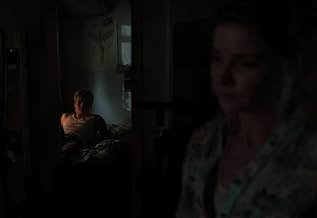


Aníta Briem
- Guðrún (Addi's mother)
- (as Anita Briem)


Þórhildur Ingunn
- Elísa (Addi's sister)
- (as Þórhildur Ingunn Pétursdóttir)

- Director
- Writer
- All cast & crew
- Production, box office & more at IMDbPro
7.32.9K
1
2
3
4
5
6
7
8
9
10
Featured reviews
Beautiful
By watching this film, you are transported into the lives of these four boys. I mean, the movie is so involving that you feel like you are part of the gang. The actors, especially Áskell Einar Pálmason, Birgir Dagur Bjarkason and Viktor Benóný Benediktsson are exceptional.
The characters aren't one dimensional simpletons. There's a lot of contradictions, transformation and growth throughout the movie and the express everything to perfection. They let you know what the characters are feeling and thinking even when they don't say anything. Áskell Einar Pálmason probably got the hardest role to play, as Balli, the bullied boy who'd never had a friend before. At the end of the movie, Balli looks like a completely different person. He is transformed by the friendship from the other boys.
Probably different people watching this movie will take away different things. The story approaches multiple themes. For me, the biggest and most moving one is "friendship". The way Addi offers his friendship to Balli and how far the four boys are willing to go to stand up for their friends is really moving. I think I will remember this movie for the rest of my life.
I'm giving 9 stars because of the mystical theme, which I was hoping to understand by the end of the movie, but I couldn't. I will probably watch this movie again. Maybe I'll get it the next time around.
The characters aren't one dimensional simpletons. There's a lot of contradictions, transformation and growth throughout the movie and the express everything to perfection. They let you know what the characters are feeling and thinking even when they don't say anything. Áskell Einar Pálmason probably got the hardest role to play, as Balli, the bullied boy who'd never had a friend before. At the end of the movie, Balli looks like a completely different person. He is transformed by the friendship from the other boys.
Probably different people watching this movie will take away different things. The story approaches multiple themes. For me, the biggest and most moving one is "friendship". The way Addi offers his friendship to Balli and how far the four boys are willing to go to stand up for their friends is really moving. I think I will remember this movie for the rest of my life.
I'm giving 9 stars because of the mystical theme, which I was hoping to understand by the end of the movie, but I couldn't. I will probably watch this movie again. Maybe I'll get it the next time around.
Mesmerising performances from one of the great young casts
A captivating, often brutal dip into the lives of four 14-year-old boys in roughly 2000-era Iceland. Addi, the one with a conscience, takes badly bullied Balli into his group of friends after feeling a twinge of compassion at seeing him being mistreated. The acting from the four first-time protagonists is exceptional. Award-worthy. I can easily see them being named joint best actors at festivals (I saw it twice in Berlin).
Áskell Einar Pálmason as Balli delivers an understated masterclass in nervous glances, twitches and despair. It's all the more impressive to see how, as the character eases into life with his first friends, his body language changes, almost imperceptibly.
Birgir Dagur Bjarkason may well take the plaudits with his turn as Addi, he carries the film on his young shoulders and doesn't put a foot wrong, whether joining in the violence or experiencing the dreamlike (often nightmarish) visions that give the film its Icelandic name.
Snorri Rafn Frímannsson has less to do as Siggi than the others but has charisma and backs the others up as his character does on screen.
But for me it is Viktor Benóný Benediktsson, as Konni, who delivers the star turn. A thug known as The Animal, his Konni is able to deliver the aggression needed to make his character believable, punching and swinging wildly through the film in an often terrifying manner. But one by one the layers are stripped away to reveal - not that he would admit it - the scared boy trapped in the young man's body. Such a broad performance would test actors twice his age but he aces it. They all do.
A note on the fight scenes, which through a combination of beautiful camera work and expert, almost balletic choreography come across as some of the most realistic I can remember. This isn't filmic violence, these are kids kicking lumps out of each other. Harsh, cold, real, shocking.
One criticism comes in the pacing at the end and an inclusion of possibly too many story strands that don't really have chance to justify their place in the final film. It feels a bit like a 2h30 film that a producer has demanded becomes 2hrs. If that's the case I hope a director's cut will follow - I would gladly spend all day in the company of the fascinating characters that director Guðmundur Arnar Guðmundsson has so expertly and lovingly brought to the screen.
Áskell Einar Pálmason as Balli delivers an understated masterclass in nervous glances, twitches and despair. It's all the more impressive to see how, as the character eases into life with his first friends, his body language changes, almost imperceptibly.
Birgir Dagur Bjarkason may well take the plaudits with his turn as Addi, he carries the film on his young shoulders and doesn't put a foot wrong, whether joining in the violence or experiencing the dreamlike (often nightmarish) visions that give the film its Icelandic name.
Snorri Rafn Frímannsson has less to do as Siggi than the others but has charisma and backs the others up as his character does on screen.
But for me it is Viktor Benóný Benediktsson, as Konni, who delivers the star turn. A thug known as The Animal, his Konni is able to deliver the aggression needed to make his character believable, punching and swinging wildly through the film in an often terrifying manner. But one by one the layers are stripped away to reveal - not that he would admit it - the scared boy trapped in the young man's body. Such a broad performance would test actors twice his age but he aces it. They all do.
A note on the fight scenes, which through a combination of beautiful camera work and expert, almost balletic choreography come across as some of the most realistic I can remember. This isn't filmic violence, these are kids kicking lumps out of each other. Harsh, cold, real, shocking.
One criticism comes in the pacing at the end and an inclusion of possibly too many story strands that don't really have chance to justify their place in the final film. It feels a bit like a 2h30 film that a producer has demanded becomes 2hrs. If that's the case I hope a director's cut will follow - I would gladly spend all day in the company of the fascinating characters that director Guðmundur Arnar Guðmundsson has so expertly and lovingly brought to the screen.
A Raw Glimpse Behind the Nordic Calm
This Icelandic film pulls no punches, offering a stark and unflinching look into the lives of troubled teenagers. You'll be struck by the raw authenticity of their struggles and the surprisingly brutal pockets of youth violence that simmer beneath the surface of a nation often lauded for its tranquility. What's even more remarkable is the powerful and believable portrayal of these complex characters by a cast largely comprised of acting newcomers - their performances feel genuinely lived-in. While Beautiful Beings is a compelling and expertly crafted piece of cinema that will undoubtedly stay with you long after the credits roll, its intense and at times disturbing nature makes it a film I appreciate for its artistry more than one I'd readily revisit. It's a potent and memorable experience, though perhaps a singular one.
A poignant masterpiece
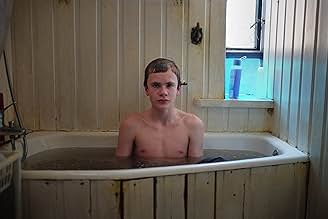
Baldur has the look that abused kids often have - especially the gentle ones. Totally closed in on himself, hang-dog, afraid to look anyone in the eye. Trying to shrink, trying to go invisible. We are not surprised to see him bullied: his manner is so fearful of attack that he invites it.
We are surprised, however, at how violent the bullying gets when one his classmates smashes him across the face with a wooden post. Suffering a broken nose and fractured skull, Baldur then has to wear a white mask to school, like a bad guy in a pantomime, and this only marginalises him further.
When Baldur's situation and demeanour again attracts unwanted attention from other youths, we expect yet more bullying and at first, we get it. Siggi, Konni and Addi invite themselves into Baldur's life, heedless of his obvious wish to be left alone. They barge their way into his house, and when Konni kicks a hole in the wall, freak out a little bit about what "Balli"'s mother might say. It turns out she doesn't really care, because she's barely around anyway, and the house is squalid and most of the walls and doors are already damaged by Balli's violent stepfather, who also shot out one of the teenager's eyes when he was four, with a BB-gun the stepfather wanted to "find out of it was loaded".
The boys then actually clean Balli's house, and he is more or less a member of their gang of drug-using, vandalising, oft-violent misfits. The other two would have been content with just victimising Baldur, but you see, Addi too has a stepfather, and he knows what it's like.
We know this group is heading for trouble and even greater violence. At first, we empathise only with Baldur, the least-violent and least-trouble causing. The gang seems indistinguishable from the kids that attacked him previously. However we come to know and care for them, especially Addi.
The movie is beautifully shot, which contrasts with the ugly behaviour of its characters. The music is also beautiful at times. Many might find its characters repellent, and it was hard for me to take a lot of the time, but by the time we meet Baldur's stepfather, and realise the connection Baldur and Addi both share, we understand why they are the way they are, and we totally understand why they feel their story needs to take the violent turn it does.
These "beautiful beings" were left behind. They apparently have very little supervision at school - I don't remember any teachers in any of the school scenes - and their parents are absent, either off on drug/alcohol benders or throwing themselves into mysticism like tarot cards when the problems their kids have are urgent and absolutely real.
Young men take what options they have open to them: here they felt there was only one option.
After "Heartstone", I was very interested to see what Guðmundur Arnar Guðmundsson was going to do next. With "Beautiful Beings", an aching, beautiful small-time masterpiece, he's outdone himself.
Lastly, the performance of Áskell Einar Pálmason in the movie as Baldur/Balli is a masterwork. He is so utterly believable the movie could be a documentary about his life. It's so real that our hearts break, not only for the Balli on the screen, but all the kids in similar situations wherever on earth you find people.
We are surprised, however, at how violent the bullying gets when one his classmates smashes him across the face with a wooden post. Suffering a broken nose and fractured skull, Baldur then has to wear a white mask to school, like a bad guy in a pantomime, and this only marginalises him further.
When Baldur's situation and demeanour again attracts unwanted attention from other youths, we expect yet more bullying and at first, we get it. Siggi, Konni and Addi invite themselves into Baldur's life, heedless of his obvious wish to be left alone. They barge their way into his house, and when Konni kicks a hole in the wall, freak out a little bit about what "Balli"'s mother might say. It turns out she doesn't really care, because she's barely around anyway, and the house is squalid and most of the walls and doors are already damaged by Balli's violent stepfather, who also shot out one of the teenager's eyes when he was four, with a BB-gun the stepfather wanted to "find out of it was loaded".
The boys then actually clean Balli's house, and he is more or less a member of their gang of drug-using, vandalising, oft-violent misfits. The other two would have been content with just victimising Baldur, but you see, Addi too has a stepfather, and he knows what it's like.
We know this group is heading for trouble and even greater violence. At first, we empathise only with Baldur, the least-violent and least-trouble causing. The gang seems indistinguishable from the kids that attacked him previously. However we come to know and care for them, especially Addi.
The movie is beautifully shot, which contrasts with the ugly behaviour of its characters. The music is also beautiful at times. Many might find its characters repellent, and it was hard for me to take a lot of the time, but by the time we meet Baldur's stepfather, and realise the connection Baldur and Addi both share, we understand why they are the way they are, and we totally understand why they feel their story needs to take the violent turn it does.
These "beautiful beings" were left behind. They apparently have very little supervision at school - I don't remember any teachers in any of the school scenes - and their parents are absent, either off on drug/alcohol benders or throwing themselves into mysticism like tarot cards when the problems their kids have are urgent and absolutely real.
Young men take what options they have open to them: here they felt there was only one option.
After "Heartstone", I was very interested to see what Guðmundur Arnar Guðmundsson was going to do next. With "Beautiful Beings", an aching, beautiful small-time masterpiece, he's outdone himself.
Lastly, the performance of Áskell Einar Pálmason in the movie as Baldur/Balli is a masterwork. He is so utterly believable the movie could be a documentary about his life. It's so real that our hearts break, not only for the Balli on the screen, but all the kids in similar situations wherever on earth you find people.
Incredible cast
The young cast was incredible in this. There were a lot of nuance to their acting, and they brought a lot of depth to their characters. This isn't an easy topic to tackle, and to be able to potray something so raw and real at such a young age really shows how talanted the actors are in this. The story is both beautiful and heartbreaking. I understand the ending, but damn, if I didn't wish for it not to end like that. I guess that's where my disappointment comes in. I understand and respect the ending, but it was also predictable and I just wanted more for the characters, but life doesn't always unfold the way we want. I absolutley loved the first half, the second half became a bit to repetitive, and too brutal for my liking which combined with ending made me wishing for more. I don't know, it felt like there was more to the story than where, and how, it ended.


Did you know
- SoundtracksMoan (Trentemøller Dub Remix)
Written by Anders Trentemøller and Mikael Simpson
Performed by Anders Trentemøller (as Trentemøller)
- How long is Beautiful Beings?Powered by Alexa
Details
- Release date
- Countries of origin
- Official site
- Language
- Also known as
- Chicken Boy
- Filming locations
- Production companies
- See more company credits at IMDbPro
Box office
- Gross worldwide
- $178,839
- Runtime
- 2h 3m(123 min)
- Color
Contribute to this page
Suggest an edit or add missing content