

A British woman recalls coming of age during World War I - a story of young love, the futility of war, and how to make sense of the darkest times.A British woman recalls coming of age during World War I - a story of young love, the futility of war, and how to make sense of the darkest times.A British woman recalls coming of age during World War I - a story of young love, the futility of war, and how to make sense of the darkest times.
- Director
- Writers
- Stars
- Awards
- 5 wins & 7 nominations total





- Director
- Writers
- All cast & crew
- Production, box office & more at IMDbPro
7.231.6K
1
2
3
4
5
6
7
8
9
10
Featured reviews
Fighting for a cause
Though fighting might not be the right word. The movie also seems to go a completely different direction at first, with the now Oscar winning actress in the front row. It remains about her and her feelings throughout, but you might think it would concentrate on another aspect of life. On the other hand, when war happens, everything else seems to not matter anymore. Even things you fought very hard for.
Some decisions are not understandable, especially the way they are "explained" by the characters, but irrational thinking does hit us from time to time. The question is, if we can bounce back from mistakes (or if we're allowed to). This also shows how grim war can be and what toll it takes, especially from the young (as the song goes: "War? What is it good for? Absolutely nothing"). Powerful performances make this a drama that is worth a watch
Some decisions are not understandable, especially the way they are "explained" by the characters, but irrational thinking does hit us from time to time. The question is, if we can bounce back from mistakes (or if we're allowed to). This also shows how grim war can be and what toll it takes, especially from the young (as the song goes: "War? What is it good for? Absolutely nothing"). Powerful performances make this a drama that is worth a watch
Vikander wins me over
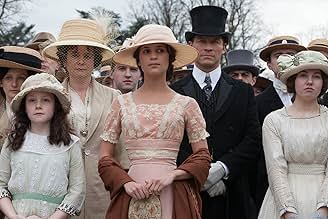
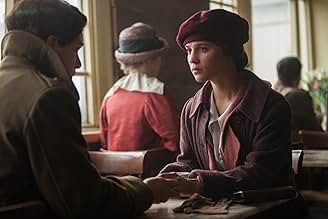
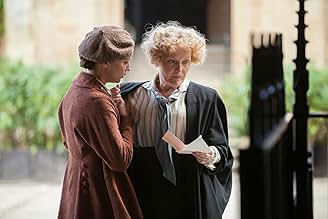
Vera Brittain (Alicia Vikander) wants to go to Oxford but her parents (Dominic West, Emily Watson) wants her to look for a husband. Her brother Edward (Taron Egerton), and friends Victor Richardson (Colin Morgan) and Roland Leighton (Kit Harington) all adore her. Vera falls for Roland and gets accepted to Somerville College, Oxford. As WWI approaches, her guys all volunteer. She convinces her father to let Edward enlist. She defers college and volunteers to be a nurse.
It has a slow period-piece start. It's got a nice hazy moody feel. Vikander is great but the guys need more exposition. They don't have enough space to show their characters. It's a slow burn and it's all concentrated on Vikander. She wins me over slowly. She has great sadness. It has very poignant moments especially in the later parts.
It has a slow period-piece start. It's got a nice hazy moody feel. Vikander is great but the guys need more exposition. They don't have enough space to show their characters. It's a slow burn and it's all concentrated on Vikander. She wins me over slowly. She has great sadness. It has very poignant moments especially in the later parts.
A true story of when the world changed.
'Testament Of Youth' is a BBC film.
The film opens with a maffick, but with one young woman being rather subdued, even dazed. Then in a clever scene, there is a Col. Blimp- style swimming scene.
We are introduced to Vera Brittain, living in provincial comfort in Buxton Derbyshire, and struggling against social convention. She and her young male friends, all on the threshold of adulthood, are looking to the future. It is the summer of 1914 and the era is caught well and authentically.
Love is in the air and as our story develops we get some nice Michael Corleone-style 'Sicilian' courting. In a small part, Joanne Scanlan plays the chaperon Aunt Belle. She delivers to the part the same depth that she did when playing Mrs Catherine Dickens in last year's 'The Invisible Woman'. Played initially for laughs, the chaperon takes a much deeper and more human role as Summer moves into Autumn. There is a station scene, much more dramatic than that in the recent 'The Imitation Game', because the trains are going in a different direction.
Vera Brittain herself wrote of critics who doubted the authenticity of her account. Who are we, to measure the authenticity and depth of feeling of young lovers? This was their love, not ours! The reality of WWI, of course, can be easily measured and recounted.
The film gets progressively darker as the war intrudes into the story. The darkest scenes of all are set in France. These scenes are grim and gritty, muddy and bloody. There are many poignant scenes of love and war. Vera Brittain's male companions are played well by a strong cast. The central character of Roland Leighton is well played by Kit Harington, Here however, his romantic side is much more subdued, than that in his role in last year's 'Pompeii', where he featured in what was arguably the most romantic kiss scene of all time. Appropriately, Colin Morgan who has previously played the role of Merlin, here adds some magic, in what is perhaps the most poignant scene in this film. Perhaps the most sinister-looking figure in the film, is the innocent-faced-looking telegram-boy, played by Xavier Atkins. A small but scary part.
Pre-war Imperial Britain changed to the post-war era of Vera Brittain. The pre-war campaign for votes for women failed. The war forced women to do jobs previously done by men, to take up new roles and new responsibilities. Thus the post-war clamour for women's equality could no longer be ignored, and instead change started. The life and literature of Vera Brittain was an inspiration for the next generation, not the least being her daughter, the politician Shirley Williams. Vera Brittain's 'Testament' is now a recognized part of British culture and history. It is a long time since I read her book, but it seems to me that this film authentically captures the story in the book.
WWI was a seminal event. It changed the lives of a generation. it was a dominant theme in thinking in the inter-war period. To understand positions taken before and during WWII, we need to understand the context in which these positions were adopted.
In four short years British history was changed forever. So too for the world. This true story authentically captures the period and the resultant changes. 9/10.
The film opens with a maffick, but with one young woman being rather subdued, even dazed. Then in a clever scene, there is a Col. Blimp- style swimming scene.
We are introduced to Vera Brittain, living in provincial comfort in Buxton Derbyshire, and struggling against social convention. She and her young male friends, all on the threshold of adulthood, are looking to the future. It is the summer of 1914 and the era is caught well and authentically.
Love is in the air and as our story develops we get some nice Michael Corleone-style 'Sicilian' courting. In a small part, Joanne Scanlan plays the chaperon Aunt Belle. She delivers to the part the same depth that she did when playing Mrs Catherine Dickens in last year's 'The Invisible Woman'. Played initially for laughs, the chaperon takes a much deeper and more human role as Summer moves into Autumn. There is a station scene, much more dramatic than that in the recent 'The Imitation Game', because the trains are going in a different direction.
Vera Brittain herself wrote of critics who doubted the authenticity of her account. Who are we, to measure the authenticity and depth of feeling of young lovers? This was their love, not ours! The reality of WWI, of course, can be easily measured and recounted.
The film gets progressively darker as the war intrudes into the story. The darkest scenes of all are set in France. These scenes are grim and gritty, muddy and bloody. There are many poignant scenes of love and war. Vera Brittain's male companions are played well by a strong cast. The central character of Roland Leighton is well played by Kit Harington, Here however, his romantic side is much more subdued, than that in his role in last year's 'Pompeii', where he featured in what was arguably the most romantic kiss scene of all time. Appropriately, Colin Morgan who has previously played the role of Merlin, here adds some magic, in what is perhaps the most poignant scene in this film. Perhaps the most sinister-looking figure in the film, is the innocent-faced-looking telegram-boy, played by Xavier Atkins. A small but scary part.
Pre-war Imperial Britain changed to the post-war era of Vera Brittain. The pre-war campaign for votes for women failed. The war forced women to do jobs previously done by men, to take up new roles and new responsibilities. Thus the post-war clamour for women's equality could no longer be ignored, and instead change started. The life and literature of Vera Brittain was an inspiration for the next generation, not the least being her daughter, the politician Shirley Williams. Vera Brittain's 'Testament' is now a recognized part of British culture and history. It is a long time since I read her book, but it seems to me that this film authentically captures the story in the book.
WWI was a seminal event. It changed the lives of a generation. it was a dominant theme in thinking in the inter-war period. To understand positions taken before and during WWII, we need to understand the context in which these positions were adopted.
In four short years British history was changed forever. So too for the world. This true story authentically captures the period and the resultant changes. 9/10.
Anthem For Doomed Youth
I remember being given this book as a set text for an English A-Level examination over 30 years ago and am aware that there was a prestigious BBC production of it also several years back but this is the first dramatisation I've seen of Vera Brittain's novel documenting her own experiences in that golden age of post-Edwardian pre WW1 England when for coming-of-age birthdays you got given a piano from your father. That's if you were a girl of course, her more musically gifted brother conversely gets what she would have wanted, a scholarship at Oxford although on the other hand he is also at the the prime age to be called up for what he and most everyone else (but not their knowing father) believes will be a short, heroic and clean war which of course it turned out not to be (apart from the heroic part).
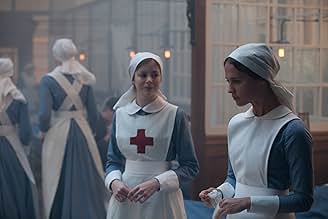
Young Vera is headstrong, not only about wanting to make her own way in a man's world (female emancipation was still years away), but later about making her own contribution to the war effort by enrolling as a nurse while her lover, brother and other male friends are fighting in the trenches. Told wholly from her point of view, it's an entertaining if not enthralling watch, beautifully shot and well acted if somehow just lacking some extra pathos to really capture the hellish undertow of the War to end all Wars.
Alicia Vikander is appealing as the vaguely tomboyish, intellectual Vera. In those days, it would appear, the golden youth had to be chaperoned everywhere by a usually imposing maiden aunt figure and make their feelings about each other known by writing and sending poems as the film strives to contrast the idyllic pre-war days of carefree swimming and carousing with the bleakness and destruction of war itself. For me, I didn't feel the contrast quite sharply enough and my abiding memories of the film are of the big family house and the dreaming spires of Oxford rather than the hell of the makeshift military hospitals and muddy and bloody trenches on the front line.
The best shot for me was when I perhaps detected a tribute to all-time great movie "Gone With The Wind" as Vera goes Scarlett-like amongst the wounded and dying, searching for her wounded brother where the camera ascends into a sweeping dolly shot showing the full extent of the number of the casualties, just like Vincent Fleming's rightly famous take all those years ago.
The supporting actors are picked from the familiar directory of experienced British character actors, notably Miranda Richardson and Emily Watson, while the young actors in the leads, all of them unfamiliar to me, perform with aplomb.
There is a great true-life story to be told here and this film does so respectfully and responsibly, if just a little too carefully at times.
Young Vera is headstrong, not only about wanting to make her own way in a man's world (female emancipation was still years away), but later about making her own contribution to the war effort by enrolling as a nurse while her lover, brother and other male friends are fighting in the trenches. Told wholly from her point of view, it's an entertaining if not enthralling watch, beautifully shot and well acted if somehow just lacking some extra pathos to really capture the hellish undertow of the War to end all Wars.
Alicia Vikander is appealing as the vaguely tomboyish, intellectual Vera. In those days, it would appear, the golden youth had to be chaperoned everywhere by a usually imposing maiden aunt figure and make their feelings about each other known by writing and sending poems as the film strives to contrast the idyllic pre-war days of carefree swimming and carousing with the bleakness and destruction of war itself. For me, I didn't feel the contrast quite sharply enough and my abiding memories of the film are of the big family house and the dreaming spires of Oxford rather than the hell of the makeshift military hospitals and muddy and bloody trenches on the front line.
The best shot for me was when I perhaps detected a tribute to all-time great movie "Gone With The Wind" as Vera goes Scarlett-like amongst the wounded and dying, searching for her wounded brother where the camera ascends into a sweeping dolly shot showing the full extent of the number of the casualties, just like Vincent Fleming's rightly famous take all those years ago.
The supporting actors are picked from the familiar directory of experienced British character actors, notably Miranda Richardson and Emily Watson, while the young actors in the leads, all of them unfamiliar to me, perform with aplomb.
There is a great true-life story to be told here and this film does so respectfully and responsibly, if just a little too carefully at times.
Elegantly filmed piece portraying the futility of war
23 January 2015 Film of Choice at The Plaza Dorchester Tonight - Testament of Youth. Based on the book by Vera Brittain which is a best selling account of her experiences during the First World War, this film follows the life of Vera herself during those harrowing times. Starting out gently, we follow Vera, her brother and his friends from their comfortable life in the country to the eve of the war in 1914 and beyond. I say gently because this film eases you into what was one of the horrors of recent history, a time which shattered people and ruined lives forever. After fighting so hard to get to Oxford, Vera then gives it all up to become a nurse, a journey which ultimately takes her to France and gives her first hand experience of the massacre that war dishes out. There is a romantic thread running through the film but her strongest bond is with her brother and her world is torn apart when he signs up to fight. Vera was played beautifully by Alicia Vikander, a Swedish actress who I am not familiar with, but she had look of Emily Blunt in her facial expressions and mannerisms, and unfortunately did not seem to age at all during the film, not even in grief. However that is my only criticism in an elegantly shot film even when covering the abomination that is war. Another cinematic experience to make you think.


Did you know
- TriviaSaoirse Ronan was originally cast as Vera Brittain but she dropped out due to scheduling conflicts. Alicia Vikander replaced her.
- GoofsAs Roland and Vera meet in late 1914 before he leaves for France, Aunt Belle notices that Roland is sick and she talks about how influenza is ripping through the troops and it's in all the newspapers "Spanish Influenza they call it." The earliest known case of what would only later be called the Spanish flu was in March of 1918--and reports of the plague were zealously suppressed in the press of the belligerent nations for fear that it damaged morale. The only reason the disease, which actually was first documented in Kansas, was named "Spanish Flu", was because Spain was neutral in the war and the Spanish papers were free to report cases, giving the wrong impression elsewhere that Spain was hit first and harder by the disease.
- Quotes
Roland Leighton: Down the long white road we walked together. Down between the grey hills and the heather. You seemed all brown and soft, just like linnet. Your errant hair had shadowed sunbeams in it. And there shone all April in your eyes.
- Crazy creditsDuring the opening credits, World War I guns can be heard in the background.
- ConnectionsFeatured in Film '72: Episode #44.1 (2015)
- SoundtracksSilver Threads Among the Gold
Written by H.P. Danks & Eben E. Rexford
Performed by John McCormack
Source: Library and Archives
Canada/Silver Threads Among the Gold
1922/AMICUS 31399658
- How long is Testament of Youth?Powered by Alexa
Details
- Release date
- Countries of origin
- Official sites
- Languages
- Also known as
- Спогади про майбутнє
- Filming locations
- Keighley Railway Station, Station Bridge, Keighley, Bradford, West Yorkshire, England, UK(railway station scenes)
- Production companies
- See more company credits at IMDbPro
Box office
- Gross US & Canada
- $1,822,250
- Opening weekend US & Canada
- $53,000
- Jun 7, 2015
- Gross worldwide
- $5,851,758
- Runtime
- 2h 9m(129 min)
- Color
- Sound mix
- Aspect ratio
- 2.39 : 1
Contribute to this page
Suggest an edit or add missing content