The Spirit of '45
- 2013
- 1h 34m
IMDb RATING
7.1/10
1.4K
YOUR RATING

A documentary on how the spirit of unity, which buoyed Britain during the war years, carried through to create a vision of a fairer, united society.A documentary on how the spirit of unity, which buoyed Britain during the war years, carried through to create a vision of a fairer, united society.A documentary on how the spirit of unity, which buoyed Britain during the war years, carried through to create a vision of a fairer, united society.
- Awards
- 2 nominations total


Julian Tudor Hart
- Self - General Practitioner
- (as Dr. Julian Tudor Hart)
Harry Keen
- Self - Consultant Physician
- (as Professor Harry Keen)
Jacky Davis
- Self - Consultant Radiologist
- (as Dr. Jacky Davis)
Jonathon Tomlinson
- Self - General Practitioner
- (as Dr. Jonathon Tomlinson)
- Director
- Writer
- All cast & crew
- Production, box office & more at IMDbPro
7.11.3K
1
2
3
4
5
6
7
8
9
10
Featured reviews
Does what it says on the Tin
Some people have complained that the film is not objective, I think they're missing the point.
The point of this documentary is to capture the essence of that time. What our parents and grandparents had endured and how they faced up to the future with hope for a better world than that passed away with war.
That working together in commonality could build a better world for future generations and they did just that. The achievements of the Atlee government still reverberate down the decades and are with us still.
They did what they did in far harder times than now, are we so useless that we cannot do it?
The point of this documentary is to capture the essence of that time. What our parents and grandparents had endured and how they faced up to the future with hope for a better world than that passed away with war.
That working together in commonality could build a better world for future generations and they did just that. The achievements of the Atlee government still reverberate down the decades and are with us still.
They did what they did in far harder times than now, are we so useless that we cannot do it?
A class in social policy
In his varied and multi angled study Ken Loach takes us on a journey back in time laying bare the most fair and socially way of running a country.
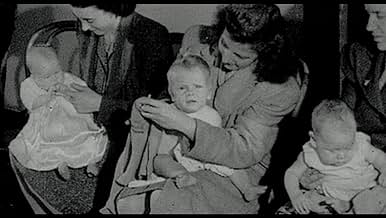
Despite the devastation caused by the 6 year World War II, Britain looked back and realised that in the pre-War era although it had the biggest ever empire, the levels of poverty and deprivation were embarrassing.
So, following the end of the War, the country followed ultra socialist policies that improved the quality of life for everyone very dramatically following which the documentary follows the changes in attitudes towards social friendly policies and how they impacted the population indicating how the drive towards ever higher profits is eroding the social fabric of this nation.
A contemplating feast and a nostalgic journey.
Despite the devastation caused by the 6 year World War II, Britain looked back and realised that in the pre-War era although it had the biggest ever empire, the levels of poverty and deprivation were embarrassing.
So, following the end of the War, the country followed ultra socialist policies that improved the quality of life for everyone very dramatically following which the documentary follows the changes in attitudes towards social friendly policies and how they impacted the population indicating how the drive towards ever higher profits is eroding the social fabric of this nation.
A contemplating feast and a nostalgic journey.
May be seen by some as a bit one sided and self indulgent, but still admirably done
STAR RATING: ***** Saturday Night **** Friday Night *** Friday Morning ** Sunday Night * Monday Morning
Ken Loach has quite a backlog of work as a performance film maker, but his latest work, laying his unashamed socialist leanings firmly on the line, is presented in a documentary format. Loach thrusts us back in time to the immediate post war years, where with a country in ruins and millions sick and injured, there was no shortage of work and so the people had the power, coming together to re-build the country and form one huge powerful united front that let them decide their own fate, all under the thrust of a powerful Labour movement. The real main objective of the movement was not to go back to the appalling poverty of before the war, which nobody noticed and was just accepted by those who lived in it. Flash forward twenty five years or so, to the arrival of Thatcher.
The main trouble, when politics is presented as art, is that you are naturally going to spur on and impress those who agree with you and form the most spiteful critics out of those who think you don't know what you're talking about. Like the most high horsed (but probably best) Michael Moore offering, Ken Loach here bombards us with a presentation of faces, talking heads, if you will, of a mostly much older generation who vividly bring the original socialist movement back to life, and try to paint a portrait of the sort of things that originally spurned it on.
Reminding me of Moore's work a little, as it does, it's all naturally quite one sided and could even be seen as somewhat self indulgent/important, but where Loach gets it right is by managing to make the film's argument so persuasive anyway, genuinely managing to craft a scene where the poor/lower classes generally had no voice and by realizing their combined power, improved things for themselves and their families, only to have it all snatched back from them many years later.
It never feels pretentious in any way. It's just the work of a proud and accomplished director, maybe wearing his heart on his sleeve a little, maybe not being as subtle as he could be, but presenting something made with such insight and, well, spirit you can't help but be impressed anyway. *****
Ken Loach has quite a backlog of work as a performance film maker, but his latest work, laying his unashamed socialist leanings firmly on the line, is presented in a documentary format. Loach thrusts us back in time to the immediate post war years, where with a country in ruins and millions sick and injured, there was no shortage of work and so the people had the power, coming together to re-build the country and form one huge powerful united front that let them decide their own fate, all under the thrust of a powerful Labour movement. The real main objective of the movement was not to go back to the appalling poverty of before the war, which nobody noticed and was just accepted by those who lived in it. Flash forward twenty five years or so, to the arrival of Thatcher.
The main trouble, when politics is presented as art, is that you are naturally going to spur on and impress those who agree with you and form the most spiteful critics out of those who think you don't know what you're talking about. Like the most high horsed (but probably best) Michael Moore offering, Ken Loach here bombards us with a presentation of faces, talking heads, if you will, of a mostly much older generation who vividly bring the original socialist movement back to life, and try to paint a portrait of the sort of things that originally spurned it on.
Reminding me of Moore's work a little, as it does, it's all naturally quite one sided and could even be seen as somewhat self indulgent/important, but where Loach gets it right is by managing to make the film's argument so persuasive anyway, genuinely managing to craft a scene where the poor/lower classes generally had no voice and by realizing their combined power, improved things for themselves and their families, only to have it all snatched back from them many years later.
It never feels pretentious in any way. It's just the work of a proud and accomplished director, maybe wearing his heart on his sleeve a little, maybe not being as subtle as he could be, but presenting something made with such insight and, well, spirit you can't help but be impressed anyway. *****
interesting but boring
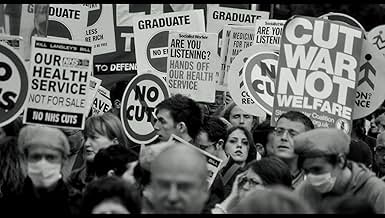
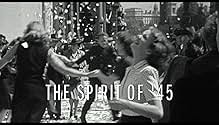
"The Spirit of '45" reminds us of the air of progress occurring in British politics immediately after World War II. It takes back to the founding of welfare state and the nationalization of the health service, transport, energy and other areas of public life. The faces we see at the beginning of the film of young Britons celebrating in the fountains at Trafalgar Square symbolize the hope of a nation. But Loach is also worried about the spirit of modern Britain. The second part ponders a different mood than the one of the 1940s: Thatcherism and the more recent failures of organized labor to live up to its founding principles. On the whole this is a tender and humane film, a compelling mix of interviews, with archive footage. The film works all at once as a lament, a celebration and a wake- up call to modern politicians, it's only a bit boring.
Red flag raised for our society
Might go a little over the top on its conclusions, but it is an important reminder of a spirit of the time portrayed in the documentary.
In a time when Friedman's free market theory dangerously veers towards anarcho-capitalism, it might not be bad to remember that politics and states should still have a say on our society.
Unfortunately, 'The Spirit of '45' might seem a little bit too much like socialist propaganda, in spite of Ken Loach's intentions of trying to stick to the overall zeitgeist of the British society of the time. Deserves recognition, nonetheless, for having the courage of revealing the colour of its flag, in a business where every film is built to be as inocuous and mass-appealing as possible.
In a time when Friedman's free market theory dangerously veers towards anarcho-capitalism, it might not be bad to remember that politics and states should still have a say on our society.
Unfortunately, 'The Spirit of '45' might seem a little bit too much like socialist propaganda, in spite of Ken Loach's intentions of trying to stick to the overall zeitgeist of the British society of the time. Deserves recognition, nonetheless, for having the courage of revealing the colour of its flag, in a business where every film is built to be as inocuous and mass-appealing as possible.


Did you know
- Quotes
Self - General Practitioner: It wasn't only "never again" about war. It was "never again" about that kind of peace where everything was run by rich people for rich people.
- ConnectionsFeatured in Laissez-faire (2015)
- How long is The Spirit of '45?Powered by Alexa
Details
- Release date
- Country of origin
- Official sites
- Language
- Also known as
- 45 Ruhu
- Filming locations
- Liverpool, Merseyside, England, UK(archive footage)
- Production companies
- See more company credits at IMDbPro
Box office
- Gross worldwide
- $488,854
- Runtime
- 1h 34m(94 min)
- Color
- Sound mix
Contribute to this page
Suggest an edit or add missing content