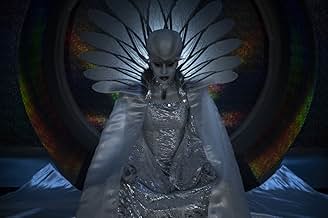
An updated version of the classic anthology series featuring various tales of science fiction, mystery, and horror.An updated version of the classic anthology series featuring various tales of science fiction, mystery, and horror.An updated version of the classic anthology series featuring various tales of science fiction, mystery, and horror.
- Nominated for 1 Primetime Emmy
- 5 wins & 13 nominations total
Browse episodes
6.020.1K
1
2
3
4
5
6
7
8
9
10
Featured reviews
Redeeming second season!
I felt similarly to these negative reviews last year, though i still saw a lot i liked in season 1, it was just to heavy on social issues.
Season 2, however, completely redeems the show. Less political message and more focus on creepy alternative realities that find our protagonists in paranormal turmoil. I wont say this is a top notch show, but it's definitely popcorn worthy and worth the watch.
What Would Rod Do?
The original Twilight Zone series was full of social commentary and messages that challenged society. With episodes touching on topics like racism, religion, censorship, greed, and corporatism, the show was far from a simple science fiction series. One might suggest the Twilight Zone started Hollywood's tradition of engaging in social and political issues.
So why did this concept work so well in the 1960s while receiving so much backlash today? The answer is simple: politics is more polarizing than it has been in recent history.
Rod Serling, the writer of the original series, set out to challenge viewers by creating content that neither the tv executives nor the regulators felt would make for a positive outcome, but they were wrong. It was a big success.
However, when revisiting old episodes, it's clear that Serling's radical approach to writing was still tame enough to appeal to most average American viewers of that era. Today, writing about social topics that make people uncomfortable while avoiding ideological backlash seems nearly impossible to do.
1964's episode "I Am the Night - Color Me Black" told the story of a town eager to hang an innocent black man after he was wrongfully convicted of killing a racist white man in self-defense. 2019's episode "Replay" tells the story of a woman using a rewind button on a camcorder to protect her son from a racist police trooper. Just read the other reviews and see how today's polarized viewer responds to the latter.
To be fair, many of the ideas conveyed by Serling's original Twilight Zone were deliberately written to not appeal to either side politically. The same probably cannot be said about this current reboot. It would be interesting to see if Serling could take on this challenge today.
Maybe the solution to this problem is to no longer use social commentary in writing. Or maybe the writers could make more obvious right leaning episodes to even things out. One thing is for certain, as long as entertainment seeks to talk about the things that make us uncomfortable, you'll manage to alienate a lot of viewers... here.... in The Twilight Zone.
So why did this concept work so well in the 1960s while receiving so much backlash today? The answer is simple: politics is more polarizing than it has been in recent history.
Rod Serling, the writer of the original series, set out to challenge viewers by creating content that neither the tv executives nor the regulators felt would make for a positive outcome, but they were wrong. It was a big success.
However, when revisiting old episodes, it's clear that Serling's radical approach to writing was still tame enough to appeal to most average American viewers of that era. Today, writing about social topics that make people uncomfortable while avoiding ideological backlash seems nearly impossible to do.
1964's episode "I Am the Night - Color Me Black" told the story of a town eager to hang an innocent black man after he was wrongfully convicted of killing a racist white man in self-defense. 2019's episode "Replay" tells the story of a woman using a rewind button on a camcorder to protect her son from a racist police trooper. Just read the other reviews and see how today's polarized viewer responds to the latter.
To be fair, many of the ideas conveyed by Serling's original Twilight Zone were deliberately written to not appeal to either side politically. The same probably cannot be said about this current reboot. It would be interesting to see if Serling could take on this challenge today.
Maybe the solution to this problem is to no longer use social commentary in writing. Or maybe the writers could make more obvious right leaning episodes to even things out. One thing is for certain, as long as entertainment seeks to talk about the things that make us uncomfortable, you'll manage to alienate a lot of viewers... here.... in The Twilight Zone.
THIS IS ANYTHING BUT THE TWILIGHT ZONE
I was very excited about this new remake of the series. Its promotion during the Super Bowl promised a premium product. What disappointment !!! Only two or three episodes are worth it, the rest has nothing to do with the original premise of the great Rod Serling. The remake of the iconic episode Nightmare at 20,000 Feet is tedious, boring, slow and mediocre, most of the episodes are. I don't understand what criteria they used, the 80's and early 2000's remakes were well done, with original and creative stories that respected the foundation of the series, but this show is bad, very bad.
I find myself wanting to like this more than I do.
I spent every episode waiting. And that's it. I just wait for something that never happens. Casting is good and the acting is on par, but the stories are just... blah... Hopefully they can get some better stores in future seasons.
Not a sci fi series, but a social agenda preaching platform
I've just finished watching the first four episodes, and I went from excited anticipation, to disappointed, to fed up enough to bail on future episodes.
Each episode seems to be plot-focused on targeting one identifiable group as perpetual racists, and another group as perpetual victims.
The science fiction is a minor incidental to the series.
Rod is turning in his grave! Shame on this reboot!
Each episode seems to be plot-focused on targeting one identifiable group as perpetual racists, and another group as perpetual victims.
The science fiction is a minor incidental to the series.
Rod is turning in his grave! Shame on this reboot!
Did you know
- TriviaAfter The Twilight Zone (1959), The Twilight Zone (1985) and The Twilight Zone (2002), this is the fourth "Twilight Zone" television series. There have also been two films in the franchise: Twilight Zone: The Movie (1983) and Twilight Zone: Rod Serling's Lost Classics (1994), as well as a radio adaptation The Twilight Zone Radio Dramas (2002).
- ConnectionsFeatured in Half in the Bag: Us and Paddleton (2019)
- How many seasons does The Twilight Zone have?Powered by Alexa
Details
Contribute to this page
Suggest an edit or add missing content