

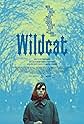
Follows the life of writer Flannery O'Connor while she was struggling to publish her first novel.Follows the life of writer Flannery O'Connor while she was struggling to publish her first novel.Follows the life of writer Flannery O'Connor while she was struggling to publish her first novel.
- Director
- Writers
- Stars
- Awards
- 1 nomination total








Caisey Cole
- Jean
- (scenes deleted)


Laketa Caston
- Sullen Woman
- (as Laketa Caston-Hosey)


- Director
- Writers
- All cast & crew
- Production, box office & more at IMDbPro
5.81.5K
1
2
3
4
5
6
7
8
9
10
Featured reviews
Trivial parochial drama.
I struggled to understand Maya Hawke who croaks and whispers in a thickly-accented incoherent drawl. Subtitles reveal a clunky yet occassionally interesting script full of overwrought, flowery dialogue that often shines. Unfortunately, it's a story without much impact, especially if you're unfamiliar with O'Connor (as I am).
The plot is fragmented into non-linear episodes that highlight her various struggles; professional, personal, historical and theological. But they never really get beyond surface level.
Ethan Hawke should be commended for his blend of dialogue, music and imagery to create a hypnotic feel. It's very heavy on post-production filters, sadly, which smothers the otherwise decent photography.
I found it slow, over-cooked and bland. But it's a 'feel' movie and if you like the vibes of the trailer, it's basically two hours of that.
The plot is fragmented into non-linear episodes that highlight her various struggles; professional, personal, historical and theological. But they never really get beyond surface level.
Ethan Hawke should be commended for his blend of dialogue, music and imagery to create a hypnotic feel. It's very heavy on post-production filters, sadly, which smothers the otherwise decent photography.
I found it slow, over-cooked and bland. But it's a 'feel' movie and if you like the vibes of the trailer, it's basically two hours of that.
VERY disappointing
WILDCAT, based on the stories of Flannery O'Connor, was even worse than my worst fears! Flannery O'Connor is one of my favorite writers, so I was thrilled that somebody was making a movie of her short stories. Previous attempts to film her work have yielded mixed results. (The best was WISE BLOOD with Brad Dourif and Harry Dean Stanton; most notorious was the TV version of "The Life You Save May Be Your Own" with Gene Kelly and a tacked-on happy ending.) This one takes on O'Connor's life after she has been diagnosed with Lupus (the disease that killed her father) and is frantically trying to write her very best before her death at age 39. Interspersed with the biographical episodes are vignettes from some of her short stories, which make no sense when removed from their contexts. It's an incomprehensible mess (starting with the title-there are no wildcats in O'Connor's work and she, a fanatical Catholic girl, could hardly be called one), with the same actors portraying real people Flannery knew and the characters she based on them. If you are not familiar with O'Connor and her work, I doubt this will make any sense at all. Top it off with the cringeworthy attempts at Southern accents by most of the actors. I enjoyed a few moments of it, but that's primarily because I had a frame of reference. Flannery's fans tend to be very possessive of her. I am no exception. I thought this was heartbreakingly bad.
Wildcat: A Surreal Southern Discomfort
Wildcat (2023) directed by Ethan Hawke is an attempt on creating a portrait of auguished writer, Flannery O'Connor. The lead actress, Maya Hawke (daughter of Ethan Hawke/Uma Thurman) takes a huge leap to portray the Lupus illed short fiction writer.
There are quiet, dreamlike moments in this film, giving insight to race and class through the writers and the Southern scenes. There's playful scenes of intertwining O'Connor's short stories with historical facts.
At the end, the scenery filmed in Kentucky, carries a strong narrative with a decent soundtrack, hoping to bring it to the finish line. The film become a little lost -- not knowing if it goes on a religious or spiritual route on O'Connor story or take a hard look at racism and class in the southern intellectual culture.
It's ending, shows an the tortured health of the writer continues and does the writing without knowing life's complexity, a maybe tribunal nod to the Catholic devout O'Connor.
There are quiet, dreamlike moments in this film, giving insight to race and class through the writers and the Southern scenes. There's playful scenes of intertwining O'Connor's short stories with historical facts.
At the end, the scenery filmed in Kentucky, carries a strong narrative with a decent soundtrack, hoping to bring it to the finish line. The film become a little lost -- not knowing if it goes on a religious or spiritual route on O'Connor story or take a hard look at racism and class in the southern intellectual culture.
It's ending, shows an the tortured health of the writer continues and does the writing without knowing life's complexity, a maybe tribunal nod to the Catholic devout O'Connor.
Mysteries of a Writer's Mind
Wildcat is the story of Flannery O'Connor (Maya Hawke), a Southern Catholic writer who lived from 1925 to 1964 and was disabled by Lupus in her later years. Although the movie shows O'Connor traveling to Iowa and New York to further her writing career, most of the plot takes place in her family's home as she types away on multiple drafts of her stories while the disease takes its toll. O'Connor is shown as socially awkward, and her mother and others cannot comprehend the motivations for her fiction. Possessing a strong faith, she explores the bizarre and twisted ways in which people can be affected by religion.
Interspersed with slow-moving scenes of O'Connor's life (non-chronological) are scenes from her fiction, acted out by the same cast of characters. Where the real segues into the fictional is sometimes hard to discern. The fictional scenes provide some insight into O'Connor's mindset but, having not read her writing in many years, I was hoping for even more insight into the influences on her writing (I probably hoped for too much). The movie is a portrait of a troubled soul that will interest her devoted readers and perhaps entice others to sample her offbeat fiction.
Interspersed with slow-moving scenes of O'Connor's life (non-chronological) are scenes from her fiction, acted out by the same cast of characters. Where the real segues into the fictional is sometimes hard to discern. The fictional scenes provide some insight into O'Connor's mindset but, having not read her writing in many years, I was hoping for even more insight into the influences on her writing (I probably hoped for too much). The movie is a portrait of a troubled soul that will interest her devoted readers and perhaps entice others to sample her offbeat fiction.
Finding faith in darkness
"My faith rises and falls in me like the tide of an invisible sea. It's torment. But then I think that might be the process by which faith can be deepened. Maybe God finds us in the darkness and not in the light. Maybe faith is a little more like marriage, that when you get into it you find is the beginning and not the end of how to make love work."
Ethan Hawke's biopic of the author Flannery O'Connor, played by his daughter Maya Hawke, is effective in showing us her many struggles, including with her editor (who can't accept her unconventional, often dark writing), her mother (who has outdated, occasionally racist notions despite believing herself to have a "good disposition") and her own body (she was diagnosed with lupus at 27 and died young at 39). Perhaps most movingly, she struggles with her Catholic faith, seeing such emptiness and suffering in the world, as well as enduring her own pain.
O'Connor's stories were of the South, of flawed people, spiritual voids, and old ways facing new realities. Death and despair were common themes. Intelligence in youthful characters often came with cynicism and laziness; simplicity and the best of intentions in older people often came with naiveté, false compassion, or outright racism. She was successful in telling her stories with simplicity and in creating memorable images; I think Hawke channeled her spirit well here, and created some powerful moments too.
Just as with her stories, however, there is a darkness to this work which may make it less appealing. What Hawke finds and expands on is the deepening of faith while in darkness, building off the sentiment O'Connor expressed in her writing, including that faith was difficult, like a cross, not an electric blanket providing comfort. While religious faith is not for me personally, this resonated nonetheless, as struggles with spirituality that connects us to all beings, having grace, and remaining optimistic in the face of evil in the world all transcend a particular dogma. However, the degree to which it's leaned into here may not be for everyone, and I would have preferred other elements of her life or writing to come through.
O'Connor's fidelity to the truth comes through in this depiction, starting with the opening quote from her, "I'm always irritated by people who imply that writing fiction is an escape from reality. It is a plunge into reality." What follows has many lines from her, e.g. "Don't think that was just an uppity Negro woman, that was the whole colored race which will no longer take your condescending pennies," which comes from the story Everything That Rises Must Converge (and which here she says to her mother). Or "We are all damned, but some of us have taken off our blindfolds and see that there is nothing to see," from Good Country People, which we see acted out as she writes it.
Hawke moves the narrative back and forth in time, which allows us to see the commonality of behavior across the years, as well as the poignancy of how things change, often more abruptly than we wish in life. He also weaves in fragments of her short stories, allowing us to see how they were grounded in her own life. It's a style I liked, as opposed to a linear narrative, but your mileage may vary. I liked the way the visuals often felt photographic, and the cast is strong, including Maya Hawke and Laura Linney in numerous roles, as well as a touching scene with Liam Neeson as a priest. A near miss for a higher rating.
Ethan Hawke's biopic of the author Flannery O'Connor, played by his daughter Maya Hawke, is effective in showing us her many struggles, including with her editor (who can't accept her unconventional, often dark writing), her mother (who has outdated, occasionally racist notions despite believing herself to have a "good disposition") and her own body (she was diagnosed with lupus at 27 and died young at 39). Perhaps most movingly, she struggles with her Catholic faith, seeing such emptiness and suffering in the world, as well as enduring her own pain.
O'Connor's stories were of the South, of flawed people, spiritual voids, and old ways facing new realities. Death and despair were common themes. Intelligence in youthful characters often came with cynicism and laziness; simplicity and the best of intentions in older people often came with naiveté, false compassion, or outright racism. She was successful in telling her stories with simplicity and in creating memorable images; I think Hawke channeled her spirit well here, and created some powerful moments too.
Just as with her stories, however, there is a darkness to this work which may make it less appealing. What Hawke finds and expands on is the deepening of faith while in darkness, building off the sentiment O'Connor expressed in her writing, including that faith was difficult, like a cross, not an electric blanket providing comfort. While religious faith is not for me personally, this resonated nonetheless, as struggles with spirituality that connects us to all beings, having grace, and remaining optimistic in the face of evil in the world all transcend a particular dogma. However, the degree to which it's leaned into here may not be for everyone, and I would have preferred other elements of her life or writing to come through.
O'Connor's fidelity to the truth comes through in this depiction, starting with the opening quote from her, "I'm always irritated by people who imply that writing fiction is an escape from reality. It is a plunge into reality." What follows has many lines from her, e.g. "Don't think that was just an uppity Negro woman, that was the whole colored race which will no longer take your condescending pennies," which comes from the story Everything That Rises Must Converge (and which here she says to her mother). Or "We are all damned, but some of us have taken off our blindfolds and see that there is nothing to see," from Good Country People, which we see acted out as she writes it.
Hawke moves the narrative back and forth in time, which allows us to see the commonality of behavior across the years, as well as the poignancy of how things change, often more abruptly than we wish in life. He also weaves in fragments of her short stories, allowing us to see how they were grounded in her own life. It's a style I liked, as opposed to a linear narrative, but your mileage may vary. I liked the way the visuals often felt photographic, and the cast is strong, including Maya Hawke and Laura Linney in numerous roles, as well as a touching scene with Liam Neeson as a priest. A near miss for a higher rating.


Did you know
- TriviaDirector and co-writer Ethan Hawke first became interested in the works of Flannery O'Connor in his early teens, when he and his mother lived in Atlanta, Georgia and his mother worked selling textbooks to local colleges. Hawke read so much of O'Connor's works that he assumed she was as well known outside of his household as Abraham Lincoln.
- GoofsMany of the scenes throughout the movie are set in fall or winter, yet blackberries are mentioned in one sequence, and in another, there are animated fireflies-neither of these things are possible in a Georgia autumn or winter.
- Quotes
Flannery O'Connor: If it is a symbol to hell with it. What people don't understand is how much religion costs. They think its easy. They think electric blanket and there it is the cross.
- SoundtracksThe Darkest Hour
performed by Norman Dane
- How long is Wildcat?Powered by Alexa
Details
Box office
- Budget
- $10,700,000 (estimated)
- Gross US & Canada
- $563,591
- Opening weekend US & Canada
- $58,140
- May 5, 2024
- Gross worldwide
- $563,591
- Runtime
- 1h 43m(103 min)
- Color
- Aspect ratio
- 2.39 : 1
Contribute to this page
Suggest an edit or add missing content