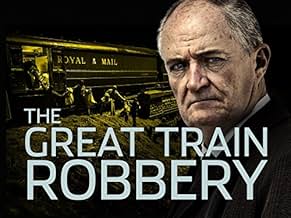
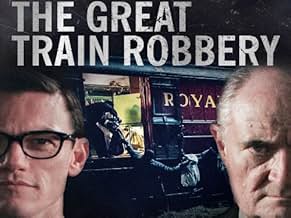
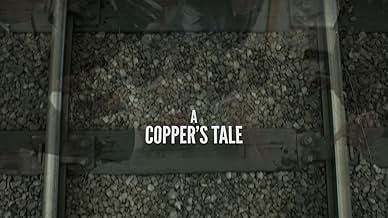
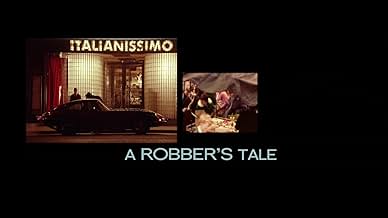
A two-part drama which portrays The Great Train Robbery of 8 August 1963, firstly from the point of view of the robbers and then from the point of view of the police who set out to identify ... Read allA two-part drama which portrays The Great Train Robbery of 8 August 1963, firstly from the point of view of the robbers and then from the point of view of the police who set out to identify and catch the robbers.A two-part drama which portrays The Great Train Robbery of 8 August 1963, firstly from the point of view of the robbers and then from the point of view of the police who set out to identify and catch the robbers.
- Nominated for 1 BAFTA Award
- 4 nominations total
Browse episodes
7.35.4K
1
2
3
4
5
6
7
8
9
10
Featured reviews
Amazon Prime
I managed to watch this on Amazon prime.
It's nothing to get overly excited about. The over the top cockney accents can get a bit annoying at times. And the acting from some is a bit wooden. But all that being said I did still really enjoy this. You just have to go in to it with the right attitude. Still well worth a watch if you are looking for something easy to follow to kill a few hours. Enjoy.
Low-Key Retelling of a Celebrated Case
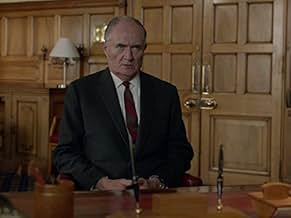
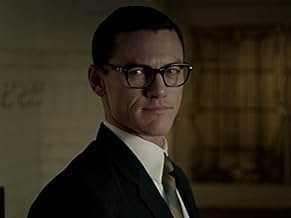
Broadcast in two parts - "The Robber's Tale" and "The Copper's Tale" - THE GREAT TRAIN ROBBERY retells the famous events of August 1963 when over £2m. was stolen from a mail train traveling from Glasgow to London. The events have been extensively retold elsewhere, notably in Peter Yates' fictionalized version ROBBERY (1967) with Stanley Baker, or BUSTER (1988) a comedy-drama with Phil Collins as robber Buster Edwards. "The Robber's Tale" (dir. Julian Jarrold) focuses specifically on Bruce Reynolds (Luke Evans) as the brains behind the whole operation; the more celebrated crook Ronald Biggs (Jack Gordon) - who passed away the night the program received its first broadcast - receives scant attention. "The Copper's Tale" looks at the painstaking ways in which Tommy Butler (Jim Broadbent) went about investigating the case and bringing the criminals to justice. Stylistically speaking the production is very much in keeping with current British television costume dramas, with low-key, almost washed-out lighting, lots of period detail (for example, the obligatory London bus from the mid-Sixties) passing across the back of the frame, or a couple of young mothers pushing their prams round the park) and plenty of focus on character through shot/reverse shot sequences. The style is diffuse, with the emphasis placed on ambiance as much as plot. "The Robber's Tale" actually proves something of a disappointment; not a lot happens in terms of action, while some of the (predominantly youthful) cast simply do not seem convincing as mid- Sixties London hoodlums. Perhaps they might have done more research into the behavior, mannerisms and (most significantly) the argot of that period. "The Copper's Tale" is a lot better, not least because of the interplay - or should that be rivalry - between Butler and his immediate subordinate Frank Williams (Robert Glenister). Although ostensibly on the same side, they seem unable to form a united front, at least professionally. Butler might be a good cop, but he certainly lacks any management abilities.
going after the big one
"The Great Train Robbery" is a miniseries in two parts. The first part focuses on mid-range crooks, led by Bruce Reynolds (Luke Evans) who decide to rob a train carrying a fortune in money. The second is about the police investigation and search for them.
I really enjoyed the first part, but the second part for me was a let- down. The criminals were more interesting than the police, led by DI Frank Williams (Robert Glenister) for some reason. And I sort of wanted them to get away with it. I'm sure that sounds terrible.
The acting is very good, and since it's based on a true story, it was interesting to see how the police picked up the trail of the crooks and to read at the end what happened to them.
I do recommend it, but you'll find the second part less compelling.
I really enjoyed the first part, but the second part for me was a let- down. The criminals were more interesting than the police, led by DI Frank Williams (Robert Glenister) for some reason. And I sort of wanted them to get away with it. I'm sure that sounds terrible.
The acting is very good, and since it's based on a true story, it was interesting to see how the police picked up the trail of the crooks and to read at the end what happened to them.
I do recommend it, but you'll find the second part less compelling.
Well produced...but for one major error!
I enjoyed this first episode although of course we all know the story. And an important part of the story is that it all happened in August of 1963. Now I was only 4 years old that year so cant quite remember what the summer of '63 was like but I would bet a large amount of money (maybe even 2.1 million pounds)on a couple of things...first there were probably leaves on the trees and secondly it is doubtful that there was snow on the ground and indeed falling in London...in the middle of August!!! What were the producers thinking? During the episode there are several captions giving the date...including the 8th August 1963. Why or why did they create a setting that looked like January or February! There wasn't even any attempt to produce a blue sky! A good film, well acted and written but ruined by the weather! Only in England!!!
Crooks and cops
This two part drama was a retelling of the The Great Train of 1963. The first part was the Robbers Tale which was a straightforward story of the planning and execution of the robbery.
This was the most fascinating aspect of the drama as over the years, the personalities of some of the robbers (Ronnie Biggs, Buster Edwards) has overshadowed the events of the Train Robbery and the main players involved.
Luke Evans, Martin Compston and Paul Anderson give the best performances.
The second part was the Policeman's Tale and featured Jim Broadbent as DCS Butler, hell bent in getting the gang like the sheriff of an old wild west town which was very much how he was introduced.
This was more procedural and not as interesting or riveting as the first part.
Incidentally both parts had different directors but Butler was just too much of a dullard and Broadbent looks too old to even be playing a cop on the verge of retirement.
Able support by Robert Glenister. It is interesting to see that 'Slipper of the Yard' (played by Nick Moran) who in later years seemed to have been more prominent in the media as the cop hunting the train robbers was a more secondary character in this drama.
Well now Slipper is dead he will not be able to sue for his lack of prominence. In the past when he was alive he was rather quick to shout libel for any slight stain on his character!
This was the most fascinating aspect of the drama as over the years, the personalities of some of the robbers (Ronnie Biggs, Buster Edwards) has overshadowed the events of the Train Robbery and the main players involved.
Luke Evans, Martin Compston and Paul Anderson give the best performances.
The second part was the Policeman's Tale and featured Jim Broadbent as DCS Butler, hell bent in getting the gang like the sheriff of an old wild west town which was very much how he was introduced.
This was more procedural and not as interesting or riveting as the first part.
Incidentally both parts had different directors but Butler was just too much of a dullard and Broadbent looks too old to even be playing a cop on the verge of retirement.
Able support by Robert Glenister. It is interesting to see that 'Slipper of the Yard' (played by Nick Moran) who in later years seemed to have been more prominent in the media as the cop hunting the train robbers was a more secondary character in this drama.
Well now Slipper is dead he will not be able to sue for his lack of prominence. In the past when he was alive he was rather quick to shout libel for any slight stain on his character!
Did you know
- TriviaRonald Biggs, one of the last surviving Great Train Robbers, died on 18 December 2013, the same day that this two-part series was first shown.
- GoofsPolice Officers are shown wearing white shirts. In 1963 Constables and Sergeants in all English police forces wore blue shirts. The change to white shirts came in the late 1970s.
- ConnectionsReferences The Great Train Robbery (1978)
- How many seasons does The Great Train Robbery have?Powered by Alexa
Details
- Release date
- Country of origin
- Official site
- Language
- Also known as
- 火車大劫案
- Filming locations
- Production companies
- See more company credits at IMDbPro
- Runtime
- 1h 30m(90 min)
- Color
Contribute to this page
Suggest an edit or add missing content