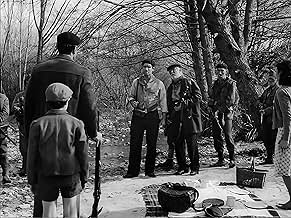
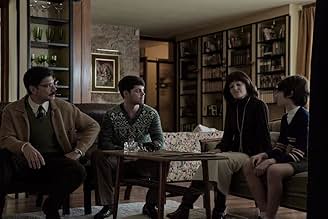
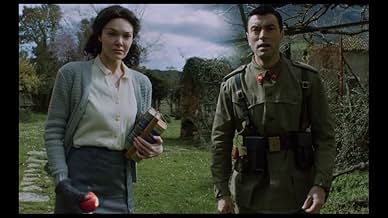
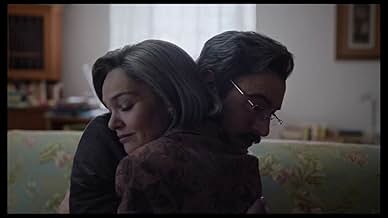
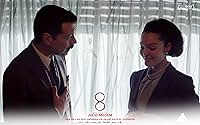
Over 90 years, eight encounters mark Octavio and Adela's tumultuous relationship, mirroring pivotal moments in Spain's history.Over 90 years, eight encounters mark Octavio and Adela's tumultuous relationship, mirroring pivotal moments in Spain's history.Over 90 years, eight encounters mark Octavio and Adela's tumultuous relationship, mirroring pivotal moments in Spain's history.
Jordi Català
- Octavio (18)
- (as Jordi Catalán)
Patxi Barko
- Médico
- (as Patxi Barco)
Asier Hernández
- Tomás (67)
- (as Asier Hernández Landa)
- Director
- Writer
- All cast & crew
- Production, box office & more at IMDbPro
5.6346
1
2
3
4
5
6
7
8
9
10
Featured reviews
Medem's poetry
Among the films by Medem, some of them stand out, crearly, La ardilla roja (The red squirrel), Tierra and Caótica Ana, where a Brian De a Palma actor, appeared, in a secondary role, his name Gerrit Graham.
The film has the direction of a craftsman, using several and very well edited sequence-shots, thus the picture deserves being watched.
The problem is the actors and actresses direction. Could be better, they are sometimes like abandoned.
The make up is not right or maybe Medem should have used a different actor and a different actress for the final scenes, when they are very old, the film loses credibility, should be more realistic and precise.
The music is too sweet. And the film is somewhat naive, sometimes cheesy.
It tries to tell a kind of history of the recent Spain, with deep wounds coming from the Spanish Civil War and the thirties.
The use of the color in the film is fantastic, sepia, black & white.
The feminism in the film is superficial, with some scenes showing the girl escaping and driving a car in the sixties with her mini skirt, hair in the wind.
But, a bunch of sequence-shots are worth watching.
The film has the direction of a craftsman, using several and very well edited sequence-shots, thus the picture deserves being watched.
The problem is the actors and actresses direction. Could be better, they are sometimes like abandoned.
The make up is not right or maybe Medem should have used a different actor and a different actress for the final scenes, when they are very old, the film loses credibility, should be more realistic and precise.
The music is too sweet. And the film is somewhat naive, sometimes cheesy.
It tries to tell a kind of history of the recent Spain, with deep wounds coming from the Spanish Civil War and the thirties.
The use of the color in the film is fantastic, sepia, black & white.
The feminism in the film is superficial, with some scenes showing the girl escaping and driving a car in the sixties with her mini skirt, hair in the wind.
But, a bunch of sequence-shots are worth watching.
one of the worst things i've seen in cinema and, to make matters worse, it's spanish.
The film falls far short of reaching even the level of an acceptable work. It is a series of errors, formal stumbles, and decisions that simply do not work. From the very beginning, the narrative presents itself with confusion; while it can be followed with enough attention, the lack of clarity creates a sense of disorder that feels more irritating than engaging.
The acting is another of the major problems. Most of the performers lack naturalness and credibility, turning the scenes into forced exercises without emotion or authenticity. It is true that some characters show a degree of development, but this is undermined by poor performances and dialogues that, in many moments, border on the implausible. Only on rare occasions does a line emerge that manages to capture interest.
Another recurring flaw of contemporary spanish cinema reappears here: the constant exploitation of sexuality as an empty narrative resource. Its overuse, instead of adding something meaningful, saturates the film and highlights a clear lack of ideas.
On the technical side, the film does not manage to hold itself together either. The attempt to extend visual continuity through false long takes fails due to clumsy cuts and editing that takes away fluidity rather than enhancing it. The result is a visual finish that feels closer to improvisation than to careful planning.
In conclusion, '8' stands among the most failed experiences i have had as a film viewer. A project that, aside from the value of its historical context and the acceptable performance of álvaro morte, collapses under a series of flaws that make it nearly indefensible. One of the worst films i have ever seen: a genuine disappointment.
The acting is another of the major problems. Most of the performers lack naturalness and credibility, turning the scenes into forced exercises without emotion or authenticity. It is true that some characters show a degree of development, but this is undermined by poor performances and dialogues that, in many moments, border on the implausible. Only on rare occasions does a line emerge that manages to capture interest.
Another recurring flaw of contemporary spanish cinema reappears here: the constant exploitation of sexuality as an empty narrative resource. Its overuse, instead of adding something meaningful, saturates the film and highlights a clear lack of ideas.
On the technical side, the film does not manage to hold itself together either. The attempt to extend visual continuity through false long takes fails due to clumsy cuts and editing that takes away fluidity rather than enhancing it. The result is a visual finish that feels closer to improvisation than to careful planning.
In conclusion, '8' stands among the most failed experiences i have had as a film viewer. A project that, aside from the value of its historical context and the acceptable performance of álvaro morte, collapses under a series of flaws that make it nearly indefensible. One of the worst films i have ever seen: a genuine disappointment.
An uneven film recounting various episodes of Spanish history based on a long love story.
The film tells the romantic story of Octavio (Javier Rey) and Adela (Ana Rujas) , whose destinies, marked by chance, intertwine around the number 8 over eight decades, from their birth on April 14, 1931 (the day the Second Republic was proclaimed), until they are elderly in 2022.
Eight chapters, filmed in single takes and set in eight historical moments of the last century in Spain (between 1931 and 2021), make up this "cinematic poem," in the words of its director Julio Medem (Sex and Lucia, Lovers of the Arctic Circle), about love and forgiveness, starring Javier Rey (Fariña, La Cima, La mujer dormida) and Ana Rujas (La buena Letra, Venus, The Messiah). Dealing with an overlong story, expanding over 90 years, eight encounters mark Octavio and Adela's tumultuous relationship, mirroring pivotal moments in Spain's history.
As director Julio Medem himself explains: "With 8, I wanted to make something that fascinated me, seduced me, and was enigmatic,", with this film I wanted to address themes such as ¨the polarization of society, collective trauma, the evolution of the role of women, and freedom."
The film's cast is noteworthy; in addition to the two main actors already mentioned, there is a strong supporting cast, including Álvaro Morte, Tamar Novas, Loreto Mauleón, and Carla Díaz, among others. All of them give decent interpretations.
There's a good photography by cinematographer Rafael Reparaz, although it uses chroma keying too much for some flashback images, as well as many scenes inside cars. Likewise, an imaginative but repetitive and insistent musical score by the renowned composer Lucas Vidal. The latter is a notorious musician who has composed various international productions, Lucas has undertaken more than twenty US and Spanish movies, including titles such as 'Fast and Furious 6', "The Raven", "Palmeras en la Nieve" or "Nobody Wants The Night".
The motion picture was unevenly written/directed by Julio Medem, it has several script flaws, imperfections, and it becomes overly long and tedious for the average viewer. Medem directed his first film for Sogetel productions and it was released in 1992, titled "Vacas" that was brilliantly received and became a big success. It won the Goya Award from the Spanish academy for best new director, and won prizes in the festivals of Tokyo, Torino and Alexandria. In 1993 Medem made his second movie, "La ardilla roja." "La ardilla roja" confirmed Medem's talents and won prizes in Fort Lauderdale, Bogota and Bucarest. His third movie, "Tierra," released in 1996, was selected for the Cannes Film Festival. In 1998 Medem released "Los amantes del Circulo Polar," considered his best movie by most of his fans. It also became a box-office hit with more than one million spectators in Spain. "Los amantes del Circulo Polar" was also released worldwide. In 2001 his fourth movie, "Lucia y el sexo," became a huge hit and began the career of actress Paz Vega who won the Goya for best new actress. In 2003 the release of "La pelota vasca," a documentary that portrays the phenomenon of nationalism in the Basque Country of northern Spain, was very polemical due to its biased point of view. ¨8¨rating: 5.5/10. Average, but at times acceptable and passable.
Eight chapters, filmed in single takes and set in eight historical moments of the last century in Spain (between 1931 and 2021), make up this "cinematic poem," in the words of its director Julio Medem (Sex and Lucia, Lovers of the Arctic Circle), about love and forgiveness, starring Javier Rey (Fariña, La Cima, La mujer dormida) and Ana Rujas (La buena Letra, Venus, The Messiah). Dealing with an overlong story, expanding over 90 years, eight encounters mark Octavio and Adela's tumultuous relationship, mirroring pivotal moments in Spain's history.
As director Julio Medem himself explains: "With 8, I wanted to make something that fascinated me, seduced me, and was enigmatic,", with this film I wanted to address themes such as ¨the polarization of society, collective trauma, the evolution of the role of women, and freedom."
The film's cast is noteworthy; in addition to the two main actors already mentioned, there is a strong supporting cast, including Álvaro Morte, Tamar Novas, Loreto Mauleón, and Carla Díaz, among others. All of them give decent interpretations.
There's a good photography by cinematographer Rafael Reparaz, although it uses chroma keying too much for some flashback images, as well as many scenes inside cars. Likewise, an imaginative but repetitive and insistent musical score by the renowned composer Lucas Vidal. The latter is a notorious musician who has composed various international productions, Lucas has undertaken more than twenty US and Spanish movies, including titles such as 'Fast and Furious 6', "The Raven", "Palmeras en la Nieve" or "Nobody Wants The Night".
The motion picture was unevenly written/directed by Julio Medem, it has several script flaws, imperfections, and it becomes overly long and tedious for the average viewer. Medem directed his first film for Sogetel productions and it was released in 1992, titled "Vacas" that was brilliantly received and became a big success. It won the Goya Award from the Spanish academy for best new director, and won prizes in the festivals of Tokyo, Torino and Alexandria. In 1993 Medem made his second movie, "La ardilla roja." "La ardilla roja" confirmed Medem's talents and won prizes in Fort Lauderdale, Bogota and Bucarest. His third movie, "Tierra," released in 1996, was selected for the Cannes Film Festival. In 1998 Medem released "Los amantes del Circulo Polar," considered his best movie by most of his fans. It also became a box-office hit with more than one million spectators in Spain. "Los amantes del Circulo Polar" was also released worldwide. In 2001 his fourth movie, "Lucia y el sexo," became a huge hit and began the career of actress Paz Vega who won the Goya for best new actress. In 2003 the release of "La pelota vasca," a documentary that portrays the phenomenon of nationalism in the Basque Country of northern Spain, was very polemical due to its biased point of view. ¨8¨rating: 5.5/10. Average, but at times acceptable and passable.
Details
Box office
- Gross worldwide
- $62,959
- Runtime
- 2h 6m(126 min)
- Color
Contribute to this page
Suggest an edit or add missing content