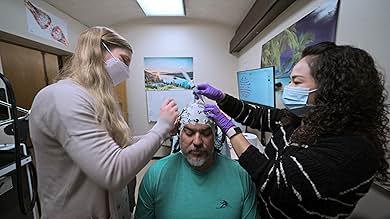
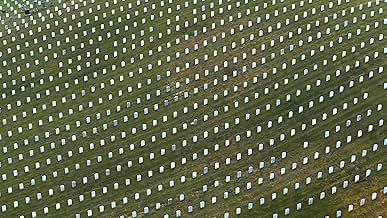
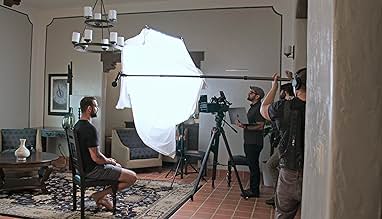
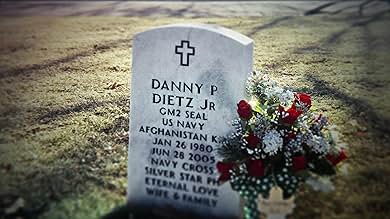
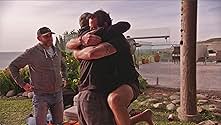
Highly decorated Navy SEAL Marcus Capone struggles with PTSD after returning from Afghanistan. His wife finds hope in psychedelic therapy. They embark on providing access to this treatment f... Read allHighly decorated Navy SEAL Marcus Capone struggles with PTSD after returning from Afghanistan. His wife finds hope in psychedelic therapy. They embark on providing access to this treatment for other veterans battling mental health issues.Highly decorated Navy SEAL Marcus Capone struggles with PTSD after returning from Afghanistan. His wife finds hope in psychedelic therapy. They embark on providing access to this treatment for other veterans battling mental health issues.
Brian Losey
- Self - U.S. Navy
- (as Admiral Brian Losey)
Patsy Dietz-Shipley
- Self
- (as Patsy Dietz)
Nolan Williams
- Self - Director, Stanford Brain Stimulation Lab
- (as Dr. Nolan Williams)
Kirsten Cherian
- Self - Clinical Psychologist, Stanford Brain Stimulation Lab
- (as Kirsten Cherian PhD)
Chris Maddox
- Self - U.S. Navy SEAL
- (archive footage)
Joshua Harris
- Self - U.S. Navy SEAL
- (archive footage)
Joe Hudak
- Self - U.S. Navy SEAL
- (archive footage)
Ronald Beecroft
- Self - U.S. Navy SEAL
- (archive footage)
Elias Kfoury
- Self - U.S. Navy SEAL
- (archive footage)
Hebert Daniels
- Self - U.S. Navy SEAL
- (archive footage)
Jeff Wettengel
- Self - U.S. Navy SEAL
- (archive footage)
7.8475
1
2
3
4
5
6
7
8
9
10
Featured reviews
Worth watching
I can understand why some people have given this documentary a low rating-though I don't agree. The first half is genuinely captivating, especially hearing directly from the SEALs. The second half, however, shifts into psychedelic therapy, and I'll admit-it's definitely strange. At times it almost looks like some kind of voodoo magic. I get why that might turn some viewers off.
That said, anyone who's experienced EMDR for PTSD knows that can seem pretty weird too-but it works. I don't fully understand how psychedelic therapy could have the effects it claims, but I'm willing to believe it's possible. Overall, I think the film is worth watching, and I hope we'll see more peer-reviewed research in the future to support the powerful testimonials shared here.
I hope this film reaches other veterans struggling with PTSD-and that it might help them find the kind of healing they deserve.
That said, anyone who's experienced EMDR for PTSD knows that can seem pretty weird too-but it works. I don't fully understand how psychedelic therapy could have the effects it claims, but I'm willing to believe it's possible. Overall, I think the film is worth watching, and I hope we'll see more peer-reviewed research in the future to support the powerful testimonials shared here.
I hope this film reaches other veterans struggling with PTSD-and that it might help them find the kind of healing they deserve.
Honest and raw. 10/10
Anyone who's experienced Traumatic Brain Injury will appreciate the delicate way in which this documentary is offering an insight into a brain that is stuck in reverse and can't move forward. I am hopeful for these new techniques and left feeling a deep admiration for the SEALs, their wives and the doctors who try to help out such a life-crippling, life-altering injury. Thanks for wanting to share this documentary.
More Lost at Home Than on the Battlefield
I was deeply moved by this documentary. It brings to light the silent catastrophe of the challenges Navy SEAL veterans face after their service. One number struck me profoundly: 4.3 suicides for every person killed in combat. That alone is a stark, horrifying testament to the invisible wounds carried by these extraordinary individuals.
I am immensely grateful to the veterans who agreed to participate and share their experiences. Watching them, I was struck again and again by how similar their struggles are and how, despite the best therapeutic efforts, trauma of this magnitude often leaves people powerless. These are exceptional people with exceptional skills facing the very worst imaginable, and the consequences of that clash are, unsurprisingly, devastating. It doesn't take a doctor to understand that - yet so few outside the military seem to realize it. That, to me, is the real scandal.
The documentary also highlights an experimental psychedelic treatment. While I find this path fascinating and appreciate its historical roots in traditional shamanic practices, it's important to be critical. The film sometimes feels like an infomercial. There is no control group, the placebo effect is untested, and such treatments are not without serious risks - bad trips can occur. It is not a therapy for everyone. We must also be cautious of commercialization; if pharmaceutical companies and opportunists get involved, this promising avenue could be industrialized and exploited, creating new problems.
That said, the documentary is a gift. Its portrayal of courage, vulnerability, and the often unseen cost of extraordinary service is invaluable. Everyone, whether in psychiatry, psychology, or simply a compassionate viewer, should watch it. If it's not your thing, that's fine - you can pass. But this is a gift worth opening, even if just to witness the reality faced by these remarkable veterans.
I am immensely grateful to the veterans who agreed to participate and share their experiences. Watching them, I was struck again and again by how similar their struggles are and how, despite the best therapeutic efforts, trauma of this magnitude often leaves people powerless. These are exceptional people with exceptional skills facing the very worst imaginable, and the consequences of that clash are, unsurprisingly, devastating. It doesn't take a doctor to understand that - yet so few outside the military seem to realize it. That, to me, is the real scandal.
The documentary also highlights an experimental psychedelic treatment. While I find this path fascinating and appreciate its historical roots in traditional shamanic practices, it's important to be critical. The film sometimes feels like an infomercial. There is no control group, the placebo effect is untested, and such treatments are not without serious risks - bad trips can occur. It is not a therapy for everyone. We must also be cautious of commercialization; if pharmaceutical companies and opportunists get involved, this promising avenue could be industrialized and exploited, creating new problems.
That said, the documentary is a gift. Its portrayal of courage, vulnerability, and the often unseen cost of extraordinary service is invaluable. Everyone, whether in psychiatry, psychology, or simply a compassionate viewer, should watch it. If it's not your thing, that's fine - you can pass. But this is a gift worth opening, even if just to witness the reality faced by these remarkable veterans.
In Waves and War A Raw and Humbling Look at the True Cost of Service
I don't usually write reviews but In Waves and War is one of the most humbling and emotionally honest programmes I have watched in years. It goes far beyond the battlefield. It shows real heroes breaking through the walls of toxic masculinity, confronting their inner demons, and allowing vulnerability to sit alongside courage. The series lays bare the true impact of war not only on the individuals who serve, but on the families who sacrifice right alongside them. It is raw, reflective, and deeply human. Waves and War is more than entertainment. It is a reminder of the cost of service and the strength it takes to heal. An absolute must-see.
Mending the Mind, Healing the Soul
This was a well done piece and my hope is that more attention will be given towards psychedelic therapy and research. I struggle with PTSD, TMI, anxiety/depression...i too have experienced the same healing through the use of psychedelics.
I know my review doesn't really inspire you to wanna see the film, but you should. It's a very moving, very relatable piece and the topic is definitely something that could use a second look. What do you have to lose when you have nothing else to lose.
Details
- Release date
- Country of origin
- Language
- Also known as
- In Waves and War: Ehemalige Navy SEALs in Therapie
- Production companies
- See more company credits at IMDbPro
- Runtime
- 1h 47m(107 min)
- Color
- Aspect ratio
- 16 : 9
Contribute to this page
Suggest an edit or add missing content