Beatles '64
- 2024
- 1h 46m
IMDb RATING
7.2/10
2.9K
YOUR RATING


The capture of the electrifying moment of The Beatles' first visit to the United States.The capture of the electrifying moment of The Beatles' first visit to the United States.The capture of the electrifying moment of The Beatles' first visit to the United States.
- Won 1 Primetime Emmy
- 2 wins & 5 nominations total





The Beatles
- Themselves
- (archive footage)

John Lennon
- Self
- (archive footage)


George Harrison
- Self
- (archive footage)


Ronnie Spector
- Self - The Ronettes
- (archive footage)


Terence Trent D'Arby
- Self - Artist
- (as Sananda Maitreya)
- …


7.22.9K
1
2
3
4
5
6
7
8
9
10
Featured reviews
A Nice Tribute To History And A Nostalgic Trip, But Not A Game-Changer
Beatles '64 might not be the most groundbreaking Beatles documentary, it's not Get Back, where newly unearthed Beatles footage is revealed in all its glory, instead, it serves more as a nostalgic throwback, revisiting an iconic and historic moment in the band's journey, while much of the footage has likely been seen by longtime fans, the upgraded quality offers a fresh perspective, the story that they told about the surrounding vibe and reaction was enough to keep the film going, i wish we could've got more of Paul and Ringo with Scorsese, that said, as a retrospective, it's still a fascinating look at a pivotal moment in Beatles history, as a fan, i thoroughly enjoyed it, though as a documentary, it's not the one that i would revisit nor the the one that i think was the most engaging, i would still much prefer the Eight Days A Week documentary by Ron Howard, but it's still nice to watch.
a really big show
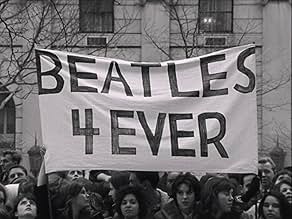
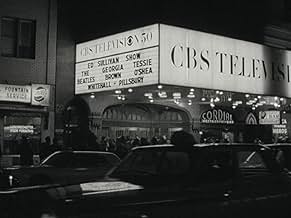
Greetings again from the darkness. It's been 60 years since 'Beatlemania' hit the United States. As impressive as Taylor Swift's ascendance has been, it pales in comparison to the cultural impact of the Fab Four those many years ago. Documentarian David Tedeschi, working with raw footage shot by brothers and renowned documentary collaborators, Albert Maysles and David Maysles, takes us back to those frenzied 14 days of The Beatles' first U. S. trip, including the infamous appearance on "The Ed Sullivan Show".
The footage is fascinating not just because it includes the band performing live on Sullivan, at the Washington Coliseum, and at Carnegie Hall, but rather because it puts us in the Plaza Hotel room where they stayed, and in the backseat of the cars as they are transported. We hear interviews and conversations, and gain some perspective on what these young men went through physically and emotionally and musically on their first trip across the pond. Girls were hyped for this group of four lads who certainly didn't fit the mold of traditional masculinity, while parents were caught off-guard.
What I found most thought-provoking of all was Tedeschi's presentation as history intertwined with one of the most impactful moments in U. S. history. President John F Kennedy was assassinated on November 22, 1963. The plane carrying The Beatles touched down on February 7, 1964. In plain language, Beatlemania struck as a nation mourned. You may view these as unrelated, but music is known to heal. Perhaps the frenzied young fan reactions to "I Want to Hold Your Hand" that caused the rift with parents and older Americans was just the diversion needed to help a country move forward. That first appearance on the Sullivan show took place on February 9.
Tedeschi supplements the video with a multitude of interviews. We hear from fans, other musicians, and the band members themselves ... even Marshal McLuhan. Surviving members Paul and Ringo were involved in the film's production, as were the estates of John and George. Archival interviews are included here - George from his own lawn, and John on a couple of TV talk shows. Paul is shown at the museum that featured Beatles photography. Yet, the interview that packs the biggest punch is likely that of Ronald Isley of The Isley Brothers. He acknowledges the impact of sales when The Beatles recorded "Twist and Shout", and he punctuates this with the fact that it did not lead to an invitation for The Isley Brothers to perform on the Sullivan show.
It's clear how much respect these four young lads had for black musicians and how much their music influenced The Beatles. They were excited to meet with and learn more about the key black musicians such as Little Richard or the Ronettes. Ronnie Spector is interviewed here and offers her recollection of the band, the music, and the times. Tedeschi's (and the Maysles') work offers an inside glance at what was happening at the time, and when we hear the wisecracking and see the raw energy of the boys, it helps to know that George (the youngest) would not turn 21 until the band returned to England. We get the feeling they believed this happened to them, not that they caused it. Perhaps they were at least partially right ... as the times, they were achangin'.
Streaming exclusively on Disney+ beginning November 29, 2024.
The footage is fascinating not just because it includes the band performing live on Sullivan, at the Washington Coliseum, and at Carnegie Hall, but rather because it puts us in the Plaza Hotel room where they stayed, and in the backseat of the cars as they are transported. We hear interviews and conversations, and gain some perspective on what these young men went through physically and emotionally and musically on their first trip across the pond. Girls were hyped for this group of four lads who certainly didn't fit the mold of traditional masculinity, while parents were caught off-guard.
What I found most thought-provoking of all was Tedeschi's presentation as history intertwined with one of the most impactful moments in U. S. history. President John F Kennedy was assassinated on November 22, 1963. The plane carrying The Beatles touched down on February 7, 1964. In plain language, Beatlemania struck as a nation mourned. You may view these as unrelated, but music is known to heal. Perhaps the frenzied young fan reactions to "I Want to Hold Your Hand" that caused the rift with parents and older Americans was just the diversion needed to help a country move forward. That first appearance on the Sullivan show took place on February 9.
Tedeschi supplements the video with a multitude of interviews. We hear from fans, other musicians, and the band members themselves ... even Marshal McLuhan. Surviving members Paul and Ringo were involved in the film's production, as were the estates of John and George. Archival interviews are included here - George from his own lawn, and John on a couple of TV talk shows. Paul is shown at the museum that featured Beatles photography. Yet, the interview that packs the biggest punch is likely that of Ronald Isley of The Isley Brothers. He acknowledges the impact of sales when The Beatles recorded "Twist and Shout", and he punctuates this with the fact that it did not lead to an invitation for The Isley Brothers to perform on the Sullivan show.
It's clear how much respect these four young lads had for black musicians and how much their music influenced The Beatles. They were excited to meet with and learn more about the key black musicians such as Little Richard or the Ronettes. Ronnie Spector is interviewed here and offers her recollection of the band, the music, and the times. Tedeschi's (and the Maysles') work offers an inside glance at what was happening at the time, and when we hear the wisecracking and see the raw energy of the boys, it helps to know that George (the youngest) would not turn 21 until the band returned to England. We get the feeling they believed this happened to them, not that they caused it. Perhaps they were at least partially right ... as the times, they were achangin'.
Streaming exclusively on Disney+ beginning November 29, 2024.
Women's Fantasies, Man Crying Over She Loves You, WHAT IS THIS?
It wasn't a bad documentary, but I didn't walk away feeling like I learned all that much. I was really looking for something that dove deep into the concert by concert of the 1964 tour. I was hoping to see a little bit of footage from each show and behind the scenes in each location. However, a lot of the focus was on New York and Washington with little to no focus on any other places that the Beatles traveled to. I would've loved to see their time in Seattle, San Francisco, Las Vegas, LA, Canada, the list goes on! It would've been interesting to learn more about the issues with segregation in Jacksonville, Florida, meeting Bob Dylan, and the 1.5 million dollars offered to them to perform an extra show in Kansas City. Instead the documentary is mostly about New York and Washington, featuring full length clips of a woman's fantasies with the Beatles, a man crying about the emotional connection to She Loves You, and a full length clip of Smokey Robinson's band performing a sssslllllooooowwww version of Yesterday. Why do I need to see this? I came here to watch something about the Beatles, and while it's OK to have guest speakers talk, they need to be short and RELEVANT. Martin Scorsese is a weird guy, which is probably why he made this weird documentary with some actually boring clips of the Beatles. There was far too much focus on Beatlemania (including the gory details of people's love affair of the boys), which is something that has been covered, like a million times. I don't think this whole thing is bad, I just wanted a focused and interesting watch, but there's not a ton here that I haven't already heard or seen. What is new is actually a little boring.
And that's coming from someone who loved: Get Back (10/10), Rooftop Concert (10/10), A Hard Days Night, and Help.
And that's coming from someone who loved: Get Back (10/10), Rooftop Concert (10/10), A Hard Days Night, and Help.
Interesting in parts, but mainly unnecessary.
Paul and Ringo were listed on the long list of producers to this documentary, and being the last of the Fab Four, provided some modern commentary. They certainly do not need the money, so its puzzling as to what they thought this added to The Beatles history. And that's what it is, just one year, all be it a milestone one in which they 'conquered America'.
Its a bit of a hotch potch of footage and interviews, both of the times and contemporary. Some of the live music performances were effectively used, the sound was good, and they provided short intervals of interest.
One for die hard Beatles fans only.
Its a bit of a hotch potch of footage and interviews, both of the times and contemporary. Some of the live music performances were effectively used, the sound was good, and they provided short intervals of interest.
One for die hard Beatles fans only.
The Beatles - Yeah Yeah Yeah
Since this documentary was produced for the Disney streaming channel you should probably assume that it's not for the super hardcore fans who are always grumpy and impossible to please. It's much more for the casual fan. And for young people (under 40 let's say) who know very little about The Beatles.
There are lots of "talking heads" interviews which are okay, but not really all that exciting to watch. Some are more interesting than others.
The old footage of The Beatles performing and not performing is the most enjoyable to watch. I saw quite a bit of footage that I had never seen before and there are some wonderful moments.
There are also some ugly moments, too. There's one moment when a New York City cop threatens to throw two teenage girls down a flight of stairs just because they aren't staying at the hotel. Yikes! Talk about police brutality! The girls were very peaceful and didn't deserve that.
There's also an ugly moment when some random male adult is telling young teenage girls that their love of The Beatles is "psycho-sexual" and that they are "sick". That guy seemed totally perverted! He was the one who was "sick". What a weirdo.
The musical performances sounded really good, especially listening with headphones.
Anyway, overall I enjoyed it quite a bit and would recommend watching it.
There are lots of "talking heads" interviews which are okay, but not really all that exciting to watch. Some are more interesting than others.
The old footage of The Beatles performing and not performing is the most enjoyable to watch. I saw quite a bit of footage that I had never seen before and there are some wonderful moments.
There are also some ugly moments, too. There's one moment when a New York City cop threatens to throw two teenage girls down a flight of stairs just because they aren't staying at the hotel. Yikes! Talk about police brutality! The girls were very peaceful and didn't deserve that.
There's also an ugly moment when some random male adult is telling young teenage girls that their love of The Beatles is "psycho-sexual" and that they are "sick". That guy seemed totally perverted! He was the one who was "sick". What a weirdo.
The musical performances sounded really good, especially listening with headphones.
Anyway, overall I enjoyed it quite a bit and would recommend watching it.


Did you know
- TriviaIn a 2024 interview with Variety, David Tedeschi spoke about some of the previously unseen footage and one interview in particular that surprised him: "That Harlem footage had never been seen before. So you have various reactions from young, black teenage girls and boys, and a few older people, and of course you have these young men in the record store. The one guy says, 'It's just disgusting the way they play that music over and over again. I like Miles Davis. I like John Coltrane.' But it was sort of interesting the way the teenage girls in Harlem just loved The Beatles, loved their hair, loved their music. That to me was a surprising thing, because of course the civil rights movement was going on. Of course I knew that later on when they actually toured the States, they refused to play before segregated audiences. But when we decided to interview Smokey Robinson, I didn't expect him to say everything that he said. One of the things was that the Beatles were the first white artist of their magnitude that said they loved and learned from black music and sang black music. We have several people, from David Lynch to Smokey, talking about the power of music, I thought in a very beautiful way. And when Smokey says in regards to the audiences being desegregated, that it gave kids a common love and that it was the power of music that literally overcame the barrier that was set up between the white audience and the black audience, I thought that was really a wonderful thing for him to say, and unexpected."
- Quotes
Self - Writer: It was so visceral, the reaction to The Beatles' music. You know, something we couldn't explain in words. That's why we screamed, because it was just coming out of some non-verbal place.
- ConnectionsFeatures The Ed Sullivan Show: Meet The Beatles (1964)
Details
- Runtime
- 1h 46m(106 min)
- Color
- Sound mix
- Aspect ratio
- 16:9 HD
Contribute to this page
Suggest an edit or add missing content