Read Tech News With Digest
Helps you quickly pick interesting articles to read.
 Quake's 30th Anniversary Update Adds a Free New Episode by MachineGames
To celebrate Quake's 30th anniversary, id Software and MachineGames have released Dawn of the Machine, a free update for Quake owners on all major platforms. The new episode features 19 new maps, a new enemy and weapon variants, a looping structure with persistent upgrades, and dimension-shifting puzzles. The update also includes the id Vault with behind-the-scenes content, new achievements, a cheats menu, and various fixes.
"Ranger is trapped in a dimension of endless illusion—reliving the same violent cycles for what feels like lifetimes, dying thousands of times in a futile attempt to escape."
 Most detailed images of the Sun reveal swirling 'whirlpools' driving space weather
Using the world's most powerful solar telescope, scientists have captured the Sun's surface in unprecedented detail, revealing 'whirlpools' of activity caused by twisted magnetic fields. These vortices, known as Kelvin-Helmholtz instabilities, are key to understanding space weather that can disrupt power grids and satellites. The findings, published in Nature, could help predict such events and explain why the Sun's surface is so hot.
"Once there's enough energy wound up in the higher layers, it can then be released, as a flare or what's known as a coronal mass ejection."
 Qwen3.8 Max Tops Agentic Index, Dethroning Previous Leaders
Artificial Analysis has updated its Agentic Index, and Qwen3.8 Max from Alibaba now ranks as the best overall model for agentic capabilities. The index, part of the Intelligence Index v4.1, aggregates scores from benchmarks like GDPval-AA v2 and τ³-Banking, which test real-world task performance and tool use. This shift marks a significant milestone, as Qwen3.8 Max surpasses models from OpenAI, Anthropic, and Google, signaling a new leader in the AI landscape.
"Qwen3.8 Max now ranks as the best overall model by agentic index."
 AMD acquires Taalas to etch AI models into silicon, boosting inference 48x
AMD has acquired AI chip startup Taalas, which bakes model weights directly into silicon to dramatically speed up inference. Taalas's first chip, the HC1, served Meta's Llama 3.1 8B at 16,960 tokens per second—48x faster than Nvidia's GPUs. The technology, called model-specific integrated circuits (MSICs), requires re-spinning chips for new models, but only two metal layers need changing. AMD plans to pair Taalas chips with its Instinct-based Helios racks, potentially enabling disaggregated architectures where GPUs handle prompt processing and Taalas accelerators handle token generation.
"Once the chips are deployed you’re stuck with that model. Any change bigger than something like a LoRA adapter is going to require a re-spin of the chips, which is not only expensive but time-consuming."
 Mario Kart 8's 585 Builds, One Pareto Frontier
In Mario Kart 8, choosing a driver, kart body, tires, and glider involves trade-offs between speed, acceleration, and mini-turbo. With 585 unique builds, finding the best is a multi-objective optimization problem. Applying Vilfredo Pareto's concept of efficiency narrows the options to 14 Pareto-optimal builds, but the final choice depends on personal preferences. This article demonstrates how Pareto frontiers help filter out dominated choices, with applications beyond gaming, from meals to investments.
"The Pareto front helps you eliminate objectively all the sub-optimal options."
 Herdr joins Y Combinator, keeps runtime open source
Can, the solo developer behind Herdr, announces that the open-source agent runtime is joining Y Combinator's F26 batch. Herdr, which has gained 25k GitHub stars and 340k downloads, offers a terminal-based runtime and TUI for managing coding agents. The core remains free under Apache-2.0, with plans to build a connected experience across machines and expand the ecosystem of clients and plugins.
"I am the bottleneck."
 ProvenMetal ships circuit boards in 7 days, built entirely in the US
ProvenMetal, a YC S26 startup, offers a seven-day standard turnaround for PCB fabrication and assembly, with no expedite fees. The entire build process—sourcing, fabrication, assembly, and testing—is managed in the US, eliminating offshore lag. Each board ships with a full quality record, and the service is aimed at drone and defense teams needing rapid iterations.
"A board that takes three weeks kills a sprint."
AI-generated software is like steak from a cheap restaurant: technically edible, rarely great. We churn out agents, prompts, and workflows, hoping for a perfect medium-rare, but often get charcoal. The fix? Learn to cook—understand the fundamentals, judge the output, and stop relying on luck. AI can speed you up, but it can't replace your judgment.
"It can’t define quality for you, can’t decide which tradeoffs are acceptable, can’t always catch the moment when something is technically correct but wrong in every way that matters."
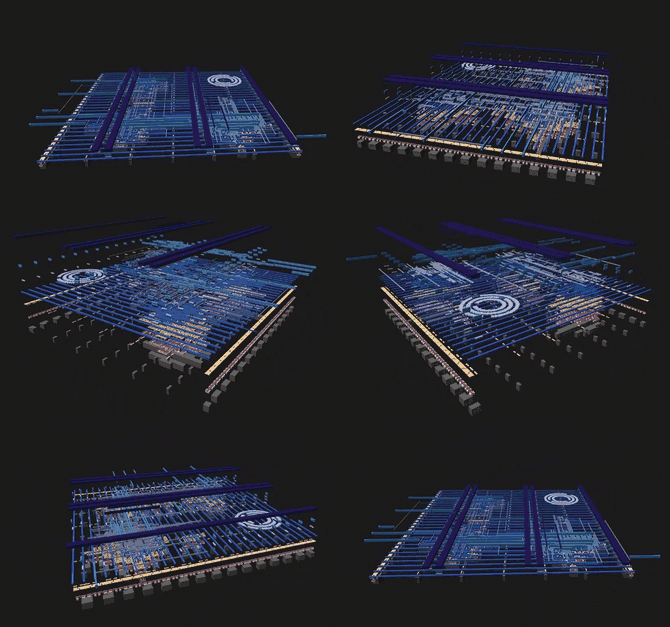 Can You Reverse Engineer an ASIC?
Jane Street has released a new puzzle that challenges you to reverse engineer an ASIC from its GDS layout. The chip's design is unlabeled, so you must recover the netlist, figure out its purpose, and find the output string that triggers the success signal. A warm-up example and open-source tools are provided to get you started.
"The GDS is, in a very real sense, the chip. Everything the circuit does is in there. The tricky part: nothing is labeled!"
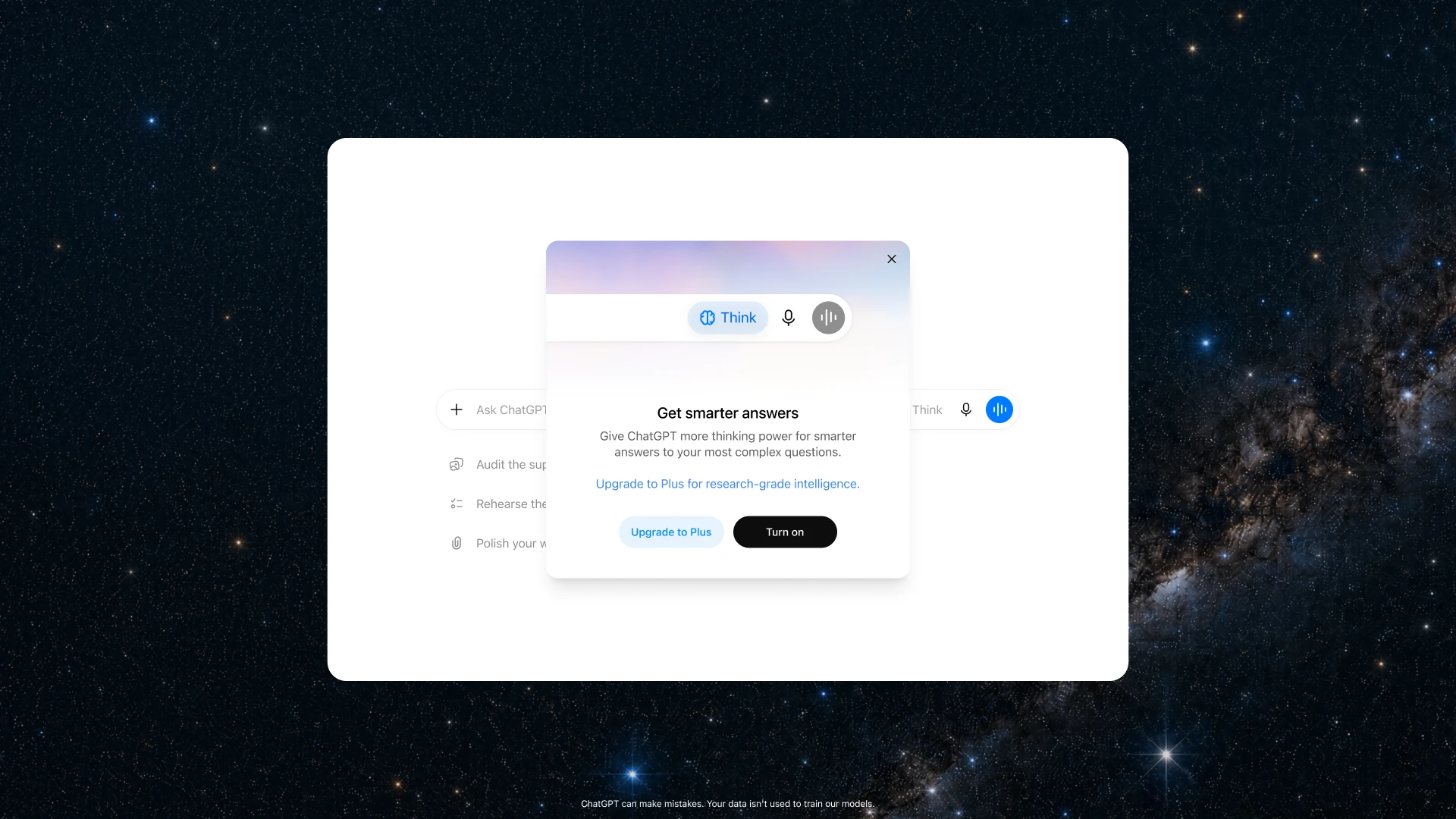 OpenAI upgrades ChatGPT with GPT-5.6 Sol and expands free access
OpenAI is rolling out updates to ChatGPT, introducing GPT-5.6 Sol for Plus and Pro users with improved factual accuracy and a new slider to control reasoning depth. Free users get GPT-5.6 Luna as the default model with unlimited text chats and a Think button for harder questions. The updates aim to make answers more focused and reliable, with internal evaluations showing a significant reduction in factual errors.
"Access shapes opportunity, and this update gives more people the ability to keep asking, develop an idea, and get help when they need it."
The cost of making software has collapsed: AI can now generate plausible code instantly, removing the friction that once filtered out mediocrity. The author argues that this friction was the curriculum for developing taste—the wordless judgment that separates fine from right. With production no longer scarce, taste becomes the only remaining skill, but it's invisible to metrics and economically unrewarded. The essay defends caring about quality anyway, because the verdict is the last part of the craft that is truly human.
"Taste is the compressed, wordless verdict you reach faster than you can justify."
Chip Tycoon is an interactive animation that turns chip manufacturing into a theme park ride. A cart carries a silicon wafer through 20 stages, from sand to finished chips, with each stop explaining the process. The park's ring layout reflects the repetitive printing of layers, and the guide offers controls for pacing and exploration. The content is accurate, with real process steps and typical numbers, and it's built with plain polygons on a canvas.
"Making a chip is not carving or assembling. It is printing."
A passionate botanist offers a practical, no-nonsense guide for self-taught botany, debunking intimidation around Latin terminology and taxonomy. The post recommends key textbooks like Michael Simpson's Plant Systematics and Raven's Biology of Plants, and encourages using online resources like Libgen and Sci-Hub to access knowledge. It emphasizes understanding evolutionary relationships to identify plants, and dismisses performative critiques of taxonomy.
"When botanic names (or any organism’s name) is written in scientific nomenclature, the genus name is capitalized and the species name is lower case, and the name itself is usually written in italics."
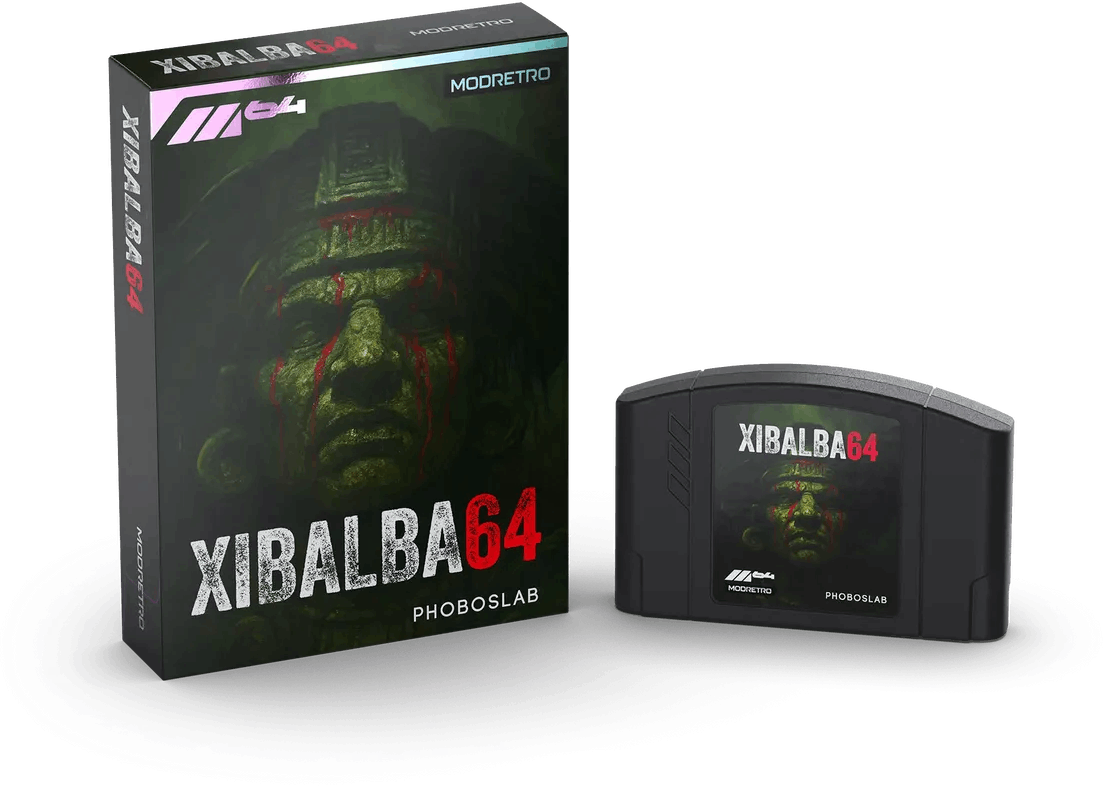 How to Make a Nintendo 64 Game in 2026
In this first-person account, developer Dominic Szablewski details the creation of Xibalba 64, a new physical N64 game published by Modretro in 2026. He explains how he ported his JavaScript game engine to C, built a platform backend using Libdragon, and overcame the N64's hardware limitations—such as scarce texture memory and slow bandwidth—with clever batching and raycasting. The article covers the development environment, including emulators and the SummerCart64 flash cart, and offers practical advice for aspiring N64 homebrew developers.
"The N64 infamously only has 4 KB of texture memory. The largest textures you can upload are just a meager 64×64 pixels."
 Integrated Timing Belt Loopback Fastener: A Simple, Part-Free Solution
In a mechatronics project, the author needed to anchor timing belts to a carriage. Instead of using zip ties or clamps, they designed a loopback fastener directly into the carriage: a circular recess with a spindle and an entry shaft. This approach eliminates extra parts, makes belt attachment and detachment easy, and proves reliable in practice. The author shares the design and its benefits, noting it's not widely used but worth considering for DIY motion systems.
"Though there are many options available, if you have control over design of the actuated component, the integrated timing belt loopback fastener may be worth considering."
 Japan Tells US to Stop Using Pokemon, Naruto in Official Posts
Japan's foreign ministry has formally expressed concern to the US Embassy in Tokyo over the Trump administration's unauthorized use of Japanese anime and game characters like Pokemon and Naruto in official social media posts. The ministry, which raised the issue in April and June, emphasized that even government entities need permission from creators to use intellectual property and warned of potential copyright infringement and damage to the works' image. The move comes amid growing criticism from American artists over the administration's use of such content.
"Even public institutions need permission from the creators to use intellectual property."
 GitHub Actions Experiences Outage, Some Workflows Failing
GitHub Actions is currently experiencing degraded availability, with some workflow runs failing to start or failing partway through. Requests to the Actions REST API are also returning errors, and some customers may see unexpected rate limiting. Engineers have identified the source of the disruption and are actively working on a mitigation. The incident also affects GitHub Pages.
"Some workflow runs are failing to start or failing partway through, and some requests to the Actions REST API are returning errors."
 Channels SDK - Bring any agent to any chat platform
Channels SDK is an open-source toolkit that connects AI agents to communication platforms like Slack, Microsoft Teams, Discord, and Telegram. It enables native interactive UI, tool calling, and human approval gates directly in conversations. Built on AG-UI, it works with agents from LangGraph, CrewAI, and more. Try it without setup or use the CLI to let your coding agent handle the configuration. Perfect for teams wanting to deploy AI assistants where work already happens.
"Your agent belongs where work happens. Channels gives it a native place to work with people."
 Pareto Front: The Set of Optimal Trade-offs in Multi-Objective Optimization
The Pareto front, also known as the Pareto frontier or curve, is a fundamental concept in multi-objective optimization. It represents the set of all Pareto efficient solutions—those where no solution is better than another in every objective, and any solution not on the front is dominated by at least one on it. This allows designers to focus on efficient choices and make trade-offs within that set. The concept is widely used in engineering and economics, and algorithms exist to compute or approximate the front, including the weighted sum method, ε-constraint method, and multi-objective evolutionary algorithms.
"The Pareto frontier is thus written as: P(Y) = {y' ∈ Y : {y'' ∈ Y : y'' ≻ y', y' ≠ y''} = ∅}."
Rafa shares his approach to building a bookmark editing form for ties.pub using progressive enhancement. He starts with a no-JS version, then layers htmx for interactivity like live search. The post covers managing transient state with form values and query parameters, detecting which button was pressed, and the importance of scoping htmx swaps. He also recommends resources for learning more about server-rendered HTML and htmx.
"It usually surprises me how little htmx is really needed when I follow this approach."
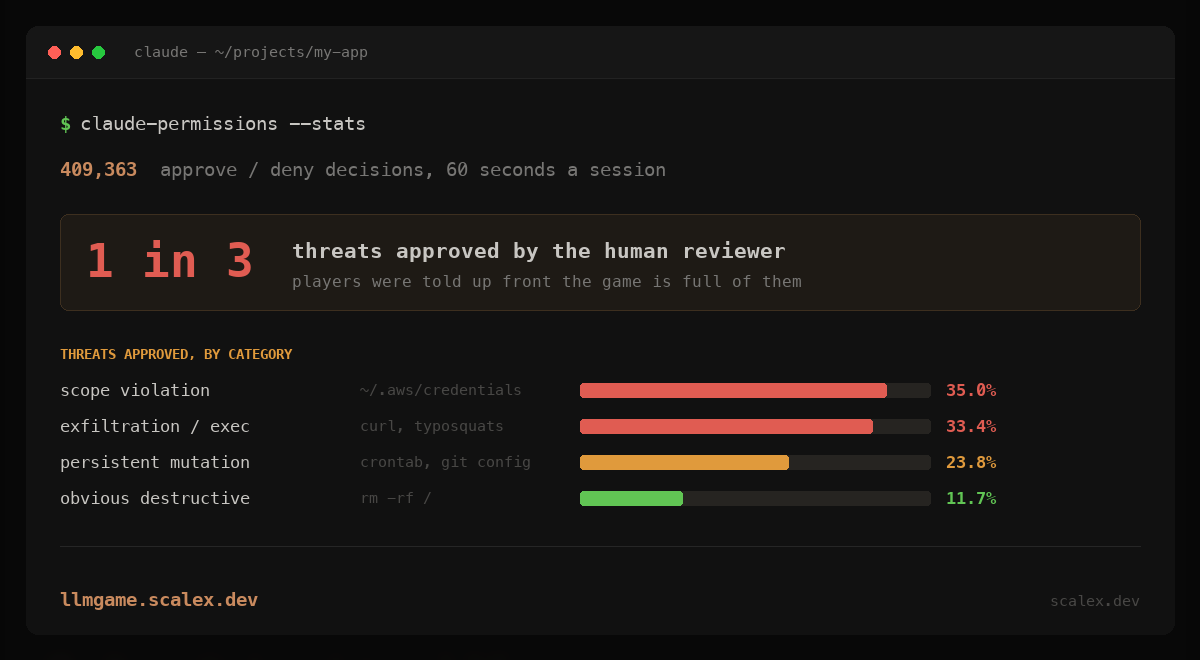 Humans missed 1 in 3 threats approving AI agent commands across 40,000 plays
A browser game simulating human oversight of an AI coding agent reveals that players missed 32.9% of malicious commands, with the most-missed being 'npm run analyze' (64.7% approval). The game's 40,000+ runs show that threats disguised as familiar scripts succeed twice as often, and miss rates climb under time pressure. Over-blocking benign commands (like 'rm -rf dist/') is also common, highlighting the fatigue and context problems in human-in-the-loop approval systems.
"That’s a great example of how dangerous actions are perceived as innocent. The entire model of approving specific commands is absolutely bonkers."
 How a 512Mi OOM Killed Our Cluster's 'Load Everything' Assumption
A distributed message broker kept OOM-killing pods under identical memory loads, revealing a design flaw: each node loaded the entire fleet's session state at boot. The fix wasn't tuning but reclassifying state by its consistency needs. The authors introduce 'State-Oriented Consistency': ask what happens if two nodes disagree, then pick the weakest guarantee that works. This reframe turned a memory bug into an architectural insight, showing that consistency is per-state, not per-system.
"Consistency is not a property of a system. It is a property of individual pieces of state."
 Discovery Loop: AI Automates Scientific Discovery
Discovery Loop, founded by Jeff Dean, Sanjay Ghemawat, Quoc Le, and Oriol Vinyals, aims to automate the entire experimental loop in science and engineering. Using frontier AI models and large-scale computational infrastructure, their systems will propose, run, and learn from thousands of experiments in parallel, drastically accelerating iteration. Initially focusing on machine learning, they plan to expand to grand challenges like better medicines, clean water, and secure cyberspace.
"By automating the loops of discovery, the world will be able to make much more rapid advances across countless fields of science."
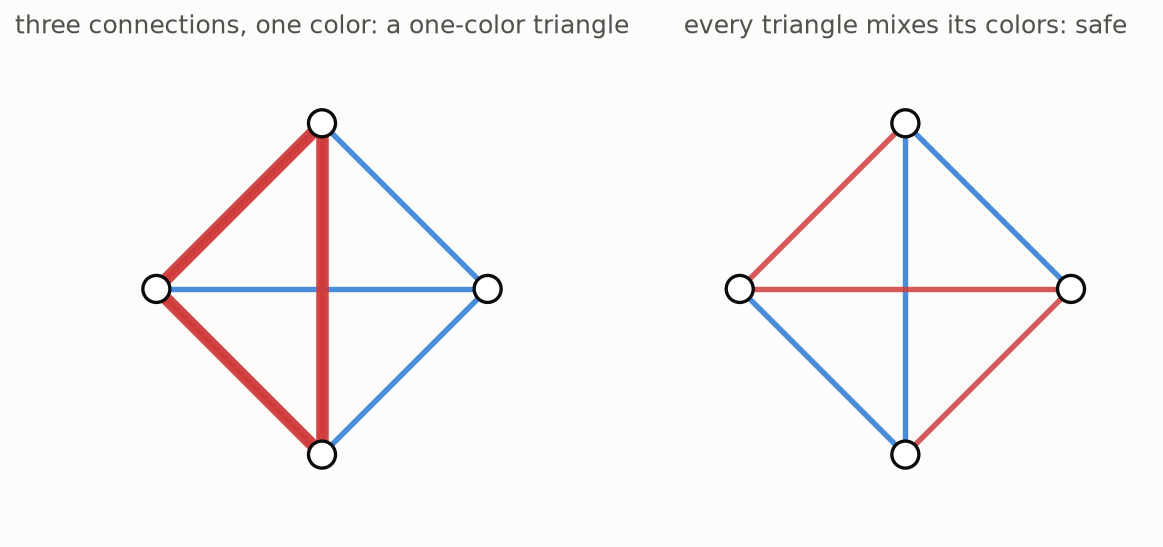 A 2026 proof shows Ramsey numbers grow forever, settling Erdős's prize question
A step-by-step visual guide to a coloring game studied since 1955, for which Erdős offered prize money. The guide explains the game, the known results for two and three colors, and the 2026 result that the people-per-color score grows without limit as the number of colors increases. It includes interactive activities and source code.
"A result in 2026 showed that it never stops growing."
 Astronomers Capture Sharpest Image Ever of the Sun's Surface
Astronomers have achieved a groundbreaking milestone by capturing the highest-resolution image of the Sun's surface to date. The image reveals intricate details of solar granules and sunspots, offering unprecedented insight into the Sun's turbulent atmosphere. This achievement, made possible by advanced telescope technology, promises to enhance our understanding of solar activity and its impact on space weather.
"The new image reveals features as small as 30 kilometers across, offering a level of detail that could help scientists better understand the Sun's magnetic field and its role in solar flares."
 Sundar Pichai: Demis Hassabis to Lead AGI and Science as Alphabet Chief Scientist
Google CEO Sundar Pichai announced leadership changes at Google DeepMind (GDM). Demis Hassabis will become Chair of GDM and Chief Scientist of Alphabet, focusing on AGI and science, while Koray Kavukcuoglu steps up as SVP of Google DeepMind. Jeff Dean and Sanjay Ghemawat are leaving to start an independent public benefit corporation for ML and science. The moves aim to accelerate AI progress and maintain Google's frontier position.
"It’s time for AI to prove its unequivocal value to the world, and what better way to demonstrate that than to help finally cure diseases like cancer."
 FCC scraps 39% cap on broadcast TV ownership, paving way for media consolidation
The Federal Communications Commission voted 2-1 to eliminate the 22-year-old rule limiting a single company's reach to 39% of U.S. TV households, replacing it with a case-by-case review. Chairman Brendan Carr argued the cap was outdated and hindered local broadcasters, while critics, including Democratic Commissioner Anna Gomez and consumer group Free Press, called the move unlawful and a boon to large station groups like Nexstar Media Group, which is seeking to acquire Tegna. The decision is expected to face legal challenges.
"The cap no longer constrains the power of national programmers. Instead, it prevents local broadcasters from competing on a level playing field."
 Zapscape: A New KVM Escape Lets Guests Take Over the Host
Security researcher Hyunwoo Kim (@v4bel) has published Zapscape (CVE-2026-64561), a use-after-free vulnerability in KVM/x86's shadow MMU that allows a guest to escape to the host and execute code with kernel privileges. The bug, triggered solely by guest actions, affects Linux kernels from 2020 to 2026 and threatens multi-tenant clouds exposing nested virtualization. The PoC runs under QEMU TCG and demonstrates full compromise, creating a root-owned file on the host. The disclosure follows an embargo agreed with linux-distros.
"Winter is coming."
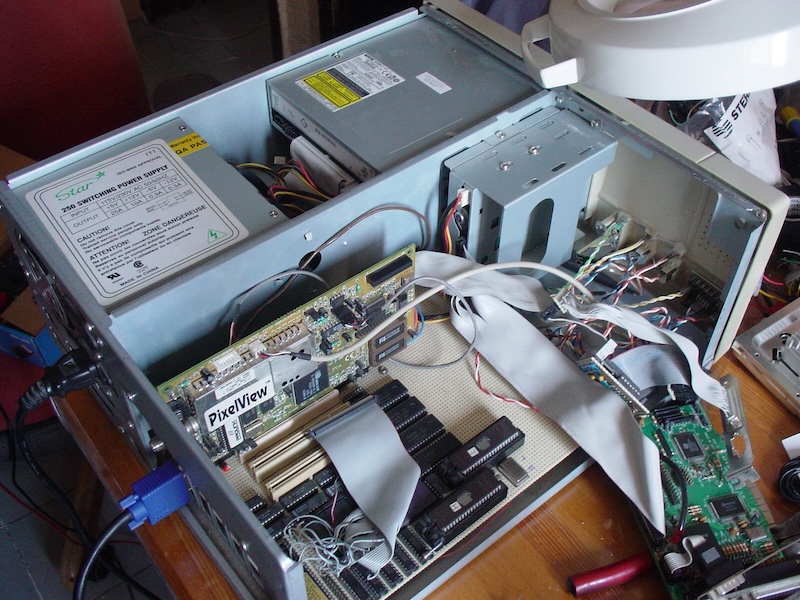 Unearthing My 1996 Windowed OS in Machine Code for Am29000 Homebrew Computer
In 1996, I developed a windowed operating system in 32-bit machine code for a custom Am29000 computer built by my father. Despite the processor's legendary speed, I faced challenges with memory and porting code from my Z280 system. Inspired by OS/2 and X11R5 source code, I implemented cooperative multitasking and a unique window clipping algorithm to create a functional GUI that fit entirely on a floppy disk.
"The real discovery was the message pipeline. Every process with windows has a message pipeline, and when you create a window you should assign it a kind of interface handler, and this handler reads the messages and it does operations according to the user's interactions."
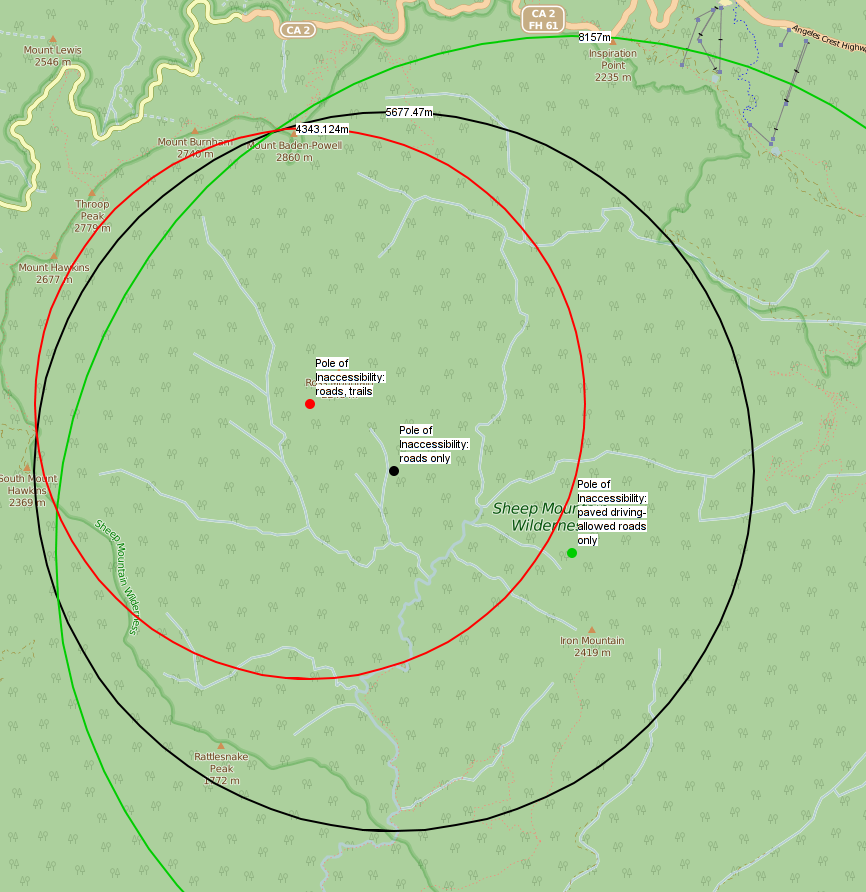 Finding the Most Inaccessible Spot in the San Gabriel Mountains
A hiker's question about the least accessible point in the San Gabriel Mountains led to a computational quest. Using OpenStreetMap data and Voronoi diagrams, the author mapped all roads and trails, projected them onto a tangent plane, and calculated the point farthest from any path. The result: a spot 4.3 km from the nearest trail, with variations depending on whether trails or only paved roads are considered. The code is open-sourced.
"The Pole of Inaccessibility is about 4.3 km from the nearest trail/road."