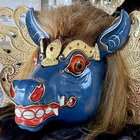
The traditions of shadow puppetry that give this album its name- Wayang Kulit, Nang Talung, Hnget pyaw pwe, and more- cast myth and memory in silhouette. Figures flicker against stretched cloth, half-revealed, half-revelation. In the same way, Shadows lets stories unfold in partial light- melodies as silhouettes, harmonies as lanterns, casting long echoes from stage to ear.
Its sound recalls instruments that once marked sacred time: gongs whose resonance outlived their makers, hushed laments once intoned for emperors and sultans, puppet masters animating stories of the divine with cloth and light. This music carries the weight of unspoken histories: migrations, rituals, empires, and dissolutions. It is not documentary, nor strictly homage. It is a living echo.
The compositions in Shadows follow sonic threads that crisscross Southeast Asia’s classical and folk traditions. Some appear plainly: a sindhen tracing high Javanese, rhythmic cycles drifting slowly before doubling, a rebab moving through pelog or slendro. Others emerge slowly, like a remembered tune with no name. Beneath the surface, older resonances linger- echoes of raga or maqam-like modality, shared rhythmic logics, aesthetics shaped by long histories of movement between subcontinent, peninsula, and, archipelago. These musical lineages are not static. They shift, stretch, and fold into one another. Over generations, they have adapted and endured, creating an aural history that is felt rather than archived—a history carried by breath, string, skin, and air.
This sequel to Fire Lapping at the Creek draws from experiences gathered over winters and monsoon season spent in Thailand, Indonesia, Malaysia, Singapore, and Vietnam between 2022 and 2023. Rather than documentation, the intention was immersion: sharing meals, learning phrases, attending ceremonies, and studying with local artists. Field recordings, informal lessons, and ambient moments all inform the compositional fabric—each sound a gesture of presence and attentiveness.
These are sounds shaped by movement, memory, and place. Shadows does not answer. It listens—and in listening, something unspoken takes shape.
credits
released June 27, 2025
Alec Goldfarb- Compositions, Guitars
Agnesia Nandasari Nuringtyas- Voice
Daniel Hass- Cello
DoYeon Kim- Voice, Gayageum
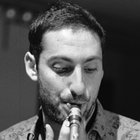
Gideon Forbes- Soprano Saxophone, Nay
Mat Muntz - Contrabass
Rani- Voice
Steven Crammer- Drumset, Tabla
T. Nama- Keyboards and E. Vibraphone (production assistance from Phillip Golub)
Yustiawan Paradigma Umar- Gender Sandikala
Roni Driyastoto- Rebab
Mixed by Alec Goldfarb and Sam Minaie
Mastered by Sam Minaie at birdFood studios
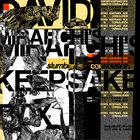
Artwork by Chapel Designs (Sri Lanka)
Released on Long Echo Records
Produced by Alec Goldfarb
#8 and #9 coproduced by Yustiawan Paradigma Umar
All compositions by Alec Goldfarb (Alec Goldfarb Music, BMI) except where noted.
#3, #8, and #9 lyrics by Agnesia Nandasari Nuringtyas / traditional, vocal melodies by Agnesia Nandasari Nuringtyas and Alec Goldfarb
#3 melody and lyrics by Rani, original recording property of Nonesuch Records/ Warner Music Group
#5 and #9 rebab melodies by Roni Driyastoto and Alec Goldfarb
All Nay melodies by Gideon Forbes with direction from Alec Goldfarb
#7 by DoYeon Kim and Alec Goldfarb, based on an improvisation by DoYeon Kim.
Thank you to Kengchakaj Kengkarna, Dion Nataraja, Teewin Houyhongtong, Anupam Shobhakar, the incredible musicians on this album, the many kind and generous people I met on my travels, Irene and Lili Han, and always Keith, Linda, Kylie, Brynn, Mindy, Jake. Thanks to Elliot Cole for his help, encouragement, and generosity in believing in this music and releasing it into the world on Long Echo Records. A special thanks to Phillip Golub for his help crafting T. Nama’s Keyboard and E. Vibraphone sounds. And another special thanks to Yustiawan Paradigma Umar for all of his help during my time in Jogja.
Alec Goldfarb (b. 1995) is a Brooklyn-based guitarist and composer blending jazz, experimental, and Hindustani classical
music. A DownBeat award-winner, his work explores hidden connections between sound cultures, described by The Wire as “full of ingenious juxtapositions."...more