Friday, July 4, 2025
Chapter 86 / A History of German Expressionist Movie Posters and Afterward
Thursday, August 24, 2023
The difficult reconciliation of the memory of World War II with mass tourism in the Netherlands
Residents of the Dutch estate portrayed in the TV series ‘Band of Brothers,’ produced by Steven Spielberg and Tom Hanks, will install a fence and charge for photos to stem the flow of tourists
In uniform, with his helmet resting on his side and a slight smile on his face. This is how U.S. Major Richard Dick Winters posed in 1944 under the archway at the entrance to an estate in the east of the Netherlands. The complex is called Schoonderlogt and is located in the village of Elst, in the Betuwe region. The Allied troops called the area The Island and the fighting there lasted 198 days during World War II. Winters and his men, members of Easy Company, transcended the realm of military memory thanks to a television series released in 2001: Band of Brothers (HBO), co-produced by filmmaker Steven Spielberg and actor Tom Hanks. British actor Damian Lewis plays Winters, and the image of him, posing in the same place as the U.S. officer, has become so famous over time that the owners of the property are going to install a fence and charge for photos to stem the flow of tourists.
Monday, March 20, 2023
Roger Waters threatens legal action over German concert cancellations
| Roger Waters |
Waters was accused of being ‘a widely known antisemite’ in Frankfurt council instruction to cancel concert, with other German cities also proposing cancellations
Ben Beaumont-ThomasThursday 16 March 2023
Roger Waters has said he will take legal action against city authorities in Germany over the threatened cancellation of concerts there, after the former Pink Floyd frontman was accused of antisemitism, which he denies.
Friday, December 3, 2021
'It’s a place where they try to destroy you' / Why concentration camps are still with us
| A "political education" camp in China's Xinjing province Photo by Greg Baker |
'It’s a place where they try to destroy you': why concentration camps are still with us
Mass internment camps did not begin or end with the Nazis – today they are everywhere from China to Europe to the US. How can we stop their spread?
Thursday 2 April 2020
At the start of the 21st century, the following things did not exist. In the US, a large network of purpose-built immigration prisons, some of which are run for profit. In western China, “political education” camps designed to hold hundreds of thousands of people, supported by a high-tech surveillance system. In Syria, a prison complex dedicated to the torture and mass execution of civilians. In north-east India, a detention centre capable of holding 3,000 people who may have lived in the country for decades but are unable to prove they are citizens. In Myanmar, rural encampments where thousands of people are being forced to live on the basis of their ethnicity. On small islands and in deserts at the edges of wealthy regions – Greece’s Aegean islands, the Negev Desert in Israel, the Pacific Ocean near Australia, the southern Mediterranean coastline – various types of large holding centres for would-be migrants.
The scale and purpose of these places vary considerably, as do the political regimes that have created them, but they share certain things in common. Most were established as temporary or “emergency” measures, but have outgrown their original stated purpose and become seemingly permanent. Most exist thanks to a mix of legal ambiguity – detention centres operating outside the regular prison system, for instance – and physical isolation. And most, if not all, have at times been described by their critics as concentration camps.
We tend to associate the idea of concentration camps with their most extreme instances – the Nazi Holocaust, and the Soviet Gulag system; genocide in Cambodia and Bosnia. But the disturbing truth is that concentration camps have been widespread throughout recent history, used to intern civilians that a state considers hostile, to control the movement of people in transit and to extract forced labour. The author Andrea Pitzer, in One Long Night, her recent history of concentration camps, estimates that at least one such camp has existed somewhere on Earth throughout the past 100 years.
Thursday, December 2, 2021
The Merkel Years / How the refugee crisis created two myths of Angela Merkel
| Angela Merkel by Matt Kenyon |
THE MERKEL YEARS
How the refugee crisis created two myths of Angela Merkel
Tuesday 21 September 2021
W
Saturday, March 21, 2020
Ten panoramas of cities in Germany
This is a guest post by Jörg Dietrich, an architecture and streetscape photographer whom I met in Leipzig last year. Being an avid fan of architecture myself, I was impressed with his portfolio of streetscapes of cities around the world and I asked if he would like to showcase some of his photography on Velvet Escape. I was thrilled when he agreed! In this post, Jörg presents his ten panoramas of cities in Germany.
1. Checkpoint Charlie, Berlin
The buildings at the former inner Berlin Checkpoint Charlie house a museum dedicated to the history of the divided city (Mauermuseum). The building on the right was created during the international building exhibition in Berlin (IBA) in 1984 and designed by the American architect Peter Eisenmann (*1932). The facade bears a GDR emblem as well as a copy of the last Kremlin-flag.
2. Kaiserstrasse, Frankfurt
Kaiserstrasse is one of the last remaining architecture ensembles from the Gründerzeit area in Frankfurt. However, even here we see the modern Frankfurt skyline in the background with the Gallileo tower on the right and the silver tower on the left.
3. Buntgarnwerke, Leipzig
Leipzig is the largest city in the German state of Saxony and has been an important trade fair, book publishing and industrial city. Following the fall of the Berlin wall, which started with demonstrations in Leipzig, it slowly regains its economic importance. Here we see a former industrial complex, turned into a modern living complex – once the largest architectural complex in Wilhelminian style in Europe.
4. Goliathstrasse, Ratisbon or Regensburg
The Goliathstrasse with the Goliathhaus in the middle are a part of the UNESCO world heritage old town of Ratisbon (Regensburg in German). Ratisbon had been an important Roman castle on the Danube river and is one of the oldest cities in Germany.
5. Kaufingerstrasse, Munich
The Kaufingerstrasse is the major shopping street in Munich, the Bavarian capital. In the back we see the Frauenkirche (exactly “Dom zu unserer Lieben Frau”), which is the seat of the Archbishop of Munich and Freising. The iconic building with a height of 98.50 metres is one of the tallest buildings in Munich.
6. Medienhafen, Düsseldorf
The Media harbour (German Medienhafen) in Düsseldorf was developed as a modern business district with some spectacular architecture since the 1990s. Düsseldorf is the capital of the German state Northrhine-Westphalia and has a population of about 600.000.
7. Brückenstrasse, Chemnitz
This complex at the Brückenstrasse is an iconic remnant of the GDR in Chemnitz, the third largest city in Saxony. Iconic because of the world’s second largest portraiture bust, depicting Karl Marx. The city was called Karl-Marx-Stadt for almost 40 years.
8. Frankenwerft, Cologne
A section of the Rhine shore in the old town of Cologne. Here the streets have been moved underground and the Rhine Garden was established. This image also shows the start of the Carnival season in Cologne with numerous people celebrating.
9. Markt, Werdau
An example of a small German town, this panorama shows the market square in Werdau. The dominating building is the town hall, inaugurated in attendance of the Saxon king in April 1911.
10. Holländischer Brook, Hamburg
Hamburg is Germany’s second largest city with a population of about 1.8 million people and its most important harbour, lying on the Elbe river. This panorama shows a part of the historic Speicherstadt area of the harbour, an extensive area of large storehouses.
Jörg Dietrich studied natural sciences in Bayreuth, London and Leipzig before turning towards cityscape and architecture photography.
By trying to create linear streetscapes he developed the project PanoramaStreetline, an archive producing and collecting linear city panoramas from all over the world.
Friday, March 20, 2020
Street art in Germany
By Keith JenkinsBest cities for street art in Germany
Friday, March 6, 2020
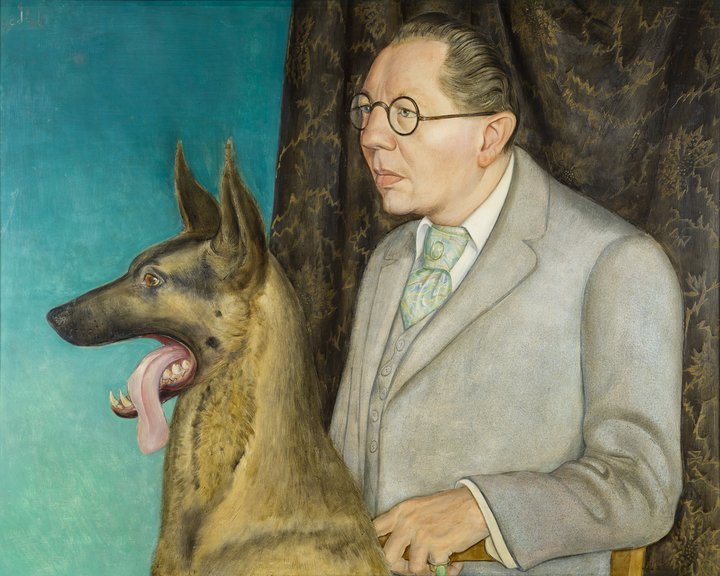
Otto Dix / Five things to know
| Otto Dix |
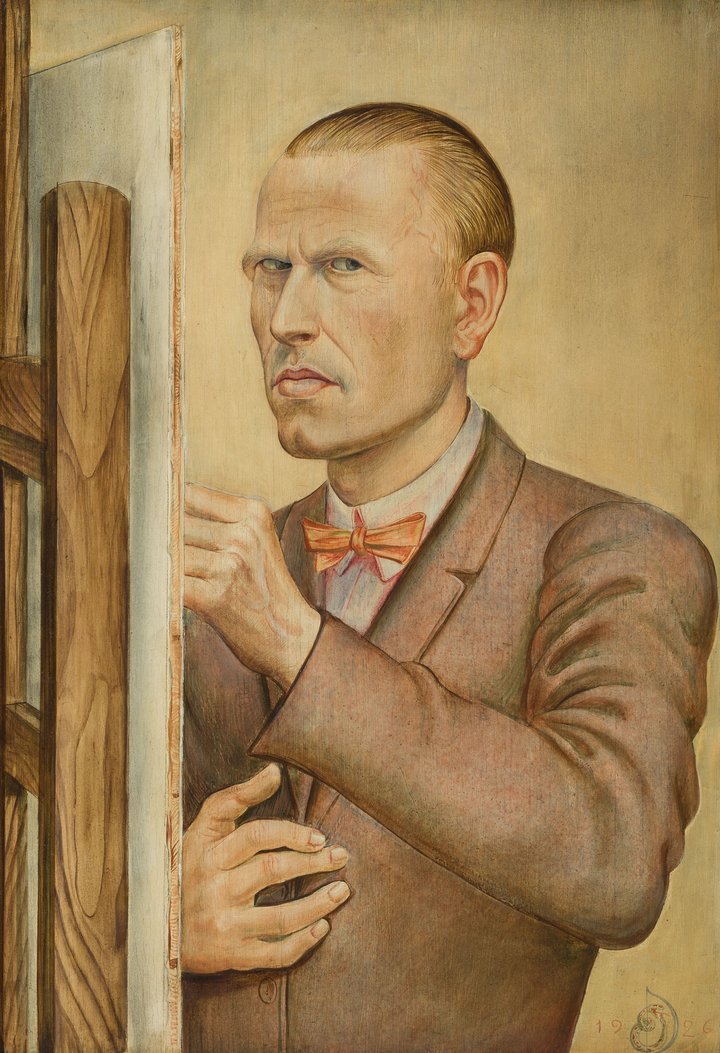
Five things to know: Otto Dix
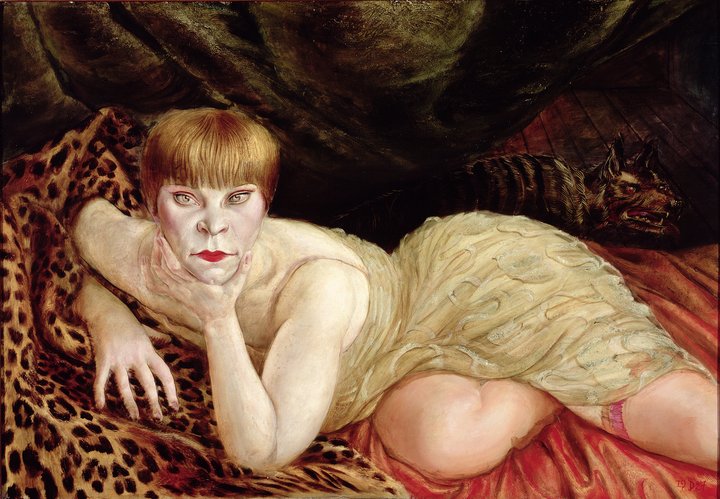
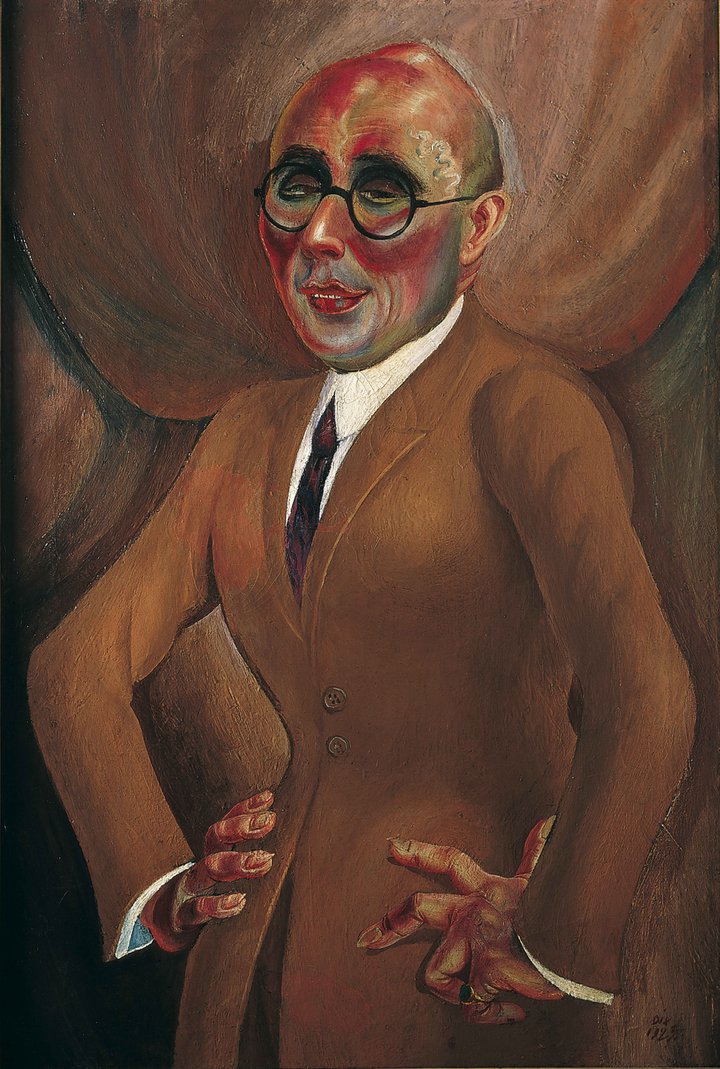
1. HE WAS A PORTRAITIST

Painting portraits is regarded by modernist artists as a lower artistic occupation; and yet it is one of the most exciting and difficult tasks for a painter.
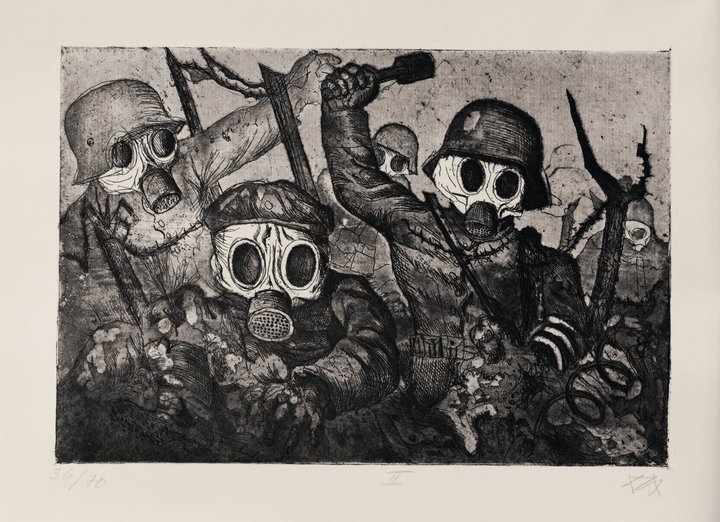
2. HE FOUGHT IN THE FIRST WORLD WAR

For years, [I] constantly had these dreams in which I was forced to crawl through destroyed buildings, through corridors through which I couldn’t pass. The rubble was always there in my dreams.
3. DIX TOOK INSPIRATION FROM THE OLD MASTERS

Dix did all the drawing in a thin tempera, then went over it with thin mastic glazes in various cold and warm tones. He was the only Old Master I ever watched using this technique.
4. HE PAINTED WHAT HE CALLED ‘LIFE UNDILUTED’

We want to see things completely naked, clear, almost without art. I invented the New Objectivity.
5. DIX AND THE NAZIS