

Chicago reporter P.J. McNeal re-opens a decade-old murder case.Chicago reporter P.J. McNeal re-opens a decade-old murder case.Chicago reporter P.J. McNeal re-opens a decade-old murder case.
- Awards
- 4 wins & 2 nominations total


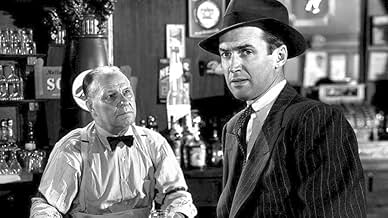


Joanne De Bergh
- Helen Wiecek
- (as Joanne de Bergh)


Robert Adler
- Taxicab Driver
- (uncredited)
Richard Bishop
- Warden of Stateville Prison
- (uncredited)

Larry J. Blake
- Police Photographic Technician
- (uncredited)

John Bleifer
- Jan Gruska
- (uncredited)

Truman Bradley
- Narrator
- (voice)
- (uncredited)
Dollie Caillet
- Secretary
- (uncredited)

7.411.2K
1
2
3
4
5
6
7
8
9
10
Featured reviews
great James Stewart
It's 1932 Chicago during prohibition. A policeman is murdered by 2 men in a speakeasy. Frank Wiecek (Richard Conte) is sentenced to 99 years. Eleven years later, Frank's mother offers $5k reward in a newspaper ad for the real killers. Cynical reporter P.J. O'Neal (James Stewart) is assigned the story. He is pushed to dig into the case by his editor Kelly (Lee J. Cobb). He starts to change his mind about the case and gets pressure from the establishment.
The based-on-a-true-story worked on me a little in this movie. With the matter of fact narration and the trusted face of Stewart, it becomes quite compelling. Stewart especially is the perfect guy for the role. His early cynicism is a great starting point. This is a compelling rip-from-the-headlines story led by a great actor.
The based-on-a-true-story worked on me a little in this movie. With the matter of fact narration and the trusted face of Stewart, it becomes quite compelling. Stewart especially is the perfect guy for the role. His early cynicism is a great starting point. This is a compelling rip-from-the-headlines story led by a great actor.
A great newspaper caper noir
According to the narration and prologue, this was based on a true story. The film depicts the 1932 murder of a police officer in a speakeasy in Chicago. In 1933, two men were given life sentences for the murder. The action of Call Northside 777 starts out eleven years later, in 1944. Lee J. Cobb, editor of the Chicago Times, comes across a small ad in the classifieds offering $5,000 to whomever can offer information regarding the murderer of the police officer in 1932. Anyone with information is urged to call Northside 777. Cobb is intrigued that someone would be offering so much money for an eleven year old, solved murder, and why it is in such an inconspicuous ad? He has a hunch that there is a story in there and he assigns lead reporter, James Stewart, to the case.
Stewart is at first uninterested but as he thinks out loud and asks questions, Cobb urges him to investigate and see what he can come up with. Stewart starts with meeting the owner of the classifieds ad, who turns out to be the mother of one of the men put in prison for the murder. She is adamant that her son is innocent, and has scrubbed floors since his imprisonment to save up the reward money and pay for the ad.
As Stewart interviews more people investigated in the case, and reviews more news stories and documents related to the case, he realizes that the man in jail for this crime may really be innocent. Noir mainstay Richard Conte stars as the (allegedly) wrong-fully convicted man. Helen Walker has a small but effective role as Stewart's devoted wife whom he confides in when he's trying to figure out the case. They also work on a jigsaw puzzle together throughout the film, which very skillfully acts as a metaphor for what Stewart is trying to do in his work life.
Betty Garde plays the eyewitness whose inconsistent ability to pick out the murderer in the lineup comes into question by Stewart. She is very bitter and uncooperative towards Stewart, and obviously afraid of something or someone unnamed, so he's forced to undermine her credibility and go without her assistance in clearing the man whom he feels was wrongfully convicted.
I thought Stewart was excellent in his role as the everyday man whose work could affect the lives of many people associated with the case. Lee J. Cobb was authentic in the role of Stewart's boss who urges him to keep going in his investigation. I do get the sense though that Cobb is just trying to increase readership in the newspaper, and that he couldn't care less about Conte's character. But Stewart is the one with a little more humanity who is more about solving the crime than increasing readership of his newspaper.
One thing I thought was interesting about this film was that the man who administers the lie detector test to Conte is the actual inventor of the lie detector test.
Stewart is at first uninterested but as he thinks out loud and asks questions, Cobb urges him to investigate and see what he can come up with. Stewart starts with meeting the owner of the classifieds ad, who turns out to be the mother of one of the men put in prison for the murder. She is adamant that her son is innocent, and has scrubbed floors since his imprisonment to save up the reward money and pay for the ad.
As Stewart interviews more people investigated in the case, and reviews more news stories and documents related to the case, he realizes that the man in jail for this crime may really be innocent. Noir mainstay Richard Conte stars as the (allegedly) wrong-fully convicted man. Helen Walker has a small but effective role as Stewart's devoted wife whom he confides in when he's trying to figure out the case. They also work on a jigsaw puzzle together throughout the film, which very skillfully acts as a metaphor for what Stewart is trying to do in his work life.
Betty Garde plays the eyewitness whose inconsistent ability to pick out the murderer in the lineup comes into question by Stewart. She is very bitter and uncooperative towards Stewart, and obviously afraid of something or someone unnamed, so he's forced to undermine her credibility and go without her assistance in clearing the man whom he feels was wrongfully convicted.
I thought Stewart was excellent in his role as the everyday man whose work could affect the lives of many people associated with the case. Lee J. Cobb was authentic in the role of Stewart's boss who urges him to keep going in his investigation. I do get the sense though that Cobb is just trying to increase readership in the newspaper, and that he couldn't care less about Conte's character. But Stewart is the one with a little more humanity who is more about solving the crime than increasing readership of his newspaper.
One thing I thought was interesting about this film was that the man who administers the lie detector test to Conte is the actual inventor of the lie detector test.
It's a Good World Outside
In 1932 December, in Chicago, the Polish Wanda Skutnik (Betty Garde) runs a speakeasy during the Prohibition. When the policeman Bundy is murdered inside the illegal bar, Frank W. Wiecek (Richard Conte) and his friend Tomek Zaleska are arrested and sentenced to serve 99 years each in the Illinois State Penitentiary.
Eleven years later, the Chicago Times' editor Brian Kelly (Lee J. Cobb) is curious with an advertisement offering a US$ 5,000.00 reward for information about the identity of the killers of the policeman eleven years ago. He assigns the efficient reporter P.J. McNeal (James Stewart) to interview the person responsible for the ad. McNeal discovers that Frank's mother Tillie Wiecek (Kasia Orzazewski), who is a janitor, has saved her salary for eleven years to prove the innocence of her beloved son and now is offering the reward for additional information. McNeal is skeptical and believes that Frank is a cop killer, but his matter is successful and Kelly asks him to investigate further. Soon he changes his mind and realizes that Frank is a victim of the corrupt system.
"Call Northside 777" is an engaging movie about injustice and redemption based on a true story. The names were changed but most of the location is real. Movies of trial are usually attractive and James Stewart is one of the best actors of the cinema history. The result is a great movie directed by the also excellent Henry Hathaway. The only remark is the awful line of McNeal in the end of the movie: "Aw, look, Frank, it's a big thing when a sovereign state admits an error. But remember this: there aren't many governments in the world that would do it." Terrible way to admit an error that has cost eleven years of a man's life and made him lose his beloved wife and son. My vote is eight.
Title (Brazil): "Sublime Devoção" ("Sublime Devotion")
Eleven years later, the Chicago Times' editor Brian Kelly (Lee J. Cobb) is curious with an advertisement offering a US$ 5,000.00 reward for information about the identity of the killers of the policeman eleven years ago. He assigns the efficient reporter P.J. McNeal (James Stewart) to interview the person responsible for the ad. McNeal discovers that Frank's mother Tillie Wiecek (Kasia Orzazewski), who is a janitor, has saved her salary for eleven years to prove the innocence of her beloved son and now is offering the reward for additional information. McNeal is skeptical and believes that Frank is a cop killer, but his matter is successful and Kelly asks him to investigate further. Soon he changes his mind and realizes that Frank is a victim of the corrupt system.
"Call Northside 777" is an engaging movie about injustice and redemption based on a true story. The names were changed but most of the location is real. Movies of trial are usually attractive and James Stewart is one of the best actors of the cinema history. The result is a great movie directed by the also excellent Henry Hathaway. The only remark is the awful line of McNeal in the end of the movie: "Aw, look, Frank, it's a big thing when a sovereign state admits an error. But remember this: there aren't many governments in the world that would do it." Terrible way to admit an error that has cost eleven years of a man's life and made him lose his beloved wife and son. My vote is eight.
Title (Brazil): "Sublime Devoção" ("Sublime Devotion")
Reliable Jimmy Stewart fighting for a cause
Call Northside 777 is a genuinely engaging film. It has reliable James Stewart as an investigative reporter on a story about an alleged cop killer in prison. At first he believes that the prisoner is guilty but then becomes convinced otherwise and is willing to risk his professional reputation on clearing him. The pace of the film is told like a gritty docudrama with no dramatic musical underscore for effect. But more importantly, this film is interesting to watch for a time capsule of post WWII Chicago. The Chicago Times, the police precincts, the ethnic neighborhoods that existed then and a whole sequence of a wireless photo copier. This is generations before the fax machine was ever conceived. This film is important as Stewart was beginning his maturing film roles in the postwar period and taking on good narrative stories and less goodguy next door roles which were going out of fashion.
Solid Cinematic Effort
Based on a true story, "Call Northside 777" follows P.J. McNeal, a newspaper reporter played by James Stewart, as he investigates a decade old murder case. The setting is Chicago in the 1930s and 40s.
Frank Wiecek (Richard Conte) has been convicted of a cop killing and sentenced to 99 years in prison. Convinced of her son's innocence, Frank's mother, an elderly and lowly cleaning lady, takes out an ad in the newspaper for information that will help free her son. McNeal grudgingly looks into the case, but doubts Wiecek's innocence. As the film moves along, McNeal slowly changes his perception of Wiecek.
Some viewers consider this to be a film-noir. To me, it is more of a docudrama, a staging of a real life story. The dialogue seems realistic. And the acting is low-key and credible. The film also highlights the technology of the era, including the use of the printing press, the polygraph, and a miniature camera.
But what impressed me most was the use of the Chicago locations where the real life story took place. Further, the B&W visuals are appropriately drab, dreary, and depressing, which reflects the tone of the actual events. There's very little background music, which also adds authenticity to the film. The only downside is the matter-of-fact procedural style in which the story is told, especially relative to the fatherly VO narration at the film's beginning and end. The film comes across at times as dry, and lacking emotional depth.
Devoid of cinematic hype, and told in a straightforward and plodding manner, "Call Northside 777" will appeal to people who seek realism in films. And, of course, the film's basis in fact, vis-a-vis fiction, adds to its credibility.
Frank Wiecek (Richard Conte) has been convicted of a cop killing and sentenced to 99 years in prison. Convinced of her son's innocence, Frank's mother, an elderly and lowly cleaning lady, takes out an ad in the newspaper for information that will help free her son. McNeal grudgingly looks into the case, but doubts Wiecek's innocence. As the film moves along, McNeal slowly changes his perception of Wiecek.
Some viewers consider this to be a film-noir. To me, it is more of a docudrama, a staging of a real life story. The dialogue seems realistic. And the acting is low-key and credible. The film also highlights the technology of the era, including the use of the printing press, the polygraph, and a miniature camera.
But what impressed me most was the use of the Chicago locations where the real life story took place. Further, the B&W visuals are appropriately drab, dreary, and depressing, which reflects the tone of the actual events. There's very little background music, which also adds authenticity to the film. The only downside is the matter-of-fact procedural style in which the story is told, especially relative to the fatherly VO narration at the film's beginning and end. The film comes across at times as dry, and lacking emotional depth.
Devoid of cinematic hype, and told in a straightforward and plodding manner, "Call Northside 777" will appeal to people who seek realism in films. And, of course, the film's basis in fact, vis-a-vis fiction, adds to its credibility.


Did you know
- TriviaThe man administering the polygraph test to convict Richard Conte was the inventor of the polygraph or lie detector machine, Leonarde Keeler. He played himself in the movie.
- GoofsThere was enough of the newspaper showing by the newspaper boy to identify the issue date without seeing the date due to the images shown below the headlines. They just needed to match the pictures in the newspaper held in the background to a newspaper from the same date and see if the photographs match.
Look at the example from the photographs for the film (slide 93 of 118). There is enough to compare newspapers.
- Quotes
[McNeal is trying to get Zaleska to name his real partner in the crime and get a chance at parole]
P.J. McNeal: What have you got to lose? You're in for life now. C'mon, tell us the truth.
Tomek Zaleska: Sure, I could say I did it. Then maybe have a chance of getting out, like you say. But if I confessed, who would I name as my partner, Joe Doakes? I couldn't make it stick for one minute. That's the trouble with being innocent. You don't know what really happened. I didn't do it. Me and Frank had nothin' to do with it.
- Crazy creditsOpening credits are printed on the pages of a book; it is also stated that this is a true story.
- ConnectionsEdited from In Old Chicago (1938)
- SoundtracksChicago (That Toddlin' Town)
(1922) (uncredited)
Music by Fred Fisher
Played during the Prohibition montage
Details
- Release date
- Country of origin
- Languages
- Also known as
- Yo creo en ti
- Filming locations
- Stateville Correctional Center - 16830 South Broadway Street, Joliet, Illinois, USA(Illinois State Penitentiary: panopticon & cells interiors; entrance exteriors)
- Production company
- See more company credits at IMDbPro
- Runtime
- 1h 52m(112 min)
- Color
- Aspect ratio
- 1.33 : 1
Contribute to this page
Suggest an edit or add missing content