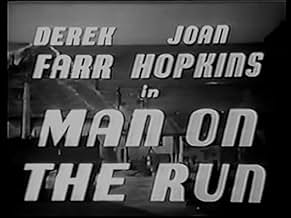
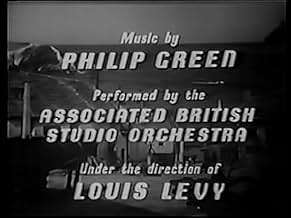
In post-war Britain, an army deserter unwittingly gets involved in murder and armed robbery and enlists the aid of a war widow to help clear his name.In post-war Britain, an army deserter unwittingly gets involved in murder and armed robbery and enlists the aid of a war widow to help clear his name.In post-war Britain, an army deserter unwittingly gets involved in murder and armed robbery and enlists the aid of a war widow to help clear his name.
Howard Marion-Crawford
- 1st Paratrooper
- (as Howard Marion Crawford)
Kenneth More
- Corporal Newman
- (as Kenneth Moore)
Martin Miller
- Cafe Proprietor
- (as Martyn Miller)
- Director
- Writer
- All cast & crew
- Production, box office & more at IMDbPro
6.7545
1
2
3
4
5
6
7
8
9
10
Featured reviews
Deserters
This is the one and only movie I saw (and I saw many) tackling the theme of deserters. Main character Peter is one of them, a guy who used to be a good soldier but felt compelled to run AWOL after four years of war because his father died in a raid and his mother and sister needed his presence.
Peter is working as a bartender in a remote corner of England when an ex-comrade happens to pass by and tries to blackmail him. Peter moves to London, where life is difficult and expensive, and while trying to pawn his weapon he gets involved in an attempted robbery. He's only a witness but the police are chasing him.
Attractive widow Jean comes to his help and the plot develops nicely, albeit in a slightly forced way towards a suitable ending. The interesting part is the perspective of deserters, considered both from a negative and less negative point of view and just for that, the movie deserves some extra points.
Peter is working as a bartender in a remote corner of England when an ex-comrade happens to pass by and tries to blackmail him. Peter moves to London, where life is difficult and expensive, and while trying to pawn his weapon he gets involved in an attempted robbery. He's only a witness but the police are chasing him.
Attractive widow Jean comes to his help and the plot develops nicely, albeit in a slightly forced way towards a suitable ending. The interesting part is the perspective of deserters, considered both from a negative and less negative point of view and just for that, the movie deserves some extra points.
10clanciai
London after the war with the social problem of 20,ooo loose deserters, many of them criminal and on the run
What you will remember of this film is the local atmosphere from the post war London with its rather weary aspect both in people and their minds and the shaggy streets, ultimately leading you down to old Wapping with one of the most genuine pub atmospheres found in any film, but there is a long way to go before that.
You will also remember the difficult case of 20,000 deserters after the war, many of them turning to criminality for having no other choice. That's the clinch in which our hero finds himself, when a burglary takes place the moment he is trying to pawn his old gun without bullets, the two robbers in desperation shooting both the clerk and, when on the run, a policeman fatally - the first casualty in the film. The clerk recovers and gives a description of our hero, whom he saw, while the two burglars were masked. So our hero finds himself wanted for murder. Could you get into any deeper sea of trouble?
It's also memorable for the fine performance by Joan Hopkins, who plays a widow who believes in our hero's innocence, Kenneth More has a small part in the beginning, which turns out fatal for our hero on a constant run, and Laurence Harvey is a policeman - neither is sympathetic. Derek Farr plays our hero convincingly enough, a completely ordinary man with an inordinate amount of bad luck, having lost practically all his family in the war. It's a sad story but well made, and the beautiful music adds some extra romantic and melancholy charm to it. In spite of the poor technical quality, I must give it almost a full score for its interesting story of an eloquent script, fluent tempo and excellent cinematography.
You will also remember the difficult case of 20,000 deserters after the war, many of them turning to criminality for having no other choice. That's the clinch in which our hero finds himself, when a burglary takes place the moment he is trying to pawn his old gun without bullets, the two robbers in desperation shooting both the clerk and, when on the run, a policeman fatally - the first casualty in the film. The clerk recovers and gives a description of our hero, whom he saw, while the two burglars were masked. So our hero finds himself wanted for murder. Could you get into any deeper sea of trouble?
It's also memorable for the fine performance by Joan Hopkins, who plays a widow who believes in our hero's innocence, Kenneth More has a small part in the beginning, which turns out fatal for our hero on a constant run, and Laurence Harvey is a policeman - neither is sympathetic. Derek Farr plays our hero convincingly enough, a completely ordinary man with an inordinate amount of bad luck, having lost practically all his family in the war. It's a sad story but well made, and the beautiful music adds some extra romantic and melancholy charm to it. In spite of the poor technical quality, I must give it almost a full score for its interesting story of an eloquent script, fluent tempo and excellent cinematography.
Joan Hopkins is excellent
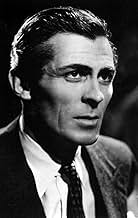
The great shame of unused female actors in British cinema is far too long; Joan Greenwood was an example, and rarely given roles that were truly worthy of her. Joan Hopkins is another and even less well known than Greenwood or many others. A pity because she had a statuesque beauty, and a quiet charm and in some shots her beauty almost rivals Greta Garbo. Opposite Derek Farr there is good chemistry, and for once she is pivotal to the film and not only decoration. Farr is a deserter from WW2 and on the run not only for that, but for a murder he is suspected of committing. Hopkins takes him into her flat and the two fall in love. I liked too the atmosphere of the UK after the war, with its turmoil at getting back to a previous life that will never come again. A fluctuating chaos that lasted through the late 1940's and the mid to late 1950's. The film is rich on detail, and there is Kenneth More as a war veteran in a small but significant role. Well directed,, and in the main well acted, it is worthy of hunting down for all those interested in this period of history, and the run down houses peeling with damp and cold bear no resemblance to the wealth there today. These films are essential to UK history and the passing of times, and the poverty and wealth that goes with it. And Joan Hopkins is quite simply excellent.
Solid Brit noir
Although I saw this on a very poor DVD transfer it held my attention from beginning to end. Yes, as other reviewers have pointed out, there's nothing new here, but it's expertly done, and it's interesting to know that there were apparently 20,000 deserters on the run in the UK in 1949, and one imagines that many of them were as hard-done-by as our hero, but I won't spoil anything by revealing why he deserted. The film is certainly sympathetic to those 20,000 men who get the blame, by several representative members of the cast, for everything that's wrong with post-war Britain. Derek Farr is excellent in the main role as the deserter who has to raise some money when Kenneth More, who had served in the same outfit, happens into the pub where he's working under an alias and decides to blackmail him. While he's trying to pawn a gun the pawnshop is robbed and a policeman killed making him one of the suspects. Joan Hopkins is the sympathetic woman who helps him. Edward Chapman is the inspector investigating the case with ever-increasing impatience. Laurence Harvey, although billed fourth, has little to do as a sergeant with a soft spot for Hopkins. Plenty of noir atmosphere. Recommended.
A Gun in His Hand
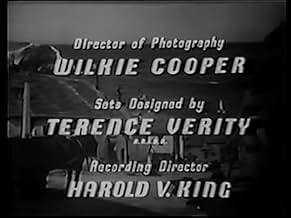
An astringent little drama painting a vivid picture as shot by Wilkie Cooper of a seething postwar London rife with deserters, blackmailers and other lowlifes.
Top-billed Joan Hopkins is rather stiff as the heroine, but this actually renders her more more rather than less appealing - not being conventional leading lady material - and as usual the supporting case is full of entertaining surprises, including early appearances by Kenneth More and a moustached Laurence Harvey in only his second film role as a detective.
Did you know
- TriviaThe dialogue includes several clear uses of "basket" as a minced oath for "bastard". However the film was given an 'A' certificate (for "Adult Audiences") by the British Board of Film Censors, because of the depiction of an armed robbery.
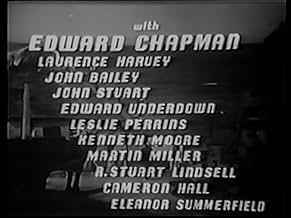
- GoofsKenneth More is listed as Kenneth Moore in the opening credits but is listed correctly in the closing credits.
- Quotes
Sgt. Peter Burden, alias Brown: Well, do you believe any of this, or am I just wasting my time?
Details
- Runtime
- 1h 22m(82 min)
- Color
- Aspect ratio
- 1.37 : 1
Contribute to this page
Suggest an edit or add missing content