IMDb RATING
6.6/10
1.2K
YOUR RATING

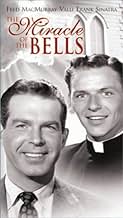
A press agent brings a dead actress home for burial. To promote her one film, he asks churches to ring bells for 3 days, hoping to get the studio head to release it.A press agent brings a dead actress home for burial. To promote her one film, he asks churches to ring bells for 3 days, hoping to get the studio head to release it.A press agent brings a dead actress home for burial. To promote her one film, he asks churches to ring bells for 3 days, hoping to get the studio head to release it.
- Awards
- 2 wins total


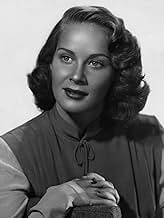



Alida Valli
- Olga
- (as Valli)


Lee J. Cobb
- Marcus Harris
- (as Lee Cobb)


James Nolan
- Tod Jones
- (as Jim Nolan)


Robert Bacon
- Soldier in 'Joan of Arc'
- (uncredited)
Walter Bacon
- Townsman
- (uncredited)
Sam Bagley
- Crew Member
- (uncredited)

Bobby Barber
- Man
- (uncredited)

Brooks Benedict
- Drunken Man
- (uncredited)
Sedal Bennett
- Woman
- (uncredited)

Oliver Blake
- Slenka
- (uncredited)
6.61.2K
1
2
3
4
5
6
7
8
9
10
Featured reviews
Believing in Miracles
A film I had never seen before, and it is highly recommended for all those who believe in faith and miracles. A Hollywood press agent, Fred MacMurray, inspires a new actress to attain higher goals in movies; she is played by Valli, who underplays her role with much emotion. Lee J. Cobb plays the tough producer and director. She dies just before the film ends, so the film is shelved by the money men. But this press agent believes in her and goes back to her hometown of Coaltown, PA where there are only a few old churches. One of them is Catholic, and Frank Sinatra plays the Catholic priest, who the press agent tries to get him and all the other pastors and ministers of the other churches to ring their bells constantly at her funeral. The day comes and the Catholic Church is loaded with townspeople who witness angelic sculptures in the pulpit turning to look at the body of the actress, and causing a national stir of publicity. All of this causes the producer director to come to terms and release the film publicly. But there is more involved in this film because it shows how sincerely faith of any kind can cause miracles to happen. I found this film to be highly entertaining and highly underrated for the period of time it was made in 1948
Well-crafted and engrossing film.
I second the opinion of reviewer "Clanciai", who cites this film's becoming "constantly more interesting" as it progresses and develops (check the 2nd paragraph of his/her review below). Much of this quality is due to the expert construction of the script,as well as actor/director Irving Pichel's fine guidance.
Since we immediately learn that the film's leading lady (and Fred MacMurray's love interest) has died, the writers must find a way to "pull the viewer into" the events surrounding her death---both before and after. The script accomplishes this superbly.
Take, for example, Fred's relationship with Olga---they never even kiss! Yet we sense a very real, very powerful emotional bond between them. Fred's heart-rending sobs at her deathbed further reveal the depth of his love for her.
Many reviewers cite Fred MacMurray's performance as outstanding; it is. He was truly a fine actor, capable of playing just about any type of role which came his way. I have a new-found appreciation of his stature as a result of this film (where was the Academy, I wonder?)
But these reviews contain a number of negative comments about Frank Sinatra's acting; I was actually impressed by his restraint. By 1948, Frank had already demonstrated his acting prowess on screen; clearly, his gentle, low-key performance was his (and Pichel's) choice for the character, not a result of his inexperience.
Many lovely, memorable moments in this film, especially the recurring motif of the starlit sky (with Leigh Harline's barely audible, shimmery music in the background), and the wonderful Christmas Eve dinner scene with Philip Ahn---one of the highlights of the film (though I felt it could have used some musical underscoring in the latter half).
But there are also plenty of dramatic scenes that are beautifully written, acted and directed. I cite TWO of them here: 1.) Olga's entrance (in full Joan of Arc costume) into Lee J. Cobb's office as Fred campaigns for her screen test (Lee J. is superb, almost riveting here). 2.) Fred's spur-of-the-moment, uplifting speech to Frank in the church basement, which dissuades Frank from explaining the "miracle" to his congregation. I had to play each of these scenes back to appreciate their excellence.
However, I have one problem with the screenplay (which I suspect didn't exist in the original story), and here it is: We become increasingly aware that Olga has a very strong attachment to her hometown and the plight of its citizens; her beautiful deathbed speech makes it clear that she wants "Joan of Arc" to serve as a morale-booster for the people of Coal Town, something which will fill them with pride and give their lives new meaning. This is why the "miracle" in the church is so crucial to Fred MacMurray's mission, which in turn motivates Lee J. to release "Joan of Arc" and use the film's proceeds to invest in the future well-being of Coal Town, since both Olga and her father were victims of the health hazards of its industry.
All of this is laid out and developed very effectively in the film's latter scenes. My reservation is the fact that the script is entirely lacking in "setting up" and establishing Olga's connection with the townspeople of Coal Town prior to her leaving to become an actress, a motive which would clearly explain her commitment to them----a dedication so deep that she would literally give her life to finish her film "mission."
The excellent script would have achieved perfection, I believe, if we had understood Olga's emotional connection to her hometown and seen it demonstrated early on. On the contrary, we see evidence that the townspeople have a low regard for her and her late father, which is confusing.
But this is fairly minor; I only point it out because the rest of the script is so logical and, as "Clanciai" says, so engrossing as it develops.
And no, I disagree with several reviews that claim: 1.) The film is too long 2.) Fred MacMurrays's addressing Olga as "baby" is off-putting. Both of these were part of our culture and the art of film making back in 1948. Deal with it.
Glad to have made the acquaintance of this terrific film.
LR
Since we immediately learn that the film's leading lady (and Fred MacMurray's love interest) has died, the writers must find a way to "pull the viewer into" the events surrounding her death---both before and after. The script accomplishes this superbly.
Take, for example, Fred's relationship with Olga---they never even kiss! Yet we sense a very real, very powerful emotional bond between them. Fred's heart-rending sobs at her deathbed further reveal the depth of his love for her.
Many reviewers cite Fred MacMurray's performance as outstanding; it is. He was truly a fine actor, capable of playing just about any type of role which came his way. I have a new-found appreciation of his stature as a result of this film (where was the Academy, I wonder?)
But these reviews contain a number of negative comments about Frank Sinatra's acting; I was actually impressed by his restraint. By 1948, Frank had already demonstrated his acting prowess on screen; clearly, his gentle, low-key performance was his (and Pichel's) choice for the character, not a result of his inexperience.
Many lovely, memorable moments in this film, especially the recurring motif of the starlit sky (with Leigh Harline's barely audible, shimmery music in the background), and the wonderful Christmas Eve dinner scene with Philip Ahn---one of the highlights of the film (though I felt it could have used some musical underscoring in the latter half).
But there are also plenty of dramatic scenes that are beautifully written, acted and directed. I cite TWO of them here: 1.) Olga's entrance (in full Joan of Arc costume) into Lee J. Cobb's office as Fred campaigns for her screen test (Lee J. is superb, almost riveting here). 2.) Fred's spur-of-the-moment, uplifting speech to Frank in the church basement, which dissuades Frank from explaining the "miracle" to his congregation. I had to play each of these scenes back to appreciate their excellence.
However, I have one problem with the screenplay (which I suspect didn't exist in the original story), and here it is: We become increasingly aware that Olga has a very strong attachment to her hometown and the plight of its citizens; her beautiful deathbed speech makes it clear that she wants "Joan of Arc" to serve as a morale-booster for the people of Coal Town, something which will fill them with pride and give their lives new meaning. This is why the "miracle" in the church is so crucial to Fred MacMurray's mission, which in turn motivates Lee J. to release "Joan of Arc" and use the film's proceeds to invest in the future well-being of Coal Town, since both Olga and her father were victims of the health hazards of its industry.
All of this is laid out and developed very effectively in the film's latter scenes. My reservation is the fact that the script is entirely lacking in "setting up" and establishing Olga's connection with the townspeople of Coal Town prior to her leaving to become an actress, a motive which would clearly explain her commitment to them----a dedication so deep that she would literally give her life to finish her film "mission."
The excellent script would have achieved perfection, I believe, if we had understood Olga's emotional connection to her hometown and seen it demonstrated early on. On the contrary, we see evidence that the townspeople have a low regard for her and her late father, which is confusing.
But this is fairly minor; I only point it out because the rest of the script is so logical and, as "Clanciai" says, so engrossing as it develops.
And no, I disagree with several reviews that claim: 1.) The film is too long 2.) Fred MacMurrays's addressing Olga as "baby" is off-putting. Both of these were part of our culture and the art of film making back in 1948. Deal with it.
Glad to have made the acquaintance of this terrific film.
LR
Not Quite A Miracle, But Close
Maltin's "guide", which should be called a "MIS-Guide", oh so generously bestows this film with a whopping star and a half. The truth is this is a fine piece of film-making, a tad unwieldy at times and perhaps 20 minutes overlong, but made with a high level of care and craft. There are many moving, poignant scenes, particularly one set early on at Christmas time. MacMurray and Valli unexpectedly run into each other and proceed to share a relaxed and blissfully unrehearsed Christmas Eve dinner at a Chinese restaurant that they have all to themselves (not unlike in the more recent A Christmas Story). The chemistry between the two and the restaurant's benevolent Asian owner is nearly heavenly.
The film has that irresistible Citizen Kane-ish structure where a character is gradually revealed and only truly understood AFTER their death. It also is refreshing in its positive depiction of religion and the important role it plays in so many people's lives. And it does so without insulting those in the audience who may not happen to be a member of that faith (Catholicism) or suggest that because they are not, that they're going to hell. If only more of today's film-makers had such courage and insight.
Performance-wise I was most impressed with Fred MacMurray who clearly invested a lot emotionally in his character. Valli is fine as the angelic aspiring actress and Lee J. Cobb is commanding as always as a studio mogul with more integrity than one might expect. Frank Sinatra as a devout small town priest? He's not bad but he hadn't yet been influenced by Montgomery Clift's method acting style in From Here To Eternity, and he comes across as a mite green for the part.
Quality work. Maltin's off by a star or two once again.
The film has that irresistible Citizen Kane-ish structure where a character is gradually revealed and only truly understood AFTER their death. It also is refreshing in its positive depiction of religion and the important role it plays in so many people's lives. And it does so without insulting those in the audience who may not happen to be a member of that faith (Catholicism) or suggest that because they are not, that they're going to hell. If only more of today's film-makers had such courage and insight.
Performance-wise I was most impressed with Fred MacMurray who clearly invested a lot emotionally in his character. Valli is fine as the angelic aspiring actress and Lee J. Cobb is commanding as always as a studio mogul with more integrity than one might expect. Frank Sinatra as a devout small town priest? He's not bad but he hadn't yet been influenced by Montgomery Clift's method acting style in From Here To Eternity, and he comes across as a mite green for the part.
Quality work. Maltin's off by a star or two once again.
Sweetly well-meaning movie
What a sweet and well-meaning movie this is. It's about love and respect for family and background and wanting to make a lasting mark on the shifting sands of our world.
The movie is not perfect, of course, it could have been shorter and not suffered much for it. The points seem belabored during the last half hour. Fred MacMurray saying "baby" all the time to Olga, the female lead was a little off-putting. Not so much for the word itself, it just seemed un-natural to hear him say it.
All that said, I will reiterate that this is a sweet movie. There is a great Christmas scene that will forever make me think of this as a "Christmas Movie". Philip Ahn as the Chinese retaurateur was a beam of light and gentleness in this movie. His role was a stand-out.
Frank Sinatra was to have better roles in later years and his acting technique would develop. He is slightly lost in the role here. But that is no big sleight in this movie.
Recommended. Religious but not preachy, sweet but not sickly sweet. A nice movie for cold Christmas eves.
The movie is not perfect, of course, it could have been shorter and not suffered much for it. The points seem belabored during the last half hour. Fred MacMurray saying "baby" all the time to Olga, the female lead was a little off-putting. Not so much for the word itself, it just seemed un-natural to hear him say it.
All that said, I will reiterate that this is a sweet movie. There is a great Christmas scene that will forever make me think of this as a "Christmas Movie". Philip Ahn as the Chinese retaurateur was a beam of light and gentleness in this movie. His role was a stand-out.
Frank Sinatra was to have better roles in later years and his acting technique would develop. He is slightly lost in the role here. But that is no big sleight in this movie.
Recommended. Religious but not preachy, sweet but not sickly sweet. A nice movie for cold Christmas eves.
Fred MacMurray leading man, does it again...
Looking back to favorite movies, I never realized what a fan I was of Fred MacMurray. This is another film of his I liked alot. Comedy, action, or drama, Fred gets the job done.
It gets 'laid on' pretty thick in this drama, schmaultzy comes to mind, but it's one to see. There were a string of 'miracle' movies made around this time, but 'Miracle of the Bells' lets you decide for yourself about this miracle, and there is more than just the obvious one.
You will get to see a movie in a movie, the reformation of MacMurray's publicist character, and even Frank Sinatra as a priest. I can think of worse ways to spend a lazy afternoon. See it if you can....
It gets 'laid on' pretty thick in this drama, schmaultzy comes to mind, but it's one to see. There were a string of 'miracle' movies made around this time, but 'Miracle of the Bells' lets you decide for yourself about this miracle, and there is more than just the obvious one.
You will get to see a movie in a movie, the reformation of MacMurray's publicist character, and even Frank Sinatra as a priest. I can think of worse ways to spend a lazy afternoon. See it if you can....


Did you know
- TriviaProducer Jesse L. Lasky sought approval from the Catholic Church of Frank Sinatra before casting him as Father Paul. The church had no objections.
- GoofsIn the street scene toward the end of the movie, there are shadows of those walking in the foreground and no shadows of those in the distance. Obviously created by scene lighting, and not natural sunlight.
- Quotes
Olga: Bill, how can I ever repay you?
Bill Dunnigan: By knocking 'em dead!
- Crazy creditsOpening credits are listed in the pages of a book with a front cover 'Russell Janney's The Miracle of the Bells'.
- ConnectionsFeatured in From the Journals of Jean Seberg (1995)
- SoundtracksPowrot
(uncredited)
Polish folk song written by Kasimierz Lubomirski
Sung a cappella by Alida Valli in Polish
- How long is The Miracle of the Bells?Powered by Alexa
Details
- Release date
- Country of origin
- Language
- Also known as
- Russell Janney's The Miracle of the Bells
- Filming locations
- Production company
- See more company credits at IMDbPro
- Runtime
- 2h(120 min)
- Color
- Aspect ratio
- 1.37 : 1
Contribute to this page
Suggest an edit or add missing content