IMDb RATING
6.7/10
2.3K
YOUR RATING

A film director tries to create the best film in history, but finds out that human abilities have their limits.A film director tries to create the best film in history, but finds out that human abilities have their limits.A film director tries to create the best film in history, but finds out that human abilities have their limits.


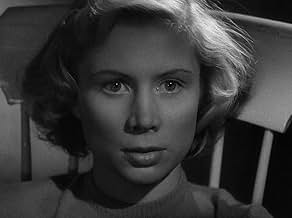


Birgit Lindkvist
- Anna - inneboende på pensionatet
- (as Bibi Lindkvist)


John W. Björling
- En man i Birgitta Carolinas dröm
- (uncredited)
Sven Björling
- En filmarbetare i ateljén
- (uncredited)
Anita Blom
- Anna - Signes kusindotter
- (uncredited)

Britta Brunius
- Lasses mamma
- (uncredited)

Åke Engfeldt
- Ena kriminalpolisen
- (uncredited)
Gösta Ericsson
- Andra kriminalpolisen
- (uncredited)

Kenne Fant
- Arne - Skådespelare
- (uncredited)
- Director
- Writer
- All cast & crew
- Production, box office & more at IMDbPro
6.72.3K
1
2
3
4
5
6
7
8
9
10
Featured reviews
Director Ingmar Bergman's First Original Screenplay
Swedish filmmaker Ingmar Bergman, 30, had directed five movies and wrote eight screenplays adapted from varying sources made into feature films. His first movie he both directed and wrote a orig script was March 1949's "Prison" (named 'The Devil's Wonton' in America and the UK). Because of Bergman's skill he displayed in his previous movies, Swedish producer Lorens Marmstedt agreed to finance his movie, but with certain stipulations. "Make a cheap film," he told Bergman, "make the cheapest film ever made in a Swedish studio and you'll be given enormous freedom to work entirely as your conscience and invention dictate. For this reason I set out to cut down on costs right across the board. Reduce the number of studio days. Limit set building. No extras. No music, or a minimal amount. Ban overtime. Limit access to celluloid."
"Prison" established a pattern of Bergman's where his movies were low budgeted with minimum sets, and churned out relatively quickly. Despite these limitations he emerged as one of Sweden's most popular directors, if not one of cinema's most influential of all time. Bergman's most highly-regarded movies came from his own original ideas. They largely dealt with deep subjects, such as the human psyche, the purpose of life and and death, the souls living on earth and in the afterlife, and religion. In "Prison," he explores 'Hell on Earth' And the devil's amusement in seeing all the pain going on. The movie opens with a film director hosting a former professor with a few guests. The professor has an idea for a great movie: the Devil has been able to exert tremendous power over people, making their life miserable and at times suicidal. As a movie-within-a movie, the participants weigh the professor's idea after he leaves, which soon leads to the portrayal of prostitution, infanticide, suicide and other miserable events, insinuating God's lack of personal control on this planet.
Bergman had an unhappy childhood, raised by a strict Lutheran minister father, who later became chaplain to the King of Sweden. Attending Stockholm University, Ingmar became interested in theatre, which led to his own play writing and stage directing. He was hired by a Swedish film studio on 1941 to rewrite screenplays, and had his own script made into 1944's 'Torment,' directed by Alf Sjöberg. In the next five years he directed five movies using the scripts he wrote based on previous works. Bergman called "Prison" an experimental one, spending under $30,000 U. S. dollars, and shot in just 18 days. Bergman said producer Marmstedt contacted several actors "and told each one, 'Don't count on getting your regular salary because this is an artistic film and one has to sacrifice something for Art!' I myself did not receive a penny, just 10 percent of the profit. There never was any profit!" Hasse Ekman, who played the professor in the opening segment, was one of Sweden's most respected film directors at the time. He was ranked as the country's most popular director since Victor Sjostrom and Mauritz Stiller, before Bergman's reputation was fully realized in the late 1950s. In the controversial role of Brigitta, Doris Svedlund plays a department store employee who moonlights in the evening as a hooker. After seeing the movie an executive representing the store workers union workers expressed his resentment on the implication employees were underpaid, writing, "We have exactly the same salaries as equivalent staff working for other employers, so we do not need to walk the streets to support ourselves." Bergman defended his characters' backgrounds, claiming they derived from his imagination alone.
In "Prison," Bergman's viewpoint was we're just marionettes manipulated by some malignant cosmic force. The movie's most discussed scene is when Tomas and Brigitta are watching a silent film where they determine, according to film reviewer James Travers, "the whole point of their existence is merely to provide entertainment for some higher spiritual entity-the Devil maybe?" The director would continue to carry such provocative ideas throughout his long influential film career.
Bergman had an unhappy childhood, raised by a strict Lutheran minister father, who later became chaplain to the King of Sweden. Attending Stockholm University, Ingmar became interested in theatre, which led to his own play writing and stage directing. He was hired by a Swedish film studio on 1941 to rewrite screenplays, and had his own script made into 1944's 'Torment,' directed by Alf Sjöberg. In the next five years he directed five movies using the scripts he wrote based on previous works. Bergman called "Prison" an experimental one, spending under $30,000 U. S. dollars, and shot in just 18 days. Bergman said producer Marmstedt contacted several actors "and told each one, 'Don't count on getting your regular salary because this is an artistic film and one has to sacrifice something for Art!' I myself did not receive a penny, just 10 percent of the profit. There never was any profit!" Hasse Ekman, who played the professor in the opening segment, was one of Sweden's most respected film directors at the time. He was ranked as the country's most popular director since Victor Sjostrom and Mauritz Stiller, before Bergman's reputation was fully realized in the late 1950s. In the controversial role of Brigitta, Doris Svedlund plays a department store employee who moonlights in the evening as a hooker. After seeing the movie an executive representing the store workers union workers expressed his resentment on the implication employees were underpaid, writing, "We have exactly the same salaries as equivalent staff working for other employers, so we do not need to walk the streets to support ourselves." Bergman defended his characters' backgrounds, claiming they derived from his imagination alone.
In "Prison," Bergman's viewpoint was we're just marionettes manipulated by some malignant cosmic force. The movie's most discussed scene is when Tomas and Brigitta are watching a silent film where they determine, according to film reviewer James Travers, "the whole point of their existence is merely to provide entertainment for some higher spiritual entity-the Devil maybe?" The director would continue to carry such provocative ideas throughout his long influential film career.
Bergman experimenting with a style of his own
"Prison" (1949) is the first film in which Ingmar Bergman develops something like a style of his own.
We see various elements that reappear in later movies. There is the character of death (to reappear in "The seventh seal", 1957) and dreamsequences (to reappear in "Wild strawberries", 1957).
The most important sign for things to come is however the theme of the film. The film is about a director trying to make a film about a world governed by the devil. Is a world governed by the devil not very much like a wordl where God is silent? Later Bergman would make a trilogy around this theme consisting of the films "Through a glass darkly" (1961), "Winterlight" (1963) and "The silence" (1963).
So in "Prison" Bergman started to experiment with a personal style, but this style was not fully developed yet. There are good sequences (such as the dream sequence) but as a whole the film is somewhat cluttered and inaccessible. Moreover the film in a film format about a director struggling to make a film does not work very well in "Prison". It does work very well in "8,5" (1963, Federico Fellini), but the Bergman of 1949 is not the Fellini of 1963.
We see various elements that reappear in later movies. There is the character of death (to reappear in "The seventh seal", 1957) and dreamsequences (to reappear in "Wild strawberries", 1957).
The most important sign for things to come is however the theme of the film. The film is about a director trying to make a film about a world governed by the devil. Is a world governed by the devil not very much like a wordl where God is silent? Later Bergman would make a trilogy around this theme consisting of the films "Through a glass darkly" (1961), "Winterlight" (1963) and "The silence" (1963).
So in "Prison" Bergman started to experiment with a personal style, but this style was not fully developed yet. There are good sequences (such as the dream sequence) but as a whole the film is somewhat cluttered and inaccessible. Moreover the film in a film format about a director struggling to make a film does not work very well in "Prison". It does work very well in "8,5" (1963, Federico Fellini), but the Bergman of 1949 is not the Fellini of 1963.
2.2.2024
Bergman Collection 20 All Reached
Bergman's first scripted film at the helm, and I didn't expect it to be that good in comparison to his entire career. It's a shame that the CC compilation didn't choose to include this Bergman film, with a hint of that New Wave flavor from Monica the Delinquent. Opened the movie on b-site with the anticipation of the Mask references.
The camera reveal in Godard's Contempt has long been a novelty, and it seems Bergman is still a master of his craft.
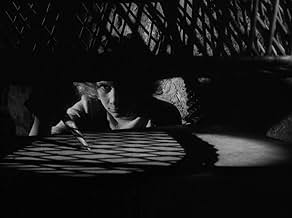
Outstanding light shaping, which has become rare in the late Bergman, it is difficult to change the lighting team?
And actually started so early in the discussion of ghosts and gods worthy of Bergman, this step should be counted into the faith trilogy.
BIBI's awful big eyes almost ruined the movie, but I still appreciate her excellent interpretation of the surreal moments that Bergman gave her life. Those big eyes seem to sparkle as if they simply don't know where to use themselves.
The ending wraps up the theme of ghosts and gods, while the core is a human framework, perfect drama. Seal the deal.
Bergman's first scripted film at the helm, and I didn't expect it to be that good in comparison to his entire career. It's a shame that the CC compilation didn't choose to include this Bergman film, with a hint of that New Wave flavor from Monica the Delinquent. Opened the movie on b-site with the anticipation of the Mask references.
The camera reveal in Godard's Contempt has long been a novelty, and it seems Bergman is still a master of his craft.
Outstanding light shaping, which has become rare in the late Bergman, it is difficult to change the lighting team?
And actually started so early in the discussion of ghosts and gods worthy of Bergman, this step should be counted into the faith trilogy.
BIBI's awful big eyes almost ruined the movie, but I still appreciate her excellent interpretation of the surreal moments that Bergman gave her life. Those big eyes seem to sparkle as if they simply don't know where to use themselves.
The ending wraps up the theme of ghosts and gods, while the core is a human framework, perfect drama. Seal the deal.
Why isn't this recognised as genius?
I am a big Begman fan, and in recent times I've gone back to some of the early films - initially just because I thought it might be interesting to see the "juvenilia", but gradually I realised that so many of them are wonderful. I've now seen Prison 4 times, and each time I am stunned by how moving and visually powerful it is. And the performance by Doris Svedlund is breath-taking. Is it the most polished film? Who cares!
Bergman did many dream sequences in films (e.g. Wild Strawberries, Face to Face) - really hard to make them un-cringey - but the one in Prison is about as good as it gets.
So wonderful artistically, and very moving in terms of human interest. There is an orthodoxy about peoples "great" films which often gets in the way of just seeing what is there - please do watch great Bergman film .. I hope you won't be disappointed!
Bergman did many dream sequences in films (e.g. Wild Strawberries, Face to Face) - really hard to make them un-cringey - but the one in Prison is about as good as it gets.
So wonderful artistically, and very moving in terms of human interest. There is an orthodoxy about peoples "great" films which often gets in the way of just seeing what is there - please do watch great Bergman film .. I hope you won't be disappointed!
PRISON (Ingmar Bergman, 1949) ***
This is the earliest Bergman film that I've watched, and already the prime concerns that occupied him throughout most of his career - human relationships, sex, faith, death, etc. - are well in evidence.
Interestingly, the narrative is set against a motion-picture backdrop; in fact, the film demonstrates a self-conscious approach to the medium that would re-emerge in later efforts such as PERSONA (1966) and THE PASSION OF ANNA (1969): rather than observing the normal procedure for the time, the credits don't appear at the outset but, effectively interrupting the proceedings after the first reel, these are given in a voice-over! Besides, the plot seems to be following the interconnecting vicissitudes of a variety of characters - but chiefly the crisis facing two separate couples - all of which, somewhat murkily and pretentiously, serves as a morality play about the triumph of Evil over Good, as envisioned in a framework set inside a studio and involving a film director's old ex-professor (the former happens to be the elder brother of one of the characters in the main narrative!).
It's all rather fascinating for much of the running-time - and the director's visual style really can't be faulted (a dream sequence is especially effective and there's even a short and quite amusing Silent slapstick film-within-a-film, ostensibly the amateurish work of one of the characters!) - but, eventually, the over-ambitious structure of PRISON (by the way, neither this vague title nor the equally well-known alternate given the film on its American release, THE DEVIL'S WANTON, really serve the purpose of its existentialist theme and generally introspective tone), to say nothing of the relentless gloominess, wear the whole down somewhat. All in all, however, it's a fine piece of work from a film-maker who would go on to become one of the leading forces in cinema during the second half of the 20th century.
Interestingly, the narrative is set against a motion-picture backdrop; in fact, the film demonstrates a self-conscious approach to the medium that would re-emerge in later efforts such as PERSONA (1966) and THE PASSION OF ANNA (1969): rather than observing the normal procedure for the time, the credits don't appear at the outset but, effectively interrupting the proceedings after the first reel, these are given in a voice-over! Besides, the plot seems to be following the interconnecting vicissitudes of a variety of characters - but chiefly the crisis facing two separate couples - all of which, somewhat murkily and pretentiously, serves as a morality play about the triumph of Evil over Good, as envisioned in a framework set inside a studio and involving a film director's old ex-professor (the former happens to be the elder brother of one of the characters in the main narrative!).
It's all rather fascinating for much of the running-time - and the director's visual style really can't be faulted (a dream sequence is especially effective and there's even a short and quite amusing Silent slapstick film-within-a-film, ostensibly the amateurish work of one of the characters!) - but, eventually, the over-ambitious structure of PRISON (by the way, neither this vague title nor the equally well-known alternate given the film on its American release, THE DEVIL'S WANTON, really serve the purpose of its existentialist theme and generally introspective tone), to say nothing of the relentless gloominess, wear the whole down somewhat. All in all, however, it's a fine piece of work from a film-maker who would go on to become one of the leading forces in cinema during the second half of the 20th century.


Did you know
- TriviaIngmar Bergman's first film based on his own original screenplay.
- Crazy creditsThere are no opening titles in this film. An unseen narrator (Hasse Ekman) reads the credits, as well as the title, out loud approximately ten minutes in to the movie. The sole title card is the standard "Slut" (Swedish for "End") that closes the picture.
- ConnectionsEdited into Histoire(s) du cinéma: Une histoire seule (1989)
- SoundtracksDrömmen
Composed by Erland von Koch (1949)
- How long is Prison?Powered by Alexa
Details
Box office
- Budget
- SEK 240,000 (estimated)
- Runtime
- 1h 19m(79 min)
- Color
- Sound mix
- Aspect ratio
- 1.33 : 1
Contribute to this page
Suggest an edit or add missing content