IMDb RATING
6.3/10
1.1K
YOUR RATING

Star footballer Pete Wilson faces a career-threatening condition. His wife Liza enjoys the glamorous lifestyle, while shunning has-beens. His friend Tim retired to coach. Pete only knows foo... Read allStar footballer Pete Wilson faces a career-threatening condition. His wife Liza enjoys the glamorous lifestyle, while shunning has-beens. His friend Tim retired to coach. Pete only knows football.Star footballer Pete Wilson faces a career-threatening condition. His wife Liza enjoys the glamorous lifestyle, while shunning has-beens. His friend Tim retired to coach. Pete only knows football.



Richard Erdman
- Buddy Morgan
- (as Dick Erdman)


Jim Backus
- Dr. Franklin
- (as James Backus)
- Director
- Writers
- All cast & crew
- Production, box office & more at IMDbPro
6.31K
1
2
3
4
5
6
7
8
9
10
Featured reviews
Realistic Drama When Football Was Still a Sport.
EASY LIVING takes you back to major league football circa 1949 and focuses on a star performer just before and after his career tops out. The direction is first rate and all the actors deliver top performances --- particularly Victor Mature, Lizabeth Scott, Lloyd Nolan and Lucille Ball. Lucy didn't always play comedy; no comedy in this one. On location filming --- a common asset to RKO Radio pictures --- adds a lot to this one. This Irwin Shaw drama doesn't have much football in it, but instead focuses on the lives of the people involved in sports.
First seen in 1949 at age 11, I looked for it again at Video Vault. It was issued in VHS so you can buy it or rent it if you look. Incidentally, RKO pictures weren't usually big hits 50 years ago but are sought after these days for their grit and on location filming. Savvy sellers in eBay include RKO in their headline.
Final comment: Unlike 2007's major hits like Pirates #3 and Potter #5, this film has an actual story, beginning, middle, end ---not relying on an overpowering musical score to sugarcoat junk. It's apt to appeal to grown-ups --- actually 11 and up.
First seen in 1949 at age 11, I looked for it again at Video Vault. It was issued in VHS so you can buy it or rent it if you look. Incidentally, RKO pictures weren't usually big hits 50 years ago but are sought after these days for their grit and on location filming. Savvy sellers in eBay include RKO in their headline.
Final comment: Unlike 2007's major hits like Pirates #3 and Potter #5, this film has an actual story, beginning, middle, end ---not relying on an overpowering musical score to sugarcoat junk. It's apt to appeal to grown-ups --- actually 11 and up.
Not So Easy Living
Pete Wilson, also known as King Football, faces a dual crisis. Diagnosed with a serious heart ailment, he learns his career is over. Wilson also must break the news to his star-struck wife, who enjoys the spotlight even more than he does.
"Easy Living" is of course an ironic title. Wilson's life, as a quarterback and as a husband, is anything but easy. As the story evolves, he must come to terms with both the loss of his livelihood and the possible end of his marriage. Victor Mature, who played gladiators both ancient and modern, does his best but he isn't quite up to the emotional demands of the role. And Lizabeth Scott, ever the ice princess, never comes across as Wilson's wife. The supporting cast, featuring Lloyd Nolan as the head coach and Lucille Ball as his son's widow, is generally stronger. Jack Paar, in one of his rare film roles, pops up as the team's PR man.
The film's climax, in which Wilson slaps his wife in desperation, could never be made today but still was acceptable in 1949. Frankly though, you can't help share Wilson's frustration with this frivolous woman and you have to wonder what you would do in his place.
Highly recommended, both as a study of mid-century social attitudes and for an early Hollywood view of the NFL
"Easy Living" is of course an ironic title. Wilson's life, as a quarterback and as a husband, is anything but easy. As the story evolves, he must come to terms with both the loss of his livelihood and the possible end of his marriage. Victor Mature, who played gladiators both ancient and modern, does his best but he isn't quite up to the emotional demands of the role. And Lizabeth Scott, ever the ice princess, never comes across as Wilson's wife. The supporting cast, featuring Lloyd Nolan as the head coach and Lucille Ball as his son's widow, is generally stronger. Jack Paar, in one of his rare film roles, pops up as the team's PR man.
The film's climax, in which Wilson slaps his wife in desperation, could never be made today but still was acceptable in 1949. Frankly though, you can't help share Wilson's frustration with this frivolous woman and you have to wonder what you would do in his place.
Highly recommended, both as a study of mid-century social attitudes and for an early Hollywood view of the NFL
Surprisingly textured drama, set in world of pro football, from Jacques Tourneur
Easy Living is not a light comedy, despite the presence of Lucille Ball, Jim Backus and Jack Paar. Neither is it really a sports movie, though it's set in the world of professional football. Irwin Shaw wrote the novel on which it's based the story of a man who's approaching midlife knowing nothing but how to play ball. The movie version proves surprisingly textured and involving, which ought not to be surprising, as the director is the ever resourceful Jacques Tourneur.
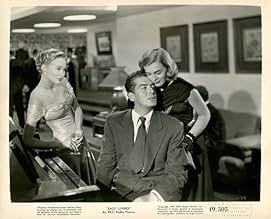
Victor Mature is a New York gridiron hero whose game is starting to slow down; in fact, he finds out he has a heart ailment which spells early death if he keeps on playing. But his quest for a cushy coaching job is handicapped by his ambitious wife (Lizabeth Scott). She's not cut out for the den-mother duties a coach's wife must shoulder, as she's trying to make a success of her interior design business despite her own handicap of commanding neither taste nor talent a handicap she overcomes by luring monied clients romantically. So in addition to his health and career crises, Mature faces a marital one as well.
The large cast includes Lloyd Nolan as the club's owner and Lucille Ball as his widowed daughter-in-law, who works for the team and nurtures a crush on Mature. Tourneur shows his craft in coaxing a subdued and touching performance from her; he surpasses that by drawing from Scott, especially in a self-pitying drunk scene, the only piece of real acting she ever committed to film.
Easy living ends too abruptly (it clocks in at only 78 minutes) but there's nary a false note or a slack stretch in it. Made near the peak of the noir cycle, which accounts for its minor-key tonality (the score, by the way, is by Roy Webb), it springs yet another surprise in being one of the first films to find a dark side in that American institution, professional football.
Victor Mature is a New York gridiron hero whose game is starting to slow down; in fact, he finds out he has a heart ailment which spells early death if he keeps on playing. But his quest for a cushy coaching job is handicapped by his ambitious wife (Lizabeth Scott). She's not cut out for the den-mother duties a coach's wife must shoulder, as she's trying to make a success of her interior design business despite her own handicap of commanding neither taste nor talent a handicap she overcomes by luring monied clients romantically. So in addition to his health and career crises, Mature faces a marital one as well.
The large cast includes Lloyd Nolan as the club's owner and Lucille Ball as his widowed daughter-in-law, who works for the team and nurtures a crush on Mature. Tourneur shows his craft in coaxing a subdued and touching performance from her; he surpasses that by drawing from Scott, especially in a self-pitying drunk scene, the only piece of real acting she ever committed to film.
Easy living ends too abruptly (it clocks in at only 78 minutes) but there's nary a false note or a slack stretch in it. Made near the peak of the noir cycle, which accounts for its minor-key tonality (the score, by the way, is by Roy Webb), it springs yet another surprise in being one of the first films to find a dark side in that American institution, professional football.
Pete options
A profesional football player is confronted with terrible medical diagnosis. He is only a fottball player ; too late to become someone else. It is high paid, preocuped by the happiness of his wife ( preocuped, herself, by only her succes ) , losing the opportunity to be the new couch of team and feeling his life empty, decided to hide his health problems and accepting be mocked by his team mates for not brilliant succeses in games.
Victor Mature proposes a fair portrait of Pete Wilson and he was the main motif for see this film in my case. But the revelation remain Lucille Ball as Anne and, no surprises , Sonny Tuffts.
In short, a good, in some measure, maybe, useful film.
Victor Mature proposes a fair portrait of Pete Wilson and he was the main motif for see this film in my case. But the revelation remain Lucille Ball as Anne and, no surprises , Sonny Tuffts.
In short, a good, in some measure, maybe, useful film.
Doesn't measure up to Victor Mature's chest
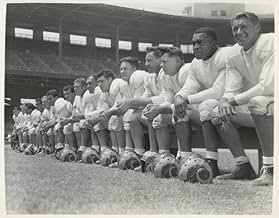
There are two stories here. The stronger one deals with a quarterback for the New York Chiefs pushed toward retirement by a heart murmur. This story offers interesting glimpses at the state of professional football, circa 1949. The team takes the train to "away" games, for instance, and it seems to have only one black player. And get this --making the Championship Playoffs means at least an extra $1000 for every man on the team! (But this was in an era of nickel pay-phone calls, when college football coaches made $3200 a year.)
The other story centers on the quarterback's troubled relationship with his ambitious, social-climbing wife who's not above using her seductive charm to make a success of her interior decorating business. Here again there are intriguing insights into the world of 1949, where "uppity" women had to be taken down a notch or two lest they forget their proper roles as wives and mothers.
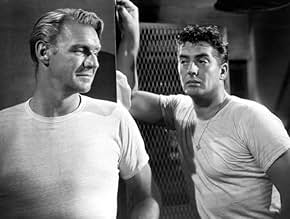
These two stories don't merge particularly well, resulting in an awkward blend of "locker room" and "Park Avenue," and the ending seems forced and unconvincing. (This may have been due to the Production Code's dim view of divorce.) However, the cast still makes the movie worth a look, with solid work from Lucille Ball, Lloyd Nolan, Jim Backus, Art Baker, Jack Paar, etc. Lizabeth Scott -- she of the spectacular eyebrows -- seems a tad "overheated" as the self-centered wife but the script probably forced this kind of performance. Victor Mature has the better part and he acquits himself in adequate fashion. In his locker room scene he gets to strip off his shirt and thus reveal one of the great torsos in the movies. (And how gloriously it was soon to be whipped and otherwise tortured in such films as "Samson and Delilah," "The Robe," "Zarak," and "Timbuktu.") Too bad the movie as a whole isn't equal to its star's chest measurement.
The other story centers on the quarterback's troubled relationship with his ambitious, social-climbing wife who's not above using her seductive charm to make a success of her interior decorating business. Here again there are intriguing insights into the world of 1949, where "uppity" women had to be taken down a notch or two lest they forget their proper roles as wives and mothers.
These two stories don't merge particularly well, resulting in an awkward blend of "locker room" and "Park Avenue," and the ending seems forced and unconvincing. (This may have been due to the Production Code's dim view of divorce.) However, the cast still makes the movie worth a look, with solid work from Lucille Ball, Lloyd Nolan, Jim Backus, Art Baker, Jack Paar, etc. Lizabeth Scott -- she of the spectacular eyebrows -- seems a tad "overheated" as the self-centered wife but the script probably forced this kind of performance. Victor Mature has the better part and he acquits himself in adequate fashion. In his locker room scene he gets to strip off his shirt and thus reveal one of the great torsos in the movies. (And how gloriously it was soon to be whipped and otherwise tortured in such films as "Samson and Delilah," "The Robe," "Zarak," and "Timbuktu.") Too bad the movie as a whole isn't equal to its star's chest measurement.


Did you know
- TriviaThe white football seen in the warm-ups for the night game at the end of the film was used in the NFL for such games from 1929 to 1955. It was considered to be more visible to the players and fans than the typical brown football. By 1956 better stadium lighting, especially needed for television, made the white football obsolete.
- GoofsThough the team's name is the Chiefs, their helmets have horns on them like the NFL's Los Angeles Rams.
- ConnectionsFeatured in After the Fox (1966)
- How long is Easy Living?Powered by Alexa
Details
- Runtime
- 1h 17m(77 min)
- Color
- Aspect ratio
- 1.37 : 1
Contribute to this page
Suggest an edit or add missing content