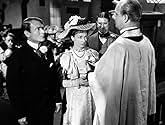
With an inheritance after his father's death, Alfred Polly finds love in the arms of a schoolgirl but marries an unattractive cousin and opens a shop, which leads him to unhappiness, arson, ... Read allWith an inheritance after his father's death, Alfred Polly finds love in the arms of a schoolgirl but marries an unattractive cousin and opens a shop, which leads him to unhappiness, arson, suicide attempts, and escape.With an inheritance after his father's death, Alfred Polly finds love in the arms of a schoolgirl but marries an unattractive cousin and opens a shop, which leads him to unhappiness, arson, suicide attempts, and escape.
- Director
- Writers
- Stars
- Director
- Writers
- All cast & crew
- Production, box office & more at IMDbPro
6.7733
1
2
3
4
5
6
7
8
9
10
Featured reviews
a charming but simple tale saved by the brilliant music
HG Wells was one of the most successful novelists of the early 20th century, particularly famous for his science fiction. But earlier his tales of life among the ordinary people won him great success and eventually a wide reputation as a thinker and commentator as well as a writer. He wrote from personal experience - his mother was a domestic servant in a great house called Uppark, now one of the showplace of the National Trust. Mr Polly was a typical Wells characters - easy-going, unambitious, an innocent in a wicked world. John MIlls, one of the best-loved of British actors, captures perfectly the character of this harmless, well-meaning man, destined to be pushed hither and thither by a variety of females. But the film lack a strong story line and is often aimless and boring. THere are some hilarious scenes - the funeral of his father, which was more like a wedding party than a wake, with young women circling the newly rich innocent like sharks round a seal. Best of all was the scene where Mr Polly tries his hand at punting, struggling with his passenger and throwing them both in to the water. The music here was brilliantly written for the wind of the orchestra and played by a team of virtuosos with an outstanding clarinettist - who were they? The composer William Alwyn was probably the most prolific film composer of his or any generation. His work here saved the film from well-meant but earnest tedium. There should be a celebration of Alwyn's contribution to the art of film.
John Mills did get deserved credit!
I echo all the good things said about this brilliant film. As for the contributor who claimed Mills did not receive enough credit in his career. . . the man was given a knighthood - how much credit does one need? As I write this comment, the film is being shown (yet again) on the Film 4 TV channel. It's one of those films (and there are many of them) which one can watch year after year and still find it entertaining, despite knowing each scene by heart. Since I discovered that a version of the film was planned and then abandoned in Hollywood with Charles Laughton in the title role, I can't help imagining Laughton speaking the lines as I watch the excellent John Mills.
Very quirky, but stick with it...
... because in its entirety the film is very satisfying.
Mr. Polly (John Mills) is hard to root for. He is a lazy employee in a shop who gets fired for reading novels when he should be working. He spends months looking - not very hard - for another job when he gets news his father died. His father left him a small inheritance, and so he decides to open a shop himself, although he hated working in one. Then he decides he needs a wife. He falls for a schoolgirl ten years younger than himself, but it turns out she is just teasing him for the amusement of her friends, so he dispassionately marries a spinster cousin.
15 years later we are shown where Polly is - on the verge of bankruptcy, with his wife constantly nagging him about things that seem to be very true about himself. The shop is a failure, in part because it is chaotic - it does not seem to have a theme at all. So the unhappy Polly decides to commit suicide by burning his shop down with him in it while his wife is at church. Polly succeeds at burning the shop but not himself, and decides to hit the open road. And it is at this point he becomes a completely different kind of person than he has been for the first half of the film. In other words, he does become somewhat admirable - focused, not lazy. The odd thing is that Polly has no real basis for any of the actions he takes at any stage of his life. He certainly isn't doing anything because he wants to do so, and in some cases his actions make him unhappy, and in latter cases they lead to happiness.
The entire thing is very ironic as the first and second parts merge into a very ironic and short third act. It's definitely original, and John Mills always improves any film.
Mr. Polly (John Mills) is hard to root for. He is a lazy employee in a shop who gets fired for reading novels when he should be working. He spends months looking - not very hard - for another job when he gets news his father died. His father left him a small inheritance, and so he decides to open a shop himself, although he hated working in one. Then he decides he needs a wife. He falls for a schoolgirl ten years younger than himself, but it turns out she is just teasing him for the amusement of her friends, so he dispassionately marries a spinster cousin.
15 years later we are shown where Polly is - on the verge of bankruptcy, with his wife constantly nagging him about things that seem to be very true about himself. The shop is a failure, in part because it is chaotic - it does not seem to have a theme at all. So the unhappy Polly decides to commit suicide by burning his shop down with him in it while his wife is at church. Polly succeeds at burning the shop but not himself, and decides to hit the open road. And it is at this point he becomes a completely different kind of person than he has been for the first half of the film. In other words, he does become somewhat admirable - focused, not lazy. The odd thing is that Polly has no real basis for any of the actions he takes at any stage of his life. He certainly isn't doing anything because he wants to do so, and in some cases his actions make him unhappy, and in latter cases they lead to happiness.
The entire thing is very ironic as the first and second parts merge into a very ironic and short third act. It's definitely original, and John Mills always improves any film.
Fantastic!
I have loved this film ever since I first saw it at approximately at the age of 6, 7 years on it's still one of my favourites. It's a heart warming tale that the whole family will love. Having never read the book I can't really compare but even so if the film's this good then I'm sure the book will be as good, if not better! I do not understand why the overall rating for this film is an average of 6.6. The people who vote obviously have no taste as this film is a masterpiece of acting. John Mills I credit as one of the best actors to have lived and one year after his death I don't think enough credit has been given to this man and his acting skills.
I am really not sure what this film set out to do.
"The History of Mr. Polly" is an odd British film. On one hand, it has some well respected and excellent British actors (notably, Sir John Mills). But, on the other, it has a story that really doesn't make a ton of sense and which creates a portrait of a guy who is often less than likable or honorable. I found the overall experience quite underwhelming.
When the story begins, Mr. Polly (Mills) is getting fired from a job because he's lazy. Soon, however, he is extricated from this predicament when he learns his father has died....and has left him a small inheritance. Polly then goes shopping for a wife, as he plans on getting married and opening a small shop. He marries a cousin and the film jumps ahead 15 years. Now, they are both pretty miserable and Polly comes up with a plan....run away. He soon finds a job and settles in to a new life...though a drunk bully promises to make this a very short life!
The hero in the film, Polly, is in so many ways an anti-hero. He's lazy, he's run away from his marriage and he's not much of a person. Yet, out of the blue, this all changes near the end...or at least changes enough that you don't quite know what to make of the guy. Overall, a mildly interesting film but far from Mills' best.
When the story begins, Mr. Polly (Mills) is getting fired from a job because he's lazy. Soon, however, he is extricated from this predicament when he learns his father has died....and has left him a small inheritance. Polly then goes shopping for a wife, as he plans on getting married and opening a small shop. He marries a cousin and the film jumps ahead 15 years. Now, they are both pretty miserable and Polly comes up with a plan....run away. He soon finds a job and settles in to a new life...though a drunk bully promises to make this a very short life!
The hero in the film, Polly, is in so many ways an anti-hero. He's lazy, he's run away from his marriage and he's not much of a person. Yet, out of the blue, this all changes near the end...or at least changes enough that you don't quite know what to make of the guy. Overall, a mildly interesting film but far from Mills' best.
Did you know
- TriviaAn earlier Hollywood version starring Charles Laughton went into production, but was cancelled following the outbreak of World War II.
- GoofsWhen the first fight between Polly and Jim starts, Polly moves quickly to the left and in so doing the shadow of the camera falls briefly full on his back.
- Quotes
The Innkeeper: I want an odd man about the place.
Alfred Polly: I'm odd all right.
- ConnectionsRemade as The History of Mr. Polly (1959)
Details
- Release date
- Country of origin
- Language
- Also known as
- История мистера Полли
- Filming locations
- Denham Film Studios, Denham, Uxbridge, Buckinghamshire, England, UK(studio: made at Denham Studios, London, England.)
- Production company
- See more company credits at IMDbPro
- Runtime
- 1h 35m(95 min)
- Color
- Aspect ratio
- 1.37 : 1
Contribute to this page
Suggest an edit or add missing content

