IMDb RATING
6.7/10
2.2K
YOUR RATING


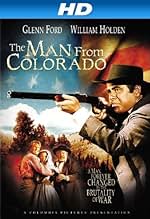
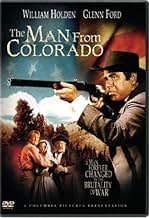
At the end of the Civil War, two friends return home to Colorado and one of them has changed and is violent and erratic.At the end of the Civil War, two friends return home to Colorado and one of them has changed and is violent and erratic.At the end of the Civil War, two friends return home to Colorado and one of them has changed and is violent and erratic.
- Director
- Writers
- Stars
- Awards
- 1 nomination total


William 'Bill' Phillips
- York
- (as Wm. 'Bill' Phillips)

Stanley Andrews
- Roger MacDonald
- (uncredited)
Emile Avery
- Townsman
- (uncredited)
Walter Bacon
- Townsman
- (uncredited)

Walter Baldwin
- Tom Barton
- (uncredited)

Symona Boniface
- Matron
- (uncredited)

Chet Brandenburg
- Party Guest
- (uncredited)

James Bush
- Cpl. Dixon
- (uncredited)
Nora Bush
- Townswoman
- (uncredited)
Boyd Cabeen
- Townsman
- (uncredited)
- Director
- Writers
- All cast & crew
- Production, box office & more at IMDbPro
6.72.1K
1
2
3
4
5
6
7
8
9
10
Featured reviews
A psychological western based on the mental anguishes of the post-Civil War era
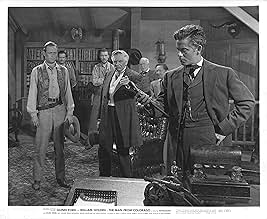
"The Man From Colorado", filmed in 1948, portrays two men and how the trauma of the Civil War affected them, and those about them. Glenn Ford delivers a truly mesmerizing performance as a Civil War commander who is slowly being gripped by madness due to the violence of the War, while William Holden plays the part of a veteran of the same war, is able to cope with the aftermath, and yet, is unable to prevent his friend from sinking into degenerate madness.
After the war has ended, both men return to the same hometown to resume their lives. Ford is appointed as a federal judge of the territory, and he, in turn, names Holden as federal marshal. Ultimately, Ford's character sinks deeper into violence and glaring errors in carrying out justice, and Holden has to try and stop his former friend.
Don't let the age of the film deceive you, this movie does pack a message that can be applied today. An 8/10 viewing mark
After the war has ended, both men return to the same hometown to resume their lives. Ford is appointed as a federal judge of the territory, and he, in turn, names Holden as federal marshal. Ultimately, Ford's character sinks deeper into violence and glaring errors in carrying out justice, and Holden has to try and stop his former friend.
Don't let the age of the film deceive you, this movie does pack a message that can be applied today. An 8/10 viewing mark
Running Roughshod Over Due Process
Back in the day William Holden and Glenn Ford both had a unique contractual arrangement with Columbia Pictures. When unknown Bill Holden was up for the lead in Golden Boy, Harry Cohn cast him in return for Paramount selling 50% of his services to Columbia. Holden served two studio masters at the time he was making The Man from Colorado and would for another decade.
Glenn Ford was Columbia's bread and butter leading man at the time and right after The Man From Colorado, Cohn sold half of Ford's contract to MGM and Ford also had two studio masters.
What it meant for these two was that all projects had to be cleared through both studios and that Holden and Ford if they did an outside loan out would also have to be cleared from both. Not that their respective studios didn't keep both these guys very busy.
Holden and Ford had done a well received western, Texas, for Columbia back in 1941. Texas was a rather lighthearted film about two cowboys turning to different sides of the law in post Civil War Texas, though it did feature the death of one of them.
The Man from Colorado is also a story about the activities of Union Army war veterans. But The Man from Colorado doesn't have any light moments whatsoever. It's pretty grim tale about one of them developing a real taste for sadism and killing as a result of the war.
Ford's the sadist here, it's one of the few villain parts he ever did and it works I think because he is so against type. He did very few parts like this, Lust for Gold is another, but his public wouldn't accept him in these roles.
Some of the town businessmen led by Ray Collins just look at the war record and decide Ford would make one fine federal judge. A real law and order type. They get a lot more than they bargain for.
In Texas Holden had the showier role of the young cowboy who take the outlaw route. Here however he's the best friend who stands by his former commanding officer even though he both sees the man has issues and Holden loses Ellen Drew to Ford. Holden takes the outlaw path after giving up his marshal's job when Ford starts running roughshod over due process.
The other really standout performance in this film is that of James Milliken who plays one of Ford's former soldiers who turns outlaw and in fact humiliates him in one of the few funny moments in The Man From Colorado. Ford conceives a burning hate for him that results in tragedy all around.
Ford and Holden were considering another joint project in 1981 when Holden died. I would like to have seen that one come to pass.
Try to see The Man From Colorado back to back with Texas.
Glenn Ford was Columbia's bread and butter leading man at the time and right after The Man From Colorado, Cohn sold half of Ford's contract to MGM and Ford also had two studio masters.
What it meant for these two was that all projects had to be cleared through both studios and that Holden and Ford if they did an outside loan out would also have to be cleared from both. Not that their respective studios didn't keep both these guys very busy.
Holden and Ford had done a well received western, Texas, for Columbia back in 1941. Texas was a rather lighthearted film about two cowboys turning to different sides of the law in post Civil War Texas, though it did feature the death of one of them.
The Man from Colorado is also a story about the activities of Union Army war veterans. But The Man from Colorado doesn't have any light moments whatsoever. It's pretty grim tale about one of them developing a real taste for sadism and killing as a result of the war.
Ford's the sadist here, it's one of the few villain parts he ever did and it works I think because he is so against type. He did very few parts like this, Lust for Gold is another, but his public wouldn't accept him in these roles.
Some of the town businessmen led by Ray Collins just look at the war record and decide Ford would make one fine federal judge. A real law and order type. They get a lot more than they bargain for.
In Texas Holden had the showier role of the young cowboy who take the outlaw route. Here however he's the best friend who stands by his former commanding officer even though he both sees the man has issues and Holden loses Ellen Drew to Ford. Holden takes the outlaw path after giving up his marshal's job when Ford starts running roughshod over due process.
The other really standout performance in this film is that of James Milliken who plays one of Ford's former soldiers who turns outlaw and in fact humiliates him in one of the few funny moments in The Man From Colorado. Ford conceives a burning hate for him that results in tragedy all around.
Ford and Holden were considering another joint project in 1981 when Holden died. I would like to have seen that one come to pass.
Try to see The Man From Colorado back to back with Texas.
Post war problems in Colorado
Colorado was a large, booming territory in 1865. It did not enter the union until eleven years later, and as the only new state to get admission in 1876 it has the right to remain our "Centennial" State (for the centennial of the Declaration of Independence). In the Civil War there were few engagements in Colorado, but one that did stick out was a massacre (there is no other way of putting it) of Indians by a Colonel Chivington at Sands Creek. Chivington's daughter had been raped by an Indian, and he took advantage of a relatively mild act of legal disobedience by the Indians to kill a good number of them.
"The Man From Colorado" is not dealing directly with the Sands Creek Massacre (no Indians are involved in the story). Instead, Chivington's character is transferred to Glenn Ford, who in the closing days of the Civil War perpetrates a similar atrocity, this time on surrendering Confederates. Ford and his friend William Holden have been through the whole war together, but Holden has managed to retain a sense of balance despite the horrors he has seen. Ford is on a slippery slope. Even after the atrocity he is still aware of his act of cruelty and writes in his diary about it. He can't control himself anymore.
Unfortunately his war record stands him well with the richest men in the territory, especially Ray Collins. Collins has managed to get control of the claims that should be used to pay the ex-Union troops. He wants a strong man to be the Federal judge of Colorado territory. Who better than the no-nonsense Ford? So Ford gets the judicial position. Holden has lost his old girlfriend (Ellen Drew) to Ford, but he remains a friend. However he and Drew are increasingly aware of Ford's mental instability. So is everyone (except Ray Collins), as Ford keeps giving the most draconian decisions from the bench. In particular to his former soldiers, now fighting to get back their claims. This, of course leads to their becoming bandits. A vicious cycle, of course. Holden and Drew may be able to break it - Drew has seen Ford's diary.
In the wake of World War II's returning men, and the many suffering psychological trauma, "The Man From Colorado" was a timely film. Ford never played a psychotic type as well as here. Holden (actually in a supporting role - before his burst into super stardom) is a great balance to Ford. Rains performs well as do most of the cast. And by the time the holocaust unleashed by Ford's appointment to the bench is finished, even Ray Collins wishes he never was dumb enough to put this man on the bench.
"The Man From Colorado" is not dealing directly with the Sands Creek Massacre (no Indians are involved in the story). Instead, Chivington's character is transferred to Glenn Ford, who in the closing days of the Civil War perpetrates a similar atrocity, this time on surrendering Confederates. Ford and his friend William Holden have been through the whole war together, but Holden has managed to retain a sense of balance despite the horrors he has seen. Ford is on a slippery slope. Even after the atrocity he is still aware of his act of cruelty and writes in his diary about it. He can't control himself anymore.
Unfortunately his war record stands him well with the richest men in the territory, especially Ray Collins. Collins has managed to get control of the claims that should be used to pay the ex-Union troops. He wants a strong man to be the Federal judge of Colorado territory. Who better than the no-nonsense Ford? So Ford gets the judicial position. Holden has lost his old girlfriend (Ellen Drew) to Ford, but he remains a friend. However he and Drew are increasingly aware of Ford's mental instability. So is everyone (except Ray Collins), as Ford keeps giving the most draconian decisions from the bench. In particular to his former soldiers, now fighting to get back their claims. This, of course leads to their becoming bandits. A vicious cycle, of course. Holden and Drew may be able to break it - Drew has seen Ford's diary.
In the wake of World War II's returning men, and the many suffering psychological trauma, "The Man From Colorado" was a timely film. Ford never played a psychotic type as well as here. Holden (actually in a supporting role - before his burst into super stardom) is a great balance to Ford. Rains performs well as do most of the cast. And by the time the holocaust unleashed by Ford's appointment to the bench is finished, even Ray Collins wishes he never was dumb enough to put this man on the bench.
Perfectly cast action packed Western
Ford and Holden worked together more than once, and they took turns playing "good cop bad cop" as the saying goes. In their case more "good Westerner bad Westerner". In this one, it's clear early that Ford is the bad guy. It was perfect casting. Ford and Holden are ex Civil War officers who become the law in a mining town. With usual poetic film license, the men from their unit live in that very town, and left mining claims while fighting in the war. While they were gone, a mine baron took advantage of a loophole to steal their claims. As the new judge, Ford complies with the letter of the law. We get a very complex and real look at the psychological influence of power, and interpretation of the law. Ford delivers his sadistic power hungry official with realism. He doesn't foam at the mouth when he performs his sadistic acts. Instead, he acts reluctant, as if he's chilled by violence. Then, after taking more and more power in his hands, he loses control of everything when he loses control of his wife, who remains faithful to him despite her respect and possible love for William Holden's character. Ford's character is very much like a Shakespearean king descending into madness and mayhem.
Gripping Adult Psychological Western!
"The Man From Colorado" opens in the closing days of the American Civil War. Two life long friends, Col. Owen Deveraux (Glenn Ford) and Capt. Del Stewart (William Holden) along with their troop corner a group of tired, poorly armed Confederate soldiers. They raise a white flag of surrender but Deveraux refuses to acknowledge it (unknown to the others) and orders his troops to open fire. The Confederates are all killed except for one officer.
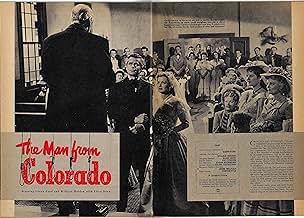
Stewart senses that his friend is becoming psychotic but attributes it to the pressures of war. Later they return to their home town and are given a heroes welcome. The surviving Confederate officer confronts Deveraux who shoots him down with a wild look in his eyes. Meanwhile, big time mine boss Ed Carter (Ray Collins) and the Governor's representative (Stanley Andrews) offer Deveraux the position of Federal Judge. He accepts and appoints Stewart as Federal Marshal.
Most of Deveraux's troops had gold mining claims prior to going off to war. During their three year absence Carter has through a legal loophole, taken over their claims. Judge Deveraux is forced to side with Carter. This causes some of the men led by Jericho Howard (James Millican) to take to the hills and rob Carter's mining company, stealing the gold they believe to be rightfully theirs.
Jericho's kid brother Johnny (Jerome Courtland) is found with a bag of gold following a robbery during which a man was killed. Deveraux under pressure to produce the guilty parties, orders him jailed. Stewart believes in the boy's innocence and sets out to find Jericho in order to prove it. During Stewart's absence Deveraux holds a speedy trial and hangs Johnny. When Del returns he is appalled and turns in his badge and joins Jericho and his gang. This leads to further robberies until the inevitable confrontation between the two men where.............
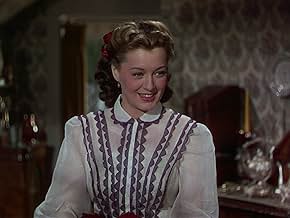
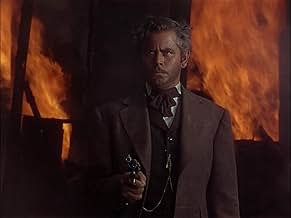
Glenn Ford playing against type, gives one of the best performances of his career as the psychotic Deveraux. His facial expressions of increasing madness are terrifying. Holden does his best in effectively what is a supporting role, as the good friend. Ellen Drew appears as the woman both men love but who marries Deveraux only to experience first hand, his increasing madness.
Also in the cast are Edgar Buchanan as Doc Merriam, Jim Bannon as Carter's henchman Nagel and western regulars Ian MacDonald, Myron Healey, Denver Pyle and Ray Teal in other roles.
Worth a look just to catch Ford's performance.
Stewart senses that his friend is becoming psychotic but attributes it to the pressures of war. Later they return to their home town and are given a heroes welcome. The surviving Confederate officer confronts Deveraux who shoots him down with a wild look in his eyes. Meanwhile, big time mine boss Ed Carter (Ray Collins) and the Governor's representative (Stanley Andrews) offer Deveraux the position of Federal Judge. He accepts and appoints Stewart as Federal Marshal.
Most of Deveraux's troops had gold mining claims prior to going off to war. During their three year absence Carter has through a legal loophole, taken over their claims. Judge Deveraux is forced to side with Carter. This causes some of the men led by Jericho Howard (James Millican) to take to the hills and rob Carter's mining company, stealing the gold they believe to be rightfully theirs.
Jericho's kid brother Johnny (Jerome Courtland) is found with a bag of gold following a robbery during which a man was killed. Deveraux under pressure to produce the guilty parties, orders him jailed. Stewart believes in the boy's innocence and sets out to find Jericho in order to prove it. During Stewart's absence Deveraux holds a speedy trial and hangs Johnny. When Del returns he is appalled and turns in his badge and joins Jericho and his gang. This leads to further robberies until the inevitable confrontation between the two men where.............
Glenn Ford playing against type, gives one of the best performances of his career as the psychotic Deveraux. His facial expressions of increasing madness are terrifying. Holden does his best in effectively what is a supporting role, as the good friend. Ellen Drew appears as the woman both men love but who marries Deveraux only to experience first hand, his increasing madness.
Also in the cast are Edgar Buchanan as Doc Merriam, Jim Bannon as Carter's henchman Nagel and western regulars Ian MacDonald, Myron Healey, Denver Pyle and Ray Teal in other roles.
Worth a look just to catch Ford's performance.


Did you know
- TriviaColumbia Pictures spent quite a bit on The Man in Colorado. At one point, the crew dynamited the side of a 1500-foot mountain in California's San Fernando Valley in order to create a deep gorge as called for by the script. And the western town they constructed was one of the largest location sets ever built by Columbia up to that time. During filming of a massive fire scene at the end, however, the set caught fire uncontrollably, and Holden and Ford tried to actually fight the fire until firemen could arrive. "Dad came away coated in black soot, with burns to his arms and hands," Ford's son Peter later wrote.
- GoofsMany of the men are wearing trousers with belt loops and belts. Belt loops were not added to men's trousers until the 20th century.
- Quotes
Owen Devereaux: [voiceover as he writes in his diary] I killed a hundred men today. I didn't want to. I couldn't help myself. What's wrong with me? I'm afraid... afraid I'm going crazy.
- Crazy creditsOpening credits are listed in the pages of a book being turned by a hand.
- ConnectionsFeatured in Brave Warrior (1952)
- SoundtracksWhen Johnny Comes Marching Home
(uncredited)
Written by Louis Lambert (pseudonym for Patrick Sarsfield Gilmore)
Played at the homecoming
- How long is The Man from Colorado?Powered by Alexa
Details
Box office
- Budget
- $1,000,000 (estimated)
- Runtime
- 1h 40m(100 min)
- Color
- Aspect ratio
- 1.37 : 1
Contribute to this page
Suggest an edit or add missing content