IMDb RATING
6.7/10
2.2K
YOUR RATING


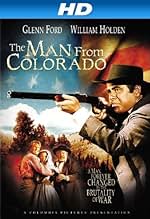
At the end of the Civil War, two friends return home to Colorado and one of them has changed and is violent and erratic.At the end of the Civil War, two friends return home to Colorado and one of them has changed and is violent and erratic.At the end of the Civil War, two friends return home to Colorado and one of them has changed and is violent and erratic.
- Director
- Writers
- Stars
- Awards
- 1 nomination total


William 'Bill' Phillips
- York
- (as Wm. 'Bill' Phillips)

Stanley Andrews
- Roger MacDonald
- (uncredited)
Emile Avery
- Townsman
- (uncredited)
Walter Bacon
- Townsman
- (uncredited)

Walter Baldwin
- Tom Barton
- (uncredited)

Symona Boniface
- Matron
- (uncredited)

Chet Brandenburg
- Party Guest
- (uncredited)

James Bush
- Cpl. Dixon
- (uncredited)
Nora Bush
- Townswoman
- (uncredited)
Boyd Cabeen
- Townsman
- (uncredited)
- Director
- Writers
- All cast & crew
- Production, box office & more at IMDbPro
6.72.1K
1
2
3
4
5
6
7
8
9
10
Featured reviews
War can do strange things to a man.
The end of the Civil War is nigh and one last pocket of Confederate resistance is holed up at Jacob's Gorge. Knowing their time is up they hoist the white flag in surrender. Union Colonel Owen Devereaux sees the white flag but orders the attack anyway. Returning home with his friend and colleague, Capt. Del Stewart, Devereaux grows ever more erratic by the day, his friends, his loves and all who cross him, are sure to pay if they can't rein in his madness.
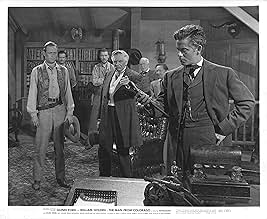
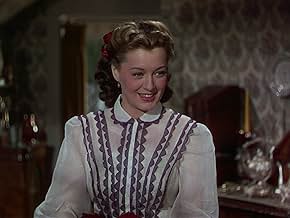
Starring Glenn Ford as Devereaux and William Holden as Stewart, directed by Henry Levin, The Man from Colorado, from a story by Borden Chase, is an intriguing psychological Western. The story follows the theme of a man ravaged by war and his inability to let go of the anger and mistrust gnawing away at him. Perfectly essayed by Ford as Devereaux (great to see him donning some bad guy boots), the film is rather grim in context. Light on action (no bad thing here at all) it's with the dialogue driven characters that Levin's film really triumphs. Having both become lawmen, it would have been easy for all to just play out a standard oater as the two friends are driven apart by not only their different levels of sanity (Holden's Stewart is an excellent counter point to Ford's blood thirst), but also the love of a good woman (Ellen Drew's petite Caroline Emmet). However, Chase's story has other elements to keep it from ever being formulaic. There's a deep political thread involving power and those entrusted with it, while the treatment of returning soldiers is firmly given prominence. Here the "boys" return after 3 years of being knee deep in blood and bone, to find that their claims are no longer valid. Snaffled by a greedy corporate type, thus as the "boys" look to the law for help?...
As a story it has substance of depth, how nice to also find that there are smart technical aspects to harness the screenplay. The Simi Valley location work is fabulous, most appealing. William E. Snyder's cinematography work is top draw, arguably his best work in the Western genre. It's fair to say that even a "c" grade Western can look nice if given a good transfer, but when the Technicolor print is good, you can tell the difference big time, and this piece is first rate. The dusty orange and browns of the scenery fabulously envelopes the blue uniforms, while the green and gold glow lamps are vivid and shine bright as if extra characters in the piece. Even Ford's greying temples have a classy sheen to them, almost belying his characters anger. All Western fans simply must hone into High Definition TV because although we always knew how fabulous these pictures looked, now it's another dimension of rewards unbound.
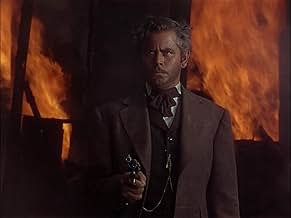
As the finale comes in a blaze of fire (welcome to hell!), The Man from Colorado has achieved the two essential Western requirements if it wants to be taken seriously - one is that it looks gorgeous, the other is that it has strong thematics to drive it forward - this has both. Hooray! 8/10
Starring Glenn Ford as Devereaux and William Holden as Stewart, directed by Henry Levin, The Man from Colorado, from a story by Borden Chase, is an intriguing psychological Western. The story follows the theme of a man ravaged by war and his inability to let go of the anger and mistrust gnawing away at him. Perfectly essayed by Ford as Devereaux (great to see him donning some bad guy boots), the film is rather grim in context. Light on action (no bad thing here at all) it's with the dialogue driven characters that Levin's film really triumphs. Having both become lawmen, it would have been easy for all to just play out a standard oater as the two friends are driven apart by not only their different levels of sanity (Holden's Stewart is an excellent counter point to Ford's blood thirst), but also the love of a good woman (Ellen Drew's petite Caroline Emmet). However, Chase's story has other elements to keep it from ever being formulaic. There's a deep political thread involving power and those entrusted with it, while the treatment of returning soldiers is firmly given prominence. Here the "boys" return after 3 years of being knee deep in blood and bone, to find that their claims are no longer valid. Snaffled by a greedy corporate type, thus as the "boys" look to the law for help?...
As a story it has substance of depth, how nice to also find that there are smart technical aspects to harness the screenplay. The Simi Valley location work is fabulous, most appealing. William E. Snyder's cinematography work is top draw, arguably his best work in the Western genre. It's fair to say that even a "c" grade Western can look nice if given a good transfer, but when the Technicolor print is good, you can tell the difference big time, and this piece is first rate. The dusty orange and browns of the scenery fabulously envelopes the blue uniforms, while the green and gold glow lamps are vivid and shine bright as if extra characters in the piece. Even Ford's greying temples have a classy sheen to them, almost belying his characters anger. All Western fans simply must hone into High Definition TV because although we always knew how fabulous these pictures looked, now it's another dimension of rewards unbound.
As the finale comes in a blaze of fire (welcome to hell!), The Man from Colorado has achieved the two essential Western requirements if it wants to be taken seriously - one is that it looks gorgeous, the other is that it has strong thematics to drive it forward - this has both. Hooray! 8/10
Mind blowing Glenn Ford performance
There are three films in Henry Levin's filmography that are pure gems: MAN FROM COLORADO, THE LONELY MAN and JOURNEY TO THE CENTER OF THE EARTH. So this one is a pure masterpiece, daring, jaw dropping, showing a Glenn Ford - already a rising star - in a villain character, and not any kind of villain, not the usual expectable villain, but a villain for whom you can have some feelings, nearly empathy. Glenn Ford, as far as I know, has not made anything like this since. Ok, there is Bill Holden, a sort of counterpoint to the evil lead Glenn Ford's character. Because a western needs a good main character after all. I highly recommend it.
Perfectly cast action packed Western
Ford and Holden worked together more than once, and they took turns playing "good cop bad cop" as the saying goes. In their case more "good Westerner bad Westerner". In this one, it's clear early that Ford is the bad guy. It was perfect casting. Ford and Holden are ex Civil War officers who become the law in a mining town. With usual poetic film license, the men from their unit live in that very town, and left mining claims while fighting in the war. While they were gone, a mine baron took advantage of a loophole to steal their claims. As the new judge, Ford complies with the letter of the law. We get a very complex and real look at the psychological influence of power, and interpretation of the law. Ford delivers his sadistic power hungry official with realism. He doesn't foam at the mouth when he performs his sadistic acts. Instead, he acts reluctant, as if he's chilled by violence. Then, after taking more and more power in his hands, he loses control of everything when he loses control of his wife, who remains faithful to him despite her respect and possible love for William Holden's character. Ford's character is very much like a Shakespearean king descending into madness and mayhem.
Post war problems in Colorado
Colorado was a large, booming territory in 1865. It did not enter the union until eleven years later, and as the only new state to get admission in 1876 it has the right to remain our "Centennial" State (for the centennial of the Declaration of Independence). In the Civil War there were few engagements in Colorado, but one that did stick out was a massacre (there is no other way of putting it) of Indians by a Colonel Chivington at Sands Creek. Chivington's daughter had been raped by an Indian, and he took advantage of a relatively mild act of legal disobedience by the Indians to kill a good number of them.
"The Man From Colorado" is not dealing directly with the Sands Creek Massacre (no Indians are involved in the story). Instead, Chivington's character is transferred to Glenn Ford, who in the closing days of the Civil War perpetrates a similar atrocity, this time on surrendering Confederates. Ford and his friend William Holden have been through the whole war together, but Holden has managed to retain a sense of balance despite the horrors he has seen. Ford is on a slippery slope. Even after the atrocity he is still aware of his act of cruelty and writes in his diary about it. He can't control himself anymore.
Unfortunately his war record stands him well with the richest men in the territory, especially Ray Collins. Collins has managed to get control of the claims that should be used to pay the ex-Union troops. He wants a strong man to be the Federal judge of Colorado territory. Who better than the no-nonsense Ford? So Ford gets the judicial position. Holden has lost his old girlfriend (Ellen Drew) to Ford, but he remains a friend. However he and Drew are increasingly aware of Ford's mental instability. So is everyone (except Ray Collins), as Ford keeps giving the most draconian decisions from the bench. In particular to his former soldiers, now fighting to get back their claims. This, of course leads to their becoming bandits. A vicious cycle, of course. Holden and Drew may be able to break it - Drew has seen Ford's diary.
In the wake of World War II's returning men, and the many suffering psychological trauma, "The Man From Colorado" was a timely film. Ford never played a psychotic type as well as here. Holden (actually in a supporting role - before his burst into super stardom) is a great balance to Ford. Rains performs well as do most of the cast. And by the time the holocaust unleashed by Ford's appointment to the bench is finished, even Ray Collins wishes he never was dumb enough to put this man on the bench.
"The Man From Colorado" is not dealing directly with the Sands Creek Massacre (no Indians are involved in the story). Instead, Chivington's character is transferred to Glenn Ford, who in the closing days of the Civil War perpetrates a similar atrocity, this time on surrendering Confederates. Ford and his friend William Holden have been through the whole war together, but Holden has managed to retain a sense of balance despite the horrors he has seen. Ford is on a slippery slope. Even after the atrocity he is still aware of his act of cruelty and writes in his diary about it. He can't control himself anymore.
Unfortunately his war record stands him well with the richest men in the territory, especially Ray Collins. Collins has managed to get control of the claims that should be used to pay the ex-Union troops. He wants a strong man to be the Federal judge of Colorado territory. Who better than the no-nonsense Ford? So Ford gets the judicial position. Holden has lost his old girlfriend (Ellen Drew) to Ford, but he remains a friend. However he and Drew are increasingly aware of Ford's mental instability. So is everyone (except Ray Collins), as Ford keeps giving the most draconian decisions from the bench. In particular to his former soldiers, now fighting to get back their claims. This, of course leads to their becoming bandits. A vicious cycle, of course. Holden and Drew may be able to break it - Drew has seen Ford's diary.
In the wake of World War II's returning men, and the many suffering psychological trauma, "The Man From Colorado" was a timely film. Ford never played a psychotic type as well as here. Holden (actually in a supporting role - before his burst into super stardom) is a great balance to Ford. Rains performs well as do most of the cast. And by the time the holocaust unleashed by Ford's appointment to the bench is finished, even Ray Collins wishes he never was dumb enough to put this man on the bench.
Another Fine Performance By Glenn Ford
Glenn Ford was as good as anyone playing an intense psychotic, which he does here in this above-average western. Ford, playing "Col.Owen Devereaux," gets elected to the position of "judge" right after his distinguished career in the Civil War. Unfortunately, he has mental problems and this position carries too much weight for an unstable sort such as him to be carrying. His best buddy, "Capt. Del Stewart" (William Holden) sees his friend as he is and tries to reason with him and help him out but winds up being alienated, too, by the paranoid judge whose problems escalate as the story goes on.
There's not a tremendous amount of action in here, but it still moves pretty fast and looks really nice on DVD. This is one of the few color films of the 1940s.
Ellen Drew, Ray Collins and Ed Buchnan provide good supporting help in the story. If you like some of the Anthony Mann-James Stewart westerns of the late '40s/early '50s, you should like this one, too.
There's not a tremendous amount of action in here, but it still moves pretty fast and looks really nice on DVD. This is one of the few color films of the 1940s.
Ellen Drew, Ray Collins and Ed Buchnan provide good supporting help in the story. If you like some of the Anthony Mann-James Stewart westerns of the late '40s/early '50s, you should like this one, too.


Did you know
- TriviaColumbia Pictures spent quite a bit on The Man in Colorado. At one point, the crew dynamited the side of a 1500-foot mountain in California's San Fernando Valley in order to create a deep gorge as called for by the script. And the western town they constructed was one of the largest location sets ever built by Columbia up to that time. During filming of a massive fire scene at the end, however, the set caught fire uncontrollably, and Holden and Ford tried to actually fight the fire until firemen could arrive. "Dad came away coated in black soot, with burns to his arms and hands," Ford's son Peter later wrote.
- GoofsMany of the men are wearing trousers with belt loops and belts. Belt loops were not added to men's trousers until the 20th century.
- Quotes
Owen Devereaux: [voiceover as he writes in his diary] I killed a hundred men today. I didn't want to. I couldn't help myself. What's wrong with me? I'm afraid... afraid I'm going crazy.
- Crazy creditsOpening credits are listed in the pages of a book being turned by a hand.
- ConnectionsFeatured in Brave Warrior (1952)
- SoundtracksWhen Johnny Comes Marching Home
(uncredited)
Written by Louis Lambert (pseudonym for Patrick Sarsfield Gilmore)
Played at the homecoming
- How long is The Man from Colorado?Powered by Alexa
Details
Box office
- Budget
- $1,000,000 (estimated)
- Runtime
- 1h 40m(100 min)
- Color
- Aspect ratio
- 1.37 : 1
Contribute to this page
Suggest an edit or add missing content