IMDb RATING
7.2/10
3.7K
YOUR RATING


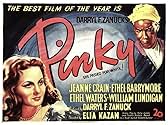
A light-skinned black woman falls in love with a white doctor, though he is unaware of her true race.A light-skinned black woman falls in love with a white doctor, though he is unaware of her true race.A light-skinned black woman falls in love with a white doctor, though he is unaware of her true race.
- Nominated for 3 Oscars
- 3 wins & 4 nominations total



Fred Aldrich
- Townsman
- (uncredited)
Shelby Bacon
- Boy
- (uncredited)
Betty Beard
- Minor Role
- (uncredited)
Rene Beard
- Teejore
- (uncredited)
Arthur Berkeley
- Townsman
- (uncredited)
Patsy Boniface
- Minor Role
- (uncredited)
Mildred Boyd
- Nurse
- (uncredited)
7.23.6K
1
2
3
4
5
6
7
8
9
10
Featured reviews
2 Ethels + 1 Kazan = Classic
It is not very "in" to like Elia Kazan right now, because he named names in the McCarthy witch-hunts and just received an honorary Oscar, but what a brilliant director he was. And if he didn't show much courage in the Fifties, he sure did in the Forties when he tackled racial prejudice head-on in two excellent movies: "Gentleman's Agreement" and "Pinky" (John Ford is said to have chickened-out of directing this one). "Pinky" is not as good as "Gentleman's Agreement", but it ain't half bad either. Here we see a deeply prejudiced South where black girls are attacked on the streets and shops refuse them service. The scenes are realistic, even brutally filmed, and the language strong for its day.
I'm sure Kazan must have been dismayed to have been given a Hollywood starlet to play the complex lead character - a black woman who looks white - but he managed to extract a damn good performance out of Jeanne Crain. The supporting cast is flawless, down to the smallest role. Kazan knew how to direct actors. Evelyn Varden deserves special mention as a vicious Southern matron. But the most praise must be reserved for the two Ethels - Waters and Barrymore - who are nothing short of brilliant.
Okay, the ending's a little dicky, and predictable, but the intentions of the film-makers are sincere and the results must have been revolutionary in 1949. I love the way Kazan shoots his movies too - long unbroken sequences and tracking shots, and excellent use of light and shadow - both of which probably coming from his stage experience. Kazan combined a strong ability to work with actors and a keen cinematic eye to create some of the best dramatic films of the century. And "Pinky" is one of these.
I'm sure Kazan must have been dismayed to have been given a Hollywood starlet to play the complex lead character - a black woman who looks white - but he managed to extract a damn good performance out of Jeanne Crain. The supporting cast is flawless, down to the smallest role. Kazan knew how to direct actors. Evelyn Varden deserves special mention as a vicious Southern matron. But the most praise must be reserved for the two Ethels - Waters and Barrymore - who are nothing short of brilliant.
Okay, the ending's a little dicky, and predictable, but the intentions of the film-makers are sincere and the results must have been revolutionary in 1949. I love the way Kazan shoots his movies too - long unbroken sequences and tracking shots, and excellent use of light and shadow - both of which probably coming from his stage experience. Kazan combined a strong ability to work with actors and a keen cinematic eye to create some of the best dramatic films of the century. And "Pinky" is one of these.
Top-notch all the way
Black people "passing for white" was not a new topic for Hollywood in 1949. It was part of the plot of "Imitation of Life" in 1934, but in that film, an actual black actress, Fredi Washington, played the role of the young woman who "passes" in the white world. In 1949, there were two films dealing with this issue: "Pinky" and "Lost Boundaries," and in both cases, the black person was played by a white actor.
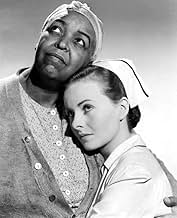
"Pinky" stars Jeanne Crain as Pinky Johnson, a black woman who looks white, so much so that she when she studies nursing in New York, she easily enters the white world and becomes involved with a white doctor who wants to marry her. Needing time to think over her situation, she returns home, which is a shack where her grandmother (Ethel Waters) lives in a black section of their southern town. There she is reminded of the prejudice and cruelty she left. When her grandmother asks her to care for an elderly white woman (Ethel Barrymore), hostility between patient and nurse leads to an uneasy bond.
This is a brilliant film all the way, magnificently directed by Elia Kazan and produced by Darryl F. Zanuck, who loved taking on these controversial social issues. The acting is superb: Jeanne Crain gives the best performance of her career as a woman who comes to grips with her true identity. She is so dignified as she walks through the town, soft-spoken yet strong, refusing to come down to the level of those around her. Ethel Barrymore is the elderly terminally ill woman Pinky reluctantly agrees to care for, and she nearly steals the movie with a no-nonsense performance. She's a woman set in her ways and opinions, but she's fair person who can see the human soul. It's probably the best drawn character in the film.
As a teen-aged fan of "Route 66," I can well remember the publicity around the show when Ethel Waters guest-starred. Of course white teens in the '60s had no idea of who she was or the circumstances of her life and career. Yet to this day I can remember her on that show. Forty years later, thankfully, I have an appreciation of her place in history and her work. Waters gives a powerful performance. Her character has accepted her lot in life but sacrifices everything so that her grandchild can have a better one. In her world, white men have the power, and you can clearly see her belief manifested in her courtroom demeanor.
The casting of Jeanne Crain is a sticking point here but not really when looked at in the context of the 1940s. Even with this casting, this is a bold movie, uncompromising in its depiction of white attitudes and racial slurs. It is just a pity that at the time of the filming, Fredi Washington was 45 years old and actually no longer in films. Washington looked so white that she was told by producers that if she would agree to "pass" and play white roles, she could have a career equal to that of Norma Shearer. She refused, and in order to play black women, she had to darken her skin. Lena Horne was deemed not white-looking enough. I suggest that the same is true for the beautiful Dorothy Dandridge. There may have been black actresses who looked white enough to play this role, but would anyone have answered such a casting call? Most importantly, "Pinky" would not have been made without Jeanne Crain, because Zanuck wanted her to do it, and it's a film that deserved making. The other sticking point in the film is Pinky's fiancée, a white doctor. His easy acceptance of her as black - and the fact that she kept it from him - is a weakness in the script. This was done perhaps to highlight that he wanted to her to continue to pass for white, therefore making it clear that Pinky has to the make the decision, but the scenario does not seem believable.
You can predict the ending of "Pinky," and despite complaints that it's a typically neat Hollywood one, I found it immensely satisfying as I found the entire experience of watching this truly classic film, "Pinky."
"Pinky" stars Jeanne Crain as Pinky Johnson, a black woman who looks white, so much so that she when she studies nursing in New York, she easily enters the white world and becomes involved with a white doctor who wants to marry her. Needing time to think over her situation, she returns home, which is a shack where her grandmother (Ethel Waters) lives in a black section of their southern town. There she is reminded of the prejudice and cruelty she left. When her grandmother asks her to care for an elderly white woman (Ethel Barrymore), hostility between patient and nurse leads to an uneasy bond.
This is a brilliant film all the way, magnificently directed by Elia Kazan and produced by Darryl F. Zanuck, who loved taking on these controversial social issues. The acting is superb: Jeanne Crain gives the best performance of her career as a woman who comes to grips with her true identity. She is so dignified as she walks through the town, soft-spoken yet strong, refusing to come down to the level of those around her. Ethel Barrymore is the elderly terminally ill woman Pinky reluctantly agrees to care for, and she nearly steals the movie with a no-nonsense performance. She's a woman set in her ways and opinions, but she's fair person who can see the human soul. It's probably the best drawn character in the film.
As a teen-aged fan of "Route 66," I can well remember the publicity around the show when Ethel Waters guest-starred. Of course white teens in the '60s had no idea of who she was or the circumstances of her life and career. Yet to this day I can remember her on that show. Forty years later, thankfully, I have an appreciation of her place in history and her work. Waters gives a powerful performance. Her character has accepted her lot in life but sacrifices everything so that her grandchild can have a better one. In her world, white men have the power, and you can clearly see her belief manifested in her courtroom demeanor.
The casting of Jeanne Crain is a sticking point here but not really when looked at in the context of the 1940s. Even with this casting, this is a bold movie, uncompromising in its depiction of white attitudes and racial slurs. It is just a pity that at the time of the filming, Fredi Washington was 45 years old and actually no longer in films. Washington looked so white that she was told by producers that if she would agree to "pass" and play white roles, she could have a career equal to that of Norma Shearer. She refused, and in order to play black women, she had to darken her skin. Lena Horne was deemed not white-looking enough. I suggest that the same is true for the beautiful Dorothy Dandridge. There may have been black actresses who looked white enough to play this role, but would anyone have answered such a casting call? Most importantly, "Pinky" would not have been made without Jeanne Crain, because Zanuck wanted her to do it, and it's a film that deserved making. The other sticking point in the film is Pinky's fiancée, a white doctor. His easy acceptance of her as black - and the fact that she kept it from him - is a weakness in the script. This was done perhaps to highlight that he wanted to her to continue to pass for white, therefore making it clear that Pinky has to the make the decision, but the scenario does not seem believable.
You can predict the ending of "Pinky," and despite complaints that it's a typically neat Hollywood one, I found it immensely satisfying as I found the entire experience of watching this truly classic film, "Pinky."
Love and Pride Conquer Prejudice
I've just seen this film for the 3rd time although I'm sure I hadn't seen it for at least 10 years. I had forgotten the depth and intensity of the prejudice displayed in the film. It is taking nothing away from Jeanne Craine's sensitive and beautiful performance to say that the star of the film is Ethel Waters - she is simply a magnificent presence throughout. It is one of those performances where every fibre of being is transmitted thru to the viewer - you cannot help but feel that the character is one of the strongest and bravest women ever shown on screen. Considering the shocking 1950's world of Amos and Andy and the in-every-sense-white-bread fiction world of Hollywood - Father Knows Best, The Donna Reed Show, etc - it is startling to see how movies so transcended the comfort-food level of TV and challenged audiences. This movie belongs, I believe, in the highest echelon of social commentary films - such as To Kill a Mockingbird, Gentlemen's Agreement. Absolute must see!!!
A truly Great Film - a woman's film that rivals Peck's "Mockingbird"
We'll know we've "arrived" when people can get past the casting of Jeanne Crain as a woman of color. There ARE mixed race women who are as light as Jeanne Crain, but because of the "one drop rule," in 1949 they were, and often still today are -considered "black." In today's multi-cultural society these women often embrace their heritage, but the issues they face remain sadly the same today in many facets. Example: African Americans who are educated are often told they are "talking white."
There is a reason that "she's passing" became an understood term. Very light skinned women & men in the early part of the 1900s DID try to do what Pinky here does.
I was really encouraged to see the scene with Nina Mae McKinney next to Frederick O'Neal, next to Jeanne Crain, all playing "black folks." THAT is the reality of miscegenation in the South, and that is what people still have trouble with: sometimes race is not just black and white. It is uncomfortable and true. (McKinney is marvelous, and fills every second of her screen time, whether she is removing a pebble from her shoe or coyly playing piano on top of a fence.)
I sadly find this film completely relevant today. These conversations of segregation and intermarriage are STILL going strong. There are African Americans who talk about "white women taking our men" or people of all races saying, "stay with your own race." This is segregationist, this is racist, and it still exists very strongly in all racial communities.
Dorothy Dandridge and Lena Horne- both beautiful & talented - are often mentioned as possible contenders for this role. They simply were NOT light enough to pass for white, it hampered their careers, and they have both acknowledged that. Hollywood in general likes their races obvious, casting is still largely done by type and stereotype, no matter what race even today it would be hard to find an actress of stature who identifies herself as black, but who can totally pass as white; the market doesn't hire these women.
Type casting is still the norm. Even my dark skinned actress friends have been told they don't "talk black enough" in auditions. Ethel Waters and Ethel Barrimore here, both fine actresses at the top of their game, were both type cast here in roles that they've basically played several times before; it is only the script context that made this special.
Jeanne Crain had enormous courage to portray this role. Not only is she perpetually faulted for being a white woman playing this role, but she risked her career, some people questioned her heritage in a racist age. That is a tribute to the reality and sensitivity she brought to the role, and her acting, which is often maligned because she had reserve. Her "under acting" is actually the preferred style today in TV and film. She was ahead of her time.
Part of why Crain is not liked much today is that she was a 40s type that is not valued today. Restrained, ladylike, mature in mindset, "high minded" - this is what she represented, and these things are not looked for in leading ladies today. What she represents has gone out of fashion; it was going out of fashion even then, and Kazan valued grittier, dirtier types like Brando. Kazan, who initially labeled her an impassive beauty queen, eventually credited her fine work.
This movie is sensitively done in all respects with really great performances top to bottom. It is not glossy or simple, neither race is solely good or solely bad. It is a disservice to have the only DVD commentary done by someone who clearly still does not like the film and doesn't appreciate the complexity of Crain's work here. That a New Yorker thought the court trial didn't look real because people were all fanning themselves shows he has never spent time in the south in a public gathering place.
This film is galling and aggravating, and unfortunately still very real. This is not a fun film, it is a great film, that speaks just as much to attitudes held today as it did then.
There is a reason that "she's passing" became an understood term. Very light skinned women & men in the early part of the 1900s DID try to do what Pinky here does.
I was really encouraged to see the scene with Nina Mae McKinney next to Frederick O'Neal, next to Jeanne Crain, all playing "black folks." THAT is the reality of miscegenation in the South, and that is what people still have trouble with: sometimes race is not just black and white. It is uncomfortable and true. (McKinney is marvelous, and fills every second of her screen time, whether she is removing a pebble from her shoe or coyly playing piano on top of a fence.)
I sadly find this film completely relevant today. These conversations of segregation and intermarriage are STILL going strong. There are African Americans who talk about "white women taking our men" or people of all races saying, "stay with your own race." This is segregationist, this is racist, and it still exists very strongly in all racial communities.
Dorothy Dandridge and Lena Horne- both beautiful & talented - are often mentioned as possible contenders for this role. They simply were NOT light enough to pass for white, it hampered their careers, and they have both acknowledged that. Hollywood in general likes their races obvious, casting is still largely done by type and stereotype, no matter what race even today it would be hard to find an actress of stature who identifies herself as black, but who can totally pass as white; the market doesn't hire these women.
Type casting is still the norm. Even my dark skinned actress friends have been told they don't "talk black enough" in auditions. Ethel Waters and Ethel Barrimore here, both fine actresses at the top of their game, were both type cast here in roles that they've basically played several times before; it is only the script context that made this special.
Jeanne Crain had enormous courage to portray this role. Not only is she perpetually faulted for being a white woman playing this role, but she risked her career, some people questioned her heritage in a racist age. That is a tribute to the reality and sensitivity she brought to the role, and her acting, which is often maligned because she had reserve. Her "under acting" is actually the preferred style today in TV and film. She was ahead of her time.
Part of why Crain is not liked much today is that she was a 40s type that is not valued today. Restrained, ladylike, mature in mindset, "high minded" - this is what she represented, and these things are not looked for in leading ladies today. What she represents has gone out of fashion; it was going out of fashion even then, and Kazan valued grittier, dirtier types like Brando. Kazan, who initially labeled her an impassive beauty queen, eventually credited her fine work.
This movie is sensitively done in all respects with really great performances top to bottom. It is not glossy or simple, neither race is solely good or solely bad. It is a disservice to have the only DVD commentary done by someone who clearly still does not like the film and doesn't appreciate the complexity of Crain's work here. That a New Yorker thought the court trial didn't look real because people were all fanning themselves shows he has never spent time in the south in a public gathering place.
This film is galling and aggravating, and unfortunately still very real. This is not a fun film, it is a great film, that speaks just as much to attitudes held today as it did then.
The Racism in Your Face
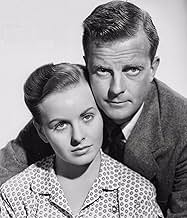
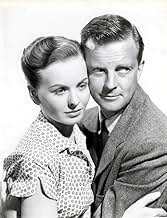
Well-mannered nurse Jeanne Crain (as Patricia "Pinky" Johnson) returns to her poor "Black" neighborhood, in Mississippi. There, she is welcomed by washerwoman grandmother Ethel Waters (as Granny). The pair are confronted by racism both outside and inside their home. Most importantly, it is revealed that Ms. Crain has been "passing" as "White". Moreover, Crain has become engaged to Caucasian doctor William Lundigan (as Thomas Adams). While working at home, to support Crain's nursing education, Ms. Waters has grown close to ailing Ethel Barrymore (as Miss Em). At first, Crain does not understand or accept the friendship between Waters, a former slave, and Ms. Barrymore, a former plantation owner. But, for her grandmother, Crain agrees to become Barrymore's nurse.
"Pinky" is a nerve-rattling classic.
Probably, the most obvious "debate" point was the casting of Crain in the title role. Crain was definitely "pink" enough (or, white-looking); but, her general "movie star" persona makes the casting decision seem risky. Yet, Crain, under Elia Kazan's direction, triumphs. There are so many ways Crain could have fallen into acting traps - she could have used mannerisms, make-up, and/or other stereotypical devices to "camp" up the "Black" - but, she avoids each trap. Crain performs the role with a great amount of dignity. She was deservedly honored with an "Academy Award" nomination.
Barrymore and Waters also perform well (as you might expect).
We are never, in the film, given a clear statement of facts regarding the heritage of Crain's "Pinky". My guess is that she is related, by blood, to both Waters and Barrymore. An attempted rape of Crain's character accounts, arguably, for her pink appearance; this might have occurred in more than one generation. It's also possible that a loving "mixed race" relationship was part of either Ethel's past. Making the "Black/White" history more clear would have only gotten the film into more trouble.
"Pinky" was quickly censored, and headed for the US Supreme Court.
One of the Board of Censors' objections was, "a white man retaining his love for a woman after learning that she is a Negro." However, Mr. Lundigan's "Thomas" is only willing to retain his love under certain conditions; and, this leads to a sharp, less "Hollywood"-styled ending. The Supreme Court was correct. Some of the film's best scenes show the way Crain is treated after other characters learn she is not white.
********* Pinky (9/29/49) Elia Kazan ~ Jeanne Crain, Ethel Barrymore, Ethel Waters, William Lundigan
"Pinky" is a nerve-rattling classic.
Probably, the most obvious "debate" point was the casting of Crain in the title role. Crain was definitely "pink" enough (or, white-looking); but, her general "movie star" persona makes the casting decision seem risky. Yet, Crain, under Elia Kazan's direction, triumphs. There are so many ways Crain could have fallen into acting traps - she could have used mannerisms, make-up, and/or other stereotypical devices to "camp" up the "Black" - but, she avoids each trap. Crain performs the role with a great amount of dignity. She was deservedly honored with an "Academy Award" nomination.
Barrymore and Waters also perform well (as you might expect).
We are never, in the film, given a clear statement of facts regarding the heritage of Crain's "Pinky". My guess is that she is related, by blood, to both Waters and Barrymore. An attempted rape of Crain's character accounts, arguably, for her pink appearance; this might have occurred in more than one generation. It's also possible that a loving "mixed race" relationship was part of either Ethel's past. Making the "Black/White" history more clear would have only gotten the film into more trouble.
"Pinky" was quickly censored, and headed for the US Supreme Court.
One of the Board of Censors' objections was, "a white man retaining his love for a woman after learning that she is a Negro." However, Mr. Lundigan's "Thomas" is only willing to retain his love under certain conditions; and, this leads to a sharp, less "Hollywood"-styled ending. The Supreme Court was correct. Some of the film's best scenes show the way Crain is treated after other characters learn she is not white.
********* Pinky (9/29/49) Elia Kazan ~ Jeanne Crain, Ethel Barrymore, Ethel Waters, William Lundigan


Did you know
- TriviaJohn Ford was the original director of the film but after seeing dailies, Darryl F. Zanuck felt Ford wasn't connecting with the material. Zanuck called Elia Kazan in New York and asked him to take over the film. Kazan felt he owed Zanuck for his film career and agreed to do the movie without even looking at the script. He flew to Los Angeles and started filming the next Monday.
- GoofsWhen the white officer slaps Rozelia on the left side of her face, she mistakenly rubs the right side of her face.
- Quotes
Pinky Johnson: I'm a Negro. I can't forget it, and I can't deny it. I can't pretend to be anything else, and I don't want to be anything else. Don't you see, Tom?
Dr. Thomas Adams: No, I don't.
Pinky Johnson: You can't live without pride.
- ConnectionsFeatured in Biography: Darryl F. Zanuck: 20th Century Filmmaker (1995)
- How long is Pinky?Powered by Alexa
Details
- Release date
- Country of origin
- Language
- Also known as
- Lo que la carne hereda
- Filming locations
- Production company
- See more company credits at IMDbPro
Box office
- Gross US & Canada
- $4,200,000
- Runtime
- 1h 42m(102 min)
- Color
- Aspect ratio
- 1.37 : 1
Contribute to this page
Suggest an edit or add missing content