IMDb RATING
7.3/10
4.3K
YOUR RATING

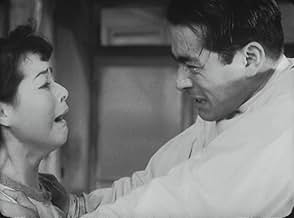
A surgeon gets syphilis from a patient when he cuts himself during an operation. The doctor's life is destroyed, but unlike the patient, he doesn't destroy others along with him.A surgeon gets syphilis from a patient when he cuts himself during an operation. The doctor's life is destroyed, but unlike the patient, he doesn't destroy others along with him.A surgeon gets syphilis from a patient when he cuts himself during an operation. The doctor's life is destroyed, but unlike the patient, he doesn't destroy others along with him.
- Director
- Writers
- Stars
- Awards
- 1 win total



- Director
- Writers
- All cast & crew
- Production, box office & more at IMDbPro
7.34.2K
1
2
3
4
5
6
7
8
9
10
Featured reviews
Struggles in post-war Japan
A film that touches on several sensitive subjects, most notably sexual desire and STD's. The "quiet duel" is one a young doctor (Toshiro Mifune) has with his conscience. During a messy operation in a field hospital while Japan is at war, he contracts syphilis by accidentally cutting himself and then getting exposed to a patient's blood. He comes home to a woman he loves (Miki Sanjo) but knows he shouldn't risk infecting her, so he resists a marriage they both want. He meets the man who inadvertently infected him and finds that he's recklessly gotten married and expecting to be a father, so through the two men, we can see how the honorable and dishonorable sides play out.
I love the women characters in this film, starting with Sanjo who has some fine moments in the grief of her longing, but even more so, Noriko Sengoku, who plays an apprentice nurse. She had come to the clinic (run by the doctor's father, also a doctor, and played by Takashi Shimura) in a crisis of her own, having been left by her adulterous husband, and pregnant. We don't see it in a flashback, but learn that she was suicidal and helped out by the doctor, so she now works there. In one fantastic moment, she chides a cop who sometimes drops by and tells him he knows nothing about what it means to have a baby as a man. My understanding is that her character was softened relative to the original play (The Abortion Doctor, by Kazuo Kikuta), and one of the unfortunate changes was that while the topic of abortion is broached, the character doesn't get one here, and in fact it's moralized against. Regardless, Sengoku turns in a strong performance for a character that has spunk as well as a soft side. The scene where she offers herself to Mifune to alleviate his brewing sexual desire is excellent. Lastly, the syphilitic soldier's wife is played by Chieko Nakakita, and here, too, we see glimpses of a woman's perspective in marriage.
I can't help but think the infection symbolizes something larger for many of the young men of Japan, who undoubtedly were trying to be honorable, good people but were then swept up into war. Many had their lives ruined by it, and many carried shame with them in the aftermath. That gives the film an interesting extra dimension, and there is no one better than Mifune to communicate the torture of these feelings. The film is a little slow at times but because of the context, the female characters, the immortal Toshiro Mifune, and how it addressed taboo subjects as best it could under American censors, I liked it.
I love the women characters in this film, starting with Sanjo who has some fine moments in the grief of her longing, but even more so, Noriko Sengoku, who plays an apprentice nurse. She had come to the clinic (run by the doctor's father, also a doctor, and played by Takashi Shimura) in a crisis of her own, having been left by her adulterous husband, and pregnant. We don't see it in a flashback, but learn that she was suicidal and helped out by the doctor, so she now works there. In one fantastic moment, she chides a cop who sometimes drops by and tells him he knows nothing about what it means to have a baby as a man. My understanding is that her character was softened relative to the original play (The Abortion Doctor, by Kazuo Kikuta), and one of the unfortunate changes was that while the topic of abortion is broached, the character doesn't get one here, and in fact it's moralized against. Regardless, Sengoku turns in a strong performance for a character that has spunk as well as a soft side. The scene where she offers herself to Mifune to alleviate his brewing sexual desire is excellent. Lastly, the syphilitic soldier's wife is played by Chieko Nakakita, and here, too, we see glimpses of a woman's perspective in marriage.
I can't help but think the infection symbolizes something larger for many of the young men of Japan, who undoubtedly were trying to be honorable, good people but were then swept up into war. Many had their lives ruined by it, and many carried shame with them in the aftermath. That gives the film an interesting extra dimension, and there is no one better than Mifune to communicate the torture of these feelings. The film is a little slow at times but because of the context, the female characters, the immortal Toshiro Mifune, and how it addressed taboo subjects as best it could under American censors, I liked it.
10dorlago
Brilliant but flawed!
As in "Drunken Angel" this film uses illness as a allegory to symbolize Japanese society after WW2. Though not as powerful "The Quiet Duel" does have some fine moments. The beginning sequence is beautifully filmed. All the Kurosawa techniques are there. The play of light, the pounding rain storm, the purposefully annoying fan, and the haunting music give this intro stunning power and make the rest of the film rather pale in comparison. The acting at times tends to be a little melodramatic but the characters are convincing even if their motives are questionable. I won't go into details. I don't want to give the story away. This film contains what I think is one of the best scenes between Mifune and Shimura. It is the magical, simple, and poignant musical cigarette box scene. An interesting point....... Watch this and then watch "Drunken Angel". Many of the same sets and props were used. Shimura's office in "Drunken Angel" and Mifune's office in "The Quiet Duel" are almost identical.
Heartbreaking Inner Duel between Conscience and Desire
In 1944, in WWII, Dr. Kyoji Fujisaki (Toshirô Mifune) cuts his finger with the scalpel during a surgery in a field hospital and is infected by spirochete from his patient Susumu Nakada (Kenjiro Uemura). After the blood test, he realizes that he has contracted syphilis, but he does not have the necessary medicine to treat the disease. He advises Nakada to seek medical treatment for his disease. In 1946, after the war, he breaks off his six years engagement with his beloved fiancée Misao Matsumoto (Miki Sanjo) but he does not tell the truth to her to let her go and find another man to get married. The hopeless apprentice nurse Rui Minegishi (Noriko Sengoku) witnesses Kioji injecting Salvarsan to treat his syphilis, and first she misunderstands why the doctor is sick. Later, after discovering the truth about his disease, she changes her behavior and becomes the confident listener of the doctor's inner feelings. When Kyoji accidentally meets Nakada in the police station of his town and finds that his wife is pregnant, he warns the reckless man about the risk of his lack of responsibility to his wife and baby.
"Shizukanaru Ketto" is a little and quite unknown gem from Master Akira Kurosawa, with a heartbreaking tale about the inner duel between conscience and desire of a pure and good doctor contaminated by a corrupt and dirty patient. Like in "Yoidore Tenshi" ("Drunken Angel") from the previous year, the story may be also interpreted in a metaphoric sense that reflects the moment of after-war society in Japan, where "a pure man is contaminated by the dirtiness and only three, five or ten years later he will be healed after a long treatment". The strong code of honor of Japanese people in the 40's explains the shame that would be for Dr. Fyoji to disclose that he had the dishonored syphilis. His sacrifice, hiding the truth from Misao, to give a chance to his twenty-seven year-old fiancée to find another husband is awesome. But the emotional scene when Kyoji discloses his feelings to Minegishi made my eyes wet, and is one of the most heartbreaking dialogs I have seen in a classic movie. Last but not the least; the story never becomes a melodramatic soap-opera due to the superb direction of Mr. Kurosawa. My vote is nine.
Title (Brazil): "Duelo Silencioso" ("Silent Duel")
"Shizukanaru Ketto" is a little and quite unknown gem from Master Akira Kurosawa, with a heartbreaking tale about the inner duel between conscience and desire of a pure and good doctor contaminated by a corrupt and dirty patient. Like in "Yoidore Tenshi" ("Drunken Angel") from the previous year, the story may be also interpreted in a metaphoric sense that reflects the moment of after-war society in Japan, where "a pure man is contaminated by the dirtiness and only three, five or ten years later he will be healed after a long treatment". The strong code of honor of Japanese people in the 40's explains the shame that would be for Dr. Fyoji to disclose that he had the dishonored syphilis. His sacrifice, hiding the truth from Misao, to give a chance to his twenty-seven year-old fiancée to find another husband is awesome. But the emotional scene when Kyoji discloses his feelings to Minegishi made my eyes wet, and is one of the most heartbreaking dialogs I have seen in a classic movie. Last but not the least; the story never becomes a melodramatic soap-opera due to the superb direction of Mr. Kurosawa. My vote is nine.
Title (Brazil): "Duelo Silencioso" ("Silent Duel")
well-acted melodrama that isn't one of Kurosawa's best
Every Akira Kurosawa film is at least interesting, and even in a work like The Quiet Duel, which is designed possible as something of a 'minor' work in the director's cannon, there's things about it that are striking and exceptional. The opening scene of the doctor, played by Toshiro Mifune, operating on the patient who will change his life forever, has a double-sided tension to it about not just the fate of the operation but of something else (this helps if you don't know what is going to happen). The way the scene is cut, the effect of the rain outside, the pan at the floor, the rain falling on the pan and making the one louder sound, it all amounts of a near-classic Kurosawa scene. This and the climax are, arguably, the best scenes of what is otherwise a good if shaky melodrama.
The problem might just be that I'm not tuned into this tearjerker side of Kurosawa, at least one that isn't as well-cooked, so to speak, as some of his best efforts. The premise is really good, as a doctor contracts syphilis by a mistake while operating on a patient during the war, and has to treat himself with medicine and cannot find a way to tell his to-be wife about his ailment (or, in fact, why he cannot marry). And saying that this isn't entirely 'well-cooked' is to say that the premise, while fascinating, doesn't entirely develop into a fully fascinating story. There are patches that seem to kind of coast, like something one might see on day-time television (not quite soap opera but close), and it's only in the last third that things really start to pick up dramatically.
Thankfully, Mifune is on his A-game as usual with his best collaborator at the helm, particularly in a scene where he (uncharacteristically for Kurosawa) breaks down in tears after seeing his once-possible-wife off to marry someone else, and there's a strange, cool mixture of musical instruments on the soundtrack- not quite what one would expect for a melodrama (i.e. xylophone, harmonica, harps, accordions). By the climax, as I said, it gets very good with the original patient Takata coming back in a drunken, syphilis-infected frenzy to the hospital. It just isn't enough, overall, to recommend it as highly as Kurosawa's best; Red Beard and Drunken Angel, also starring Mifune, are much better as medical/hospital dramas. 7.5/10
The problem might just be that I'm not tuned into this tearjerker side of Kurosawa, at least one that isn't as well-cooked, so to speak, as some of his best efforts. The premise is really good, as a doctor contracts syphilis by a mistake while operating on a patient during the war, and has to treat himself with medicine and cannot find a way to tell his to-be wife about his ailment (or, in fact, why he cannot marry). And saying that this isn't entirely 'well-cooked' is to say that the premise, while fascinating, doesn't entirely develop into a fully fascinating story. There are patches that seem to kind of coast, like something one might see on day-time television (not quite soap opera but close), and it's only in the last third that things really start to pick up dramatically.
Thankfully, Mifune is on his A-game as usual with his best collaborator at the helm, particularly in a scene where he (uncharacteristically for Kurosawa) breaks down in tears after seeing his once-possible-wife off to marry someone else, and there's a strange, cool mixture of musical instruments on the soundtrack- not quite what one would expect for a melodrama (i.e. xylophone, harmonica, harps, accordions). By the climax, as I said, it gets very good with the original patient Takata coming back in a drunken, syphilis-infected frenzy to the hospital. It just isn't enough, overall, to recommend it as highly as Kurosawa's best; Red Beard and Drunken Angel, also starring Mifune, are much better as medical/hospital dramas. 7.5/10
I have to have the conscience of a doctor, and the conscience of a man. It is hard.
One rarely, if ever goes wrong watching a film directed by Akira Kurosawa and starring Toshirô Mifune, even if it one of the early ones. In this film, however, the star is not Mifune, but the man who plays his father, Takashi Shimura, destined to achieve greater fame in Ikiru, and The Seven Samurai.
Mifune comes back from the war with Syphilis, a disease he contracted during an operation. He must make drastic changes in his life starting with his finance of six years, Miki Sanjo. He finds the man who gave him the disease, and spends his energy trying to get him to stop spreading it, horrified that he has a pregnant wife.
Noriko Sengoku (Stray Dog, Drunken Angel, Blind Beast) plays a self-absorbed nurse trainee and provides comedy to an otherwise depressing film. She transforms after having a baby she didn't want, and after learning of Mifune's plight. She is a talented performer in this film showing many facets.
Mifune comes back from the war with Syphilis, a disease he contracted during an operation. He must make drastic changes in his life starting with his finance of six years, Miki Sanjo. He finds the man who gave him the disease, and spends his energy trying to get him to stop spreading it, horrified that he has a pregnant wife.
Noriko Sengoku (Stray Dog, Drunken Angel, Blind Beast) plays a self-absorbed nurse trainee and provides comedy to an otherwise depressing film. She transforms after having a baby she didn't want, and after learning of Mifune's plight. She is a talented performer in this film showing many facets.


Did you know
- TriviaThis film was the first film Kurosawa directed outside of Toho, as it was a co-production between Daiei Studios and the newly formed Art Film Association, of which Kurosawa was a founding member.
- Quotes
Dr. Konosuke Fujisaki: If he had been happy, he might have become just a snob.
- ConnectionsFeatured in A Message from Akira Kurosawa: For Beautiful Movies (2000)
- SoundtracksBengawan Solo
Written by Gesang
(uncredited)
The melody's heard in the police station when Fujisaki talked to Nakata
- How long is The Quiet Duel?Powered by Alexa
Details
- Runtime
- 1h 35m(95 min)
- Color
- Sound mix
- Aspect ratio
- 1.37 : 1
Contribute to this page
Suggest an edit or add missing content