IMDb RATING
7.3/10
6.4K
YOUR RATING


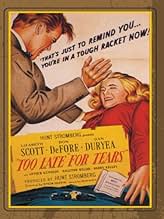
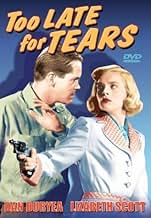
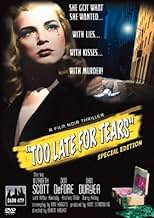
Through a fluke circumstance, a ruthless woman stumbles across a suitcase filled with $60,000, and is determined to hold onto it even if it means murder.Through a fluke circumstance, a ruthless woman stumbles across a suitcase filled with $60,000, and is determined to hold onto it even if it means murder.Through a fluke circumstance, a ruthless woman stumbles across a suitcase filled with $60,000, and is determined to hold onto it even if it means murder.
- Awards
- 2 wins total




Jimmy Ames
- Fat Man
- (uncredited)

Georgia Backus
- Woman
- (uncredited)

Robert Bice
- Policeman
- (uncredited)

Paul Bradley
- Hotel Clerk
- (uncredited)

John Butler
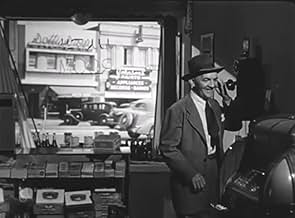
- Little Man Answering Phone
- (uncredited)

David Clarke
- Jack Sharber
- (uncredited)

Jimmie Dodd
- Second Car Thief
- (uncredited)

Renee Donatt
- Young Lover in Boat
- (uncredited)
Charles Flynn
- Policeman
- (uncredited)

Billy Halop
- Boat Attendant
- (uncredited)
Richard Irving
- First Car Thief
- (uncredited)
Perry Ivins
- Checkroom Attendant
- (uncredited)
- Director
- Writer
- All cast & crew
- Production, box office & more at IMDbPro
7.36.4K
1
2
3
4
5
6
7
8
9
10
Featured reviews
Lizabeth Scott tries her luck as unregenerate femme fatale in hard-boiled noir
Lizabeth Scott did her best remembered work in film noir (more than half of her only 21 screen credits fall within the noir cycle), and became one of its iconic faces. Rarely, however, was she called upon to play the fully-fledged femme fatale, and there's probably a reason for this: She couldn't bring off duplicity.
Her smile had no shadings into wry, or ironic, or smirky; it had but one setting a fresh, guileless grin that lit up like a Christmas tree. F. Scott Fitzgerald (in his sad screenwriting days) observed of Joan Crawford that you couldn't give her a simple stage direction like `telling a lie' because then she'd give an impersonation of Benedict Arnold betraying West Point to the British. But Scott can't manage even that, which results in confusingly mixed signals when her characters are motivated by malice, like Coral Chandler in Dead Reckoning: Her smile keeps convincing us that she's on the up-and-up.
Her damn smile keeps switching on in Too Late For Tears, even though there's no doubt that she's one hard, cold case. She and husband Arthur Kennedy are bickering one night en route to a party in the Hollywood Hills when suddenly a suitcase crammed with cash lands in their roadster. He wants to turn it over to the police, but she persuades him to think it over, so they check the valise at Union Station. When she starts buying clothes and furs against the checked capital, it's clear she has no intention of surrendering the windfall; we learn that her background was `white-collar poor, middle-class poor,' and that she'd made a previous marriage solely for money.
Strange men start ringing her doorbell. First Dan Duryea shows up, a blackmailer for whom the payoff was intended. He slaps her around playfully (`What do they call you besides stupid,' she taunts him. `Stupid will do if you don't bruise easily,' he purrs back). Quickly Scott maneuvers Duryea into helping him murder Kennedy but still won't tell him where the money's stashed. Though wary, he falls for her, starts hitting the bottle, and grows careless. Meanwhile, Kennedy's sister (Kristine Miller) harbors suspicions about his mysterious disappearance. When the next caller (Don DeFore) shows up, claiming to be an old Air Corps buddy of Kennedy's, she makes an alliance with him to find out what's really going on. And the claim ticket for the money keeps changing hands....
The plot is none too simple, and in consequence director Byron Haskin spends a lot of time trying to keep it clear rather than addressing some questions about character and logic that inevitably arise. Why did the avaricious, manipulative Scott marry Kennedy in the first (or second) place? Why does the sister live so conveniently close? How did Duryea, and for that matter DeFore, find Scott so easily? But few thriller plots are so tightly constructed that they survive rigorous analysis. Too Late For Tears passes muster as hard-boiled, late-40s noir and as one of Scott's hardest, strongest performances, inappropriate smile and all.
Her smile had no shadings into wry, or ironic, or smirky; it had but one setting a fresh, guileless grin that lit up like a Christmas tree. F. Scott Fitzgerald (in his sad screenwriting days) observed of Joan Crawford that you couldn't give her a simple stage direction like `telling a lie' because then she'd give an impersonation of Benedict Arnold betraying West Point to the British. But Scott can't manage even that, which results in confusingly mixed signals when her characters are motivated by malice, like Coral Chandler in Dead Reckoning: Her smile keeps convincing us that she's on the up-and-up.
Her damn smile keeps switching on in Too Late For Tears, even though there's no doubt that she's one hard, cold case. She and husband Arthur Kennedy are bickering one night en route to a party in the Hollywood Hills when suddenly a suitcase crammed with cash lands in their roadster. He wants to turn it over to the police, but she persuades him to think it over, so they check the valise at Union Station. When she starts buying clothes and furs against the checked capital, it's clear she has no intention of surrendering the windfall; we learn that her background was `white-collar poor, middle-class poor,' and that she'd made a previous marriage solely for money.
Strange men start ringing her doorbell. First Dan Duryea shows up, a blackmailer for whom the payoff was intended. He slaps her around playfully (`What do they call you besides stupid,' she taunts him. `Stupid will do if you don't bruise easily,' he purrs back). Quickly Scott maneuvers Duryea into helping him murder Kennedy but still won't tell him where the money's stashed. Though wary, he falls for her, starts hitting the bottle, and grows careless. Meanwhile, Kennedy's sister (Kristine Miller) harbors suspicions about his mysterious disappearance. When the next caller (Don DeFore) shows up, claiming to be an old Air Corps buddy of Kennedy's, she makes an alliance with him to find out what's really going on. And the claim ticket for the money keeps changing hands....
The plot is none too simple, and in consequence director Byron Haskin spends a lot of time trying to keep it clear rather than addressing some questions about character and logic that inevitably arise. Why did the avaricious, manipulative Scott marry Kennedy in the first (or second) place? Why does the sister live so conveniently close? How did Duryea, and for that matter DeFore, find Scott so easily? But few thriller plots are so tightly constructed that they survive rigorous analysis. Too Late For Tears passes muster as hard-boiled, late-40s noir and as one of Scott's hardest, strongest performances, inappropriate smile and all.
Film Noir with a Female Loser in the Middle
My 6th Noir in a self-managed study of Noir.
The web of deceit weaved by this crazy blond is a marvel to behold. Her brazen disregard for common sense, and the way she controls people around her, make her quite hate-worthy, which would make the actress Lizabeth Scott pleased to know.
Kristine Miller stole my heart with her grace and femininity as the innocent in-law, trying to make sense of the mad house of characters dropping in and out of her brother's apartment.
The toxic, manipulative love/hate relationship portrayed by Dan Duryea and Lizabeth Scott radiated sparks of electricity. See if *you* can figure out where that thing is headed. Only one of them can get the upper hand in this caper.
As I watched the version on Archive.org, I found myself wondering, "How are they going to wrap this up with only a few minutes to go?" knowing the clock is running out only heightens the tension of this nifty Noir.
Why aren't more people suspicious around such toxic characters? Maybe we all dread looking behind that curtain. Classic tragedy speaks to this.
This is some excellent story-telling, and is highly recommended.
The web of deceit weaved by this crazy blond is a marvel to behold. Her brazen disregard for common sense, and the way she controls people around her, make her quite hate-worthy, which would make the actress Lizabeth Scott pleased to know.
Kristine Miller stole my heart with her grace and femininity as the innocent in-law, trying to make sense of the mad house of characters dropping in and out of her brother's apartment.
The toxic, manipulative love/hate relationship portrayed by Dan Duryea and Lizabeth Scott radiated sparks of electricity. See if *you* can figure out where that thing is headed. Only one of them can get the upper hand in this caper.
As I watched the version on Archive.org, I found myself wondering, "How are they going to wrap this up with only a few minutes to go?" knowing the clock is running out only heightens the tension of this nifty Noir.
Why aren't more people suspicious around such toxic characters? Maybe we all dread looking behind that curtain. Classic tragedy speaks to this.
This is some excellent story-telling, and is highly recommended.
See It For Dan
So what would YOU do if someone chucked a suitcase containing $60,000 into the backseat of your car? Well, if you're film noir "bad girl" Lizabeth Scott in the 1949 picture "Too Late For Tears," the answer is a no-brainer: Drive off as fast as you can and try to keep your greedy mitts on it! For Arthur Kennedy, playing her husband, the issue is not quite so cut and dried. And things become even more problematic when the tough guy who this payoff was intended for, portrayed by the great Dan Duryea, comes knocking at their door, all leading to gunfire, a poisoning, double crosses and still more double crosses, in this very entertaining if minor noir effort. The film is a somewhat contrived affair, made on the cheap--it almost strikes one as a "B picture" with an A-list cast--but ultimately succeeds in winning the viewer over, largely due to some fine performances. While Scott's sexpot charms have always been lost on me, it is hard to deny her great acting abilities, and Dan Duryea here almost single-handedly manages to turn a routine potboiler into something quite memorable (hardly the first time he did this for a picture; Duryea was certainly one of the great character actors of the 1940s). Director Byron Haskin, who would go on to helm some of my favorite pictures, such as "The War of the Worlds," "The Naked Jungle" and "Robinson Crusoe on Mars," here shows that he was quite capable of creating a film in the noir genre, as well. Kudos also to Don DeFore (whom baby boomers may remember from the 1960s TV show "Hazel") for his mysteriously motivated snoopy character. In all, a fun if lesser noir. Too bad that the DVD in question here is another crummy-looking one from Alpha Video. This is a company that has a gigantic catalog of "public domain" films, most of which have been put onto DVD with zero effort at film restoration. While the company does serve its niche, watching its films CAN be a bitch!
good noir, good cast
Lizabeth Scott sinks her teeth into the role of a ruthless woman in "Too Late for Tears," also known as "Killer Bait," a 1949 film directed by Byron Haskin and written by a man who later became a very popular TV writer-director and creator of some top series, Roy Huggins.
The film also stars Dan Duryea, Don DeFore, and Arthur Kennedy.
Scott plays Jane Palmer, the wife of Alan Palmer (Kennedy) - while driving one night, someone from another car throws a satchel into their car. It turns out to be $60,000 (the equivalent of $598,000 today). Alan doesn't want anything to do with it, preferring to take it to the police, but Jane wants to keep it and spend it. Finally she convinces him to hide the money and wait for a time.
Jane, it turns out, is one tough cookie, and without giving much away, let's say that getting her hands on that money becomes her full time job, and she's determined that nothing and no one will stand in her way. Unfortunately for a few people, they stood in her way.
Really terrific noir set in Hollywood, with Dan Duryea playing a sleaze, but actually less of a sleaze than Jane - he's more of an opportunist than evil; Don Defore is friendly and unassuming as a friend of Alan Palmer's, and Arthur Kennedy, one of the finest actors in film, is just plain wasted. Perhaps this was a film he had to do in order to fulfill a contract, or it was a loanout on trade - it was a waste.
It's Scott's film, and with her husky voice, lovely smile and pouty lips, she's able to, at first anyway, hide a core of steel underneath.
Very good. If you're a fan of film noir, see this one.
The film also stars Dan Duryea, Don DeFore, and Arthur Kennedy.
Scott plays Jane Palmer, the wife of Alan Palmer (Kennedy) - while driving one night, someone from another car throws a satchel into their car. It turns out to be $60,000 (the equivalent of $598,000 today). Alan doesn't want anything to do with it, preferring to take it to the police, but Jane wants to keep it and spend it. Finally she convinces him to hide the money and wait for a time.
Jane, it turns out, is one tough cookie, and without giving much away, let's say that getting her hands on that money becomes her full time job, and she's determined that nothing and no one will stand in her way. Unfortunately for a few people, they stood in her way.
Really terrific noir set in Hollywood, with Dan Duryea playing a sleaze, but actually less of a sleaze than Jane - he's more of an opportunist than evil; Don Defore is friendly and unassuming as a friend of Alan Palmer's, and Arthur Kennedy, one of the finest actors in film, is just plain wasted. Perhaps this was a film he had to do in order to fulfill a contract, or it was a loanout on trade - it was a waste.
It's Scott's film, and with her husky voice, lovely smile and pouty lips, she's able to, at first anyway, hide a core of steel underneath.
Very good. If you're a fan of film noir, see this one.
Terrific Noir with a great central performance
Made in 1949 this is one of those films that is a must for all noir fans. Do be warned though as this fell out of copyright some years ago and was widely duplicated – often very badly – but this is the restored version and is an absolute gem.
Late one night a couple are driving to a party that is far from inviting when a slow car tosses a bag into their open top car. The bag is choc full f cash. The wife is Jane Palmer (Lizabeth Scott) and she decides that she is going to hang onto the cash – despite what her husband wants. So she decides to convince him to keep it. He is cut from a different cloth and it soon becomes apparent how far she will go to keep it.
Now Lizabeth Scott is a show stealer here and that is even though everyone else is great too. She is so convincing as the manipulative and self centred vixen and I just loved it. As I said earlier watch out for poor copies or better still get the restored version. For those of you that love fashion, there are some timeless and elegant gowns on display here too and the men all wear zoot suits so you can't win 'em all. This is a must for all fans of the genre and one that has aged with style.
Late one night a couple are driving to a party that is far from inviting when a slow car tosses a bag into their open top car. The bag is choc full f cash. The wife is Jane Palmer (Lizabeth Scott) and she decides that she is going to hang onto the cash – despite what her husband wants. So she decides to convince him to keep it. He is cut from a different cloth and it soon becomes apparent how far she will go to keep it.
Now Lizabeth Scott is a show stealer here and that is even though everyone else is great too. She is so convincing as the manipulative and self centred vixen and I just loved it. As I said earlier watch out for poor copies or better still get the restored version. For those of you that love fashion, there are some timeless and elegant gowns on display here too and the men all wear zoot suits so you can't win 'em all. This is a must for all fans of the genre and one that has aged with style.


Did you know
- TriviaThe UCLA Film and Television Archive has remastered Too Late for Tears (1949) from a recently discovered original print. The restoration process took five years after the print was discovered in France, and involved piecing segments of another copy into the restored version to have a complete film. The restoration was funded by the Film Noir Foundation. The restored version was broadcast on 7/17/2015, on the Turner Classic Movies network in pristine condition. The restored version of the film was released in 2016 on Blu-ray in the United States and the United Kingdom. The film has developed a cult following in the years since its release.
- GoofsJane tells Alan that the $790 she has spent represents about one tenth of a percent of the money in the satchel. Since they thought they had $100,000 (later determined by Danny the blackmailer to be $60,000). One tenth of a percent of 100,000 would be $100, so she spent closer to eight tenths of a percent of what she thought they had. A tenth of a percent of $60,000 would be $60, and $790 would be slightly over 1.3 per cent of that amount.
- Quotes
Danny Fuller: Don't ever change, Tiger. I don't think I'd like you with a heart.
- ConnectionsEdited into Your Afternoon Movie: Too Late for Tears (2022)
- How long is Too Late for Tears?Powered by Alexa
Details
- Runtime
- 1h 39m(99 min)
- Color
- Aspect ratio
- 1.37 : 1
Contribute to this page
Suggest an edit or add missing content