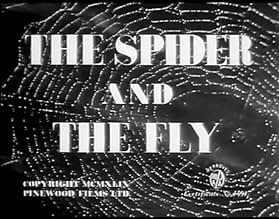
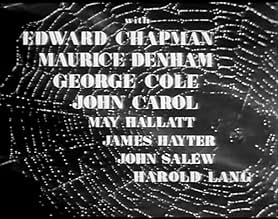
A clever and dedicated French police official, a cleverer master-thief whom he secretly admires, the woman loved by the official who is in love with the thief, at the outbreak of World War I... Read allA clever and dedicated French police official, a cleverer master-thief whom he secretly admires, the woman loved by the official who is in love with the thief, at the outbreak of World War I.A clever and dedicated French police official, a cleverer master-thief whom he secretly admires, the woman loved by the official who is in love with the thief, at the outbreak of World War I.
- Monique
- (as May Hallat)
- Jacque's Grandmother
- (as Madge Brinley)
- Director
- Writer
- All cast & crew
- Production, box office & more at IMDbPro
Featured reviews
Guy Rolfe vs. Eric Portman
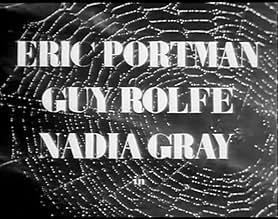
Eric Portman is Fernand Maubert, a French police officer around World War II. He is being heavily criticized because he is unable to catch a very efficient robber, Philippe Lodocq (Guy Rolfe) who always seems to have an alibi when there's a robbery.
If things weren't bad enough, both men are in love with the same woman (Nadia Gray). She is madly in love with Philippe, who at first uses her; later, however, he realizes that he does love her.
Happily for Maubert, he is able finally to catch Philippe and throw him in prison for six years. War breaks out, and Maubert, working with the government, is summoned and given an assignment. Maubert knows just the man to carry it out.
I don't know if I gave this an 8 because I've seen so mediocre films lately, or if this was really good. I think this was really good, particularly because of the performances of Portman and the elegant, handsome Guy Rolfe. I only knew him from the film "King of the Khyber Rifles" but was too busy looking at Tyrone Power to notice him.
The lesson of the film is that, for the good of a country, opposing forces can work together. Given the situation in the U. S. today, I found it timely.
There's are two twists at the end, both of which add to the film.
Recommended, especially if you're not familiar with Guy Rolfe.
Paris when it fizzles
It all starts to go horribly wrong for Rolfe, when a routine, dead of night caper, involving a spot of tight rope walking and an assault on the north face of the Eiger results in the death of both his accomplice and a police officer. Soon afterwards, Portman nails his man, but it's all so civilized and well....well-mannered. It's like watching a game of chess. Could you imagine Bogart serenely accompanying the arresting officer on a gentle stroll, exchanging pleasantries, popping into a bar for a convivial, 'fair cop guv' drink, before continuing to the station to face charges and jail? NO WAY! Given the slenderest opportunity, he'd have unleashed the knuckle sandwich from Hell and disappeared into the night.
Where 'Spider and the Fly' scores some Brownie points is as a 'twofer'. The cop vs robber scenario is only half the story. As the Great War rages, Rolfe rots remorselessly in a prison cell until Portman identifies him as a potential hot property in the allied effort and presses for his release.
Despite the presence of love interest Nadia Gray, the movie never really sparks, seems oddly devoid of passion. Everyone is so ensconced in prim, proper Edwardian style decorum, that 'Spider and the Fly' remains a tepid, torpid plodder, most notable for brief, early appearances by Hattie Jacques, Arthur Lowe and Campbell Singer - familiar faces on British T. V. during the 1960's and 70's.
Great performances, tension, and atmosphere.
Strange French first world war spy story with an odd twist
The story is very thought-provoking, there is a toch of tragedy to it as well, Portman and Rolfe are both at their best, and they team very well together.
Cherchez la femme.
Films set in Europe featuring English actors seldom ring true but this is a glorious exception. Both Portman and Rolfe, whose career alas was hampered by tuberculosis, are first class. Excellent support from Edward Chapman and Maurice Denham. It is of course the lovely Miss Gray who supplies the exotic touch.
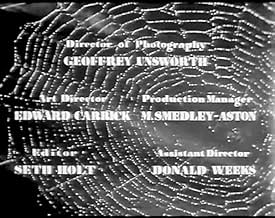
Based by writer Robert Westerby on a story related to him by a member of the French police, this film is atmospherically shot by Geoffrey Unsworth and marks an impressive editorial debut by Seth Holt.
Although no doubt considered a 'minor' work of Robert Hamer this is extremely entertaining. It typifies Hamer's flair, distinctive visual style and what one critic astutely called 'his bitter intelligence'.
Did you know
- TriviaThis was the first release from the newly revived Mayflower Pictures Corporation which had been set up in 1937 by Charles Laughton and Erich Pommer, but gone into hiatus on the outbreak of World War II.
- Quotes
Fernand Maubert: How many times have I arrested you?
Philippe Lodocq: Oh, five, ten...
Fernand Maubert: And still you go on?
Philippe Lodocq: You know that absinthe is a vicious drink. It can blind you. But you still drink it.
- SoundtracksSymphony
(Symphonie) (uncredited)
Music by Alex Alstone
French lyrics by André Tabet and Roger Bernstein
English lyrics by Jack Lawrence
Details
- Release date
- Country of origin
- Languages
- Also known as
- Der Meisterdieb von Paris
- Filming locations
- Production company
- See more company credits at IMDbPro
- Runtime
- 1h 27m(87 min)
- Color
- Aspect ratio
- 1.37 : 1