IMDb RATING
6.5/10
1.2K
YOUR RATING

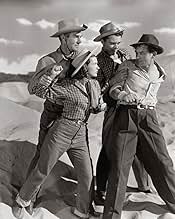
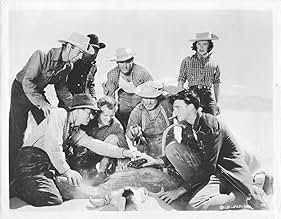
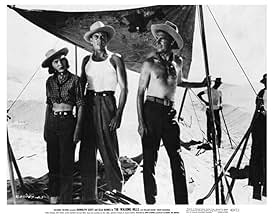
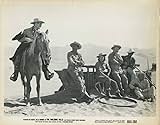
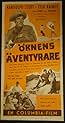
A group of treasure hunters search for a wagon load of gold, buried years before in Death Valley.A group of treasure hunters search for a wagon load of gold, buried years before in Death Valley.A group of treasure hunters search for a wagon load of gold, buried years before in Death Valley.



Ralph Dunn
- Detective
- (uncredited)

Ray Jones
- Rodeo Spectator
- (uncredited)
John McKee
- Bronc Handler
- (uncredited)
Frank Merlo
- Bronc Handler
- (uncredited)
Jack Parker
- American Customs Guard
- (uncredited)

Charles Stevens
- Cleve
- (uncredited)
Frank Yaconelli
- Bartender
- (uncredited)
- Director
- Writers
- All cast & crew
- Production, box office & more at IMDbPro
6.51.2K
1
2
3
4
5
6
7
8
9
10
Featured reviews
Like shovelling sand into the wind.
The Walking Hills is directed by John Sturges and written by Alan LeMay. It stars Randolph Scott, Ella Raines, Arthur Kennedy, Edgar Buchanan, John Ireland, William Bishop, Josh White and Jerome Courtland. Music is by Arthur Morton and cinematography by Charles Lawton Jr.
Upon hearing a chance statement about lost gold, a disparate group of people head out in search of it to the desert plains of The Walking Hills...
Whipping up a sandstorm.
A sort of contemporary Western film noir fusion, The Walking Hills is a darn fine drama that is acted accordingly. Though blessed with action, tension and passion, it's as a character study where the picture excels. True enough to say it's not overly complex stuff, the greed is bad motif a standard narrative strand, as is the tricky love triangle that resides within the sandy tale, but with the wily Sturges and the shrewd LeMay pulling the strings this plays out always as compelling. With the great Lawton Jr. adding his considerable skills as a photographer - ensuring the Alabama Hills and Death Valley locations are key characters themselves - the production shines.
Often mentioned in reference to The Treasure of the Sierra Madre, it of course is not as good as that superb picture. That it earns its right to be considered a baby brother to it, though, is testament to its worth in itself. 7/10
Upon hearing a chance statement about lost gold, a disparate group of people head out in search of it to the desert plains of The Walking Hills...
Whipping up a sandstorm.
A sort of contemporary Western film noir fusion, The Walking Hills is a darn fine drama that is acted accordingly. Though blessed with action, tension and passion, it's as a character study where the picture excels. True enough to say it's not overly complex stuff, the greed is bad motif a standard narrative strand, as is the tricky love triangle that resides within the sandy tale, but with the wily Sturges and the shrewd LeMay pulling the strings this plays out always as compelling. With the great Lawton Jr. adding his considerable skills as a photographer - ensuring the Alabama Hills and Death Valley locations are key characters themselves - the production shines.
Often mentioned in reference to The Treasure of the Sierra Madre, it of course is not as good as that superb picture. That it earns its right to be considered a baby brother to it, though, is testament to its worth in itself. 7/10
Film Noir - Way Out West
This is a really interesting picture. In almost all respects it represents a transition from 1940's film noir to 1950's new age angst - in buckskin and boots.
It stars a diverse group of slightly shady characters who accidentally meet up in a Mexican border town and stumble across a possible fortune out in the desert. The supporting cast is first rate with John Ireland, Edgar Buchanan (as the grizzled old prospector), William Bishop, and Arthur Kennedy. The lead is Randolph Scott with the luscious Ella Raines as the love interest. Too many people underestimate Randolph Scott. They describe his acting as robotic or wooden. His range as microscopic. I even have a brother who questions his sexual orientation. I think he is underrated. He represents, to me, an all American hero in the mold of John Wayne. Whether he's in fatigues or in the saddle, his steely eyed, square jawed performance always adds something to the production. Ella Raines likewise managed to create a smoldering, sexy presence in way too many second rate movies.
This is a contemporary Western (1949) with a clearly modern twist. Not just a falling out between thieves, but an intricate, complicated plot with lots of flashbacks and character development. Most of the principal players spend valuable time beating themselves up for mistakes they made. For a bunch of coyoots, they seem to be mighty introspective. Yet, it doesn't seem to detract from the overall tension built in to the story.
I won't go into the finale, but if you liked Treasure of the Sierra Madre and you're fascinated by the legend of The Lost Dutchman Mine, tune in. You won't be disappointed.
It stars a diverse group of slightly shady characters who accidentally meet up in a Mexican border town and stumble across a possible fortune out in the desert. The supporting cast is first rate with John Ireland, Edgar Buchanan (as the grizzled old prospector), William Bishop, and Arthur Kennedy. The lead is Randolph Scott with the luscious Ella Raines as the love interest. Too many people underestimate Randolph Scott. They describe his acting as robotic or wooden. His range as microscopic. I even have a brother who questions his sexual orientation. I think he is underrated. He represents, to me, an all American hero in the mold of John Wayne. Whether he's in fatigues or in the saddle, his steely eyed, square jawed performance always adds something to the production. Ella Raines likewise managed to create a smoldering, sexy presence in way too many second rate movies.
This is a contemporary Western (1949) with a clearly modern twist. Not just a falling out between thieves, but an intricate, complicated plot with lots of flashbacks and character development. Most of the principal players spend valuable time beating themselves up for mistakes they made. For a bunch of coyoots, they seem to be mighty introspective. Yet, it doesn't seem to detract from the overall tension built in to the story.
I won't go into the finale, but if you liked Treasure of the Sierra Madre and you're fascinated by the legend of The Lost Dutchman Mine, tune in. You won't be disappointed.
Modern-Day (1949) Western Worth a 3rd Viewing
It doesn't take $175 million to make a good movie. Hollywood just squandered $175 million on a stupid comedy called Evan Almighty, which garnered scant public attention. I doubt that John Sturges and Columbia Pictures spend as much as $175 THOUSAND making The Walking Hills; but people are still searching for it on eBay some 60 years later.
Sand dunes are "walking hills" as my family found out in North Carolina when I was 8 years old and we found our motel room at Nags Head 90% buried under the sand, following a gentle storm.
Eight men playing poker in a bar's back room meet a young guy who accidentally blurts out a king sized clue on the whereabouts of a gold carrying wagon train that legend says disappeared in the desert a hundred years earlier. Eight men and one woman (Ella Raines) band together and quietly head out into the desert --- just 8 miles from town --- looking for the gold. The men will battle Mother Nature and each other seeking the gold --- in a story which is relentlessly compelling. Find this movie and watch it.
Sand dunes are "walking hills" as my family found out in North Carolina when I was 8 years old and we found our motel room at Nags Head 90% buried under the sand, following a gentle storm.
Eight men playing poker in a bar's back room meet a young guy who accidentally blurts out a king sized clue on the whereabouts of a gold carrying wagon train that legend says disappeared in the desert a hundred years earlier. Eight men and one woman (Ella Raines) band together and quietly head out into the desert --- just 8 miles from town --- looking for the gold. The men will battle Mother Nature and each other seeking the gold --- in a story which is relentlessly compelling. Find this movie and watch it.
A Small Delight
We have been seeing this on the TV Westerns channel. It's a very film noir western. Beside the always sturdy and moral Randolph Scott, there were two special delights. Ella Raines is my long favorite among the older actresses, with her bright eyes and rather sarcastic manner always seeming to be laughing at some private joke. I feel a personal connection to her in that she was born a month after my father and followed him by a month in death. She first captured my fascination in "The Suspect" with Charles Laughton and then in "The Strange Affair of Uncle Harry" with George Sanders. Josh White is the really special feature here. How often do you find such wonderfully played Delta Blues inexplicably inserted into the plot of a 1949 western? It's not a truly great movie but still a must-see because it is so ahead of it's time. "Bad Day at Black Rock" meets "O Brother Where Art Thou."
A different type role for Randy Scott
In 1948 the blockbuster movie John Huston's "The Treasure of the Sierra Madre" hit the big screen. This cinematic masterpiece took the entertainment world by storm and spawned several copies and variations including this early John Sturges flick. The same year 1949 saw a much better version on the same theme "Lust for Gold" starring Ida Lupino, Glenn Ford, and Gig Young, though neither reached the lofty peaks of Huston's classic. Coincidentally stalwart character actor Edgar Buchanan was in both films. Though "Lust for Gold" is better, "The Walking Hills" has its own merits. This thirst for hidden treasure is a recurring theme throughout mankind's existence on earth going all the way back to Soloman and before. During the post-World War II period when this film was released there was even a mad rush to find uranium because of the arms race involving the Cold War and the specter of the atomic bomb. Geiger counters became the rage. Hollywood hoped to cash in on this craze.
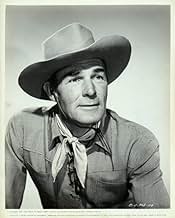
One facet of "The Walking Hills" that caught my attention was the role played by Randolph Scott(Would you believe Jim Carey?). Apparently a fairly well-to-do horse breeder who talks about the races, his energy and time centers more on his mare who is about to foal than on the gold or the attractive Chris Jackson, played with sexual magnetism by the lady with the hypnotic eyes Ella Raines. He comes across as somewhat selfish and even pushy when he assumes leadership of the group of fortune seekers who did not ask his assistance. Only Frazee (John Ireland), the apparent private dick, attempts to stand up to him to no avail. Naturally, his reason is as selfish as Carey's. Actually, this is one of the most complicated roles Scott ever played and he shines as the brilliant actor that he was.
Of the gold seekers, Arthur Kennedy is virtually wasted in a nondescript part. A face you seldom see on the big screen Jerome Courtland does a fine job in his part which is also somewhat mysterious. Willaim Bishop who tragically made too few films before his untimely death from cancer does well as the fugitive member of the gold seekers (Is he the only fugitive present?). Wily Edgar Buchanan as Old Willy talked the well-worn philosophy that he did so well. It's good to see the pop blues singer Josh White in a rare film appearance. One wonders why he didn't make more movies. His acting is almost as good as his singing and guitar playing. This is one of the few westerns (maybe the only one) that features the blues rather than country and western or Hollywood music. White was never quite the legend that Leadbelly was but some of his music was influential on the later folk revival in America.
The script by Alan LeMay who wrote the novel from which "The Searchers" was adapted, leaves a lot to the viewer's imagination. There is much that is hidden and esoteric. Some of it is revealed by director Sturges in flashbacks but much goes unanswered. This is a ploy used by Hitchcock in many of his films. Hitchcock believed that certain parts of a story should be left to the imagination. Apparently LeMay felt the same way.
There is much talk and conflict among the seekers that eventually leads to death for some of them. Nature intervenes in the form of a sandstorm, the highlight of this movie and not to be missed. Sturges shines as a director throughout with his innovative use of the camera, but the sandstorm is a treat to behold. The storm is also metaphorical. It washes away much and reveals much about human nature and the souls of the seekers. The Death Valley locale is appropriate for both story and character development.
The title "The Walking Hills" refers to the shifting sands that form dunes that seem to walk like humans. The sand dunes may also hide items mankind values and then suddenly make them reappear.
One facet of "The Walking Hills" that caught my attention was the role played by Randolph Scott(Would you believe Jim Carey?). Apparently a fairly well-to-do horse breeder who talks about the races, his energy and time centers more on his mare who is about to foal than on the gold or the attractive Chris Jackson, played with sexual magnetism by the lady with the hypnotic eyes Ella Raines. He comes across as somewhat selfish and even pushy when he assumes leadership of the group of fortune seekers who did not ask his assistance. Only Frazee (John Ireland), the apparent private dick, attempts to stand up to him to no avail. Naturally, his reason is as selfish as Carey's. Actually, this is one of the most complicated roles Scott ever played and he shines as the brilliant actor that he was.
Of the gold seekers, Arthur Kennedy is virtually wasted in a nondescript part. A face you seldom see on the big screen Jerome Courtland does a fine job in his part which is also somewhat mysterious. Willaim Bishop who tragically made too few films before his untimely death from cancer does well as the fugitive member of the gold seekers (Is he the only fugitive present?). Wily Edgar Buchanan as Old Willy talked the well-worn philosophy that he did so well. It's good to see the pop blues singer Josh White in a rare film appearance. One wonders why he didn't make more movies. His acting is almost as good as his singing and guitar playing. This is one of the few westerns (maybe the only one) that features the blues rather than country and western or Hollywood music. White was never quite the legend that Leadbelly was but some of his music was influential on the later folk revival in America.
The script by Alan LeMay who wrote the novel from which "The Searchers" was adapted, leaves a lot to the viewer's imagination. There is much that is hidden and esoteric. Some of it is revealed by director Sturges in flashbacks but much goes unanswered. This is a ploy used by Hitchcock in many of his films. Hitchcock believed that certain parts of a story should be left to the imagination. Apparently LeMay felt the same way.
There is much talk and conflict among the seekers that eventually leads to death for some of them. Nature intervenes in the form of a sandstorm, the highlight of this movie and not to be missed. Sturges shines as a director throughout with his innovative use of the camera, but the sandstorm is a treat to behold. The storm is also metaphorical. It washes away much and reveals much about human nature and the souls of the seekers. The Death Valley locale is appropriate for both story and character development.
The title "The Walking Hills" refers to the shifting sands that form dunes that seem to walk like humans. The sand dunes may also hide items mankind values and then suddenly make them reappear.


Did you know
- TriviaOne of 7 Randolph Scott films that Edgar Buchanan (Old Willy) appeared in.
- GoofsSince the action appears to be in the late 1940s. Instead of digging all over the dunes, why didn't they get a WW2 surplus mine detector?
- Quotes
Chris Jackson: [Referring to the large bandage on her forehead] Yeah, until I went bangin' my puss! Now get lost, will ya?
- SoundtracksYou Won't Let Me Go
Sung by Josh White
- How long is The Walking Hills?Powered by Alexa
Details
- Runtime
- 1h 18m(78 min)
- Aspect ratio
- 1.37 : 1
Contribute to this page
Suggest an edit or add missing content