IMDb RATING
7.0/10
4.7K
YOUR RATING


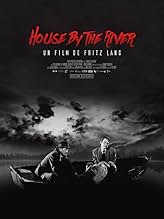
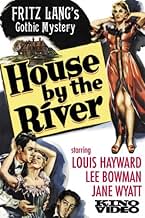
A deranged writer murders a maid after she resists his advances. The writer engages his brother's help in hiding the body, causing unexpected problems for both of them.A deranged writer murders a maid after she resists his advances. The writer engages his brother's help in hiding the body, causing unexpected problems for both of them.A deranged writer murders a maid after she resists his advances. The writer engages his brother's help in hiding the body, causing unexpected problems for both of them.



Bob Burns
- Courtroom Spectator
- (uncredited)
Edgar Caldwell
- Square Dancer
- (uncredited)

Edward Clark
- Minor Role
- (uncredited)

Frank Dae
- Col. Davis
- (uncredited)
- Director
- Writers
- All cast & crew
- Production, box office & more at IMDbPro
7.04.7K
1
2
3
4
5
6
7
8
9
10
Featured reviews
Illogical
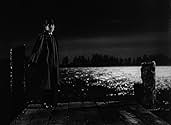
Failing novelist Stephen Byrne (Louis Hayward) murders his maid and manipulates his brother John (Lee Bowman) into helping him dispose of the body. Later, after it has been found, he sees a chance to pin the crime on John, whom he eventually tries to kill, too (making it look like suicide). 'House by the River' is suffering from one essential downside: The plot is illogical. While Stephen does everything to let suspicion fall on his brother, he is at the same time working on a new novel (following the advice of a neighbour to focus on things he knows) about a murder - a novel that is as good as an admission of guilt. And if he puts all this into that novel, which after all he intends to publish, why is he so desparate to prevent his wife Marjory (Jane Wyatt) from reading the manuscript? Despite all this, I am rating 'House by the River' 7 stars. That is because it is well-acted and beautifully photographed. Especially the eerie scenes on the river (with its murky and brackish water) are great. In sum, this is by no means one of Fritz Lang's best films, far from it. But it has some important points in its favour.
It's people who should be blamed for the filth, not the river.
House by the River is directed by Fritz Lang and adapted by Mel Dinelli from A.P. Herbert's novel The House on the River. It stars Louis Hayward, Jane Wyatt, Lee Bowman & Dorothy Patrick. Music is by George Antheil and photography by Edward J. Cronjager.
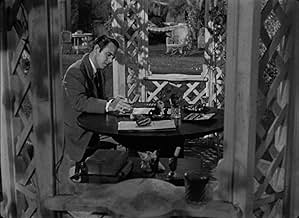
Novelist Stephen Byrne (Hayward) makes a play for the house maid and unwittingly kills her when she repels his advances. Enlisting the help of his disabled brother, John (Bowman), to dispose of the body in the river, Stephen suddenly finds that the publicity surrounding the maid's disappearance has put him in vogue again. In fact he finds his muse sufficiently stoked enough to craft another novel. But as easy as Stephen finds it easy to have no conscience, the opposite is the case with John, and with the river refusing to hold its secrets, something is going to give.
Working out of Republic pictures, Lang refused to let the low budget production hamper his vision of a bleak Cain & Abel like Gothic-noir-melodrama. He did, however, meet some resistance when requesting that the maid be played by a black woman, which was quickly shot down by nervous executives at the famed "B" movie studio. House by the River is far from being among the best of Lang's work, but the final product is still a triumph considering it's basically a three character piece set virtually in just two locations. It scores high on eerie atmosphere and finds Lang dealing in moral bankruptcy/responsibility and the eye for an eye mentality. Ushered into the narrative, too, is a Lang fave of people irked by loving someone they can't have. These themes allow the director to gloss over the simple script and dally in some truly arresting visuals.
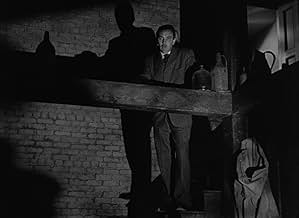
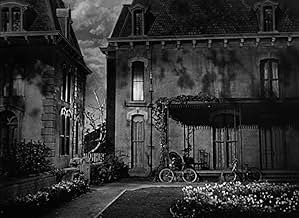
Aided considerably by Cronjager's (Desert Fury/CanyonPassage) chiaroscuro photography, Lang's film is a lesson in how to maximise effect from limited sets. The actual house on the river, and that of the neighbour (resplendent with creepy scarecrow in garden), has a very disquiet feel to it, fronted by shimmering water that carries the dead carcass' of animals, it's a most haunting setting. And the eerie atmosphere continues inside the house, where shadows work their wonders and Antheil's music sticks rigidly (and rightly) to the creaky house formula. The cast don't pull up any trees, but they don't need to. Hayward is perhaps too animated for a study in snide villainy, but it works and he has a nice line in visual mocking. The rest fall in line for what is required, with the best of the bunch being Ann Shoemaker as nosey neighbour Mrs. Ambrose.
Once a hard to find film, House by the River is now easily accessible after gaining a DVD release (the print is fine, some age spotting and crackles, but completely watchable). It's a film that is easily recommended to Lang and Gothic house based movie purists. Driven by a despicable protagonist and cloaked in a creepy noirish vibe, it deserves to now gain a better and more appreciative audience. 7.5/10
Novelist Stephen Byrne (Hayward) makes a play for the house maid and unwittingly kills her when she repels his advances. Enlisting the help of his disabled brother, John (Bowman), to dispose of the body in the river, Stephen suddenly finds that the publicity surrounding the maid's disappearance has put him in vogue again. In fact he finds his muse sufficiently stoked enough to craft another novel. But as easy as Stephen finds it easy to have no conscience, the opposite is the case with John, and with the river refusing to hold its secrets, something is going to give.
Working out of Republic pictures, Lang refused to let the low budget production hamper his vision of a bleak Cain & Abel like Gothic-noir-melodrama. He did, however, meet some resistance when requesting that the maid be played by a black woman, which was quickly shot down by nervous executives at the famed "B" movie studio. House by the River is far from being among the best of Lang's work, but the final product is still a triumph considering it's basically a three character piece set virtually in just two locations. It scores high on eerie atmosphere and finds Lang dealing in moral bankruptcy/responsibility and the eye for an eye mentality. Ushered into the narrative, too, is a Lang fave of people irked by loving someone they can't have. These themes allow the director to gloss over the simple script and dally in some truly arresting visuals.
Aided considerably by Cronjager's (Desert Fury/CanyonPassage) chiaroscuro photography, Lang's film is a lesson in how to maximise effect from limited sets. The actual house on the river, and that of the neighbour (resplendent with creepy scarecrow in garden), has a very disquiet feel to it, fronted by shimmering water that carries the dead carcass' of animals, it's a most haunting setting. And the eerie atmosphere continues inside the house, where shadows work their wonders and Antheil's music sticks rigidly (and rightly) to the creaky house formula. The cast don't pull up any trees, but they don't need to. Hayward is perhaps too animated for a study in snide villainy, but it works and he has a nice line in visual mocking. The rest fall in line for what is required, with the best of the bunch being Ann Shoemaker as nosey neighbour Mrs. Ambrose.
Once a hard to find film, House by the River is now easily accessible after gaining a DVD release (the print is fine, some age spotting and crackles, but completely watchable). It's a film that is easily recommended to Lang and Gothic house based movie purists. Driven by a despicable protagonist and cloaked in a creepy noirish vibe, it deserves to now gain a better and more appreciative audience. 7.5/10
"There's a limit to this business of being brothers."
Louis Hayward utters this chilling line. His brother, Lee Bowman, has a physical disability. He has always been loyal to Hayward. But Hayward is looking out for number one -- big time.
I had seen a terrible print of this movie once years ago and figured it to be lesser Fritz Lang. Not so! It is certainly one of the very best of his American movies. It's beautifully filmed, extremely well plotted, and cast superbly.
It is, in summary, a terrifying movie.
The Hayward character is responsible for a killing very early in the plot. He had not intended it, though his motives were not very high in the circumstance causing it. He doesn't care whom he drags down to keep his name clear and finish the book he is writing about the crime.
In addition to excellent performances by Hayward, Bowman, and Jane Wyatt as Hayward's wife, the supporting cast is a dream: Plump Jody Gilbert is pathetic and hateful simultaneously as Bowman's maid. Ann Shoemaker gives a touch of comic relief -- but just a touch -- as a nosy neighbor of Hayward and Wyatt.
Like the best of Lang -- "The Big Heat," "Fury," "M," "Metropolis," and the Mabuse films -- this concerns morality and its lack. There is a Biblical feel to it, as evidenced in the quote from Hayward (Cain) regarding his fine brother Abel/Bowman.
It could scarcely be better than it is.
I had seen a terrible print of this movie once years ago and figured it to be lesser Fritz Lang. Not so! It is certainly one of the very best of his American movies. It's beautifully filmed, extremely well plotted, and cast superbly.
It is, in summary, a terrifying movie.
The Hayward character is responsible for a killing very early in the plot. He had not intended it, though his motives were not very high in the circumstance causing it. He doesn't care whom he drags down to keep his name clear and finish the book he is writing about the crime.
In addition to excellent performances by Hayward, Bowman, and Jane Wyatt as Hayward's wife, the supporting cast is a dream: Plump Jody Gilbert is pathetic and hateful simultaneously as Bowman's maid. Ann Shoemaker gives a touch of comic relief -- but just a touch -- as a nosy neighbor of Hayward and Wyatt.
Like the best of Lang -- "The Big Heat," "Fury," "M," "Metropolis," and the Mabuse films -- this concerns morality and its lack. There is a Biblical feel to it, as evidenced in the quote from Hayward (Cain) regarding his fine brother Abel/Bowman.
It could scarcely be better than it is.
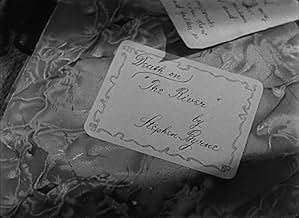
"(Death On) The River"
House By The River was a simple tale masterfully brought to the screen by Fritz Lang in his best conventional yet classy style. It was shot on a shoestring budget for Republic but a brooding atmosphere was captured beautifully by intelligent production and marvellous period sets on sharp nitrate film stock. Even the studio shot scenes of the garden with long shots of the bricky houses are fascinating to sink into.
Louis Haywood plays a budding writer with pretensions to Art and dubious morals who accidentally murders his lowly servant girl and drags his weaker brother into the mess to help him out. The story is simply played out to the bitter end, and although I wish the police angle could have been given more prominence it's completely logical. The part the River plays isn't as large as the House, but it's a darkly inspired mix; I've always wondered what colour the wallpaper was. Haywood often played ambivalent characters, however there's no ambivalence here in his portrayal of Stephen Byrne he's an evil swine all right. When it's all done you should be left with admiration for a director who could make a little go such a long way, with the help of a great team and cast of course!
It deserves more attention than it gets maybe the simple descriptive title didn't help it win immortality, otoh a more eye-catching "Strangled In The Dark" wouldn't have been as good either! This is one of those little films to treasure and something to revel in at the cinema or late at night on TV with the lights off for maximum effect.
Louis Haywood plays a budding writer with pretensions to Art and dubious morals who accidentally murders his lowly servant girl and drags his weaker brother into the mess to help him out. The story is simply played out to the bitter end, and although I wish the police angle could have been given more prominence it's completely logical. The part the River plays isn't as large as the House, but it's a darkly inspired mix; I've always wondered what colour the wallpaper was. Haywood often played ambivalent characters, however there's no ambivalence here in his portrayal of Stephen Byrne he's an evil swine all right. When it's all done you should be left with admiration for a director who could make a little go such a long way, with the help of a great team and cast of course!
It deserves more attention than it gets maybe the simple descriptive title didn't help it win immortality, otoh a more eye-catching "Strangled In The Dark" wouldn't have been as good either! This is one of those little films to treasure and something to revel in at the cinema or late at night on TV with the lights off for maximum effect.
Cold-blooded and callous murder and a flawed cover-up
House by the River (1950)
A straight up Gothic murder scenario with echoes of the 1945 "Spiral Staircase." A family with two brothers at odds with each other is living in a house and one of them is a murderer. And at first only the audience knows who. Their relative isolation on the banks of a wide river means only that they will have little help when danger occurs. The neighbors and police and few and far.
Louis Hayward plays the main character, Stephen Byrne, a writer and a bit of a self-important cad. Hayward has an odd style on film during this era, attractive and likable at first, but with an acerbic humor and some kind of unworkable stiffness, as if you know he's always performing. But he's clever about it, and when you realize he isn't meant to be exactly lovable, he's pretty well cast. Byrne's brother, wife, and maid all come through with solid if uninspired performances, and you wonder exactly what held everyone back. Fritz Lang has many more successful melodramas than this one.
I think the weakness is largely the raw material, the story itself, which is a bit straight forward. One brother commits a murder, the other is drawn into helping cover it up, and then the tensions build between them as an inquest raises questions. It has moments, but there are no further twists that work. The ending is out of character, almost comical in its false (and unlikely) horror.
Along the way, though, are a series of nice scenes, inside the house at night, along the river at night, at a party meant to hide the killer's guilt, and so on. The music is especially helpful in jabbing the audience at key moments. American Georges Antheil was a composer famous for his avant-garde pieces in the 1920s in Europe before settling into a Hollywood routine. You can detect, and appreciate, the edge he brings to the score. The photography by contrast is good without rising up to the possibilities of these kinds of settings--the house, the river, the dock, all have more dramatic potential that we just don't see.
A straight up Gothic murder scenario with echoes of the 1945 "Spiral Staircase." A family with two brothers at odds with each other is living in a house and one of them is a murderer. And at first only the audience knows who. Their relative isolation on the banks of a wide river means only that they will have little help when danger occurs. The neighbors and police and few and far.
Louis Hayward plays the main character, Stephen Byrne, a writer and a bit of a self-important cad. Hayward has an odd style on film during this era, attractive and likable at first, but with an acerbic humor and some kind of unworkable stiffness, as if you know he's always performing. But he's clever about it, and when you realize he isn't meant to be exactly lovable, he's pretty well cast. Byrne's brother, wife, and maid all come through with solid if uninspired performances, and you wonder exactly what held everyone back. Fritz Lang has many more successful melodramas than this one.
I think the weakness is largely the raw material, the story itself, which is a bit straight forward. One brother commits a murder, the other is drawn into helping cover it up, and then the tensions build between them as an inquest raises questions. It has moments, but there are no further twists that work. The ending is out of character, almost comical in its false (and unlikely) horror.
Along the way, though, are a series of nice scenes, inside the house at night, along the river at night, at a party meant to hide the killer's guilt, and so on. The music is especially helpful in jabbing the audience at key moments. American Georges Antheil was a composer famous for his avant-garde pieces in the 1920s in Europe before settling into a Hollywood routine. You can detect, and appreciate, the edge he brings to the score. The photography by contrast is good without rising up to the possibilities of these kinds of settings--the house, the river, the dock, all have more dramatic potential that we just don't see.


Did you know
- TriviaFritz Lang originally wanted a black woman to play the role of Emily Gaunt, but the producers refused.
- GoofsThe women are dressed in turn of the century type clothing but the men are wearing modern hats and suits.
- Quotes
John Byrne: You must be very, very ill Stephen...
Stephen Byrne: Ill?
- SoundtracksTurkey in the Straw
(uncredited)
American folk song
Author unknown
- How long is House by the River?Powered by Alexa
Details
- Runtime
- 1h 23m(83 min)
- Color
- Aspect ratio
- 1.33 : 1
Contribute to this page
Suggest an edit or add missing content