IMDb RATING
7.7/10
13K
YOUR RATING
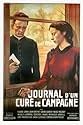
A young priest taking over the parish at Ambricourt tries to fulfill his duties even as he fights a mysterious stomach ailment.A young priest taking over the parish at Ambricourt tries to fulfill his duties even as he fights a mysterious stomach ailment.A young priest taking over the parish at Ambricourt tries to fulfill his duties even as he fights a mysterious stomach ailment.
- Director
- Writers
- Stars
- Nominated for 1 BAFTA Award
- 7 wins & 3 nominations total
Adrien Borel
- Priest of Torcy (Curé de Torcy)
- (as Andre Guibert)
Rachel Bérendt
- Countess (La Comtesse)
- (as Marie-Monique Arkell)
Antoine Balpêtré
- Dr. Delbende (Docteur Delbende)
- (as Balpetre)
Gaston Séverin
- Canon (Le Chanoine)
- (as Gaston Severin)
Serge Bento
- Mitonnet
- (as Serge Benneteau)
Germaine Stainval
- La patronne du café
- (uncredited)
François Valorbe
- Bit Role
- (uncredited)
- Director
- Writers
- All cast & crew
- Production, box office & more at IMDbPro
7.713.4K
1
2
3
4
5
6
7
8
9
10
Featured reviews
10coop-16
"God is not a torturer;He wants us to love another."
That simple quote from Bresson's film sums up its teaching-and Bresson's achievement..In another review, I referred to this film as one of the handful of "elevens' in the history of film, the two or three dozen that cling to the soul forever.With absolute simplicity and unrivaled economy of means, Bresson has created one of the few 'religious experiences' in the history of cinema.SEE IT.
Faith in the midst of tribulation
Robert Bresson's masterfully composed film, Diary of a Country Priest, is in complete alinement with his other work. Bresson was a very spiritual filmmaker, and he weaves the fascinating tale of a young parish priest who sets up shop in a hostile environment with such grave and minimalistic purity. Bresson relied upon naturalistic performances from non-actors. He thrived on this way of film-making, and he was the master of it. Diary of a Country Priest details the sublime detachment between a young priest and his new congregation. His sickness further alienates him from the parishoners, who act in a hostile manner at what they see as his negated passivity. He falls back on his faith as his source of strength, but even it is dwindling. The only person who he is able to commune with is a young girl who confides in him. The film is a touching portrait of the stasis of mankind, whether you feel that religion is key and of necessity, or if you feel it is a farce.
10msultan
Excellent
This must be one of the most touching movies I have seen in my
life. I would rank it high up there with movies like The Bicycle Thief.
It depicts human frailty at its best (and consequently, worst) in a
very pure and painfully real light. I think this this is definitely a movie that cannot be remade, the
priest's expressions and anxiety are too perfect to be replaced. I
only wish I watched a good copy (mine skipped scenes and cut
dialogues). Regardless, this movie is definitely an all-time best,
and deals with such personal issues at such a personal level that
it can never age. It touches the soul straight on and literally takes
one's breath away.
life. I would rank it high up there with movies like The Bicycle Thief.
It depicts human frailty at its best (and consequently, worst) in a
very pure and painfully real light. I think this this is definitely a movie that cannot be remade, the
priest's expressions and anxiety are too perfect to be replaced. I
only wish I watched a good copy (mine skipped scenes and cut
dialogues). Regardless, this movie is definitely an all-time best,
and deals with such personal issues at such a personal level that
it can never age. It touches the soul straight on and literally takes
one's breath away.
A rewarding experience
Journal d'un cure de Campagne is about a young priest who, whilst suffering from an illness, is assigned to a new parish in a French country village. The story is told by the priests recounting of his experiences in his diary. This itself is a powerful narrative device, as we not only understand the experiences of the protagonist, but also how he reflects upon them with hindsight, relating his observations to faith and human nature. As he carries out his duties in his new parish though, he is treated with animosity and hatred by many of the villiagers, because they see him as an unwanted intrusion into their lives. As he becomes estranged, and to an extend outcast by the townspeople, he increasingly relies on his faith for strength and comfort, however even this begins to fade as he witnesses the townspeople purvey sinful and malicous behaviour, damaging his faith in human nature.
The films of Robert Bresson, although wonderful, can at times seem austere almost to the point of being drained of any emotion. Before passing judgement though, it is important to understand his aims and understanding of film making. Bresson believed that the theatrical performing of actors had no place in cinema, and so typically cast non-actors for his films. The reason for his desire to suppress performing, was to avoid the melodramatic histrionics common with conventional acting as he believed it shortchanges the complexities of human emotion that in real life are much more subtle and not always on the surface. A large part of who we are he believed, is determined by experience, circumstance and environment. These elements affect the way we 'perform' and obscure who we are at the core essence of our being. Bresson was much more concerned with this person, whom we are when all our affectations are removed and we are laid bare. In Diary of a Country Priest, Bresson had Claude Laydu repeat scenes many times in order so that he would rid himself of all natural desire to perform. This suppressed emotion re-introduces the intricately nuanced expression, replacing the scenes with a delicate and contemplative lilt. Like Ozu, another master of character expression and portrayal, Bresson proves that by adopting this method in conjunction with his wonderful compositions, it forces the viewer to replace the lack of gratuitous emotion with their own feelings, resulting in moments of genuine pathos and emotion.
Doubt of the soul
That Robert Bresson's (1907-1999) films is somewhat hard to digest must be the understatement of the century. But for those who feel entangled in the most profound questions of the human existence, this movie must seem like a harrowing thriller! All others will probably be more or less indifferent to the escapades of a young priest in a small french village. Bresson's movies are among the most unique in the history of motion pictures; they are like nothing else I have ever seen and the themes are somewhat innovative. That is, the storyline are simple, but in all his films he deals with tormented people and the main theme seems to be the search for freedom and the futile battle against the human conditions. In a sense he is the most pessimistic of all directors, not only the french, but in a strange way he is perhaps the one that is closest to the truth and to life itself.
Did you know
- TriviaThe hand and handwriting in the film belong to Robert Bresson.
- Quotes
[subtitled version]
Countess: Love is stronger than death. Your scriptures say so.
Curé d'Ambricourt: We did not invent love. It has its order, its law.
Countess: God is its master.
Curé d'Ambricourt: He is not the master of love. He is love itself. If you would love, don't place yourself beyond love's reach.
- ConnectionsFeatured in Histoire(s) du cinéma: Les signes parmi nous (1999)
- How long is Diary of a Country Priest?Powered by Alexa
Details
Box office
- Gross US & Canada
- $47,000
- Opening weekend US & Canada
- $7,674
- Feb 27, 2011
- Gross worldwide
- $47,000
- Runtime
- 1h 35m(95 min)
- Color
- Aspect ratio
- 1.37 : 1
Contribute to this page
Suggest an edit or add missing content