IMDb RATING
7.2/10
1.5K
YOUR RATING

A young boy receives a rocking horse for Christmas and soon learns that he is able to pick the winning horse at the races.A young boy receives a rocking horse for Christmas and soon learns that he is able to pick the winning horse at the races.A young boy receives a rocking horse for Christmas and soon learns that he is able to pick the winning horse at the races.
- Director
- Writers
- Stars



Anthony Holles
- Bowler Hat
- (uncredited)
Melanie Mackenzie
- Matilda Grahame
- (uncredited)
Michael Ripper
- 2nd Chauffeur
- (uncredited)
Johnnie Schofield
- 1st Chauffeur
- (uncredited)
Caroline Steer
- Joan Grahame
- (uncredited)
- Director
- Writers
- All cast & crew
- Production, box office & more at IMDbPro
7.21.5K
1
2
3
4
5
6
7
8
9
10
Featured reviews
You have a runaway talent for spending money and that's all.
The Rocking Horse Winner is directed by Anthony Pelissier, who also adapts the screenplay from the D. H. Lawrence short story of the same name. It stars Valerie Hobson, John Howard Davies, Ronald Squire, John Mills, Hugh Sinclair and Susan Richards. Music is by William Alwyn and cinematography by Desmond Dickinson.
Dreadful, Evil Money.
There's a handful of British films from the 1940s that deserve to be far better known, films that blended haunted themes with film noir traits and visual smarts. The Night Has Eyes, Uncle Silas, Corridor Of Mirrors and the magnificent Queen Of Spades readily come to mind. Now it has an official DVD release, we can add Anthony Pelissier's brilliant The Rocking Horse Winner to the obscure gem list.
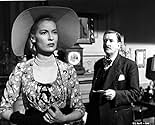
Story has young Paul Grahame (Davies) receiving a weird looking Rocking Horse for Christmas. He's an introverted and sensitive lad, seemingly reaching out for some sort of guidance from his parents. Unfortunately his mother, Hester (Hobson), is a spendthrift badly hung up on money as some sort of status symbol, while his father, Richard (Sinclair), is a gambler, and not a good one at that. With Uncle Oscar Creswell (Squire) bailing them out of financial trouble for the last time, the Grahame family are heading for bankruptcy unless income can be found. Befriending the new handyman, Bassett (Mills), Paul is delighted to find that Bassett is an ex-jockey and regales him with tails of horse racing, he even learns from Bassett how to ride his Rocking Horse like a real jockey. Then something magical happens, Paul seems to be able to predict the winners of real horse races, and the money starts to roll in
D. H. Lawrence's story gets a faithful adaptation and transfers quite excellently to the screen. It's a haunting fantasy at heart, but one tinged with utter sadness, and being Lawrence it has a sex metaphor sitting right in the middle of the greed and exploitation thematics. As story progresses, it soon becomes evident that Paul has to ride his Rocking Horse to a frenzied climax, if he doesn't get there then he will not see the name of the next race winner. Initially he is thrilled to be able to win lots of money, the house seems to be telling him that his parents must have more money, so aided by Bassett, he is saving the cash to help his frantic mother, who by now has resorted to pawning possessions for cash. But the more he wins, and the more Bassett and Uncle Oscar also profit, the further away from his parents Paul gets. Soon enough it's going to come to a head and it will prove to be devastating for the Grahame family.
Pelissier, Alwyn and Dickinson each work respective wonders to smoother the picture with a sense of the unearthly, not so much supernatural, but like a blurry discord, a purgatory where ignorant parenting dwells and childhood innocence is corrupted. Pic is crammed with sinister imagery. The Rocking Horse itself is up in the attic, which gives the makers perfect opportunities for shadows to enhance the "unhealthy" scenes of Paul riding away like a boy possessed, while for the key scene Pelissier uses a depth perception technique that is gloriously disorientating. An ascent by Paul up to the attic is moody magnificence, Hester's visit to the back room Pawnbroker (Charles Goldner) drips with unease, while the finale features a near demonic last shot that literally will be burned into your soul.
With top performances from the cast to seal the deal, this tale of a boy and his Rocking Horse gnaws away at the senses as the fallibility of the human condition is frighteningly laid bare. 9/10
Dreadful, Evil Money.
There's a handful of British films from the 1940s that deserve to be far better known, films that blended haunted themes with film noir traits and visual smarts. The Night Has Eyes, Uncle Silas, Corridor Of Mirrors and the magnificent Queen Of Spades readily come to mind. Now it has an official DVD release, we can add Anthony Pelissier's brilliant The Rocking Horse Winner to the obscure gem list.
Story has young Paul Grahame (Davies) receiving a weird looking Rocking Horse for Christmas. He's an introverted and sensitive lad, seemingly reaching out for some sort of guidance from his parents. Unfortunately his mother, Hester (Hobson), is a spendthrift badly hung up on money as some sort of status symbol, while his father, Richard (Sinclair), is a gambler, and not a good one at that. With Uncle Oscar Creswell (Squire) bailing them out of financial trouble for the last time, the Grahame family are heading for bankruptcy unless income can be found. Befriending the new handyman, Bassett (Mills), Paul is delighted to find that Bassett is an ex-jockey and regales him with tails of horse racing, he even learns from Bassett how to ride his Rocking Horse like a real jockey. Then something magical happens, Paul seems to be able to predict the winners of real horse races, and the money starts to roll in
D. H. Lawrence's story gets a faithful adaptation and transfers quite excellently to the screen. It's a haunting fantasy at heart, but one tinged with utter sadness, and being Lawrence it has a sex metaphor sitting right in the middle of the greed and exploitation thematics. As story progresses, it soon becomes evident that Paul has to ride his Rocking Horse to a frenzied climax, if he doesn't get there then he will not see the name of the next race winner. Initially he is thrilled to be able to win lots of money, the house seems to be telling him that his parents must have more money, so aided by Bassett, he is saving the cash to help his frantic mother, who by now has resorted to pawning possessions for cash. But the more he wins, and the more Bassett and Uncle Oscar also profit, the further away from his parents Paul gets. Soon enough it's going to come to a head and it will prove to be devastating for the Grahame family.
Pelissier, Alwyn and Dickinson each work respective wonders to smoother the picture with a sense of the unearthly, not so much supernatural, but like a blurry discord, a purgatory where ignorant parenting dwells and childhood innocence is corrupted. Pic is crammed with sinister imagery. The Rocking Horse itself is up in the attic, which gives the makers perfect opportunities for shadows to enhance the "unhealthy" scenes of Paul riding away like a boy possessed, while for the key scene Pelissier uses a depth perception technique that is gloriously disorientating. An ascent by Paul up to the attic is moody magnificence, Hester's visit to the back room Pawnbroker (Charles Goldner) drips with unease, while the finale features a near demonic last shot that literally will be burned into your soul.
With top performances from the cast to seal the deal, this tale of a boy and his Rocking Horse gnaws away at the senses as the fallibility of the human condition is frighteningly laid bare. 9/10
A Little Closer Look at an Unforgettable One-of-a-Kind
I've seen a few rocking horses in my time, but none that looked like this one. With its predatory teeth, gaping mouth, and flaring eyes, it looks more like Halloween than X-mas. No wonder it's got supposedly demonic powers. But then the social-climbing parents need help of the monetary kind. Mom (Hobson) isn't happy with just a big house and servants. She wants top status among the British upper-class, and by golly she'll spend whatever it takes, affordable or not. Meanwhile, Dad (Sinclair) tries to keep up by losing at gambling, while Uncle Oscar (Squire) is finally fed up with doling out money from the family trust. That leaves the kids (Davies, et.al.) to make out as best they can with neglectful parents. So where will the money come from, and how will the kids connect with Mom. Enter an infernal toy.
I can see the premise being done on the Twilight Zone, but certainly not to better effect. With his rather narrow eyes, little Paul (Davies) is positively scary when demonically whipping both himself and the wooden horse into a sweaty frenzy. A thousand gory films could not register more strongly than these inspired scenes. It's a unnerving spectre that moves the entire film into a special category of its own.
Surprisingly, the suspense of the rocking horse is not built up in the movie's main part. Instead, the film's majority deals with more ordinary matters: placing bets, pawning dresses, Uncle Oscar, Bassett (Mills) and Paul. Thus a natural contrast is laid for the demonic scenes. Nonetheless, the acting is first-rate, though Sinclair pretty much fades into the background as Dad, while Hobson's mom takes center stage in sleekly determined fashion. Then again, Mills is especially winning as the humane handy man. Happily, he furnishes needed companionship for the lonely boy. And, given the parent's upper-class pretensions, I detect a comment on the effects of Britain's traditional class system.
To me, however, it's never clear whether the whispering comes from the house or from Paul's internalizing of the family's money troubles. But, either way, the never-ending need for picking race-horse winners drives poor Paul into continuing his rocking horse frenzy. The tragedy lies in the personal toll this takes on him for the sake of his generally oblivious mother. Still, it is possible, unless I missed something, that Paul is just lucky picking winners rather than rocking horse possessed. After all, he wants to think he's lucky and maybe he is. In that case, no supernatural would be involved. Instead the upshot would be how an imaginative boy internalizes overriding family greed. In that case, I think the ending would be even more tragic. I may be mistaken, but I don't think the screenplay forecloses this second possibility. Either way, however, those final scenes are genuinely memorable.
Speaking of endings, it's certainly not one Hollywood's Motion Picture Code would have permitted. Good for the British. Because what we're left with is a truly remarkable one-of-a- kind, whose moral is as timely now as 6 decades ago. Don't miss it.
I can see the premise being done on the Twilight Zone, but certainly not to better effect. With his rather narrow eyes, little Paul (Davies) is positively scary when demonically whipping both himself and the wooden horse into a sweaty frenzy. A thousand gory films could not register more strongly than these inspired scenes. It's a unnerving spectre that moves the entire film into a special category of its own.
Surprisingly, the suspense of the rocking horse is not built up in the movie's main part. Instead, the film's majority deals with more ordinary matters: placing bets, pawning dresses, Uncle Oscar, Bassett (Mills) and Paul. Thus a natural contrast is laid for the demonic scenes. Nonetheless, the acting is first-rate, though Sinclair pretty much fades into the background as Dad, while Hobson's mom takes center stage in sleekly determined fashion. Then again, Mills is especially winning as the humane handy man. Happily, he furnishes needed companionship for the lonely boy. And, given the parent's upper-class pretensions, I detect a comment on the effects of Britain's traditional class system.
To me, however, it's never clear whether the whispering comes from the house or from Paul's internalizing of the family's money troubles. But, either way, the never-ending need for picking race-horse winners drives poor Paul into continuing his rocking horse frenzy. The tragedy lies in the personal toll this takes on him for the sake of his generally oblivious mother. Still, it is possible, unless I missed something, that Paul is just lucky picking winners rather than rocking horse possessed. After all, he wants to think he's lucky and maybe he is. In that case, no supernatural would be involved. Instead the upshot would be how an imaginative boy internalizes overriding family greed. In that case, I think the ending would be even more tragic. I may be mistaken, but I don't think the screenplay forecloses this second possibility. Either way, however, those final scenes are genuinely memorable.
Speaking of endings, it's certainly not one Hollywood's Motion Picture Code would have permitted. Good for the British. Because what we're left with is a truly remarkable one-of-a- kind, whose moral is as timely now as 6 decades ago. Don't miss it.
A Dark Tale of Compulsion
In London, the teenager Paul Grahame (John Howard Davies) lives with his upper class but financially broken family. His wasteful mother Hester Grahame (Valerie Hobson) is a compulsive buyer, spending all the family money in new expensive dresses, jewels and objects for their home. His father Richard Grahame (Hugh Sinclair) is a gambler, losing money in the horse races. His uncle Oscar Cresswell (Ronald Squire) is permanently covering the Grahame family debts. When the servant Bassett (John Mills) is hired, Paul finds that he can predict the winner of the horses' races rocking his wooden horse. Paul asks Bassett to become his partner, betting their money in the races, trying to prove that he is lucky and silencing the permanent whisper of the house needing more money. But the prize is high and fatal.
"The Rocking Horse Winner" is a dark tale of compulsion of D. H. Lawrence. I have never read his short story, and I did not feel any sexual connotation as mentioned in some reviews that I have glanced. The story is very disturbing and quite unpleasant, with great direction and performances, especially of Valerie Hobson in the role of a compulsive shallow woman. My vote is seven.
Title (Brazil): "O Cavalo Campeão" ("The Horse Winner")
"The Rocking Horse Winner" is a dark tale of compulsion of D. H. Lawrence. I have never read his short story, and I did not feel any sexual connotation as mentioned in some reviews that I have glanced. The story is very disturbing and quite unpleasant, with great direction and performances, especially of Valerie Hobson in the role of a compulsive shallow woman. My vote is seven.
Title (Brazil): "O Cavalo Campeão" ("The Horse Winner")
One of the best fantasy films--and certainly one of the most disturbing!
Suspenseful, intriguing, disturbing, heartbreaking, atmospherically crafted by director and photographer, this is a gem of a movie that was too out of the rut to be appreciated by audiences in its day. The characters are not only totally believable but so convincingly acted that few viewers will have any difficulty accepting the plot's key supernatural premise. Because they are so credibly realistic, however, some of the people in this movie (the lad's mother and father, for instance) are far from sympathetic. This trait doubtless alienated contemporary audiences even further, particularly those looking for escape into an idealistic world of smilingly duty-bound, hardworking mothers and bumbling yet well-intentioned dads.
As stated, all the players are excellentincluding producer John Mills who cast himself in a small but key rolebut three are so outstanding it would churlish not to mention them individually: Valerie Hobson is perfect as the selfish, socially aspiring mum; John Howard Davies is likewise brilliant as the driven, psychotic boy of the title; and it's great to see Ronald Squire utilizing his talents to the full in a major role.
The pace never slackens and the movie incorporates so many unforgettably powerful scenes, it would be impossible to single just three or four for special praise.
In short: a masterpiece from screenwriter/director Anthony Pelissier (who handled only a handful of movies), photographer Desmond Dickinson and a fine array of artists and craftspeople under the control of actor/producer John Mills.
As stated, all the players are excellentincluding producer John Mills who cast himself in a small but key rolebut three are so outstanding it would churlish not to mention them individually: Valerie Hobson is perfect as the selfish, socially aspiring mum; John Howard Davies is likewise brilliant as the driven, psychotic boy of the title; and it's great to see Ronald Squire utilizing his talents to the full in a major role.
The pace never slackens and the movie incorporates so many unforgettably powerful scenes, it would be impossible to single just three or four for special praise.
In short: a masterpiece from screenwriter/director Anthony Pelissier (who handled only a handful of movies), photographer Desmond Dickinson and a fine array of artists and craftspeople under the control of actor/producer John Mills.
memorably haunting
I first saw this film as a pare-teen many years ago and it stuck in my memory all these years; I suppose I identified, at the time, with the idea that events could be somehow manipulated and controlled by sheer intensity. When I recently saw this film on DVD, it still struck a nerve and, as an adult, realized what a strong film it is and why it had been in my memory all these years. Because the file is so old, many of the mannerisms in the movie appear quaint now, but the themes are timeless; sensitive kids sensing parental dysfunction and taking it upon themselves to try and "fix" things. It's interesting to note that John Mills, then a staple in English films, produced the film. I would recommend this film to anyone with a penchant for psychological drama of the old school.


Did you know
- TriviaBassett says that he had "... fine plans for teaching Gordon Richards a thing or two...". Gordon Richards (1904 - 1986) was an English jockey. He was the Champion Jockey in British flat horse-racing 26 times, a record that still stands.
- Quotes
[last lines]
Hester Grahame: I wanted to see the end of it, just wanted to be sure it had gone. Gone for good.
Bassett: You won't never see the end of it, ma'am, nor will I. As long as ever we'll live, we'll remember, and we'll know just what it is was done.
- ConnectionsVersion of Winner (1977)
- SoundtracksSilent Night
(uncredited)
Music by Franz Xaver Gruber
English lyrics by John Freeman Young
Sung by the carollers
Details
- Release date
- Country of origin
- Language
- Also known as
- Dobitnik sa drvenog konjića
- Filming locations
- Denham Studios, Denham, Buckinghamshire, England, UK(studio: made at Denham Studios, London, England)
- Production companies
- See more company credits at IMDbPro
- Runtime
- 1h 31m(91 min)
- Color
- Aspect ratio
- 1.37 : 1
Contribute to this page
Suggest an edit or add missing content