
Vicky Barton visits Paris with her brother Johnny, only to discover the following morning he has gone missing and the hotel staff have no recollection of his presence.Vicky Barton visits Paris with her brother Johnny, only to discover the following morning he has gone missing and the hotel staff have no recollection of his presence.Vicky Barton visits Paris with her brother Johnny, only to discover the following morning he has gone missing and the hotel staff have no recollection of his presence.
- Directors
- Writers
- Stars
- Awards
- 2 nominations total

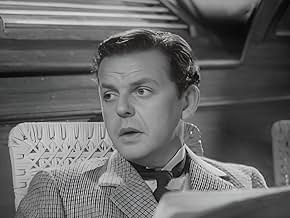


- Doctor Hart
- (as Andre Morell)


- Madame Verni
- (uncredited)
- Porter at Paris Station
- (uncredited)
- Gendarme
- (uncredited)

- Hotel Guest
- (uncredited)
- Hotel Guest in Room 20
- (uncredited)
- German Hotel Guest
- (uncredited)
- Directors
- Writers
- All cast & crew
- Production, box office & more at IMDbPro
Featured reviews
An elegant suspense feast for the senses.
Director Terence Fisher leads his audience with aplomb from the gaiety of the Moulon Rouge to the lugubrious shadows of a convent hospital with an assurance missing from most modern thrillers.
Production values are first rate from the elegant hotel to the elaborately wrought fair sequences.
One could scarcely ask for a more debonair and attractive couple than Mr. Bogarde, (with his famous pompadour intact), and the exquisite Miss Simmons, who, in her turn provides a welcome reminder of 19th century feminine deportment. And Villainess Cathleen Nesbitt, with her cut glass diction, and rustling black bombazine, defines sinister suavity in a way you won't soon forget.
Kudos also to Honor Blackman who wears a bustle with distinction.
Simmons and Bogarde excel in enjoyable mystery...
Oh Dear! What Can the Matter Be?
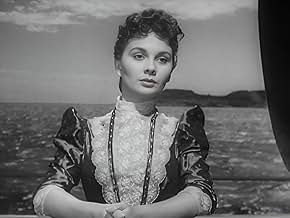
Adapted from Thorne's novel of the same name, story is set in Paris 1889 (not 1896 as some other sources strangely suggest it is) and sees Simmons as Vicky Barton, who awakes in her hotel to find that her brother, and his hotel room, are missing. With the hotel staff adamant that she checked in alone and that her brother never accompanied her, Vicky is confused and very alone. However, hope comes in the form of handsome artist George Hathaway (Bogarde), who had an exchange with Vicky's brother and therefore can vouch for his existence. But with the odds stacked against them and proof hard to find, can the pair of them uncover the truth and solve the mystery?
It seems now to be a familiar plot, but it wasn't back then and the story's origin is derived from an urban legend. What unfolds over the film's running time is a sharply told mystery that is infused with good quality drama. Simmons and Bogarde make for a very engaging couple and it's very easy to root for them as they set about their sleuthing. However, the film is split into two as regards tonal worth.
The first half is the most atmospheric as Simmons' Vicky is a stranger in a strange land, her fraught helplessness over her missing brother is enhanced by the language problems. This aspect impacts on us the viewers by there not being any sub-titles for the French speaking parts of the script. A good move is that.
Once Vicky teams up with George the thriller suspense gives way to detective mystery, which is fine, and for sure the "reveal" that comes in the finale is credible, but it's hard not to lament a touch that the pic hasn't stayed in "darker" mode, even if the score is consistently too jaunty for such a story. While the black and white photography is, however, tonally pleasing, and the Victorian costuming is authentic looking.
There's a couple of off kilter shots but noir like visuals are in short supply, and characterisations and basis of plotting do not scream out as being noir influenced, so you have to wonder why the film has found its way into a DVD collection of British Noir? It's a classy little mystery, boosted by some prime British acting talent, but first time viewers expecting a Brit film noir should heed my warning, it's not! 7/10
Delightful performance by Jean Simmons is focal point of intriguing story...
No one claims to have seen him. Of course, when this happens we know there has to be a reason for everyone's refusal to acknowledge the brother's existence. Simmons has attracted the attention of at least one young man (DIRK BOGARDE) who does learn that she is traveling with her brother. In fact, he learns this bit of information from the brother himself. That is the key to the scene wherein Simmons is relieved to find that someone besides herself knows that her brother is not a figment of her imagination.
Bogarde is glad to come to her rescue, since he's attracted to her at first glance. Their relationship becomes the only predictable aspect of this little mystery. What happens when he decides to do some detective work is best left unexplained, lest too much of the plot is given away.
It's the kind of ending that deserves to be kept secret.
There are a few weaknesses in motivations but overall the revelation at the end is reasonable enough to be credible. One can always wonder if the authorities at the hotel could have handled the situation a bit differently so as not to antagonize Simmons.
It's a satisfying piece of entertainment, well acted by a British cast and deserves to be better known than it is.
Suddenly there - next moment not


Did you know
- TriviaThe J. Arthur Rank Organization planned to dupe the public into thinking that the attractive pairing of Jean Simmons (Victoria Barton) and Dirk Bogarde (George Hathaway) was mirrored in real-life. One of the taglines was "Presenting the stars of The Blue Lagoon (1949) and The Blue Lamp (1950)." Both Simmons and Bogarde were coming from three film projects that were critically and commercially successful around the world - Simmons coming hot from the one-two punch of Hamlet (1948) and The Blue Lagoon; Bogarde having just finished The Blue Lamp for Ealing Studios, and both were signed to a multi-picture co-starring deal with the Rank Organization. This backfired suddenly, however, after Simmons became involved with Stewart Granger, and Bogarde was afraid of disclosing his own same-sex attraction because of fears of homophobia. The highly touted screen pairing of Simmons and Bogarde lasted only one film.
- GoofsAt the hospital at the end, there is a statue of St. Therese of Lisieux. The Exposition took place in 1889, eight years before Therese died, and she wasn't made a saint until about 1925.
- Quotes
Mrs. O'Donovan: When you were dancing, did he say anything?
Rhoda O'Donovan: He said he loved Paris, he loved his studio, he loved his painting, he loved dancing, but he didn't say anything about loving me.
Mrs. O'Donovan: You don't encourage him, Rhoda, that's the trouble. How do you expect him to make up his mind if you don't help him? Where would you be if I hadn't made up your father's mind?
Rhoda O'Donovan: Really, Ma, what an improper question!
- Alternate versionsThe same story is alluded to in Ernest Hemingway's early satirical novel "The Torrents of Spring," published in 1926, the same year as "The Sun Also Rises." One of the characters recounts the events as having happened to her. By way of explanation, Hemingway recounts the tale, the version with the mother, in the afterword, the "Author's Final Note to the Reader."
- ConnectionsFeatured in TCM Guest Programmer: 15 Fan Programmers (2009)
- SoundtracksCoronation March
(uncredited)
from "Le Prophete"
Music by Giacomo Meyerbeer
Used during opening credit sequence
- How long is So Long at the Fair?Powered by Alexa
Details
- Release date
- Country of origin
- Official site
- Languages
- Also known as
- Idilio en París
- Filming locations
- Paris, France(This information already exists in your trivia section)
- Production company
- See more company credits at IMDbPro
- Runtime
- 1h 26m(86 min)
- Color
- Aspect ratio
- 1.33 : 1