IMDb RATING
7.0/10
1.5K
YOUR RATING

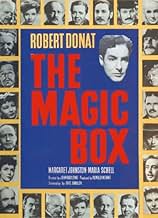
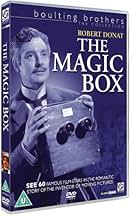
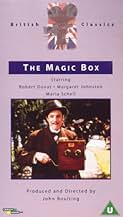
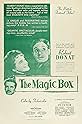
A chronicle of the life of William Friese-Greene, a British inventor and early pioneer in cinema.A chronicle of the life of William Friese-Greene, a British inventor and early pioneer in cinema.A chronicle of the life of William Friese-Greene, a British inventor and early pioneer in cinema.
- Nominated for 2 BAFTA Awards
- 1 win & 2 nominations total



Renée Asherson
- Miss Tagg
- (as Renee Asherson)


- Director
- Writers
- All cast & crew
- Production, box office & more at IMDbPro
7.01.5K
1
2
3
4
5
6
7
8
9
10
Featured reviews
STUNNING picture.
A stunning biography of William Friese-Greene, the UK inventor who made important contributions towards the creation of the motion picture, then saw greatness pass him by. Brilliantly written by Eric Ambler, and with beautiful color photog by Jack Cardiff (working in the 3-strip Technicolor process that we see Friese-Greene working towards in the picture!). Robert Donat's performance in the lead is among his best screen work. As this was made on the occasion of Britain's 1951 "Festival of Lights", virtually every British actor of note at the time appears in the picture---but pay particularl attention for Laurence Olivier, as a London "bobby" who is the first to see Friese-Greene's "pictures that move", and for the film's closing line, delivered by Dennis Price.
A Terrific Movie
The most enjoyable and very emotional scene was when Robert Donat (Wm. Friese-Greene) finally succeeds in producing moving images on a sheet he's hung in his studio...he runs like a madman into the street in the middle of the night desperate to find someone to witness this miracle. Who does he find? Sir Laurence Olivier..a Police Constable . Donat ushers him into his lab, sits him down and proceeds to ramble on about what he's invented. Sir Laurence, the ever vigilant and cautious policeman thinks he's some kind of nut and slowly reaches for his night stick..that's when Robert Donat flicks on the first moving pictures of Hyde Park...Olivier is flabergasted..gets up moves to the sheet and looks behind it.."That's Hyde Park!' After rambling some more Robert Donat breaks into tears..finally explaining what he has accomplished..Olivier replies "You must be a very happy man"..a terrific scene and one I'll never forget. A cameo appearance by Lord Olivier and a very memorable scene.
Terrific film for film collectors and film buffs
This is the 1951 feature made by the British film industry to celebrate the festival of Britain. The film stars a virtual who's who of all the famous British cinema actors of that time, and one of the fun things about this film is trying to identify all of them as they pop up in various cameo roles. The story is the biography of William Friese- Greene, who this film claims invented the motion picture camera and projector. Edison and Lumiere are casually acknowledged as also being motion picture pioneers, but Friese-Greene is claimed to have had the first intermittent mechanism (presumably the Maltese cross) used in today's cinema projectors. It also claims that he invented the biocolour process, where color motion pictures are produced by rotating two color filters in front of the camera and projector (KinemaColour). The lead role is beautifully played by Robert Donat as the quiet intense inventor obsessed with producing moving photographs, and his wife is competently played by Maria Schell. Also appearing in cameo roles are Michael Redgrave, Richard Attenborough, Peter Ustinov, Stanley Holloway, Michael Dennison, the great Dennis Price, the beautiful Glynnis Johns and her father Mervyn Johns, the eccentric Joyce Grenfell, the wonderful Margeret Rutherford, and a host of others too long to mention. The most famous cameo is by Sir Laurence Olivier, as the astonished policeman who witnesses Friese-Greene's first triumph, the projection of moving images of Hyde Park on an improvised sheet screen. This is the most remembered scene of the film, and Friese Greene's excitement at this event reminded me of my own excitement when I first turned the handle on my first Pathescope 9.5mm projector! The film is of great interest to film collectors and movie buffs, containing beautiful shots of old wood and brass magic lanterns and early movie equipment. There are many wonderful scenes, such as the Victorian photo studio where they show customers having to stand absolutely still for 30 seconds to get their photo taken! The film was produced by Roy Boulting, and the beautiful Victorian settings and costumes are sumptuously photographed by Jack Cardiff. My family and friends really enjoyed this movie, it is low key almost like a BBC period drama, but if you are a film collector you will love it. We take the showing of films in our homes for granted these days, and it easy to forget the real struggle by inventors such as Friese- Greene to achieve what seemed impossible at the time. American audiences will of course have to (at least temporarily) suspend their belief that Edison was the sole inventor of the motion picture camera ( in fact Edison was primarily a business man and entrepreneur who copied many of the motion picture concepts developed by Lumiere in France) This film is very rare indeed. I don't think it exists on VHS or DVD,(certainly not in the USA), however Super 8mm film prints do exist, so if you find an S8 print grab it! My particular super 8 print is a 2400 ft Agfa color print, pin sharp with beautiful rich colors and great contrast. The mono magnetic track sound quality is very good for a film of 1951 vintage. Highly recommended, if you can find it.
A biography of one of the true first inventors of the cinema.
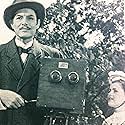
A brilliant biography of one of the virtually unknown inventors of modern motion pictures. The historical aspects are incredibly well researched and detailed (look at the film credits)-- down to the reproduction of a beautiful example of his first twin-lensed motion picture camera, which was stereoscopic (which proved not be be practical until the introduction of polarized projection at the 1939 World's Fair). This film was made as a showcase piece for the 1951 "Festival of Britain" at the current location of the Royal Festival Hall and the Museum of the Moving Image on the banks of the Thames in London, England. What remains of the original Friese-Greene camera may be seen at the Science Museum in London. For those interested in the history of the cinema, and its earliest experiments, this is a "must see" film. Historical footage is brilliantly incorporated into the story. Although the presentation is a little bit slow by today's standards, it remains a fascinating and unique film. For related topics see the book "The Missing Reel", by Christopher Rawlence, about the other unknown film pioneer, Louis Aime Augustin Le Prince.
Patriotic Flagwaver That Manages to Communicate Some of the Struggles of an Obsessive Character
Much has been said in other reviews about the subject of John Boulting's biopic, the inventor William Friese-Greene, who spent his life trying to create the eponymous "magic box" that would show moving pictures. Whether he was the first to do so is largely insignificant: the fact that he went largely unrecognized assumes far greater importance.
Planned to celebrate the Festival of Britain in 1951, THE MAGIC BOX recognizes the achievements of someone who spent just about everything - time, money and effort - on his work. Director Boulting alternates between scenes in Friese Greene's (Robert Donat's) laboratory, with domestic sequences involving his wives Edith (Margaret Johnston) and Helena (Maria Schell). Although a devoted husband, Friese-Greene is so obsessed with his work that he neglects his family; as shown in several sequences where he begins to talk excitedly about his discoveries, while remaining oblivious to his wives' complaints. In one sequence, for example, Edith has to remind him that he has missed an important concert at which he was supposed to be the soloist; to avoid any embarrassment with the conductor (Muir Matheson), she had to fill in for him. Sometimes his wives sacrifice their own health to support him; Helena is shown in close-up crumpling a medicinal prescription in her hand as she travels home by coach. In her view it's far more important to encourage Friese-Greene's work than to cure her congenital heart condition.
Boulting adopts an equivocal view of Friese-Greene's work; although obviously an innovator, his obsessions caused pain and suffering in his family, and led to the break-up of profitable partnerships such as that with rich northern business person Arthur Collings (Eric Portman), which could have secured Friese-Greene's financial future.
The film is structured in double flashback, showing us how Friese- Greene's life, and enabling Donat to give a virtuoso performance in the title role. This most underrated of British actors was particularly good at portraying tortured souls (remember GOODBYE MR. CHIPS (1939)), and he manages to communicate the pain lurking at the heart of Friese-Greene's soul, once he realizes the damage he has done to his family. Boulting is fond of using the quick close-up to register his emotions.
As well as being a celebration of the inventor, THE MAGIC BOX celebrates the British film industry by offering roles to virtually all the major stars (and supporting actors) working in the studios at that time. The film offers fans the pleasure of identifying people in the smallest roles, and enjoying scene-stealing cameos such as Margaret Ruthferford's irascible dowager telling Friese- Greene's first employer Guttenberg (Frederick Valk) off; Joyce Grenfell at her toothiest as a member of Edith's choral society; Sidney James and William Hartnell as a pair of World War One army personnel; and Laurence Olivier in his famous cameo as a London police officer marveling at Friese-Greene's invention.
Thematically speaking, Eric Ambler's script might be a familiar one, but that does not prevent viewers from enjoying the film as a celebration of a long-forgotten figure as well as British films as a whole.
Planned to celebrate the Festival of Britain in 1951, THE MAGIC BOX recognizes the achievements of someone who spent just about everything - time, money and effort - on his work. Director Boulting alternates between scenes in Friese Greene's (Robert Donat's) laboratory, with domestic sequences involving his wives Edith (Margaret Johnston) and Helena (Maria Schell). Although a devoted husband, Friese-Greene is so obsessed with his work that he neglects his family; as shown in several sequences where he begins to talk excitedly about his discoveries, while remaining oblivious to his wives' complaints. In one sequence, for example, Edith has to remind him that he has missed an important concert at which he was supposed to be the soloist; to avoid any embarrassment with the conductor (Muir Matheson), she had to fill in for him. Sometimes his wives sacrifice their own health to support him; Helena is shown in close-up crumpling a medicinal prescription in her hand as she travels home by coach. In her view it's far more important to encourage Friese-Greene's work than to cure her congenital heart condition.
Boulting adopts an equivocal view of Friese-Greene's work; although obviously an innovator, his obsessions caused pain and suffering in his family, and led to the break-up of profitable partnerships such as that with rich northern business person Arthur Collings (Eric Portman), which could have secured Friese-Greene's financial future.
The film is structured in double flashback, showing us how Friese- Greene's life, and enabling Donat to give a virtuoso performance in the title role. This most underrated of British actors was particularly good at portraying tortured souls (remember GOODBYE MR. CHIPS (1939)), and he manages to communicate the pain lurking at the heart of Friese-Greene's soul, once he realizes the damage he has done to his family. Boulting is fond of using the quick close-up to register his emotions.
As well as being a celebration of the inventor, THE MAGIC BOX celebrates the British film industry by offering roles to virtually all the major stars (and supporting actors) working in the studios at that time. The film offers fans the pleasure of identifying people in the smallest roles, and enjoying scene-stealing cameos such as Margaret Ruthferford's irascible dowager telling Friese- Greene's first employer Guttenberg (Frederick Valk) off; Joyce Grenfell at her toothiest as a member of Edith's choral society; Sidney James and William Hartnell as a pair of World War One army personnel; and Laurence Olivier in his famous cameo as a London police officer marveling at Friese-Greene's invention.
Thematically speaking, Eric Ambler's script might be a familiar one, but that does not prevent viewers from enjoying the film as a celebration of a long-forgotten figure as well as British films as a whole.


Did you know
- TriviaWilliam Friese-Greene's son Claude Friese-Greene continued to develop his father's color process and produced a series of color travelogues of Britain in the 1920s. These never achieved contemporary commercial success, but formed the basis of a very popular three-part BBC Television broadcast The Lost World of Friese-Greene (2006), after being preserved by the British Film Institute.
- GoofsIn 1915 when Green's three eldest sons join the army, the landlord's agent mentions that the Spanish influenza is going around. In actuality the Spanish influenza did not begin until 1918.
- Quotes
William Fox-Talbot: The original thinker - the innovator - mustn't mind seeming a little foolish to his contemporaries. He must always look to his star... In the end, he may still fail. That's unimportant. If he is true to himself, he won't be too unhappy or embittered, even in failure, and will still speak for what is good.
- Crazy creditsOpening credits superimposed over tablets bearing the following inscriptions: THOMAS ALVA EDISON 1847 - 1931 THE INVENTOR OF MOTION PICTURES / ETIENNE-JULES MAREY 1830 - 1908 FONDATEUR DU CINEMA / LOUIS LE PRINCE 1842 - 1890 L'INVENTEUR DE LA CINEMATOGRAPHIE LOUIS LUMIERE 1864 - 1948 AVEC SON FRERE LE CREATEUR DU CINEMA MODERNE
- ConnectionsEdited into Kraft Theatre: The Magic Box (1956)
- How long is The Magic Box?Powered by Alexa
Details
- Release date
- Country of origin
- Language
- Also known as
- Der wunderbare Flimmerkasten
- Filming locations
- Production company
- See more company credits at IMDbPro
Box office
- Budget
- £220,000 (estimated)
- Runtime
- 1h 58m(118 min)
- Color
- Aspect ratio
- 1.37 : 1
Contribute to this page
Suggest an edit or add missing content