IMDb RATING
7.4/10
7.3K
YOUR RATING


The growing pains of three young women contrast with the immutability of the holy Bengal River, around which their daily lives unfold.The growing pains of three young women contrast with the immutability of the holy Bengal River, around which their daily lives unfold.The growing pains of three young women contrast with the immutability of the holy Bengal River, around which their daily lives unfold.
- Nominated for 2 BAFTA Awards
- 3 wins & 4 nominations total



June Tripp
- Narrator
- (voice)
- (as June Hillman)
Nimai Barik
- Kanu
- (uncredited)
Richard R. Foster
- Bogey
- (uncredited)
Jane Harris
- Muffie
- (uncredited)
Jennifer Harris
- Mouse
- (uncredited)

Trilak Jetley
- Anil
- (uncredited)
Sajjan Singh
- Ram Singh - The Gateman
- (uncredited)
Penelope Wilkinson
- Elizabeth
- (uncredited)
Cecilia Wood
- Victoria
- (uncredited)
- Director
- Writers
- All cast & crew
- Production, box office & more at IMDbPro
7.47.3K
1
2
3
4
5
6
7
8
9
10
Featured reviews
Spellbinding, magnificent
A really glorious, spellbinding movie. Filmed in Bengal, India, on the Ganges, it captures the essence of India, the timeless quality of life on the Ganges, without being patronizing.
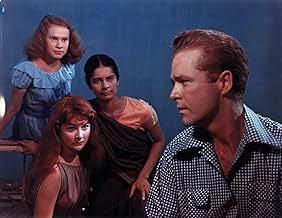
This is a coming of age movie about three teenage girls, two British and one Anglo-Indian, and how their lives are affected by the arrival of a one-legged American war veteran. It's very easy to fall into sentimentality in a movie like this, but Renoir avoids this obvious pitfall. Though I have to say, I found this film very moving.
It helps that this movie is filmed in Technicolor, and is one of the best uses of Technicolor of that era.
Some of the performers were amateurs, including the actor who played the veteran and some of the children, but overall the performances are outstanding. A fine, low-key performance by Esmond Knight. This was the only film for Patricia Walters, who played Harriet, and Thomas Breen, the war veteran who played Captain Jack, never made any other movies. Watch for Arthur Shields, the brilliant Irish actor, as father of Nan.
This is a coming of age movie about three teenage girls, two British and one Anglo-Indian, and how their lives are affected by the arrival of a one-legged American war veteran. It's very easy to fall into sentimentality in a movie like this, but Renoir avoids this obvious pitfall. Though I have to say, I found this film very moving.
It helps that this movie is filmed in Technicolor, and is one of the best uses of Technicolor of that era.
Some of the performers were amateurs, including the actor who played the veteran and some of the children, but overall the performances are outstanding. A fine, low-key performance by Esmond Knight. This was the only film for Patricia Walters, who played Harriet, and Thomas Breen, the war veteran who played Captain Jack, never made any other movies. Watch for Arthur Shields, the brilliant Irish actor, as father of Nan.
Pure illustration of Indian Philosophy.
Unlike many western movies i have seen that portrays Indians as if they were some nomadic people who are far from culture and sophistication, this film understands and illustrates the exact philosophy behind every deed that is performed by the Indians.
And also i wonder why can't so many great directors inspire from a film like this to understand that the true culture lies in philosophy and not in their race or color. I suppose it is easy to stick to stereotypes rather than educating through movies.
Therefore, it is not diversity for namesake that is important, but proper the depiction of one's understanding towards the diversity.
And also i wonder why can't so many great directors inspire from a film like this to understand that the true culture lies in philosophy and not in their race or color. I suppose it is easy to stick to stereotypes rather than educating through movies.
Therefore, it is not diversity for namesake that is important, but proper the depiction of one's understanding towards the diversity.
The River (1951) ***
India has, through the years, fascinated many a major film-maker, including Robert Flaherty, Fritz Lang, Louis Malle, Michael Powell, Roberto Rossellini and Jean Renoir. Renoir's film, based on a novel by English novelist Rumer Godden of BLACK NARCISSUS (1947) fame, is as gorgeously shot (in ravishing Technicolor) as can be expected from a master film-maker and the son of a famous French impressionist painter; however, the narrative itself is rather disappointingly thin to support its 99-minute running time. Having said that, the coming-of-age story of two English girls living in India and loving the same young officer wounded in WWII, is appealingly performed by Nora Swinburne, Esmond Knight, Arthur Shields and Adrienne Corri. The central character, played winningly by newcomer Patricia Walters (whose only film this turned out to be) is a stand-in for Godden herself, whose considerable writing talent was not encouraged by her stern family. The film offers Renoir another chance to show his humanist side dwelling as it does on the strange (to Western eyes) social and religious customs of the Indian people; even so, when all is said and done, there is just too much local color in the film. However, as Renoir is not only one of my favorite film directors but arguably the greatest of all French film-makers, I am confident that a second viewing of THE RIVER will elevate significantly my estimation of it, as it is probably too rich an experience to savor all at one go.
Among the copious supplements on the Criterion DVD, there is a typically enthusiastic interview with Martin Scorsese (who also helped in funding the film's restoration) who waxes lyrically on the effect the film had on him as a 9 year-old film-goer; surprisingly for me, he also confesses that the appeal of Renoir's masterpiece, LA REGLE DU JEU (1939), an automatic candidate for the title of the greatest film of all time, escapes him!!
Among the copious supplements on the Criterion DVD, there is a typically enthusiastic interview with Martin Scorsese (who also helped in funding the film's restoration) who waxes lyrically on the effect the film had on him as a 9 year-old film-goer; surprisingly for me, he also confesses that the appeal of Renoir's masterpiece, LA REGLE DU JEU (1939), an automatic candidate for the title of the greatest film of all time, escapes him!!
10jasonb84
Thoughtful and Beautiful...
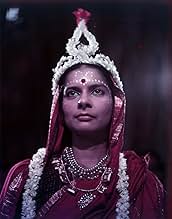
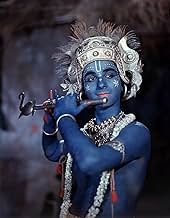
This is a little known film, but well worth watching if you're lucky enough to find it on Video or TV. The director Jean Renoir is the son of the French Impressionist Painter Pierre Auguste Renoir ( the cinematographer Claude Renoir is Jean's nephew ) and the family talent shines throughout this film, which is beautifully shot. Whether showing the amazing landscape of India and the river itself, the colours and intricacies of the many Indian festivals, or even a close up of Valerie's face as she gazes at Captain John, every frame displays grace, beauty and style that film rarely captures.
The plot itself, how a troubled outsider affects three teenaged girls, is a simple tale, and all the more powerful for it. We've all had a crush, and know the river of emotions that are awakened by one. Each of the three girls, the irrepressible and dramatic Valerie, the talented but awkward Harriet, and the stoic Melanie ( who despite schooling in the West is somehow more Indian in nature than her friends who've been brought up in India ) vie for Captain John's affections in their own way.
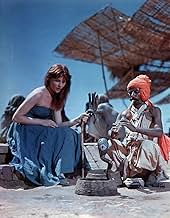
However, the real love of this film is India itself - it's fascinating people, beliefs, festivals, and the constant River that runs through them all. It's a slow paced film, not in a hurry to get to any kind of conclusion, and you are immersed in the country, and what it's like to live there. Like relaxing on one of the many river boats, as its floats gently downstream, the film meanders along, showing us different scenes along the way, from the local postman's route to the house gates to the son's fascination with Cobras, with the story always moving on, though always interwoven with more day to day life. This brings a familiar reality to the film, it doesn't just skip moments that might not immediately concern the main characters - like life, other events happen, and they have their place in this film too.
Actually getting to watch this film will be hard, it's not well known ( and not even considered one of Renoir's best ), but if you ever come home one night, flick on the TV, and see this starting, then get comfortable, and enjoy a lovingly made film about a country and the people, both native and foreigners, who live there.
The plot itself, how a troubled outsider affects three teenaged girls, is a simple tale, and all the more powerful for it. We've all had a crush, and know the river of emotions that are awakened by one. Each of the three girls, the irrepressible and dramatic Valerie, the talented but awkward Harriet, and the stoic Melanie ( who despite schooling in the West is somehow more Indian in nature than her friends who've been brought up in India ) vie for Captain John's affections in their own way.
However, the real love of this film is India itself - it's fascinating people, beliefs, festivals, and the constant River that runs through them all. It's a slow paced film, not in a hurry to get to any kind of conclusion, and you are immersed in the country, and what it's like to live there. Like relaxing on one of the many river boats, as its floats gently downstream, the film meanders along, showing us different scenes along the way, from the local postman's route to the house gates to the son's fascination with Cobras, with the story always moving on, though always interwoven with more day to day life. This brings a familiar reality to the film, it doesn't just skip moments that might not immediately concern the main characters - like life, other events happen, and they have their place in this film too.
Actually getting to watch this film will be hard, it's not well known ( and not even considered one of Renoir's best ), but if you ever come home one night, flick on the TV, and see this starting, then get comfortable, and enjoy a lovingly made film about a country and the people, both native and foreigners, who live there.
10ELSPENCE
Post-Independence?
I believe that both Karina and Gabridl are slightly off when they say that the film is supposed to depict post-independence India. I don't believe this is true and, therefore, Renoir cannot be taken to task for not covering India's independence struggles. Although the film was made post-independence (1951), it does not cover the period of independence itself (late 1930s to actual independence in 1947). Remember, that the film is a "memory film" and is based on the autobiography of Rumer Godden, who was born in 1907. The adult narrator is a grown-up Harriet. A grown-up Harriet in 1951 would be speaking of an earlier time--probably sometime in the 1920s--that was a more peaceful time for the English colonial inhabitants. The clothing and hairstyles can't be used to indicate when the film takes place. Harriet's blue sack of a dress would have been worn by any 13 year-old girl from the 1920 through the 1940s. And Valerie's rather unkempt and flowing hair could be anytime, too.
As for Melanie having an Indian accent. I don't believe that it was ever said that Melanie was educated in England. I believe that the film says she was educated in a convent, and there were certainly convent schools in India in the 1920s. I find it interesting that when it is said that Melanie will probably marry Anil, an understanding that they have had since childhood, she is still wearing her convent uniform. When she develops a crush on Captain John, she starts to wear saris, maybe hoping to attract him through the exotic.
All in all, a beautiful, lyrical film that should not be missed.
As for Melanie having an Indian accent. I don't believe that it was ever said that Melanie was educated in England. I believe that the film says she was educated in a convent, and there were certainly convent schools in India in the 1920s. I find it interesting that when it is said that Melanie will probably marry Anil, an understanding that they have had since childhood, she is still wearing her convent uniform. When she develops a crush on Captain John, she starts to wear saris, maybe hoping to attract him through the exotic.
All in all, a beautiful, lyrical film that should not be missed.


Did you know
- TriviaThomas E. Breen, who plays Capt. John, was really missing one leg like his character.
- Goofs(at around 36 mins) A cigarette appears from nowhere.
- ConnectionsFeatured in Loin (2001)
- How long is The River?Powered by Alexa
Details
- Release date
- Countries of origin
- Official site
- Languages
- Also known as
- Río sagrado
- Filming locations
- Production company
- See more company credits at IMDbPro
Box office
- Gross worldwide
- $53,357
- Runtime
- 1h 39m(99 min)
- Aspect ratio
- 1.37 : 1
Contribute to this page
Suggest an edit or add missing content