IMDb RATING
7.4/10
7.3K
YOUR RATING


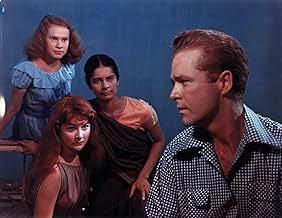
The growing pains of three young women contrast with the immutability of the holy Bengal River, around which their daily lives unfold.The growing pains of three young women contrast with the immutability of the holy Bengal River, around which their daily lives unfold.The growing pains of three young women contrast with the immutability of the holy Bengal River, around which their daily lives unfold.
- Nominated for 2 BAFTA Awards
- 3 wins & 4 nominations total



June Tripp
- Narrator
- (voice)
- (as June Hillman)
Nimai Barik
- Kanu
- (uncredited)
Richard R. Foster
- Bogey
- (uncredited)
Jane Harris
- Muffie
- (uncredited)
Jennifer Harris
- Mouse
- (uncredited)

Trilak Jetley
- Anil
- (uncredited)
Sajjan Singh
- Ram Singh - The Gateman
- (uncredited)
Penelope Wilkinson
- Elizabeth
- (uncredited)
Cecilia Wood
- Victoria
- (uncredited)
- Director
- Writers
- All cast & crew
- Production, box office & more at IMDbPro
7.47.3K
1
2
3
4
5
6
7
8
9
10
Featured reviews
Spellbinding, magnificent
A really glorious, spellbinding movie. Filmed in Bengal, India, on the Ganges, it captures the essence of India, the timeless quality of life on the Ganges, without being patronizing.
This is a coming of age movie about three teenage girls, two British and one Anglo-Indian, and how their lives are affected by the arrival of a one-legged American war veteran. It's very easy to fall into sentimentality in a movie like this, but Renoir avoids this obvious pitfall. Though I have to say, I found this film very moving.
It helps that this movie is filmed in Technicolor, and is one of the best uses of Technicolor of that era.
Some of the performers were amateurs, including the actor who played the veteran and some of the children, but overall the performances are outstanding. A fine, low-key performance by Esmond Knight. This was the only film for Patricia Walters, who played Harriet, and Thomas Breen, the war veteran who played Captain Jack, never made any other movies. Watch for Arthur Shields, the brilliant Irish actor, as father of Nan.
This is a coming of age movie about three teenage girls, two British and one Anglo-Indian, and how their lives are affected by the arrival of a one-legged American war veteran. It's very easy to fall into sentimentality in a movie like this, but Renoir avoids this obvious pitfall. Though I have to say, I found this film very moving.
It helps that this movie is filmed in Technicolor, and is one of the best uses of Technicolor of that era.
Some of the performers were amateurs, including the actor who played the veteran and some of the children, but overall the performances are outstanding. A fine, low-key performance by Esmond Knight. This was the only film for Patricia Walters, who played Harriet, and Thomas Breen, the war veteran who played Captain Jack, never made any other movies. Watch for Arthur Shields, the brilliant Irish actor, as father of Nan.
10Fesch
Just life
This is one of those rare films which give you the impression after viewing it that you have truly lived and shared the lives of its characters (not just 'two people received that kiss', as they say in the film, but everyone who's watching the movie).
You became part of that river as the film progresses, it is perhaps the picture which has described the passage of time better than any other. It is life, running within its waters, that catches your soul, which melts with the river and the film and your memory...
I think it is the only movie that made me run to a bookstore to buy the book it was based on. Rumer Godden's work is beautiful indeed, but the film is far better for me.
Highly recommended!
You became part of that river as the film progresses, it is perhaps the picture which has described the passage of time better than any other. It is life, running within its waters, that catches your soul, which melts with the river and the film and your memory...
I think it is the only movie that made me run to a bookstore to buy the book it was based on. Rumer Godden's work is beautiful indeed, but the film is far better for me.
Highly recommended!
The River
I found there to be something of the beauty of one of novelist Rumor Godden's other novels - "Black Narcussus" (1947) in this gorgeously photographed tale of three young women growing up with the Ganges river providing a constant in their lives. Our story is narrated, in part, by "Harriet" (Patricia Walters) who lives an affluent life beside the river with her much younger sisters, brother and with her mother (Nora Swinburne) expecting number seven! The age difference means she spends much of her time with her two friends "Valerie" (Andrienne Corri) and "Melanie" (Radha). "Melanie" is of mixed-race, her father being being British, her late mother a local - and so their's is a more complex dynamic fitting in with a society that was still pretty unforgiving of inter-racial transgressions. The three girls rub along well enough though, enjoying the simplicities of their privileged lives, until the arrival of the handsome "Uncle John" (Thomas E. Breen) who is the cousin of "Mr. John" (Arthur Shields) - the dad of "Melanie". This visitor has, quite literally, been through the wars and has a prosthetic limb to show for it. Psychologically struggling, he has come to hide himself away; to remove any reminders of his former more able existence. What he doesn't bargain for though are these three girls. They take an immediate shine to him and over the course of the latter part of the film we enjoy their growing infatuation and rivalries - all set amidst the colourful and vibrant Hindu community in which they live but with which they have remarkably little but the most polite of involvement. As you'd expect, the narrative delivers an occasional tragedy and it takes a perhaps little too stoic a view on the value of human life - especially when it isn't white - but for the most part the story seems set on avoiding anything politically, or even societally contentious as the plot develops. Essentially, there's not a great deal of actual substance to this story. It's a beautifully photographed and aesthetically pleasing depiction of a dream, if you like - and it's not a great dream for everyone; even "Harriet" - before the timeless Ganges continues on it's way past farms, fields, temples and homes. It looks great on a big screen and if you can, literally, go with the flow then you ought to be able to appreciate it for what it was, when it was written in 1946.
A great film
After a family tragedy, an adolescent girl blurts out angrily at the dinner table, "We just go on as if nothing has happened". "No", her mother responds, "we just go on". The River, Jean Renoir's first color film, is about going on -- the ebb and flow of life that mirrors the path of the sacred river Ganges that flows nearby. Filmed on location in India, The River is a sumptuously beautiful film that was called by Martin Scorsese ""one of the two most beautiful color films ever made" and one of his "most formative movie experiences." The film has been brought to life magnificently in a new Criterion DVD that contains an introduction by Jean Renoir, an interview with Scorsese, and a biography of author Rumer Godden, who grew up in India and whose work formed the basis for Powell and Pressburger's Black Narcissus (1947).
Set in India at the time of independence, its themes are universal: the feeling of being an outsider, of running away from unpleasant situations, and the hopelessly romantic stirring of adolescent love. While the film reflects the point of view of a British colonial family, it is respectful of the surrounding culture and pays homage to Hindu and Buddhist traditions through stories, documentary footage, and dance sequences. Harriet (Patricia Walters) is the adult narrator who looks back on her days as an adolescent. About thirteen in the film, she lives with her four sisters and brother Bogey in a colonial house in India that looks out upon the Ganges. Renoir's camera captures the energy and rhythm of life on the river: its peddlers, ships, markets, people coming and going, the crowds, everything in constant motion juxtaposed with the timeless tranquility of the river.
Harriet's father (Esmond Knight) who lost an eye during the war, runs a jute manufacturing plant while his pregnant wife (Nora Swinburne) takes care of the house, assisted by governess Nan (Suprova Mukerjee). When a young American named Captain John (Thomas E. Breen) comes to visit his cousin Mr. John (Arthur Shields) after losing his leg in the war, his dreams of being left alone are short lived. Harriet becomes infatuated with Captain John but has to contend with two other female admirers: her older friend Valerie (Adrienne Corri), a flaming redhead, and Mr. John's daughter Melanie (Radha Shri Ram), a young woman of mixed ethnicity who was born in India but reared in a British boarding school. The arrival of Captain John brings a clear signal that the girls must face the end of what has been an idyllic childhood.
All feel like outsiders: Melanie is caught between two cultures and questions whether she will ever fit into either, Harriet expresses her adolescent longings in idealistic poetry, Valerie is overwhelmed by her innocent desires, and Captain John is a deeply troubled man who only wants to live a normal life. Although the acting can be a bit wooden especially during peak dramatic moments, it does not detract from the film's authenticity. The River is definitely of its time and its attitudes towards women are dated, yet it is a work that transcends time and place to capture universal emotions. It is a great film that can be relished over and over again with increasing appreciation.
Set in India at the time of independence, its themes are universal: the feeling of being an outsider, of running away from unpleasant situations, and the hopelessly romantic stirring of adolescent love. While the film reflects the point of view of a British colonial family, it is respectful of the surrounding culture and pays homage to Hindu and Buddhist traditions through stories, documentary footage, and dance sequences. Harriet (Patricia Walters) is the adult narrator who looks back on her days as an adolescent. About thirteen in the film, she lives with her four sisters and brother Bogey in a colonial house in India that looks out upon the Ganges. Renoir's camera captures the energy and rhythm of life on the river: its peddlers, ships, markets, people coming and going, the crowds, everything in constant motion juxtaposed with the timeless tranquility of the river.
Harriet's father (Esmond Knight) who lost an eye during the war, runs a jute manufacturing plant while his pregnant wife (Nora Swinburne) takes care of the house, assisted by governess Nan (Suprova Mukerjee). When a young American named Captain John (Thomas E. Breen) comes to visit his cousin Mr. John (Arthur Shields) after losing his leg in the war, his dreams of being left alone are short lived. Harriet becomes infatuated with Captain John but has to contend with two other female admirers: her older friend Valerie (Adrienne Corri), a flaming redhead, and Mr. John's daughter Melanie (Radha Shri Ram), a young woman of mixed ethnicity who was born in India but reared in a British boarding school. The arrival of Captain John brings a clear signal that the girls must face the end of what has been an idyllic childhood.
All feel like outsiders: Melanie is caught between two cultures and questions whether she will ever fit into either, Harriet expresses her adolescent longings in idealistic poetry, Valerie is overwhelmed by her innocent desires, and Captain John is a deeply troubled man who only wants to live a normal life. Although the acting can be a bit wooden especially during peak dramatic moments, it does not detract from the film's authenticity. The River is definitely of its time and its attitudes towards women are dated, yet it is a work that transcends time and place to capture universal emotions. It is a great film that can be relished over and over again with increasing appreciation.
a smugly colonial tip of the Indian iceberg
Jean Renoir embraces Technicolor for the first time in his adaptation of Rumer Godden's coming- of-age novel THE RIVER, with the latter collaborating on the screenplay. The story takes place in Bengal, India, a teenage girl named Harriet (Walters) is the eldest child of a middle-class British family living near the riverbank of Ganges, her father (an one-eyed Knight) runs a jute mill, and her mother (Swinburne) is expecting a child no. 7.
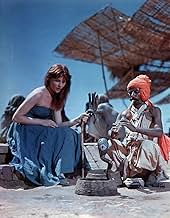
It is a carefree scenario, growing up in the natural inculcation of an exotically profound Hindu culture while carrying on an genteel upbringing, sometimes, it conspires to be a false or at least parochial impression of the land and its people, which doesn't take up too much space in the story-line, the only native Indian who has a speaking part is Nan (Mukerjee), the family's convivial but gossipy nanny, and the rest sustains as an ethnic curiosity to meet the Westerners' eyes, although beguilingly and entrancingly so, after all, what we are allowed to watch is the smugly colonial tip of the Indian iceberg.
The plot revolves around Harriet's budding affection towards the guest of their neighbor Mr. John (Shields), an one-legged American Captain John (Breen), who takes his time in lolling on a foreign land, to find some peace with his battlefield past and physical disability, look for a new resolution for life. As John is the only eligible white young man on the market, to her chagrin, a besotted, but fairly plain-looking Harriet has a losing game against her rival, the maturer and more zaftig Valerie (Corri), by the way, a British girl too is also her best friend. And throughout this picturesque film, it is Harriet's voice-over that guides viewers traversing her prepubescent triviality (poems, indeed), to listen to her inner voice, to sympathize her unrequited love, to find empathy in this garden-variety tale.
Wielded as an emotional clincher, a tragic incident materializes as one downside of having a brood of many caused by adult negligence, but here also emanates a disquieting undertow to pinpoint the virulence of a foreign society with a local boy standing by as an unwary abetter. And a cheesy solution to get it over is taking the pro-procreation flag, babies are being borne all the time.
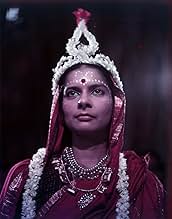
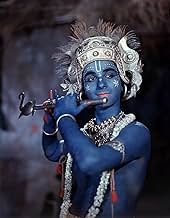
The cast is mixed with adult professionals and amateur players, but comes off barely adequate, a major gripe is the narrative ellipsis in the story of Melanie (Radha), the mixed-race daughter of Mr. John, who stands out (there is not much competition though) with a massively pleasurable Ganesha-courting dancing sequence, but whose dislike of herself, waffling identity never been considerably mapped out as a pre-eminent counterpoint of Harriet's more orthodox background.
So, all above sounds like a pejorative critique against a film who has earned a hallowed reputation since its genesis, yet, it is as plain as the nose on one's face, the picture's eye-catching glamour and aural accompaniments are undeniably supreme, technologically speaking. And it is smart enough for Mr. Renoir to treat it as a philosophical prose other than a heady narration of banal proceedings, only a 60-odd-year later, its allure fades away slightly due to the original novel's awkward stance on a colonized land and Renoir's condoning deference.
It is a carefree scenario, growing up in the natural inculcation of an exotically profound Hindu culture while carrying on an genteel upbringing, sometimes, it conspires to be a false or at least parochial impression of the land and its people, which doesn't take up too much space in the story-line, the only native Indian who has a speaking part is Nan (Mukerjee), the family's convivial but gossipy nanny, and the rest sustains as an ethnic curiosity to meet the Westerners' eyes, although beguilingly and entrancingly so, after all, what we are allowed to watch is the smugly colonial tip of the Indian iceberg.
The plot revolves around Harriet's budding affection towards the guest of their neighbor Mr. John (Shields), an one-legged American Captain John (Breen), who takes his time in lolling on a foreign land, to find some peace with his battlefield past and physical disability, look for a new resolution for life. As John is the only eligible white young man on the market, to her chagrin, a besotted, but fairly plain-looking Harriet has a losing game against her rival, the maturer and more zaftig Valerie (Corri), by the way, a British girl too is also her best friend. And throughout this picturesque film, it is Harriet's voice-over that guides viewers traversing her prepubescent triviality (poems, indeed), to listen to her inner voice, to sympathize her unrequited love, to find empathy in this garden-variety tale.
Wielded as an emotional clincher, a tragic incident materializes as one downside of having a brood of many caused by adult negligence, but here also emanates a disquieting undertow to pinpoint the virulence of a foreign society with a local boy standing by as an unwary abetter. And a cheesy solution to get it over is taking the pro-procreation flag, babies are being borne all the time.
The cast is mixed with adult professionals and amateur players, but comes off barely adequate, a major gripe is the narrative ellipsis in the story of Melanie (Radha), the mixed-race daughter of Mr. John, who stands out (there is not much competition though) with a massively pleasurable Ganesha-courting dancing sequence, but whose dislike of herself, waffling identity never been considerably mapped out as a pre-eminent counterpoint of Harriet's more orthodox background.
So, all above sounds like a pejorative critique against a film who has earned a hallowed reputation since its genesis, yet, it is as plain as the nose on one's face, the picture's eye-catching glamour and aural accompaniments are undeniably supreme, technologically speaking. And it is smart enough for Mr. Renoir to treat it as a philosophical prose other than a heady narration of banal proceedings, only a 60-odd-year later, its allure fades away slightly due to the original novel's awkward stance on a colonized land and Renoir's condoning deference.


Did you know
- TriviaThomas E. Breen, who plays Capt. John, was really missing one leg like his character.
- Goofs(at around 36 mins) A cigarette appears from nowhere.
- ConnectionsFeatured in Loin (2001)
- How long is The River?Powered by Alexa
Details
- Release date
- Countries of origin
- Official site
- Languages
- Also known as
- Río sagrado
- Filming locations
- Production company
- See more company credits at IMDbPro
Box office
- Gross worldwide
- $53,357
- Runtime
- 1h 39m(99 min)
- Aspect ratio
- 1.37 : 1
Contribute to this page
Suggest an edit or add missing content