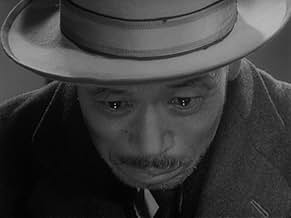
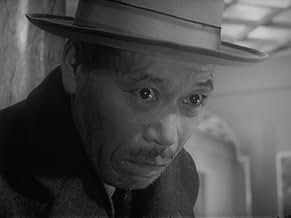
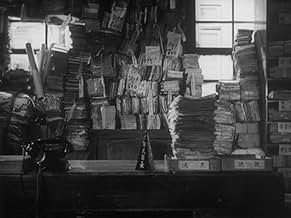
A bureaucrat tries to find meaning in his life after he discovers he has terminal cancer.A bureaucrat tries to find meaning in his life after he discovers he has terminal cancer.A bureaucrat tries to find meaning in his life after he discovers he has terminal cancer.
- Director
- Writers
- Stars
- Nominated for 1 BAFTA Award
- 6 wins & 2 nominations total
- Director
- Writers
- All cast & crew
- Production, box office & more at IMDbPro
8.3100.2K
1
2
3
4
5
6
7
8
9
10
Featured reviews
A cinematic tour de force
"Ikiru" is supposedly one of Steven Spielberg's favourite films, and one can see the influence it's had on him not only in the sentimentality and the ultimate "feelgood factor" (which may be a little too extreme for some viewers, although the script never condescends), but visually, especially in the virtuoso sequence in which a reprobate leads our hero, a respectable and dull civil servant, on a whirlwind tour of Tokyo's frenzied nightlife - a masterpiece of camera placement and editing. With images throughout that will stay with you for a long time, and a terrific supporting performance by Miki Odagiri as a vivacious young "office lady", "Ikiru" is still an absolute knockout more than 50 years on.
The most moving and human film I have ever seen.
I can safely say that I have seen no finer film than Kurosawa's true masterpiece, Ikiru. The story of a dying petty bureaucrat in 1950's Japan, Ikiru is as uncompromisingly honest and beautiful a film as has ever been made on the subject of life. Kurosawa elevates a story that could have been simple melodrama to the level of masterwork with a genuine love of his characters, and with an incredible technical direction. The film's structure accentuates and deepens its many, many lessons on life, and the performances, including a heartbreakingly earnest turn by Shimura are all flawless.
In short, Ikiru is easily one of the greatest works committed to film, and no discerning film aficionado should avoid experiencing it. Had Kurosawa directed only this film, it would still be enough to include him in the pantheon of the greatest storytellers who ever lived. Fortunately for us, it is simply the pinnacle of a staggeringly amazing career. It is the absolute definition of a 10/10 film.
Beautiful & touching, also very clever
This film touched me in a way no other film has. Filmed in black and white and gorgeous, both in the visuals and in how the story unfolds. Behold the clever manner of gradually unfolding the story as people jog each other's memories at his funeral (an obligation for them, that gradually turns into a real eulogy). Everything is told in flashbacks: the mourners' memories unfold naturally, as people remember what the man did and struggle to comprehend why.
This film I would nominate for the golden five of the century!
I first saw it in 1956 or so at a small theater in downtown Chicago. A second viewing, years later, confirmed my initial pleasure!
This film I would nominate for the golden five of the century!
I first saw it in 1956 or so at a small theater in downtown Chicago. A second viewing, years later, confirmed my initial pleasure!
10wobelix
Kurosawa is Kafka going Kawabata...
Being one of the Founding Fathers of Cinema, Kurosawa shines to all directions. In his diverse oeuvre it is hard, if not impossible, to find a weak work.
Ikiru is the most humane film of this grand Humanist. Kurosawa's story telling skills are sublime, and he has surpassed himself with this movie.
The slow pace and ditto camera movements (except in the night with 'Mephistofeles' where all is logically much more frantic) enhances the story superbly. What a pity some of the nowadays public can't find the tranquility and maybe serenity to watch a gorgeous film like that. That part of the movie lovers will miss a brilliant film, that would have lingered in the mind forever...
Ikiru is the most humane film of this grand Humanist. Kurosawa's story telling skills are sublime, and he has surpassed himself with this movie.
The slow pace and ditto camera movements (except in the night with 'Mephistofeles' where all is logically much more frantic) enhances the story superbly. What a pity some of the nowadays public can't find the tranquility and maybe serenity to watch a gorgeous film like that. That part of the movie lovers will miss a brilliant film, that would have lingered in the mind forever...
To Live in Death
Probably one of the most difficult aspects a film like "Ikiru" has to overcome is the very rough march of time. To actually find someone these days, let's say a crowd of regular movie-goers to sit down and watch a film about an old Japanese man dying of cancer would be too much to ask.
Long held shots, hardly uplifting subject, to westerners very foreign. An array of reasons not to see it. And yet, once you actually start getting into the picture it doesn't let you go. Which is why it may be rightfully considered to be a classic.
Of all of Kurosawa's films this is probably the one movie that works perfectly on a universal level. Because at its core it is about one of the most basic desires of human existence...namely to be able to look back on your life and say "It was worth it."
In its starch and unforgiving black-and-white form the movie records the time of one man's life in such a beautiful and yes, colorful way, that by the time the final moments of the film play out, it will be very hard for anybody not to be touched. A glorious moment in 20th century cinema, that will hopefully be preserved for decades to come.
Long held shots, hardly uplifting subject, to westerners very foreign. An array of reasons not to see it. And yet, once you actually start getting into the picture it doesn't let you go. Which is why it may be rightfully considered to be a classic.
Of all of Kurosawa's films this is probably the one movie that works perfectly on a universal level. Because at its core it is about one of the most basic desires of human existence...namely to be able to look back on your life and say "It was worth it."
In its starch and unforgiving black-and-white form the movie records the time of one man's life in such a beautiful and yes, colorful way, that by the time the final moments of the film play out, it will be very hard for anybody not to be touched. A glorious moment in 20th century cinema, that will hopefully be preserved for decades to come.
Did you know
- TriviaWhen Takashi Shimura rehearsed his singing of "Song of the Gondola," director Akira Kurosawa instructed him to "sing the song as if you are a stranger in a world where nobody believes you exist."
- GoofsWhen Kanji and the Novelist go to a busy, loud nightclub, the film has been reversed as evidenced by the backwards "Nippon Beer" banner in the background.
- ConnectionsFeatured in The Siskel & Ebert 500th Anniversary Special (1989)
- SoundtracksJ'ai Deux Amours
(uncredited)
Music by Vincent Scotto
Lyrics by Georges Koger and Henri Varna
Performed by Josephine Baker
[Played when entering the bar with the long-faced man]
Details
Box office
- Gross US & Canada
- $60,239
- Opening weekend US & Canada
- $2,149
- Dec 29, 2002
- Gross worldwide
- $114,026
- Runtime
- 2h 23m(143 min)
- Color
- Sound mix
- Aspect ratio
- 1.37 : 1
Contribute to this page
Suggest an edit or add missing content