Ruby Gentry
- 1952
- 1h 22m
IMDb RATING
6.6/10
1.9K
YOUR RATING

A sexy but poor young girl marries a rich man she doesn't love, but carries a torch for another man.A sexy but poor young girl marries a rich man she doesn't love, but carries a torch for another man.A sexy but poor young girl marries a rich man she doesn't love, but carries a torch for another man.
- Director
- Writers
- Stars




Barney Phillips
- Dr. Saul Manfred
- (as Bernard Phillips)
- …


Peter Adams
- Joage--Golfer
- (uncredited)

Edgar Dearing
- Engineer
- (uncredited)
George Fields
- Harmonica Player
- (uncredited)

Thomas Browne Henry
- Cotton Warehouse Owner
- (uncredited)

Selmer Jackson
- Club Member at Bar
- (uncredited)
- Director
- Writers
- All cast & crew
- Production, box office & more at IMDbPro
6.61.9K
1
2
3
4
5
6
7
8
9
10
Featured reviews
Heavy-breather via King Vidor...not terribly convincing, but shameless fun
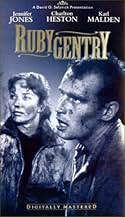
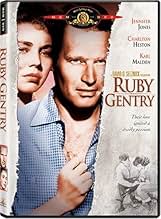
The turbulent life of a female sea captain is revealed. Jennifer Jones does quite well in the meaty leading role of Ruby, a swamp girl from the Carolinas who infiltrates an indifferent high society after marrying wealthy businessman Karl Malden. However, that marriage was just a convenience for this hellcat, who has pined her whole life for intrigued childhood hunting pal Charlton Heston, himself a recent newlywed to a girl who hails from the right side of the tracks. Silvia Richards' screenplay, which originated from a story by Arthur Fitz-Richard, is alarmingly direct, cutting right to the action despite a few well-placed flashbacks. Still, the narrative is somewhat confused (who's telling this story? If it's supposed to be Bernard Phillips' smitten doctor, he isn't around a whole lot). Jones sidesteps camp (just barely) with some enjoyably wild behavior in the film's second-half, and yet this portion of the movie doesn't quite fit comfortably alongside the rest--it plays almost like an unrelated episode. Director and co-producer King Vidor's strongest work comes in the earliest sequences, which have a well-wrought sense of character and pacing which the finale tends to lack. **1/2 from ****
Snobbery, hypocrisy, and small-minded people
It's no big surprise that RUBY GENTRY receives such mixed reviews, because the theme of the film will not appeal to small-town America. Ruby is a girl from the wrong side of the tracks, as the narrator at the beginning of the film states. What this is code for in classic Hollywood is not necessarily straight translation. In other words, we are in the realm of a lost art form: the romantic film, or the melodrama. King Vidor was a master of this craft.
Ruby, then, was different. She was a free spirit, an unconventional thinker, and a seductive beauty. This is a lethal combination in the small, conservative town Ruby grows up in. She falls in love, of course, with the 'popular' boy, the rich kid, who the most well-bred society girls are after. Of course none of them have anything except their money against Ruby, and Boake (Charlton Heston) knows it! So there is an essential conflict between what Boake wants (Ruby) and what he is expected to have. He, unlike Ruby, is rather weak, and afraid. Deep down he loves her, but he lacks her spirit and wisdom. He won't go after someone looked down on by the town. He has to be 'respectable.' He cares what others think. Ruby does not, so she is willing to fight for him, but at the same time she does not want to be taken for granted. She wants her love to be fulfilled through marriage; he only wants her as a sex object.
I think it is important to note that Ruby Gentry is not necessarily a femme fatale, nor does she necessarily sin. She simply follows her heart. However, a series of accidents, including the death of her wealthy husband, occur, and Ruby is involved in scandal after scandal. The people always choose to believe the worst of her because she represents what they despise: an independent woman with beauty and natural intelligence, and class mobility.
RUBY GENTRY is a masterpiece. King vidor, my favorite director, is at the top of his form. Jennifer Jones, a talented and underrated actress, makes Ruby both sympathetic and believable. Charlton Heston is extremely effective as a complex character--one who on the surface seems shallow, but beneath the surface you can still feel his love for Ruby (which he struggles to hide, or deny).
Boake and his family feel they are above Ruby. Even Ruby's brother is judgmental and calls her a 'sinner,' based on assumptions. The final event in the film is a tragedy, but noteworthy because it was not the fault of Ruby or Boake, but a judgmental, hypocritical, and merciless society, imposing religious and social institutions which hinder us all.
The film is not dated. If anything, it proves melodrama is more effective than realism sometimes, where larger-than-life human emotions are concerned. People who call a movie like RUBY GENTRY 'trash' are actually in denial that the theme, and the emotions, are as vividly real and relevant now as ever. Anyone who thinks social class, sex appeal, and money do not count for everything in today's world, just as then, hasn't a clue. These are timeless themes, and the relationships in the film, and how they were negatively affected by the prejudice and snobbery around them, can be compared to any number of contemporary homosexual or interracial relationships, among others. How's that for relevance?
Sometimes the bigger emotions, the tragedies, are more appropriately told in melodramatic terms--because they are serious and heartbreaking and should not be reduced to cinematic language that conveys anything less!
Ruby, then, was different. She was a free spirit, an unconventional thinker, and a seductive beauty. This is a lethal combination in the small, conservative town Ruby grows up in. She falls in love, of course, with the 'popular' boy, the rich kid, who the most well-bred society girls are after. Of course none of them have anything except their money against Ruby, and Boake (Charlton Heston) knows it! So there is an essential conflict between what Boake wants (Ruby) and what he is expected to have. He, unlike Ruby, is rather weak, and afraid. Deep down he loves her, but he lacks her spirit and wisdom. He won't go after someone looked down on by the town. He has to be 'respectable.' He cares what others think. Ruby does not, so she is willing to fight for him, but at the same time she does not want to be taken for granted. She wants her love to be fulfilled through marriage; he only wants her as a sex object.
I think it is important to note that Ruby Gentry is not necessarily a femme fatale, nor does she necessarily sin. She simply follows her heart. However, a series of accidents, including the death of her wealthy husband, occur, and Ruby is involved in scandal after scandal. The people always choose to believe the worst of her because she represents what they despise: an independent woman with beauty and natural intelligence, and class mobility.
RUBY GENTRY is a masterpiece. King vidor, my favorite director, is at the top of his form. Jennifer Jones, a talented and underrated actress, makes Ruby both sympathetic and believable. Charlton Heston is extremely effective as a complex character--one who on the surface seems shallow, but beneath the surface you can still feel his love for Ruby (which he struggles to hide, or deny).
Boake and his family feel they are above Ruby. Even Ruby's brother is judgmental and calls her a 'sinner,' based on assumptions. The final event in the film is a tragedy, but noteworthy because it was not the fault of Ruby or Boake, but a judgmental, hypocritical, and merciless society, imposing religious and social institutions which hinder us all.
The film is not dated. If anything, it proves melodrama is more effective than realism sometimes, where larger-than-life human emotions are concerned. People who call a movie like RUBY GENTRY 'trash' are actually in denial that the theme, and the emotions, are as vividly real and relevant now as ever. Anyone who thinks social class, sex appeal, and money do not count for everything in today's world, just as then, hasn't a clue. These are timeless themes, and the relationships in the film, and how they were negatively affected by the prejudice and snobbery around them, can be compared to any number of contemporary homosexual or interracial relationships, among others. How's that for relevance?
Sometimes the bigger emotions, the tragedies, are more appropriately told in melodramatic terms--because they are serious and heartbreaking and should not be reduced to cinematic language that conveys anything less!
7jhkp
ruby
Jennifer Jones is so big in this film she makes Charlton Heston appear to be underacting - no mean feat! Nonetheless she's a fascinating actress to watch, and the whole film is fresh. Does it seem like "real life" North Carolina? No, but I don't really think it matters. It's an effective, entertaining melodrama that was a big hit in its day.
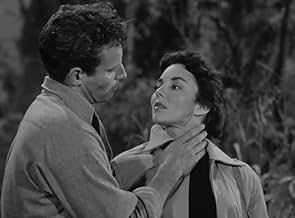
Ruby Gentry was filmed on location (mostly in rural California), and what a nice, uncomplicated, outdoor feeling the film has. It's not studio-bound at all, even when the occasional use of process photography is obvious. Who could ever forget that amazing love scene played in the convertible careening down the beach, for example? You can almost feel the fresh sea air and smell the salt water. Heston and Jones, in this and other steamy scenes (at least for the time) make a surprisingly effective team.
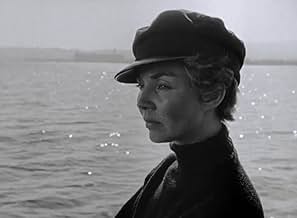
Photographed in real light, Jennifer Jones looks just about five years too old for the part; she seems to compensate by overdoing the tomboy aspects, strutting about and speaking too loudly to people standing three feet away from her. Playing a tramp-ish character, a girl from the wrong side of the tracks, she's hardly as naturally sultry or sexy as, say, Ava Gardner. She works at it, and works a bit too hard, at times. A scene in which she pours coffee for a group of horny guys, where all she has to do is stand there looking good, is played with so many varied facial tics and expressions. She can't throw away a scene, or a moment.
Yet her performance is appropriate to the character and the film. She commands the screen and is never boring for a second. What's great about Jennifer Jones is her incredible sensitivity, so that when Ruby is slighted by the people of her town for her low social status, despite (and because of) her marriage to Karl Malden's wealthy character, her hurt and rage are palpable. She really lives the part. And this drives the film. She has a great deal of life on the screen.
Charlton Heston is great. Looser than usual, calling his girl, "baby." He doesn't seem to rely as much on his mellifluous voice this time. He plays a regular American guy. It's a shame he didn't get to demonstrate the casual quality of his Boake Teckman, here, in other roles. But I guess when you play Moses and Michelangelo you don't get that much of an opportunity.
Karl Malden was still pretty new to moviegoers at this time but he became very popular, very fast, after his Oscar winning role in Streetcar. In many ways he's always reminded me of Spencer Tracy with his sharp yet warm, human portrayals. Unfortunately he didn't have Tracy's good looks and wasn't in line for leading man parts. But that didn't stop him from becoming a top star. He blends into his part expertly and makes us forget he's acting. He just seems to be Jim Gentry.
The brilliant director King Vidor went through a long melodramatic period and it was most enjoyable. Ruby Gentry was a highlight.
The score (for harmonica and orchestra) is one of the most memorable things about the film, the theme music became a big hit called "Ruby."
Ruby Gentry was filmed on location (mostly in rural California), and what a nice, uncomplicated, outdoor feeling the film has. It's not studio-bound at all, even when the occasional use of process photography is obvious. Who could ever forget that amazing love scene played in the convertible careening down the beach, for example? You can almost feel the fresh sea air and smell the salt water. Heston and Jones, in this and other steamy scenes (at least for the time) make a surprisingly effective team.
Photographed in real light, Jennifer Jones looks just about five years too old for the part; she seems to compensate by overdoing the tomboy aspects, strutting about and speaking too loudly to people standing three feet away from her. Playing a tramp-ish character, a girl from the wrong side of the tracks, she's hardly as naturally sultry or sexy as, say, Ava Gardner. She works at it, and works a bit too hard, at times. A scene in which she pours coffee for a group of horny guys, where all she has to do is stand there looking good, is played with so many varied facial tics and expressions. She can't throw away a scene, or a moment.
Yet her performance is appropriate to the character and the film. She commands the screen and is never boring for a second. What's great about Jennifer Jones is her incredible sensitivity, so that when Ruby is slighted by the people of her town for her low social status, despite (and because of) her marriage to Karl Malden's wealthy character, her hurt and rage are palpable. She really lives the part. And this drives the film. She has a great deal of life on the screen.
Charlton Heston is great. Looser than usual, calling his girl, "baby." He doesn't seem to rely as much on his mellifluous voice this time. He plays a regular American guy. It's a shame he didn't get to demonstrate the casual quality of his Boake Teckman, here, in other roles. But I guess when you play Moses and Michelangelo you don't get that much of an opportunity.
Karl Malden was still pretty new to moviegoers at this time but he became very popular, very fast, after his Oscar winning role in Streetcar. In many ways he's always reminded me of Spencer Tracy with his sharp yet warm, human portrayals. Unfortunately he didn't have Tracy's good looks and wasn't in line for leading man parts. But that didn't stop him from becoming a top star. He blends into his part expertly and makes us forget he's acting. He just seems to be Jim Gentry.
The brilliant director King Vidor went through a long melodramatic period and it was most enjoyable. Ruby Gentry was a highlight.
The score (for harmonica and orchestra) is one of the most memorable things about the film, the theme music became a big hit called "Ruby."
A tragic love story
This is the story of Ruby Gentry, as it is told by the town's doctor. Ruby Gentry was born in the wrong side of the town, she never considered herself a lady, and so nobody else did so. When Boake Tackman returns from North America to his hometown, Ruby Gentry believes that their old passion will keep her dreams alive, and that she will finally win his heart. But Boake (Charlton Heston) betrays her love,and marries a wealthy towngirl. Now Ruby marries Jim Gentry, played excellent by Kard Malden, the richest person in the town, but after some months he dies and the whole town turns against her, believing that she has caused his death. Ruby tries to revenge above all, Boake, but with the help of her fanatic christian brother tragedy comes and Ruby looses everything that she wanted.
Jennifer Jones had a big success with this movie, after 5 box-office flops. Its is a well known story, directed very good by Charles Vidor, and supported excellent by Karl Malden. Charlton Heston show the kind of acting that will follow for the rest of his career,and comes out rather convincing.
A good film you would like to see again...(but not a masterpiece)
Jennifer Jones had a big success with this movie, after 5 box-office flops. Its is a well known story, directed very good by Charles Vidor, and supported excellent by Karl Malden. Charlton Heston show the kind of acting that will follow for the rest of his career,and comes out rather convincing.
A good film you would like to see again...(but not a masterpiece)
Jennifer Jones
I saw this when I was very young and it was quite risqué for 1952. Jennifer was beautiful and very seductive. The thought of a woman being shown on the screen engaged in seduction was far from the norm for my family. I went with my friend and was afraid to tell my Mother. I need to rent this and see if it still holds up after all this time. I'm sure Jennifer will as she was a wonderful actress. I love Charlton Heston because is a journeyman actor but he bugs me. He always seems to be the same person. Karl Malden is an actors actor and never gives a bad performance. The setting was typical of that time, poor girl seduces rich boy. The other one was rich girl falls for poor boy. Sure never happened in my life. What I remember most though was the music as It is so plaintive.. I have it downloaded and it is one of my favorites.


Did you know
- TriviaAccording to Charlton Heston, Jennifer Jones broke two bones in her hand hitting him in a fight scene. As a result, Jones had to wear several bracelets covering up a cast.
- GoofsThe swamp background noise instead of being NC wildlife is jungle noises - Perhaps the same sound clip from Cape Fear with Gregory Peck. Both were to have taken place in the swamps of NC - yet both sounded like something out of Tarzan.
- Quotes
Ruby Gentry: Turn off the pumps.
- ConnectionsEdited into Histoire(s) du cinéma: Une histoire seule (1989)
Details
Box office
- Budget
- $525,000 (estimated)
- Runtime
- 1h 22m(82 min)
- Color
- Aspect ratio
- 1.33 : 1
Contribute to this page
Suggest an edit or add missing content