IMDb RATING
6.1/10
1.5K
YOUR RATING


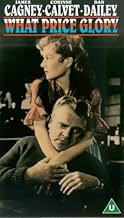
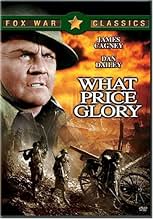
The wartime romantic misadventures of Captain Flagg, commander of a company of US Marines in 1918 France.The wartime romantic misadventures of Captain Flagg, commander of a company of US Marines in 1918 France.The wartime romantic misadventures of Captain Flagg, commander of a company of US Marines in 1918 France.

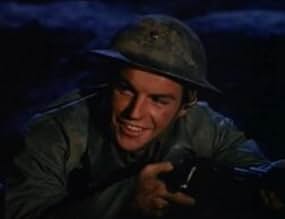
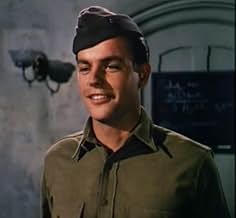


Max Showalter
- Lt. Moore
- (as Casey Adams)


Luis Alberni
- Grand Uncle
- (uncredited)

Olga Andre
- Sister Clothilde
- (uncredited)
Tina Blagoi
- Mrs. Bouchard
- (uncredited)
Danny Borzage
- Gilbert
- (uncredited)

George Bruggeman
- German Lieutenant
- (uncredited)
Frederic Brunn
- German Officer
- (uncredited)

Paul Bryar
- Charmaine's Uncle
- (uncredited)
6.11.5K
1
2
3
4
5
6
7
8
9
10
Featured reviews
Disappointing and Silly Parody of War
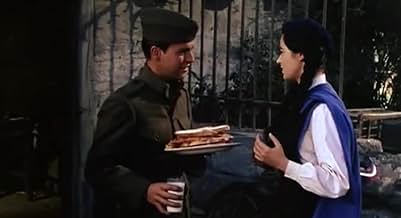
In 1918, in Bar-de-Duc, France, the leader of a company of Marines in the front, Captain Flagg (James Cagney), receives a group of green replacements and his disaffection, the tough Sergeant Quirt (Dan Dailey). Their rivalry increases when they both feel attracted by the same easy woman and daughter of the local innkeeper, Charmaine (Corinne Calvet).
What a disappointing and silly parody of war this "What Price Glory" is! Directed by John Ford and with James Cagney in the cast, I could not believe that this film would be so weak. Today I have watched "The Road to Glory", a great anti-war movie directed by Howard Hawks that shows the barbarian life in the trenches in WWI. However, John Ford has made neither a comedy (like Robert Altman's "MASH"), nor a romance or drama or war movie. Actually it is a messy feature, too silly and not funny for a comedy, too heavy for a romance and unreal for a drama or war, but with a magnificent cinematography and a lovely Corinne Calvet. My vote is five.
Title (Brazil): "Sangue por Glória" ("Blood for Glory")
What a disappointing and silly parody of war this "What Price Glory" is! Directed by John Ford and with James Cagney in the cast, I could not believe that this film would be so weak. Today I have watched "The Road to Glory", a great anti-war movie directed by Howard Hawks that shows the barbarian life in the trenches in WWI. However, John Ford has made neither a comedy (like Robert Altman's "MASH"), nor a romance or drama or war movie. Actually it is a messy feature, too silly and not funny for a comedy, too heavy for a romance and unreal for a drama or war, but with a magnificent cinematography and a lovely Corinne Calvet. My vote is five.
Title (Brazil): "Sangue por Glória" ("Blood for Glory")
Cagney being Cagney
This patriotic war film is the bees knees for slap stick, witty comedy. The mixture of wussy brown nosing privates and annoyed sarcastic generals provides a hilarious bitter sweet feeling that can put a smile on your face. Not to mention the constant friendly rivalry between the comedic loud mouthed Captain Flagg (Cagney being Cagney), and the irritated Sergeant Quirt played by Dailey, for the cute and innocent French waitress Charmaine. This movie not only made a great world war 1 film, but proved Cagney was still his energetic, pound for pound, hard nosed self even at 53 years old. The only downside to the movie was the poorly portrayed dramatic war speeches and the failed attempts at giving a life lesson. But all around 8/10
John Ford's idea of World War I
One of the great anti-war plays of the 1920s was Maxwell Anderson's What Price Glory. The play expressed popular American feeling that we were never going to war again like that and endure the slaughter in those trenches in France that occurred in the short time we were there. Remember we only declared war in 1917 and the thing had been going on in Europe for three years by the time we got there.
One of the things Woodrow Wilson as President and the American Expeditionary Force commander John Pershing insisted on was that the American army when fully trained would fight as a unit and not just be replacement troops for the French and British already there. They deviated only once from that policy when the American First Marine Division became the first American troops in battle in World War I at Belleau Wood. These Marines depicted here are part of those troops.
John Ford is one of our great American directors and when he does his own work on material never before used he's produced some remarkable cinema. But here he takes a serious anti-war play and turns it into one of his service comedies. There certainly are comedic elements in What Price Glory, but it's a serious picture.
The original silent film version done by Raoul Walsh was faithful to Maxwell Anderson's spirit and introduced those two Marines Edmund Lowe and Victor McLaglen who were so popular as Captain Flagg and Sergeant Quirt that they went and starred in a slew of buddy films. In fact they and James Cagney and Pat O'Brien introduced and popularized the buddy film genre.
Cagney steps into McLaglen shoes here and Dan Dailey plays Sergeant Quirt. They played two belligerent oafs in this and play them well, but no one ever thought of re-teaming them.
John Ford should have let this classic alone.
One of the things Woodrow Wilson as President and the American Expeditionary Force commander John Pershing insisted on was that the American army when fully trained would fight as a unit and not just be replacement troops for the French and British already there. They deviated only once from that policy when the American First Marine Division became the first American troops in battle in World War I at Belleau Wood. These Marines depicted here are part of those troops.
John Ford is one of our great American directors and when he does his own work on material never before used he's produced some remarkable cinema. But here he takes a serious anti-war play and turns it into one of his service comedies. There certainly are comedic elements in What Price Glory, but it's a serious picture.
The original silent film version done by Raoul Walsh was faithful to Maxwell Anderson's spirit and introduced those two Marines Edmund Lowe and Victor McLaglen who were so popular as Captain Flagg and Sergeant Quirt that they went and starred in a slew of buddy films. In fact they and James Cagney and Pat O'Brien introduced and popularized the buddy film genre.
Cagney steps into McLaglen shoes here and Dan Dailey plays Sergeant Quirt. They played two belligerent oafs in this and play them well, but no one ever thought of re-teaming them.
John Ford should have let this classic alone.
Not very compelling, not much like Marines either
Well, despite having made "The Sands of Iwo Jima", John Ford made a movie about World War I Marines that doesn't really seem to be about Marines at all. I'm not a student of World War I Marine slang, but it seemed odd for Captain Flagg to pronounce Sergeant Quirt his "Top Soldier" and for Marines to refer to each other as soldiers. Despite the fact that they under French command, I found it odd for them to refer to being in the Army, since they are in the Corps. Go figure.
The two combat scenes are amateurish, even by Ford's standards. The acting is not convincing (except when Robert Wagner dies and Cagney manages not to over-act it) and while you can believe the two main characters don't like each other at the beginning, you never believe there's some odd tie binding them together. The character development is relatively tame, with only Wagner and Harry Morgan (Colonel Potter as a Marine Corporal and quartermaster!) showing any depth among the minor Marine characters.
Dan Dailey does play a convincing loud, parade ground senior NCO. He conveys the conniving and womanizing well, but when he is supposed to have finally fallen for the French beauty, it's hard to believe. Cagney plays merely a caricature of the hard-bitten, seen-it-all Marine. His final scene neither convinces you he considers staying or that the Corps means so much to him that he has to go.
The worst part is when a wounded Marine shouts out the title of the movie. It's something along the lines of "Are you going to get in the game, Captain? There's two minutes left and we need a hero. What price glory, Captain? What price glory?" One can imagine that delivered stirringly by a character whose motivation we understand, but instead, it is shouted by a nameless face with only a crazed look. It also would help if the Captain had been portrayed as a glory hound instead of drunken, war-weary yet sympathetic. I guess they had to get the name of the movie in somehow....
I was trying to imagine John Ford's World War I and was sadly disappointed that it wasn't more moving.
The two combat scenes are amateurish, even by Ford's standards. The acting is not convincing (except when Robert Wagner dies and Cagney manages not to over-act it) and while you can believe the two main characters don't like each other at the beginning, you never believe there's some odd tie binding them together. The character development is relatively tame, with only Wagner and Harry Morgan (Colonel Potter as a Marine Corporal and quartermaster!) showing any depth among the minor Marine characters.
Dan Dailey does play a convincing loud, parade ground senior NCO. He conveys the conniving and womanizing well, but when he is supposed to have finally fallen for the French beauty, it's hard to believe. Cagney plays merely a caricature of the hard-bitten, seen-it-all Marine. His final scene neither convinces you he considers staying or that the Corps means so much to him that he has to go.
The worst part is when a wounded Marine shouts out the title of the movie. It's something along the lines of "Are you going to get in the game, Captain? There's two minutes left and we need a hero. What price glory, Captain? What price glory?" One can imagine that delivered stirringly by a character whose motivation we understand, but instead, it is shouted by a nameless face with only a crazed look. It also would help if the Captain had been portrayed as a glory hound instead of drunken, war-weary yet sympathetic. I guess they had to get the name of the movie in somehow....
I was trying to imagine John Ford's World War I and was sadly disappointed that it wasn't more moving.
Misfired War Musical
Marine buddies James Cagney (as Captain Flagg) and Dan Dailey (as Sergeant Quirt) carouse through World War I, and eventually become rivals for the affections of beautifully-proportioned Frenchwoman Corinne Calvet (as Charmaine). Newly arriving from Philadelphia, handsome 22-year-old Robert Wagner (as Private Lewisohn) is attracted to local 17-year-old Marisa Pavan (as Nicole Bouchard). The pretty, dark-haired girl's father is upset. Rivaling Mr. Wagner for handsomeness, Craig Hill (as Aldrich) asks the titular question, "What price glory?" Future TV stars William Demarest and Harry Morgan support the troops...
This successful stage comedy-drama became a huge "silent" film hit for Fox in 1926, winning Quigley Publications "Best Picture" award and rising high in everyone's "Ten Best" list for the year. This 1952 re-make did not score as well with audiences...
One of the original film's "all-talking" comedy sequels was the semi-musical "The Cock-Eyed World" (1929), which is how this project was initially envisioned. We have colorful cinematic sets, a few remaining musical performances and stage-lighting techniques. Director John Ford and the Fox personnel assembled were much more aware of the earlier films, helping to explain this misfire. The story began as an anti-war statement; while present, the point gets lost in the inebriated interplay between Mr. Cagney and Mr. Dailey. The actors are forced to alternate between broad "F Troop"-style antics and the accumulation of dead bodies.
***** What Price Glory (7/25/52) John Ford ~ James Cagney, Dan Dailey, Corinne Calvet, Robert Wagner
This successful stage comedy-drama became a huge "silent" film hit for Fox in 1926, winning Quigley Publications "Best Picture" award and rising high in everyone's "Ten Best" list for the year. This 1952 re-make did not score as well with audiences...
One of the original film's "all-talking" comedy sequels was the semi-musical "The Cock-Eyed World" (1929), which is how this project was initially envisioned. We have colorful cinematic sets, a few remaining musical performances and stage-lighting techniques. Director John Ford and the Fox personnel assembled were much more aware of the earlier films, helping to explain this misfire. The story began as an anti-war statement; while present, the point gets lost in the inebriated interplay between Mr. Cagney and Mr. Dailey. The actors are forced to alternate between broad "F Troop"-style antics and the accumulation of dead bodies.
***** What Price Glory (7/25/52) John Ford ~ James Cagney, Dan Dailey, Corinne Calvet, Robert Wagner


Did you know
- TriviaJohn Ford was an uncredited second unit director in the 1926 version directed by Raoul Walsh.
- GoofsCaptain Flagg's command was referred to as L Company, 5th Marines. In WWI Marine Companies were numbered. Prior to WWI they served independently with battalions and above were ad hoc organizations. 5th Marines should 5th Regiment. The change from Regiment to Marines wouldn't come until the 30s.
- Quotes
Captain Flagg: It's a lousy war, kid... but it's the only one we've got.
- ConnectionsFeatured in The Only Game in Town (1970)
- SoundtracksOui, Oui, Marie
(uncredited)
Music by Fred Fisher
Lyrics by Al Bryan and Joseph McCarthy
Sung by Corinne Calvet and chorus
- How long is What Price Glory?Powered by Alexa
Details
- Release date
- Country of origin
- Languages
- Also known as
- El precio de la gloria
- Filming locations
- Marine Corps Base Camp Pendleton, California, USA(army base scenes)
- Production company
- See more company credits at IMDbPro
- Runtime
- 1h 51m(111 min)
- Aspect ratio
- 1.37 : 1
Contribute to this page
Suggest an edit or add missing content