1930: Andrés, a young priest just out of the seminary, is intended to the imaginary village of Aldemoz, a poor mining parish. There will try by all means to end, through the Gospel, the just... Read all1930: Andrés, a young priest just out of the seminary, is intended to the imaginary village of Aldemoz, a poor mining parish. There will try by all means to end, through the Gospel, the justified anger of the miners, who live in a bloody misery and social injustice.1930: Andrés, a young priest just out of the seminary, is intended to the imaginary village of Aldemoz, a poor mining parish. There will try by all means to end, through the Gospel, the justified anger of the miners, who live in a bloody misery and social injustice.
- Director
- Writers
- Stars
- Awards
- 7 wins & 1 nomination total
José Marco Davó
- Don César
- (as José Davó)
- Director
- Writers
- All cast & crew
- Production, box office & more at IMDbPro
7.098
1
2
3
4
5
6
7
8
9
10
Featured reviews
A committed and poignant film explores the religious work of a good priest in a troubled mining town.
After being ordained a priest, the young Andrés Mendoza (Claude Laydu) is assigned to the troublesome mining town of Aldemoz. Upon arrival, he finds himself embroiled in a long-standing conflict between the town's powerful figures: Don César (José Marco Davo), owner of the La Estrella coal mine, the manager (Alberto Romea) , the doctor (José Sepúlveda) and the miners led by the atheist widower Martín (Francisco Rabal), El Negro (Gérard Tichy), and Barrona (Fernando Sancho). The priest finds some solace in the friendship that develops between the altar boy Daniel (Blanch), Julio (Juan José Vidal), son of the all-powerful Don César, and Margarita (María Eugenia Escrivá). But one day, the three children go missing, and things take a turn for the worse.
¨I Was a Parish Priest¨or "La Guerra de Dios (The War of God)" is the war waged by the enemies of God against his law and justice. With a somewhat sensationalist and slightly contrived script, but skillful and well-constructed, screenwriter and producer Vicente Escrivá offers his particular version of the class struggle and creates the best of the political-religious films directed by Rafael Gil during the first half of the 1950s. This well-paced film preaches a peculiar way of resolving problems between capital and labor, through solidarity, common commitment, and religion. To avoid problems with General Franco's rigid censorship, a title card at the beginning of the film warns that the action takes place in the fictional town of Aldemoz and in 1930. However, it ran into trouble with the Medical Association due to the unprofessional behavior of Dr. Mendoza -José Sepúlveda- who has no qualms about certifying the miners' deaths outside the mine so they wouldn't receive compensation and social benefits. Nevertheless, it's quite clear that the action takes place in the early 1950s, as underscored by a photograph of Pope Pius XII in the priest's office, as well as by the costumes and sets.
Decently filmed by Rafael Gil from a well-written script by Vicente Escrivá, it stars the French actor Claude Laydu, simply for having previously played the protagonist priest in Robert Bresson's 1951 film "Diary of a Country Priest," an excellent adaptation of Georges Bernanos's novel of the same name. Along with him, a magnificent plethora of the 50's best secondaries, such as: Francisco Rabal, José Marco Davó, Fernando Sancho, Gérard Tichy, Alberto Romea, Ricardo Calvo, Julia Caba Alba, Félix Dafauce, Milagros Leal, Mariano Azaña, José Sepúlveda, Arturo Marín, José Manuel Martín, Félix Briones, Jaime Blanch and Ángel Álvarez . The three children are conveniently dubbed by professional voice actors; something similar occurs with a young Arturo García Fernández, who has a brief role as a miner.
The main plot revolves around a young priest who, amidst the misgivings of the humble and the incomprehension of the powerful, wages an agonizing struggle against class hatred, indifferent to Christ's commandment, bringing Jesus's message-love one another-to a mining town. Only the terror of catastrophe in a mine will make both sides understand that there is no peace other than that which springs from the heart itself, won by the truth. Rafael Gil makes here his best film of the religious or "Estampita (Holy Card)" genre, and together with Escrivá as producer and screenwriter, they manage to provide their particular vision of the class struggle in accordance with the guidelines that prevailed at that time.
Musical score by classic composer Joaquín Rodrígo (Concierto de Aranjuez) stands out. As well as the evocative and brilliant cinematography by Alfredo Fraile, shot on location in El Bierzo (León). The motion picture was notably directed by Rafael Gil and it won a Bronze Lion at the Venice Film Festival. Rafael was one of the best filmmakers in Spanish cinema, directing several classic and engaging films, such as: Don Quijote de la Mancha, El Clavo, Eloísa está bajo un almendro, La Fe murió hace 15 años, Nuestra Señora de Fátima, La Reina Santa, El hijo pródigo, La guerra de Dios, El beso de Judas, Sor Intrépida, El Gran Galeoto, El Litri, Currito de la Cruz, La otra vida del capitán Contreras, La casa de Troya, Rogelia, La gran mentira, as well as films starring Sara Montiel such as: Samba, The Queen of the Chantecler, and several others. Rating: 7.5/10. Better than average.
¨I Was a Parish Priest¨or "La Guerra de Dios (The War of God)" is the war waged by the enemies of God against his law and justice. With a somewhat sensationalist and slightly contrived script, but skillful and well-constructed, screenwriter and producer Vicente Escrivá offers his particular version of the class struggle and creates the best of the political-religious films directed by Rafael Gil during the first half of the 1950s. This well-paced film preaches a peculiar way of resolving problems between capital and labor, through solidarity, common commitment, and religion. To avoid problems with General Franco's rigid censorship, a title card at the beginning of the film warns that the action takes place in the fictional town of Aldemoz and in 1930. However, it ran into trouble with the Medical Association due to the unprofessional behavior of Dr. Mendoza -José Sepúlveda- who has no qualms about certifying the miners' deaths outside the mine so they wouldn't receive compensation and social benefits. Nevertheless, it's quite clear that the action takes place in the early 1950s, as underscored by a photograph of Pope Pius XII in the priest's office, as well as by the costumes and sets.
Decently filmed by Rafael Gil from a well-written script by Vicente Escrivá, it stars the French actor Claude Laydu, simply for having previously played the protagonist priest in Robert Bresson's 1951 film "Diary of a Country Priest," an excellent adaptation of Georges Bernanos's novel of the same name. Along with him, a magnificent plethora of the 50's best secondaries, such as: Francisco Rabal, José Marco Davó, Fernando Sancho, Gérard Tichy, Alberto Romea, Ricardo Calvo, Julia Caba Alba, Félix Dafauce, Milagros Leal, Mariano Azaña, José Sepúlveda, Arturo Marín, José Manuel Martín, Félix Briones, Jaime Blanch and Ángel Álvarez . The three children are conveniently dubbed by professional voice actors; something similar occurs with a young Arturo García Fernández, who has a brief role as a miner.
The main plot revolves around a young priest who, amidst the misgivings of the humble and the incomprehension of the powerful, wages an agonizing struggle against class hatred, indifferent to Christ's commandment, bringing Jesus's message-love one another-to a mining town. Only the terror of catastrophe in a mine will make both sides understand that there is no peace other than that which springs from the heart itself, won by the truth. Rafael Gil makes here his best film of the religious or "Estampita (Holy Card)" genre, and together with Escrivá as producer and screenwriter, they manage to provide their particular vision of the class struggle in accordance with the guidelines that prevailed at that time.
Musical score by classic composer Joaquín Rodrígo (Concierto de Aranjuez) stands out. As well as the evocative and brilliant cinematography by Alfredo Fraile, shot on location in El Bierzo (León). The motion picture was notably directed by Rafael Gil and it won a Bronze Lion at the Venice Film Festival. Rafael was one of the best filmmakers in Spanish cinema, directing several classic and engaging films, such as: Don Quijote de la Mancha, El Clavo, Eloísa está bajo un almendro, La Fe murió hace 15 años, Nuestra Señora de Fátima, La Reina Santa, El hijo pródigo, La guerra de Dios, El beso de Judas, Sor Intrépida, El Gran Galeoto, El Litri, Currito de la Cruz, La otra vida del capitán Contreras, La casa de Troya, Rogelia, La gran mentira, as well as films starring Sara Montiel such as: Samba, The Queen of the Chantecler, and several others. Rating: 7.5/10. Better than average.
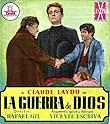
A really great film
This is one of the best European 50s films. An impeccable haughty accomplishment,superlative actors, superb recreation,light and ambient.One of the titles distinguished from one of the best Spanish directors of all the times. The movie reflects faithfully the life in small mining village. There a young faithful priest was coming to the original beginning of the Christianity and free of the prejudices of the catholic church. His love the neighbor and delivery to the social justice was shocking with the stubborn disillusion from that always the miners have suffered. The great director Rafael Gil( "the Spanish Frank Capra"), unjustly forgotten, competed with this film with the big ones of his epoch, Mizoguchi; Fellini, Kurosawa, Rosellini. Nominated to the golden lion and winner of the lion of bronze.
Details
- Release date
- Country of origin
- Language
- Also known as
- La guerra de Dios
- Production company
- See more company credits at IMDbPro
- Runtime
- 1h 36m(96 min)
- Color
- Sound mix
- Aspect ratio
- 1.37 : 1
Contribute to this page
Suggest an edit or add missing content
