IMDb RATING
8.0/10
5.3K
YOUR RATING
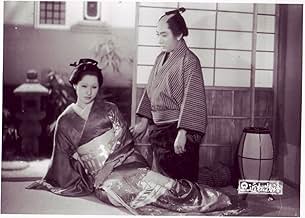
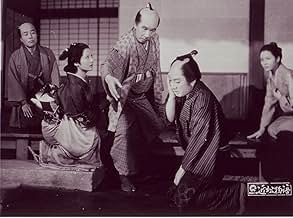
Ishun is a wealthy but unsympathetic master printer who has wrongly accused his wife and best employee of being lovers. To escape punishment, the accused run away together, but Ishun is cert... Read allIshun is a wealthy but unsympathetic master printer who has wrongly accused his wife and best employee of being lovers. To escape punishment, the accused run away together, but Ishun is certain to be ruined if word gets out.Ishun is a wealthy but unsympathetic master printer who has wrongly accused his wife and best employee of being lovers. To escape punishment, the accused run away together, but Ishun is certain to be ruined if word gets out.
- Awards
- 1 win & 2 nominations total
Eitarô Ozawa
- Sukeemon
- (as Sakae Ozawa)
8.05.3K
1
2
3
4
5
6
7
8
9
10
Featured reviews
Good though not on par with Mizoguchi's masterpieces
This is certainly a good film, beautifully photographed and evocatively acted. Yet one should certainly criticize it, and Mizoguchi, for it is not without flaws and weaknesses. Mizoguchi really cared for women, and wanted to make statements on man's lack of sympathy and total cruelty, yet he sometimes gets ahead of himself in trying to make this statement by adopting the wrong means. This is certainly a case in 'the Crucified Lovers', 'Princess Yang Kwei Fei' and 'Zankiku monogatari'. He sets the scenario in feudal Japan, which leaves the viewer at the end with the partially right exclamation: "boy, does feudalism suck, I'm glad that it is over...". And true, some of the scenarios such weaker films of Mizoguchi present would be literary impossible today. Also, his women characters sometimes become archetypes of unrealistic self-sacrifice, which also simplifies the scenario less appealing. Saying that, "Crucified Lovers" is a good film, with such few relative weaknesses, though the sometimes chilly, cynical prose by Ueda, the screenwriter helps this film allot. I still highly prefer and recommend Mizoguchi's 'realistic, 'contemprary' films of 1936: 'Osaka Elegy' and 'Sisters of the Gion', as well as his late masterpieces, in which he showed more restraint and subtlety: 'Ugetsu', 'Sansho Dayu', and 'The Life of Oharu'.
Elegant and methodical
"Chikamatsu Monogatari" (Crucified Lovers) (Japanese, 1954): Set in 17th century Japan, a series of honorable gestures begins to go terribly wrong, and takes victims with them. Did you know that adulterers at that time were crucified in Japan? This and many more traditions of the Old Way were up for reexamination by the Japanese culture soon after their defeat in World War II. This must have been a time of great doubt for them after all, wasn't it their past that lead them to their current condition? "Chikamatsu Monogatari" is an elegant, methodical story with tragic twists and turns that never the less head straight into inflexible Fate.
One of the key films in all of Japanese cinema
"Chikamatsu Monogatari" , (aka "The Crucified Lovers"), is one Mizoguchi's lesser known works and yet it is no less extraordinary for all that. It is, of course, typical of its director; another tragic tale of corrupted innocence and the terrible hand fate plays in people's lives, in this case a wrongful accusation of adultery over a very simple misunderstanding. Shakespeare could have written this.
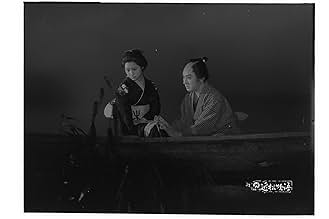
It's set in the 17th century and it paints as relentless a picture of cruelty and hypocrisy as Mizoguchi has given us and he shoots it almost in semi-darkness, (even the exteriors take place at night or are shrouded in mist or in shadow), so there is no escape for its protagonists nor for us; the inevitability of the lovers' fate is clearly signposted from the beginning.
As the couple forced to acknowledge their love for each other by unfolding events Kazuo Hasegawa and Kyoko Kagawa are superb, particularly Kagawa whose performance as the wronged wife is a masterclass in subtlety and tenderness. This is surely one of the key films in all of Japanese cinema.
It's set in the 17th century and it paints as relentless a picture of cruelty and hypocrisy as Mizoguchi has given us and he shoots it almost in semi-darkness, (even the exteriors take place at night or are shrouded in mist or in shadow), so there is no escape for its protagonists nor for us; the inevitability of the lovers' fate is clearly signposted from the beginning.
As the couple forced to acknowledge their love for each other by unfolding events Kazuo Hasegawa and Kyoko Kagawa are superb, particularly Kagawa whose performance as the wronged wife is a masterclass in subtlety and tenderness. This is surely one of the key films in all of Japanese cinema.
nope
I think this makes it official: no major filmmaker ever utilized lakes as well as did Kenji Mizoguchi. Between the canoe chase in Sansho the Bailiff and the suicide attempt seen in this film, it can safely be said that the Japanese director was the cinematic master of lake imagery.
The images here, by Mizoguchi and DP Kazuo Miyagawa, who also lensed many of Kurosawa's most iconic films, are consistently gorgeous. More than that, though, Chikamatsu is, I think, the most perfect encapsulation of Mizoguchi's central theme: the self-annihilating ecstasy that comes with turning one's back on an unjust social order.
Perhaps "encapsulate" is a particularly good word to use because one of the reasons the themes are so brazen is that Mizoguchi is here working on a far smaller canvas than he usually allows himself. This film is quite short by the director's standards, and deals with a smaller number of characters. Perhaps because of its less epic scope I would rank it just below the previously mentioned Sansho the Bailiff as my favorite film by this great director.
The images here, by Mizoguchi and DP Kazuo Miyagawa, who also lensed many of Kurosawa's most iconic films, are consistently gorgeous. More than that, though, Chikamatsu is, I think, the most perfect encapsulation of Mizoguchi's central theme: the self-annihilating ecstasy that comes with turning one's back on an unjust social order.
Perhaps "encapsulate" is a particularly good word to use because one of the reasons the themes are so brazen is that Mizoguchi is here working on a far smaller canvas than he usually allows himself. This film is quite short by the director's standards, and deals with a smaller number of characters. Perhaps because of its less epic scope I would rank it just below the previously mentioned Sansho the Bailiff as my favorite film by this great director.
An accessible masterpiece
The only print of CHIKAMATUS MONOGATARI I've been able to find was abysmal - I almost couldn't watch it. Which is a shame as this is among the greatest Mizoguchi films. The story - which I believe had been done before and since by other Japanese directors - is a bit straighter than my favorite Mizoguchi films (SANSHO THE BAILIFF and UGETSU MONOGATARI), and is essentially a tale of tragic romance, in this case a transgressive romance that crosses strict class boundaries. As always with Mizoguchi, there is an exquisitely expressed tone of defiance, and - bad print aside - I was very pleased. As with all of Mizoguchi's films, I'm eagerly awaiting a restored DVD release - whenever that may come...
Did you know
- TriviaThe movie is based on a play by the classic Japanese author Monzaemon Chikamatsu (1653-1725). The original title "Chikamatsu monogatari" means "A Tale From Chikamatsu".
- ConnectionsFeatured in Histoire(s) du cinéma: Toutes les histoires (1988)
- How long is A Story from Chikamatsu?Powered by Alexa
Details
- Release date
- Country of origin
- Language
- Also known as
- The Crucified Lovers
- Production company
- See more company credits at IMDbPro
Box office
- Gross worldwide
- $9,311
- Runtime
- 1h 42m(102 min)
- Color
- Aspect ratio
- 1.37 : 1
Contribute to this page
Suggest an edit or add missing content