IMDb RATING
8.0/10
5.3K
YOUR RATING
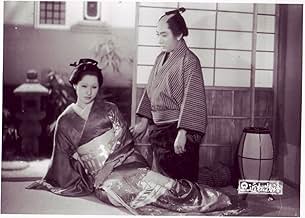
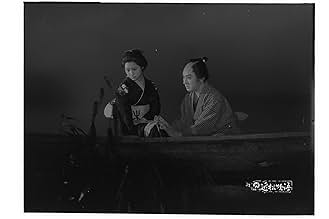
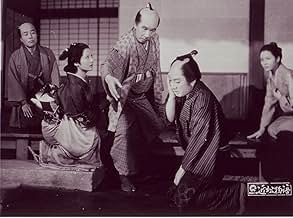
Ishun is a wealthy but unsympathetic master printer who has wrongly accused his wife and best employee of being lovers. To escape punishment, the accused run away together, but Ishun is cert... Read allIshun is a wealthy but unsympathetic master printer who has wrongly accused his wife and best employee of being lovers. To escape punishment, the accused run away together, but Ishun is certain to be ruined if word gets out.Ishun is a wealthy but unsympathetic master printer who has wrongly accused his wife and best employee of being lovers. To escape punishment, the accused run away together, but Ishun is certain to be ruined if word gets out.
- Awards
- 1 win & 2 nominations total
Eitarô Ozawa
- Sukeemon
- (as Sakae Ozawa)
8.05.3K
1
2
3
4
5
6
7
8
9
10
Featured reviews
Beautiful, but inferior to Mizoguchi's Masterpieces
I never heard of Mizoguchi's "Chikamatsu monogatari" before until a friend of mine who loves Mizoguchi's films showed it to me recently. It is a beautiful, haunting, and emotionally involving study of forbidden love between a rigid merchant's wife, Osan, and her devoted servant, Mohei, in 17th century Kyoto. The lovers are unfairly punished for having an affair; Osan escapes her husband's home while Mohei is forced into exile. "Chikamatsu" is a highly charged work, but I'm not entirely sure if I would call it a masterpiece on par with "Zangiku monogatari", "The Life of Oharu", "Ugetsu", "Sansho dayu", and "Princess Yang Kwei Fei" - Mizoguchi's richest and most beautiful films. The photography is extraordinarily ravishing and evocative, with Mizoguchi's masterful fluid camera. Also, the sound quality of "Chikamatsu" is interestingly rich and astounding, but the film doesn't stay with you for a while like those aforementioned films. Overall, this is a minor Mizoguchi: beautiful and haunting at times, but inferior to his renowned masterpieces.
Crucified Lovers
This film was near the end of a wonderful sequence of films made near the end of his life by Mizoguchi. As Tony Raines says in the DVD extra for the Masters of Cinema edition this was a studio project that he was not wholly enthusiastic about. This shows a little in the film as it lacks some of the real flair and emotional power of some of his earlier great films. However, it shares with them his wonderful flowing camera and great cinematography. Its also a terrific story, based originally on a story from the great Japanese 17th Century playwright Monzaemon Chikamatsu (hence the Japanese name, A Tale from Chikamatsu). The screenplay is skillfully worked from the original story, which depends a lot of some pretty unlikely coincidences.
The film has a great cast, although the lead actor (and major star at the time) Kazuo Hazegawa is a little old for the role of the shy lover. Kyoko Kagawa is great as the wife of a powerful merchant who is mistakenly accused of having an affair with her servant, but then falls in love with him as they both go on the run.
As you'd expect from a Mizoguchi film, technically it is flawless, with lovely sets and some beautiful camera work. The Masters of Cinema version on DVD is a beautiful restoration. For Mizoguchi fans, this film is well worth getting, but for those who haven't seen many of his films it would be better to start with some of his earlier masterpieces.
The film has a great cast, although the lead actor (and major star at the time) Kazuo Hazegawa is a little old for the role of the shy lover. Kyoko Kagawa is great as the wife of a powerful merchant who is mistakenly accused of having an affair with her servant, but then falls in love with him as they both go on the run.
As you'd expect from a Mizoguchi film, technically it is flawless, with lovely sets and some beautiful camera work. The Masters of Cinema version on DVD is a beautiful restoration. For Mizoguchi fans, this film is well worth getting, but for those who haven't seen many of his films it would be better to start with some of his earlier masterpieces.
Elegant and methodical
"Chikamatsu Monogatari" (Crucified Lovers) (Japanese, 1954): Set in 17th century Japan, a series of honorable gestures begins to go terribly wrong, and takes victims with them. Did you know that adulterers at that time were crucified in Japan? This and many more traditions of the Old Way were up for reexamination by the Japanese culture soon after their defeat in World War II. This must have been a time of great doubt for them after all, wasn't it their past that lead them to their current condition? "Chikamatsu Monogatari" is an elegant, methodical story with tragic twists and turns that never the less head straight into inflexible Fate.
One of the key films in all of Japanese cinema
"Chikamatsu Monogatari" , (aka "The Crucified Lovers"), is one Mizoguchi's lesser known works and yet it is no less extraordinary for all that. It is, of course, typical of its director; another tragic tale of corrupted innocence and the terrible hand fate plays in people's lives, in this case a wrongful accusation of adultery over a very simple misunderstanding. Shakespeare could have written this.
It's set in the 17th century and it paints as relentless a picture of cruelty and hypocrisy as Mizoguchi has given us and he shoots it almost in semi-darkness, (even the exteriors take place at night or are shrouded in mist or in shadow), so there is no escape for its protagonists nor for us; the inevitability of the lovers' fate is clearly signposted from the beginning.
As the couple forced to acknowledge their love for each other by unfolding events Kazuo Hasegawa and Kyoko Kagawa are superb, particularly Kagawa whose performance as the wronged wife is a masterclass in subtlety and tenderness. This is surely one of the key films in all of Japanese cinema.
It's set in the 17th century and it paints as relentless a picture of cruelty and hypocrisy as Mizoguchi has given us and he shoots it almost in semi-darkness, (even the exteriors take place at night or are shrouded in mist or in shadow), so there is no escape for its protagonists nor for us; the inevitability of the lovers' fate is clearly signposted from the beginning.
As the couple forced to acknowledge their love for each other by unfolding events Kazuo Hasegawa and Kyoko Kagawa are superb, particularly Kagawa whose performance as the wronged wife is a masterclass in subtlety and tenderness. This is surely one of the key films in all of Japanese cinema.
Nothing is more unpredictable than a person's fate
Set in 17th century Japan, and based on a 1715 play by Chikamatsu Monzaemon (hence the title, 'A Story From Chikamatsu'), this film starts with a rich scroll-maker (Eitarō Shindō) refusing to give his wife (Kyōko Kagawa) money. When she turns to one of his top apprentices (Kazuo Hasegawa), she sets in motion of a chain of events that ultimately have them fleeing together, because the apprentice, normally a virtuous man, intended to take the money from the scroll-maker and was caught.
The story reveals emotion and desire that is both on the surface, such as the scroll-maker sexually harassing a young servant (Yōko Minamida), as well as that which is concealed. It shows us the randomness of events which may cause everything to suddenly change in one's life; as the wife puts it at one point, "Nothing is more unpredictable than a person's fate. In just one day, all of this has happened to us." If you've ever had your life flip suddenly because of love, you'll identify.
The film also shows the all-too-common fate of women; the advice given to the young servant being harassed is to "Just take it. That's the duty of an employee." Adultery is also blamed first and foremost on the women ("It's frightening what women are capable of"), and it's ominous when a couple of adulterers are being led through the town to be crucified early on in the film.
It's a solid film throughout – the cast is strong, the story is well told, and there are some gorgeous scenes, one of which is in a bamboo forest. I don't think it's going to blow you away, but it's a good one.
The story reveals emotion and desire that is both on the surface, such as the scroll-maker sexually harassing a young servant (Yōko Minamida), as well as that which is concealed. It shows us the randomness of events which may cause everything to suddenly change in one's life; as the wife puts it at one point, "Nothing is more unpredictable than a person's fate. In just one day, all of this has happened to us." If you've ever had your life flip suddenly because of love, you'll identify.
The film also shows the all-too-common fate of women; the advice given to the young servant being harassed is to "Just take it. That's the duty of an employee." Adultery is also blamed first and foremost on the women ("It's frightening what women are capable of"), and it's ominous when a couple of adulterers are being led through the town to be crucified early on in the film.
It's a solid film throughout – the cast is strong, the story is well told, and there are some gorgeous scenes, one of which is in a bamboo forest. I don't think it's going to blow you away, but it's a good one.
Did you know
- TriviaThe movie is based on a play by the classic Japanese author Monzaemon Chikamatsu (1653-1725). The original title "Chikamatsu monogatari" means "A Tale From Chikamatsu".
- ConnectionsFeatured in Histoire(s) du cinéma: Toutes les histoires (1988)
- How long is A Story from Chikamatsu?Powered by Alexa
Details
- Release date
- Country of origin
- Language
- Also known as
- The Crucified Lovers
- Production company
- See more company credits at IMDbPro
Box office
- Gross worldwide
- $9,311
- Runtime
- 1h 42m(102 min)
- Color
- Aspect ratio
- 1.37 : 1
Contribute to this page
Suggest an edit or add missing content