IMDb RATING
7.3/10
5.2K
YOUR RATING
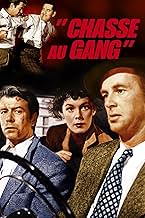
Reformed parolee Steve Lacey is caught in the middle when a wounded former cellmate seeks him out for shelter.Reformed parolee Steve Lacey is caught in the middle when a wounded former cellmate seeks him out for shelter.Reformed parolee Steve Lacey is caught in the middle when a wounded former cellmate seeks him out for shelter.
Charles Bronson
- Ben Hastings
- (as Charles Buchinsky)
Nedrick Young
- Gat Morgan
- (as Ned Young)
Dub Taylor
- Gus Snider
- (as Dubb Taylor)
Iris Adrian
- Hastings' Girlfriend
- (uncredited)
Joe Bassett
- Cop
- (uncredited)
Charles Cane
- Detective
- (uncredited)
Timothy Carey
- Johnny Haslett
- (uncredited)
Tom Clarke
- Salvation Army Singer
- (uncredited)
Fred Coby
- Cop in Squad Car
- (uncredited)
Dennis Dengate
- Police Officer
- (uncredited)
7.35.1K
1
2
3
4
5
6
7
8
9
10
Featured reviews
A Cold. Nasty Little Noir
And we fans of film noir prize nastiness and cold-heartedness. We also like small movies.
Gene Nelson is very affecting as a parolee who is dragged into a crime against his will. Phyllis Kirk is fine as his wife. She doesn't add much flavor but she's believably loyal.
For flavor, we have none other than Timothy Carey! He is one of the bad guys. Charles Bronson, early in his career, is another. Carey adds a great deal of creepiness to the goings-on.
Sterling Hayden is excellent as the cynical cop who's called in. Though the plot tells us nothing about him other than that he's given up smoking and misses it, he is clearly not a warm human being. His eyes squint and shift. He doesn't trust anyone and it's very possible he doesn't like much of anyone, either.
The movie begins with Dub Taylor as an exceptionally goofy gas station attendant. He's like a character from the "Ma and Pa Kettle" series. But our villains knock him out and rob him, which is a jarring contrast.
The characters are very well drawn in "Crime Wave." It has a tough plot but the people are what elevates it to a high status.
Gene Nelson is very affecting as a parolee who is dragged into a crime against his will. Phyllis Kirk is fine as his wife. She doesn't add much flavor but she's believably loyal.
For flavor, we have none other than Timothy Carey! He is one of the bad guys. Charles Bronson, early in his career, is another. Carey adds a great deal of creepiness to the goings-on.
Sterling Hayden is excellent as the cynical cop who's called in. Though the plot tells us nothing about him other than that he's given up smoking and misses it, he is clearly not a warm human being. His eyes squint and shift. He doesn't trust anyone and it's very possible he doesn't like much of anyone, either.
The movie begins with Dub Taylor as an exceptionally goofy gas station attendant. He's like a character from the "Ma and Pa Kettle" series. But our villains knock him out and rob him, which is a jarring contrast.
The characters are very well drawn in "Crime Wave." It has a tough plot but the people are what elevates it to a high status.
Great little unknown film!!
I just love these type films and I had never heard of this one--thank you to the Mystery Channel. Great performances all around, and for once I liked this performance of Sterling Hayden!! Normally, I can't stand him, as he seemed to play the same character in every film I have seen him in. Gene Nelson and Phyllis Kirk were also excellent,who would have thought they could do such acting and the cinematography is really something to see--I always wonder when seeing these films, just how many of the buildings are still around. This is a great little film--be sure and catch it if you ever see it on the schedule!!!
Taut little thriller
Short film that doesn't waste a moment. Life is short and hard in this film. Make one mistake and you're marked for life, at least that seems to be Sterling Hayden's motto. Gene Nelson gives a good performance as a man haunted by his past. Steve Lacey is so scarred by his past that it runs his current life, this eventually leads him into trouble. Andre De Toth keeps most of the film in the shadows and only a few scenes take place during the day. Even the climatic robbery is shot in the dark. The only false note is that Hayden's character doesn't act the same throughout the movie. I found the movie to be pretty brutal for the time and Charles Bronson did a good job portraying most of the brutality. All in all, a worthy entry in the film noir genre.
A gritty, realistic, streets-of-LA crime film
Crime Wave (1954)
What a surprise. There was a drift in the 1950s from highly controlled studio to highly controlled location shooting, and then, as we see here, to a slightly looser location style that used more of the ambient qualities. It isn't quite cinema verite (or some other documentary-influenced style more common in Europe), and it may be more a product of budget than aesthetics, but it really works. It's most of all realistic.
Director Andre De Toth handles all the moving elements with fast precision. The photography is, by necessity, smart and crisp, but the lighting is less dramatic (less noir, you might say) than most crime films. But again, this is a indication of where the industry was moving, on on De Toth's intentions to avoid over stylizing. Other mid 1950s crime films also show shifts from the dramatics of the noirs that define the genre, one example being another Sterling Hayden, "The Killing," directed by Kubrick two years later. The use of identifiable locations for the shoots is part of their unique draw. In Crime Wave, the L.A. streets are used in a simple, unhyped way.
The story is a meat and potatoes police drama, with Hayden working the homicide squad. He's terse and experienced, and has the thugs in his sights almost from the start. This puts a lot of the focus on the bad guys, and they come off as highly believable. They do crimes to survive, without romanticizing the criminal, and with lots of little mistakes and harping back and forth. And they know they are on the run, dragging a couple of innocent people along for the terrifying ride.
What a surprise. There was a drift in the 1950s from highly controlled studio to highly controlled location shooting, and then, as we see here, to a slightly looser location style that used more of the ambient qualities. It isn't quite cinema verite (or some other documentary-influenced style more common in Europe), and it may be more a product of budget than aesthetics, but it really works. It's most of all realistic.
Director Andre De Toth handles all the moving elements with fast precision. The photography is, by necessity, smart and crisp, but the lighting is less dramatic (less noir, you might say) than most crime films. But again, this is a indication of where the industry was moving, on on De Toth's intentions to avoid over stylizing. Other mid 1950s crime films also show shifts from the dramatics of the noirs that define the genre, one example being another Sterling Hayden, "The Killing," directed by Kubrick two years later. The use of identifiable locations for the shoots is part of their unique draw. In Crime Wave, the L.A. streets are used in a simple, unhyped way.
The story is a meat and potatoes police drama, with Hayden working the homicide squad. He's terse and experienced, and has the thugs in his sights almost from the start. This puts a lot of the focus on the bad guys, and they come off as highly believable. They do crimes to survive, without romanticizing the criminal, and with lots of little mistakes and harping back and forth. And they know they are on the run, dragging a couple of innocent people along for the terrifying ride.
Brilliant B-Movie Noir
An American Cinematheque presentation at The Egyptian.
A great little 'second feature' noir. Hayden is brilliant as the tough and cynical cop willing to break any rule to catch a couple of cop killers, and Phyllis Kirk oozes B-movie sex-appeal as the good-girl caught in the middle. With some genuinely funny dialogue, solid performances all round, and wonderful location filming around downtown Los Angeles, Chinatown and Glendale, the movie is a brilliant testament to the quality of so many cheap post-war crime thrillers. Of particular interest is the location filming inside the LAPD offices and dispatch room in City Hall.
Charles Bronson plays a tough-guy killer in an early supporting role. Timothy Carey shows up to chew the scenery as a bizarre, bog-eyed, dope-fiend, rape-o. And there's a great car chase through the Downtown city streets at night.
A minor classic. Entertaining throughout.
A great little 'second feature' noir. Hayden is brilliant as the tough and cynical cop willing to break any rule to catch a couple of cop killers, and Phyllis Kirk oozes B-movie sex-appeal as the good-girl caught in the middle. With some genuinely funny dialogue, solid performances all round, and wonderful location filming around downtown Los Angeles, Chinatown and Glendale, the movie is a brilliant testament to the quality of so many cheap post-war crime thrillers. Of particular interest is the location filming inside the LAPD offices and dispatch room in City Hall.
Charles Bronson plays a tough-guy killer in an early supporting role. Timothy Carey shows up to chew the scenery as a bizarre, bog-eyed, dope-fiend, rape-o. And there's a great car chase through the Downtown city streets at night.
A minor classic. Entertaining throughout.
Did you know
- TriviaAccording to an interview on US DVD, Jack L. Warner originally wanted Humphrey Bogart and Ava Gardner to star in the movie, but André De Toth vehemently protested this. Warner was fed up after a long argument and told De Toth he could make the movie any way he wanted, but it had to be in two weeks, which suited De Toth since he finished under schedule and under budget with his preferred star, Sterling Hayden.
- GoofsWhen Gat Morgan comes to the Laceys' apartment, he brandishes a Smith & Wesson .38 special with a 2.5" barrel. When Steve's parole officer arrives, detective Lt. Sims hands the gun that Steve Lacey took from Morgan to parole officer O'Keefe. The revolver now has a 4" barrel and appears to be a Colt Police Positive. Sims is handling the pistol with a pencil up the barrel to avoid getting his finger prints on it. The pistol is still a snub nosed revolver as the gun sight can be plainly seen on the short barrel.
- Quotes
Dr. Otto Hessler: People. They accept the love of a dog, and when it gets old and sick they say put it to sleep.
- ConnectionsEdited from Gun Crazy (1950)
- How long is Crime Wave?Powered by Alexa
Details
- Release date
- Country of origin
- Language
- Also known as
- Ciudad en tinieblas
- Filming locations
- Chinatown, Los Angeles, California, USA(walking en route to hideout)
- Production company
- See more company credits at IMDbPro
- Runtime
- 1h 13m(73 min)
- Color
- Aspect ratio
- 1.37 : 1
Contribute to this page
Suggest an edit or add missing content


