
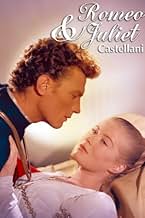
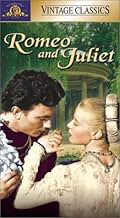
In Shakespeare's classic play, the Montagues and Capulets, two families of Renaissance Italy, have hated each other for years, but the son of one family and the daughter of the other fall de... Read allIn Shakespeare's classic play, the Montagues and Capulets, two families of Renaissance Italy, have hated each other for years, but the son of one family and the daughter of the other fall desperately in love and secretly marry.In Shakespeare's classic play, the Montagues and Capulets, two families of Renaissance Italy, have hated each other for years, but the son of one family and the daughter of the other fall desperately in love and secretly marry.
- Director
- Writers
- Stars
- Nominated for 3 BAFTA Awards
- 6 wins & 6 nominations total


Ennio Flaiano
- Prince of Verona
- (as Giovanni Rota)

Thomas Nicholls
- Brother Giovanni
- (as Tom Nicholls)

- Director
- Writers
- All cast & crew
- Production, box office & more at IMDbPro
6.0688
1
2
3
4
5
6
7
8
9
10
Featured reviews
Filmed and Forgotten
Renato Castellani's ROMEO AND JULIET has somehow fallen into a hole in film history. Despite a handsome production with some worthy performances, it is overshadowed by Franco Zefferelli's 1966 film and even the 1936 MGM movie with Norma Shearer, Leslie Howard, Basil Rathbone, and John Barrymore. One has to wonder why - it was the first version of the movie to be shot (or partially shot) on locale in Italy in color. While the leads are not the proper juveniles that appeared in the 1966 version, Lawrence Harvey and Susan Shentell were closer to the ages of the characters than Howard and Shearer were.
My guess is that it's very reliance on Italian movie production may have been a drawback to the audiences who (unfortunately) counted the most: English - speaking ones. The leads were all English and the basic play (despite the Italian setting) was in English by the greatest writer of the English language. If it had been filmed in England I suspect it would have had more acceptance. But this is a guess. There could have been other factors: bad timing due to more overpowering productions. Orson Welles' had completed and released OTHELLO in 1952 (where it, like this ROMEO AND JULIET, won a prize at the Venice Film Festival). The following year Lawrence Olivier's masterly RICHARD III was released. The failure of the Castellani movie remains striking and puzzling.
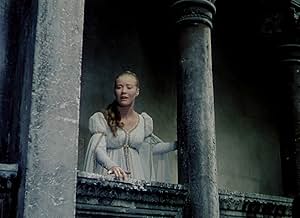
Today Zefferelli's version is considered the best one by most viewers, because of his making his hero and heroine what they are: growing teenagers. But one should not sneer at Harvey's attempts at Romeo opposite Shentell's Juliet. They do generate a soft glow between them that gradually picks up heat. I might add that I found Shentell's final suicide rather stark and complete as it should be. Whether due to her acting or the director's direction she gave Juliet's passing a type of dignity I have rarely seen.
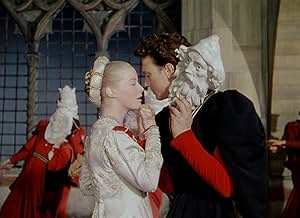
As for the performers in the cast, Sebastian Cabot's Capulet is the picture of an Italian Renaissance merchant prince type, corpulent and ruthless towards his family's foes. It's funny thinking of Cabot today as a villain in his roles, but in fact (prior to his going into CHECKMATE on television - where he was the wise spy master of the heroes) most of his film parts were villainous, or (as in THE TIME MACHINE) ridiculously self-important. His belated affability appeared only when he lucked out and became "Mr. French" in FAMILY AFFAIR. So here, a 1954 audience in the know, would have had no problem about his rattlesnake - eyed timing in planning the demise of Montagues. Look at his scene at the ball he is throwing when Tybalt (Enzo Fiormonte) wants to kill Romeo, but Cabot restrains him - adding that it can be done later.
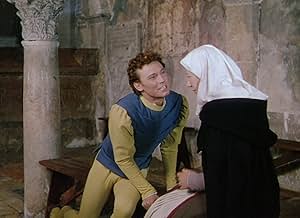
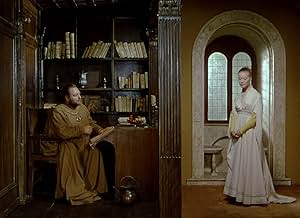
Also note Mervyn Johns as Friar Lawrence, who manages to show the all-to-human side of the good man, which enables so many bad things to occur because of his trusting the wrong people (one messenger is locked up because he is stuck in a quarantined house), or his instructions were not clear enough. Johns was a gifted actor in his own way. Most people remember him as gentle, loving Bob Crachit opposite crusty, nasty Scrooge (Alistair Sim). But he was also the bedeviled and doomed architect in DEAD OF NIGHT, and the equally doomed partner of the ruthless Spencer Tracy in EDWARD MY SON. Johns was a fine character role player, and was lucky to pass on his skills to his daughter Glynnis.
My guess is that it's very reliance on Italian movie production may have been a drawback to the audiences who (unfortunately) counted the most: English - speaking ones. The leads were all English and the basic play (despite the Italian setting) was in English by the greatest writer of the English language. If it had been filmed in England I suspect it would have had more acceptance. But this is a guess. There could have been other factors: bad timing due to more overpowering productions. Orson Welles' had completed and released OTHELLO in 1952 (where it, like this ROMEO AND JULIET, won a prize at the Venice Film Festival). The following year Lawrence Olivier's masterly RICHARD III was released. The failure of the Castellani movie remains striking and puzzling.
Today Zefferelli's version is considered the best one by most viewers, because of his making his hero and heroine what they are: growing teenagers. But one should not sneer at Harvey's attempts at Romeo opposite Shentell's Juliet. They do generate a soft glow between them that gradually picks up heat. I might add that I found Shentell's final suicide rather stark and complete as it should be. Whether due to her acting or the director's direction she gave Juliet's passing a type of dignity I have rarely seen.
As for the performers in the cast, Sebastian Cabot's Capulet is the picture of an Italian Renaissance merchant prince type, corpulent and ruthless towards his family's foes. It's funny thinking of Cabot today as a villain in his roles, but in fact (prior to his going into CHECKMATE on television - where he was the wise spy master of the heroes) most of his film parts were villainous, or (as in THE TIME MACHINE) ridiculously self-important. His belated affability appeared only when he lucked out and became "Mr. French" in FAMILY AFFAIR. So here, a 1954 audience in the know, would have had no problem about his rattlesnake - eyed timing in planning the demise of Montagues. Look at his scene at the ball he is throwing when Tybalt (Enzo Fiormonte) wants to kill Romeo, but Cabot restrains him - adding that it can be done later.
Also note Mervyn Johns as Friar Lawrence, who manages to show the all-to-human side of the good man, which enables so many bad things to occur because of his trusting the wrong people (one messenger is locked up because he is stuck in a quarantined house), or his instructions were not clear enough. Johns was a gifted actor in his own way. Most people remember him as gentle, loving Bob Crachit opposite crusty, nasty Scrooge (Alistair Sim). But he was also the bedeviled and doomed architect in DEAD OF NIGHT, and the equally doomed partner of the ruthless Spencer Tracy in EDWARD MY SON. Johns was a fine character role player, and was lucky to pass on his skills to his daughter Glynnis.
There's a reason this one has been forgotten
A friend of mine lent this film to me, because I'm doing research before directing the play. I've now seen about 9 different productions, and while the production is handsome and offers some interesting scenes to try and move the plot along, it features costumes woefully wrong for the period. The interpretation of the text is probably as good as it can be, but huge chunks of dialogue, including the Queen Mab Speech are cut, and Mercutio, always a vivid character, has been reduced to a few lines and an unimportant character. Sebastian Cabot is marvelous as Capulet, and Flora Robson offers some fine moments as the Nurse. Susan Shentall's Juliet is not bad, but except for occasional scenes, Laurence Harvey is phoning it in. I don't completely hate this one -- that would be the Baz Lurhmann disaster, but in comparison, while I've always loved the 1968 Zefferelli version, I'm seeing it from different eyes now, and as I watch the 1936 MGM production, I'm liking the interpretation of the text in that far better than the 1968. This film is an interesting artifact, but it's not especially inspirational. Enjoy it for what it's worth.
A very good film about the immortal and tragic story of the Verona's young lovers
This lavish British-Italian production about ill-fated and star-crossed lovers deals about the Montagues and Capulets, two feuding families whose young sons Romeo(Laurence Harvey) and Juliet (Susan Shentall) meet and fall in love and whose passion for one another is irresistible . But Juliet's father(Sebastian Cabot) wants marry her to a rich suitor (Norman Wooland) and keep apart Romeo.There are many obstacles on the way and they have to hide their love from the world because both know which their parents will not allow them to be together.The prince of Verona has prohibited duels and fights, but Tybaldo Capulet (Enzo Fiermonte) kills Mercutio and Romeo Montague as revenge murders Tybaldo. The priest friend (Mervyn Johns) prepares a potion for Juliet to simulate her death. Then Romeo is banished to Mantua when he receives the news that Juliet has dead, and happen their tragic destiny.
This is one of the best filmed and most pleasant adaptations of Shakespeare's play. Lush production and well-performed, though is handicapped because the two protagonists are too old for the roles , but at the play they were fifteen and fourteen years old respectively .This sumptuously version has the virtue of good and appealing casting , Laurence Harvey , Flora Robson , Mervyn Johns,Bill Travers and a brief introduction by John Gielgud. Exquisite cinematography by Robert Krasker, a cameraman usual of costumer and historical super-productions (Alexandre the Great , Cid , Fall of the Roman Empire) . Hauntingly wonderful musical score by Roman Vlad .The picture was professionally directed by Renato Castenalli, made in Pinewood Studios and Italian location . Anyone interested in tragic love tales and timeless stories will want to watch this cinematic version on Shakespeare tragedy.
Other versions about this know story are the following ones : the vintage classic, Romeo and Juliet (36)by George Cukor with Norma Shearer and Leslie Howard ; a dancing adaptation (1966) by Paul Czinner with Rudolf Nureyev and Margot Fonteyn ; famous rendition (1968) by Franco Zeffirelli with Leonard Whiting and Olivia Hussey ; and modern versión (1996) by Baz Luhrmann with Leonardo DiCaprio and Claire Danes .
This is one of the best filmed and most pleasant adaptations of Shakespeare's play. Lush production and well-performed, though is handicapped because the two protagonists are too old for the roles , but at the play they were fifteen and fourteen years old respectively .This sumptuously version has the virtue of good and appealing casting , Laurence Harvey , Flora Robson , Mervyn Johns,Bill Travers and a brief introduction by John Gielgud. Exquisite cinematography by Robert Krasker, a cameraman usual of costumer and historical super-productions (Alexandre the Great , Cid , Fall of the Roman Empire) . Hauntingly wonderful musical score by Roman Vlad .The picture was professionally directed by Renato Castenalli, made in Pinewood Studios and Italian location . Anyone interested in tragic love tales and timeless stories will want to watch this cinematic version on Shakespeare tragedy.
Other versions about this know story are the following ones : the vintage classic, Romeo and Juliet (36)by George Cukor with Norma Shearer and Leslie Howard ; a dancing adaptation (1966) by Paul Czinner with Rudolf Nureyev and Margot Fonteyn ; famous rendition (1968) by Franco Zeffirelli with Leonard Whiting and Olivia Hussey ; and modern versión (1996) by Baz Luhrmann with Leonardo DiCaprio and Claire Danes .
10adamshl
A "Romeo" to die for
Renato Castellani's rendering of this tragedy is my all-time favorite version. Using on-location settings and magnificent costumes and art direction, this presentation is without peer.
Laurence Harvey is perfect as the young Romeo. He brings genuine love and pathos to his character that is heart-rending.
Susan Shentall's gives the most intelligent and moving execution of this challenging role I've ever witnessed. She, like Harvey, overcome minor matters of age to make these characters their own.
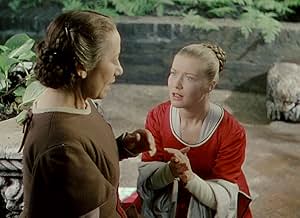
Who could be a better nurse than the great Flora Robson, or Norman Wooland a finer Paris?
Roman Vlad's original score is wonderful, and he's composed a Gallilard that becomes a haunting motif as it's reprised throughout in different variations.
If only a digitalized restoration could be done on this great work, that would make everything complete.
Laurence Harvey is perfect as the young Romeo. He brings genuine love and pathos to his character that is heart-rending.
Susan Shentall's gives the most intelligent and moving execution of this challenging role I've ever witnessed. She, like Harvey, overcome minor matters of age to make these characters their own.
Who could be a better nurse than the great Flora Robson, or Norman Wooland a finer Paris?
Roman Vlad's original score is wonderful, and he's composed a Gallilard that becomes a haunting motif as it's reprised throughout in different variations.
If only a digitalized restoration could be done on this great work, that would make everything complete.
Uneven, but with moments of dazzling color & music
Handsome, leisurely-paced, ineptly cut, often badly acted (especially by Laurence Harvey as Romeo, surprisingly) version of Shakespeare's most playful and youthful tragedy. Much of the film's charm lies in the creation of sumptuous tableaux in the tradition of Italian Renaissance painting, and the portrayal of Capulet is a marvelously acted stereotype of the fat, crude nouveau riche Italian patriarch; but Harvey (despite a few promising moments early on) is far too effusive and unctuous, creepily reminiscent of John Dall in Rope; Susan Shentall displays admirable coyness and gusto in the "overture" of the dance and courtship scenes, but stiffens and is stifled by the death of a thousand cuts toward the end (although almost nothing is cut from the first act). Still, aside from some ghastly, somnambulistic line readings, the film often dazzles with its feeling for the music of Shakespeare's text; the Nurse's folkloric shanty is highlighted with musical settings (shadings)-- Flora Robson is delightful in the role; the vaguely rappish banter of Benvolio and Romeo's first scene is gracefully and intelligently played. The presentation of the episode of losing the letter due to the Plague is a brilliant use of cinema to bring out embedded narrative in Shakespeare. The near-interchangeability of the actors who play Benvolio, Tybalt and Paris is regrettable.


Did you know
- TriviaDame Joan Collins was originally slated to play Juliet, but turned it down when Writer and Director Renato Castellani insisted she undergo surgery to change the shape of her nose.
- ConnectionsReferenced in Arena: All the World's a Screen - Shakespeare on Film (2016)
- How long is Romeo and Juliet?Powered by Alexa
Details
- Release date
- Countries of origin
- Official site
- Languages
- Also known as
- Romeo und Julia
- Filming locations
- Italy(made in Italy)
- Production companies
- See more company credits at IMDbPro
- Runtime
- 2h 18m(138 min)
Contribute to this page
Suggest an edit or add missing content