IMDb RATING
8.0/10
3.2K
YOUR RATING

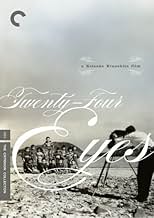
Schoolteacher Hisako Oishi forms an emotional bond with her pupils and teaches them various virtues, while at the same time worrying about their future.Schoolteacher Hisako Oishi forms an emotional bond with her pupils and teaches them various virtues, while at the same time worrying about their future.Schoolteacher Hisako Oishi forms an emotional bond with her pupils and teaches them various virtues, while at the same time worrying about their future.
- Director
- Writers
- Stars
- Awards
- 10 wins & 1 nomination total




- Director
- Writers
- All cast & crew
- Production, box office & more at IMDbPro
8.03.1K
1
2
3
4
5
6
7
8
9
10
Featured reviews
The truth about being Japanese.
25 years ago I made up my mind I would move to Japan. So I wrote to people in Japan who had lived there for over thirty years, and asked them what would be the #1 movie I should watch that encapsulated the spirit of the Japanese.
They all suggested "24 Eyes".
Now, after having lived in a strictly Japanese environment for five years, and having seen well over thirty Japanese movies, not to mention over a thousand hours of TV shows and animae, it is still the #1 to me.
By today's standards it will seem extremely "G" rated, a little too slow and a bit too long. But for those who want to really understand people, and where they are coming from, I can't think of a better movie to recommend. I wish every culture, particularly those that may be going extinct, would use this movie as a guideline to tell their story.
They all suggested "24 Eyes".
Now, after having lived in a strictly Japanese environment for five years, and having seen well over thirty Japanese movies, not to mention over a thousand hours of TV shows and animae, it is still the #1 to me.
By today's standards it will seem extremely "G" rated, a little too slow and a bit too long. But for those who want to really understand people, and where they are coming from, I can't think of a better movie to recommend. I wish every culture, particularly those that may be going extinct, would use this movie as a guideline to tell their story.
An interesting description of Japan rural society
It was a pleasure for me to see this lovely movie, a film I've really wished to see in the last four years but I couldn't do it until today. I heard about this movie when I lived in Japan and visited Shodoshima island, where "Eiga Mura" (Cinema Village), the place this film was made, can still be visited and the atmosphere of the past can be enjoyed. To be honest, I must say that "Nijushi no hitomi" wasn't for me the "exceptional film" I expected to see, but anyway it has been a pleasant experience. The life of the rural teacher, from the start of her career (in the mid 20's) to the time she retakes her teaching position after having become a widow (in the 40's, after the end of WWII), is an interesting guide to discover the traditional life and mentalities in the small islands of Seto (Japan Inland Sea). A good point for this film: it is usually said that this is an "anti-war" film. Well, it is true that the teacher shows a clear position against the wars Japan was involved (the war against China and the later Pacific War against the USA), but this film mustn't be considered as a pacifist pamphlet: the honest position of the teacher against the war is just one more detail in this complete description of how life should be in rural Japan during those difficult prewar, war and postwar years. A film that should be shown in every school around the world.
Outstanding
Nearly everyone who rated this film gave it 10/10, and it's easy to see why. This is a wonderful and bittersweet story about a teacher and her first twelve students, the "24 eyes" of the title, on a fairly remote island community. The story sweeps over about 20 years, from the students in the first grade, then the sixth, then as later teenagers, then four years later. The story begins in the late 1920s, and thus spans a turbulent time in Japanese history, which of course impacts greatly on the characters, even on a fairly isolated island.
Hideko Takamine is perhaps my favourite Japanese actress. This luminous and loveable women with the dazzling smile is a joy to behold and, playing the object of much affection from the children (though only sometimes from the adults), creates a wonderful feeling. Man, I wish I'd had her as a teacher in lower primary school.
There's a strong sense of community in this story, which is one of its strong points, but it is not always a positive thing for the characters. The older women gossip, of course, about the 'modern' new teacher, because she rides a bike and wears western clothes.
The director expertly presses all the emotional buttons of the audience. There are some people who detest this sort of thing, but I'm a sucker for it. In the hands of an expert director, and for the purposes of entertainment, there's nothing wrong with being taken on a emotional roller-coaster ride. There are some high points and many sad events in the story, which moves along at a pace which is sometimes leisurely but never dull.
This film is not free of faults. Aside from the very overt emotional manipulation, there are several tunes which are vastly overused. For instance, "auld lang syne" is played at least ten times.
Also, and most surprisingly, Hideko's range is limited. Despite two and a half hours, together with Hideko being the undisputed star, she shows only three expressions during the entire proceedings. Comparison to the superb HAPPINESS FOR US ALONE shows this clearly. In HFUA, Hideko plays a deaf-mute and uses her wonderfully expressive face to full effect.
But these are minor points, and no reason to mark it down from a perfect score. This is a must-see for anyone who loves film.
Hideko Takamine is perhaps my favourite Japanese actress. This luminous and loveable women with the dazzling smile is a joy to behold and, playing the object of much affection from the children (though only sometimes from the adults), creates a wonderful feeling. Man, I wish I'd had her as a teacher in lower primary school.
There's a strong sense of community in this story, which is one of its strong points, but it is not always a positive thing for the characters. The older women gossip, of course, about the 'modern' new teacher, because she rides a bike and wears western clothes.
The director expertly presses all the emotional buttons of the audience. There are some people who detest this sort of thing, but I'm a sucker for it. In the hands of an expert director, and for the purposes of entertainment, there's nothing wrong with being taken on a emotional roller-coaster ride. There are some high points and many sad events in the story, which moves along at a pace which is sometimes leisurely but never dull.
This film is not free of faults. Aside from the very overt emotional manipulation, there are several tunes which are vastly overused. For instance, "auld lang syne" is played at least ten times.
Also, and most surprisingly, Hideko's range is limited. Despite two and a half hours, together with Hideko being the undisputed star, she shows only three expressions during the entire proceedings. Comparison to the superb HAPPINESS FOR US ALONE shows this clearly. In HFUA, Hideko plays a deaf-mute and uses her wonderfully expressive face to full effect.
But these are minor points, and no reason to mark it down from a perfect score. This is a must-see for anyone who loves film.
A moving tribute to a teacher's dedication to her students
Considered by some Japanese critics as one of the ten best Japanese films of all time, Keisuke Kinoshita's Twenty-Four Eyes is a moving tribute to a teacher's dedication to her students and to her progressive ideals. The film spans twenty years of turbulent Japanese history beginning in 1928 and continuing through the end of World War II. Though to Western eyes it can be at times oppressively melodramatic with its overuse of such sentimental melodies like "Annie Laurie", "Auld Lang Syne", and "Bless This House", the film was extremely popular in Japan, beating out such highly regarded classics as Mizoguchi's Sansho Dayu, Kurosawa's Seven Samurai, and Naruse's Late Chrysanthemums for Best Film in Japan and Best Foreign Film at the Golden Globes.
Adapted from a novel by Sakae Tsuboi and set in the rural island of Shodoshima, the title refers to the eyes of seven girls and five boys, the twelve students of first grade teacher Hisako Oishi (Hideko Takamine), endearingly called "Miss Pebble". As the film opens, a confident new teacher, Miss Oishi, rides to the school on her bicycle dressed in modern Western clothes but soon has problems being accepted by the working class villagers who think that she is a wealthy outsider. The senior teacher (Chishu Ryu) at the primary school even asks why the authorities would send such a good teacher. Miss Oishi is also criticized for calling the students by their nicknames, inquiring into each child's family life, and singing folk songs instead of the school anthems.
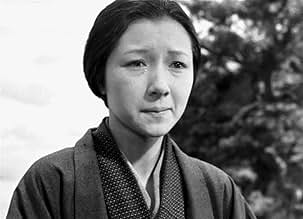
Later, during the Japanese invasion of China, she is suspected of being a "red" because she discourages her young pupils from becoming soldiers but does not protest when the headmaster burns one of her books. Proud but traditionally passive, she refuses to intervene in a family dispute when one of her students, a gifted singer, expresses a desire to attend the conservatory rather than go to work in a café, and does not attempt to raise funds to send one of the poorest students on a school trip. Miss Oishi is able to gain a share of acceptance, however, after an injury to her leg sidelines her for several months and the children visit her without being aware of the length of the journey. It is only when she meets the crying children on their way to her home that reconciliation with the community begins to take place.
Unfortunately, the length of the trip to the school forces Miss Oishi to transfer to the middle school closer to her home and she will not teach the same children for five years. Miss Oishi is a compassionate teacher who does not want to see her bright young students killed in the war but the growing conflict in China and the increasing poverty in the village force the young men to become cannon fodder for the militarists with unfortunate results. Twenty-Four Eyes to our modern view has many excesses including its almost three-hour length but the purity and radiance of Takamine as the compassionate school teacher shines through and the film allowed Japanese audiences to experience a cathartic expression of the sadness and loss caused by the war.
Adapted from a novel by Sakae Tsuboi and set in the rural island of Shodoshima, the title refers to the eyes of seven girls and five boys, the twelve students of first grade teacher Hisako Oishi (Hideko Takamine), endearingly called "Miss Pebble". As the film opens, a confident new teacher, Miss Oishi, rides to the school on her bicycle dressed in modern Western clothes but soon has problems being accepted by the working class villagers who think that she is a wealthy outsider. The senior teacher (Chishu Ryu) at the primary school even asks why the authorities would send such a good teacher. Miss Oishi is also criticized for calling the students by their nicknames, inquiring into each child's family life, and singing folk songs instead of the school anthems.
Later, during the Japanese invasion of China, she is suspected of being a "red" because she discourages her young pupils from becoming soldiers but does not protest when the headmaster burns one of her books. Proud but traditionally passive, she refuses to intervene in a family dispute when one of her students, a gifted singer, expresses a desire to attend the conservatory rather than go to work in a café, and does not attempt to raise funds to send one of the poorest students on a school trip. Miss Oishi is able to gain a share of acceptance, however, after an injury to her leg sidelines her for several months and the children visit her without being aware of the length of the journey. It is only when she meets the crying children on their way to her home that reconciliation with the community begins to take place.
Unfortunately, the length of the trip to the school forces Miss Oishi to transfer to the middle school closer to her home and she will not teach the same children for five years. Miss Oishi is a compassionate teacher who does not want to see her bright young students killed in the war but the growing conflict in China and the increasing poverty in the village force the young men to become cannon fodder for the militarists with unfortunate results. Twenty-Four Eyes to our modern view has many excesses including its almost three-hour length but the purity and radiance of Takamine as the compassionate school teacher shines through and the film allowed Japanese audiences to experience a cathartic expression of the sadness and loss caused by the war.
Absorbing and Affecting
For English speaking people, there are not many movies available on DVD starring Hideko Takamine. This is one, and it is a masterpiece. Ms. Takamine plays a schoolteacher in a small Inland Sea village in Japan. The movie's time line is twenty years, from 1928 to 1948. These turbulent times affect the students she teaches, some of whom went off to war. There are many tears in this film, from the children and Takamine's character. The fact that "Auld Lang Syne" is used at times for background music heightens the feelings of loss & sadness, which does make up some of the story. This is somewhat of an anti-war film, but only as it affects the children and the teacher. Ms. Takamine is luminous in this role, as she is in every movie I've ever seen her in. The fact that the director Kinoshita Keisuke also directed her in "Carmen Comes Home" (the first ever Japanese film in color), a film light years away from this one, shows off their versatility in their craft. The only complaint I have is small, that the subtitles are somewhat annoying, since they are sometimes out of sync. However, a great movie is a great movie. This film won the Golden Globe for Best Foreign Language Film. It is a richly deserved honor.


Did you know
- TriviaAccording to Japanese film critic and historian Tadao Satô, in casting this film about a schoolteacher and her relationships with her pupils over many years, director Keisuke Kinoshita very cleverly chose pairs of look-alike siblings to portray the students. So for those scenes set in later years, Kinoshita simply substituted the older siblings for the younger ones, so that the schoolchildren appeared to "grow" before the audience's eyes.
- ConnectionsReferenced in Violence at Noon (1966)
- SoundtracksAnnie Laurie
- How long is Twenty-Four Eyes?Powered by Alexa
Details
- Release date
- Country of origin
- Language
- Also known as
- Vierundzwanzig Augen
- Filming locations
- Production company
- See more company credits at IMDbPro
- Runtime
- 2h 36m(156 min)
- Color
- Sound mix
- Aspect ratio
- 1.37 : 1
Contribute to this page
Suggest an edit or add missing content