Release calendarTop 250 moviesMost popular moviesBrowse movies by genreTop box officeShowtimes & ticketsMovie newsIndia movie spotlight
    What's on TV & streamingTop 250 TV showsMost popular TV showsBrowse TV shows by genreTV news
    What to watchLatest trailersIMDb OriginalsIMDb PicksIMDb SpotlightFamily entertainment guideIMDb Podcasts
    OscarsBest Of 2025Holiday Watch GuideGotham AwardsCelebrity PhotosSTARmeter AwardsAwards CentralFestival CentralAll events
    Born todayMost popular celebsCelebrity news
    Help centerContributor zonePolls
For industry professionals
  • Language
  • Fully supported
  • English (United States)
    Partially supported
  • Français (Canada)
  • Français (France)
  • Deutsch (Deutschland)
  • हिंदी (भारत)
  • Italiano (Italia)
  • Português (Brasil)
  • Español (España)
  • Español (México)
Watchlist
Sign in
  • Fully supported
  • English (United States)
    Partially supported
  • Français (Canada)
  • Français (France)
  • Deutsch (Deutschland)
  • हिंदी (भारत)
  • Italiano (Italia)
  • Português (Brasil)
  • Español (España)
  • Español (México)
Use app
  • Cast & crew
  • User reviews
  • Trivia
  • FAQ
IMDbPro

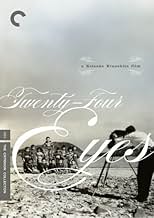
Twenty-Four Eyes

Original title: Nijûshi no hitomi
  • 1954
  • Not Rated
  • 2h 36m
IMDb RATING
8.0/10
3.2K
YOUR RATING
Twenty-Four Eyes (1954)
JapaneseDrama

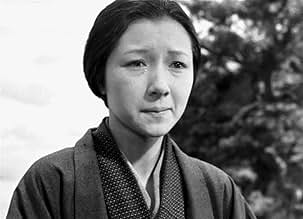
Schoolteacher Hisako Oishi forms an emotional bond with her pupils and teaches them various virtues, while at the same time worrying about their future.Schoolteacher Hisako Oishi forms an emotional bond with her pupils and teaches them various virtues, while at the same time worrying about their future.Schoolteacher Hisako Oishi forms an emotional bond with her pupils and teaches them various virtues, while at the same time worrying about their future.

  • Director
    • Keisuke Kinoshita
  • Writers
    • Keisuke Kinoshita
    • Sakae Tsuboi
  • Stars
    • Hideko Takamine
    • Itsuo Watanabe
    • Makoto Miyagawa
  • See production info at IMDbPro
  • IMDb RATING
    8.0/10
    3.2K
    YOUR RATING
    • Director
      • Keisuke Kinoshita
    • Writers
      • Keisuke Kinoshita
      • Sakae Tsuboi
    • Stars
      • Hideko Takamine
      • Itsuo Watanabe
      • Makoto Miyagawa
    • 33User reviews
    • 36Critic reviews
  • See production info at IMDbPro
  • See production info at IMDbPro
    • Awards
      • 10 wins & 1 nomination total

    Photos40

    View Poster
    View Poster
    View Poster
    View Poster
    View Poster
    View Poster
    View Poster
    + 33
    View Poster

    Top Cast59

    Edit
    Hideko Takamine
    Hideko Takamine
    • Ôishi Sensei
    Itsuo Watanabe
    • Takeichi Takeshita - Bunkyôjô Jidai
    Makoto Miyagawa
    • Kichiji Tokuda - Bunkyôjô Jidai
    Takeo Terashita
    • Tadashi Morioka - Bunkyôjô Jidai
    Kunio Satô
    • Nita Aizawa - Bunkyôjô Jidai
    Hiroko Ishii
    • Masuno Kagawa - Bunkyôjô Jidai
    Yasuko Koike
    • Misako Nishiguchi - Bunkyôjô Jidai
    Setsuko Kusano
    Setsuko Kusano
    • Matsue Kawamoto - Bunkyôjô Jidai
    Kaoko Kase
    • Sanae Yamaishi - Bunkyôjô Jidai
    Yumiko Tanabe
    • Kotsuru Kabe - Bunkyôjô Jidai
    Ikuko Kanbara
    • Fujiko Kinoshita - Bunkyôjô Jidai
    Hiroko Uehara
    • Kotoe Katagiri - Bunkyôjô Jidai
    Hitoshi Gôko
    • Isokichi Okada - Honkô Jidai
    Shirô Watanabe
    • Takeichi Takeshita - Honkô Jidai
    Jun'ichi Miyagawa
    • Kichiji Tokuda - Honkô Jidai
    Takeaki Terashita
    • Tadashi Morioka - Honkô Jidai
    Takeshi Satô
    • Nita Aizawa - Honkô Jidai
    Shisako Ishii
    • Masuno Kagawa - Honkô Jidai
    • Director
      • Keisuke Kinoshita
    • Writers
      • Keisuke Kinoshita
      • Sakae Tsuboi
    • All cast & crew
    • Production, box office & more at IMDbPro

    User reviews33

    8.03.1K
    1
    2
    3
    4
    5
    6
    7
    8
    9
    10

    Featured reviews

    rufasff

    Another postwar japanese gem

    Compared to a film like "Pigs And Battleships", or even "I Live In Fear"; Kinoshita's film is a middlebrow, mainstream, even sentimental take on the Japan's war years and it's aftermath.

    Still, the film is graceful and touching, with what Pauline Kael called "concealed art." Kinoshita's approach seems to be to take potently maudlin situations, and film them from an objective distance; with as direct and simple emotion as possible.

    This may short change the great Takamine a bit; we seem to be an hour into the film before the great actress receives a close up. Still, her performaces gains power as the film goes on.

    Though politics are kept in the background, as perhaps they had to in a Japanese film of this nature; but there is an anger lurking in the backgroud; an inditement of a culture that would waste the strength of it's woman and worse; reduce it's men to cannon fodder. Was it something in Japanese life; rather than just it's military, that led to it's disasters? Even the country's great filmmakers seem hesitant to speculate. In any event, another strong film of interest to all those who have fallen under the spell of great Japanese film.
    9zetes

    An incredibly moving film

    Mostly unknown and frequently dismissed in the West, this film is often considered by the Japanese to be one of their very best films, if not their best. I concur with the Japanese. I can understand the issues people have with it, namely that it is overly sentimental, but I think it mostly earns the tears that are shed over it. It's a film in the classic teacher genre, like Goodbye Mr. Chips. Hideko Takamine plays Hisako Oishi, a young woman who begins the movie as a first grade teacher on a small island in 1928. Being a small population, she ends up staying with the same students for several years. The film ends in the 1950s, so you kind of know what will probably happen to her male students, and what she and her female students will have to experience. It may be somewhat predictable, but it's incredibly heartbreaking. The film is beautifully made, and filled with Japanese folk songs (strangely, the score of the film is made up of a bunch of Western music, including "Bonnie Annie Laurie" and "There's No Place Like Home"; it's definitely a flaw). Takamine, who starred in several Mikio Naruse films around the same time, is exceptional.
    10crossbow0106

    Absorbing and Affecting

    For English speaking people, there are not many movies available on DVD starring Hideko Takamine. This is one, and it is a masterpiece. Ms. Takamine plays a schoolteacher in a small Inland Sea village in Japan. The movie's time line is twenty years, from 1928 to 1948. These turbulent times affect the students she teaches, some of whom went off to war. There are many tears in this film, from the children and Takamine's character. The fact that "Auld Lang Syne" is used at times for background music heightens the feelings of loss & sadness, which does make up some of the story. This is somewhat of an anti-war film, but only as it affects the children and the teacher. Ms. Takamine is luminous in this role, as she is in every movie I've ever seen her in. The fact that the director Kinoshita Keisuke also directed her in "Carmen Comes Home" (the first ever Japanese film in color), a film light years away from this one, shows off their versatility in their craft. The only complaint I have is small, that the subtitles are somewhat annoying, since they are sometimes out of sync. However, a great movie is a great movie. This film won the Golden Globe for Best Foreign Language Film. It is a richly deserved honor.
    9guardian-genghis

    Masterpiece of storytelling...

    People who view this film would do well to consider the sentiment of post-war Japan in the mid-50s, when the future was still uncertain and the vast devastation and shame caused by the war were prevalent in the mindset of its citizens.

    The timing for this film's release was significant, because perhaps for the first time, it permitted the people of Japan to cry unabashedly for themselves, far removed from any political statement so frequent in Shochiku films such as with many of Kurosawa's classics. Movies at the time tended to have positive, uplifting themes that motivated the populous to help rebuild the country into a modern democratic nation. You can thank Douglas MacArthur for that.

    The post-war generation was now almost 10 years old, and in the Japanese psyche was the need for justification for its darkest period in history.

    This film served as a reminder of the horrors of war, not from the battlefields, but from the emotional scars left on its children who lived and died during it.

    Hideko Takamine brilliantly played the role of a school teacher on a typical remote island community in south Japan during an increasingly militarist government. As was customary at the time, the same teacher saw to their students' education from primary to high school, forming a lifetime bond.

    Director Keisuke Kinoshita's camera work is nothing less than genius, beautifully portraying the transitions of seasons from year to year. The water, sand, and dust textures are so distinct that you almost forget that it was filmed in black and white.

    The character closeups are never exaggerated and the 12 children actors (hence "24 Eyes") do an outstanding job portraying how they end up sacrificing their childhood dreams due to poverty and for national duty.

    Of symbolic note is the appearance of the Island bus, which is seen at first with Japanese kanji characters painted on the side. Later in the film, it's written in English as "Shima Bus", signifying how modernization has reached the island after the war.

    From cast, location and cinematography, Nijushi no Hitomi is a masterpiece of emotional storytelling.
    9thomaskasaki

    The truth about being Japanese.

    25 years ago I made up my mind I would move to Japan. So I wrote to people in Japan who had lived there for over thirty years, and asked them what would be the #1 movie I should watch that encapsulated the spirit of the Japanese.

    They all suggested "24 Eyes".

    Now, after having lived in a strictly Japanese environment for five years, and having seen well over thirty Japanese movies, not to mention over a thousand hours of TV shows and animae, it is still the #1 to me.

    By today's standards it will seem extremely "G" rated, a little too slow and a bit too long. But for those who want to really understand people, and where they are coming from, I can't think of a better movie to recommend. I wish every culture, particularly those that may be going extinct, would use this movie as a guideline to tell their story.

    More like this

    The Ballad of Narayama
    7.8
    The Ballad of Narayama
    Yearning
    8.0
    Yearning
    When a Woman Ascends the Stairs
    8.0
    When a Woman Ascends the Stairs
    Floating Clouds
    7.6
    Floating Clouds
    Sound of the Mountain
    7.7
    Sound of the Mountain
    The Garden of Women
    6.9
    The Garden of Women
    Father of the Milky Way Railroad
    6.3
    Father of the Milky Way Railroad
    A Japanese Tragedy
    7.3
    A Japanese Tragedy
    The Rickshaw Man
    7.5
    The Rickshaw Man
    She Was Like a Wild Chrysanthemum
    7.5
    She Was Like a Wild Chrysanthemum
    The Burmese Harp
    8.0
    The Burmese Harp
    Immortal Love
    7.3
    Immortal Love

    Related interests

    Hidetoshi Nishijima and Tôko Miura in Drive My Car (2021)
    Japanese
    Naomie Harris, Mahershala Ali, Janelle Monáe, André Holland, Herman Caheej McGloun, Edson Jean, Alex R. Hibbert, and Tanisha Cidel in Moonlight (2016)
    Drama

    Storyline

    Edit

    Did you know

    Edit
    • Trivia
      According to Japanese film critic and historian Tadao Satô, in casting this film about a schoolteacher and her relationships with her pupils over many years, director Keisuke Kinoshita very cleverly chose pairs of look-alike siblings to portray the students. So for those scenes set in later years, Kinoshita simply substituted the older siblings for the younger ones, so that the schoolchildren appeared to "grow" before the audience's eyes.
    • Connections
      Referenced in Violence at Noon (1966)
    • Soundtracks
      Annie Laurie

    Top picks

    Sign in to rate and Watchlist for personalized recommendations
    Sign in

    FAQ15

    • How long is Twenty-Four Eyes?Powered by Alexa

    Details

    Edit
    • Release date
      • September 15, 1954 (Japan)
    • Country of origin
      • Japan
    • Language
      • Japanese
    • Also known as
      • Vierundzwanzig Augen
    • Filming locations
      • Shodoshima, Kagawa, Japan
    • Production company
      • Shochiku
    • See more company credits at IMDbPro

    Tech specs

    Edit
    • Runtime
      • 2h 36m(156 min)
    • Color
      • Black and White
    • Sound mix
      • Mono
    • Aspect ratio
      • 1.37 : 1

    Contribute to this page

    Suggest an edit or add missing content
    • Learn more about contributing
    Edit page

    More to explore

    Recently viewed

    Please enable browser cookies to use this feature. Learn more.
    Get the IMDb App
    Sign in for more accessSign in for more access
    Follow IMDb on social
    Get the IMDb App
    For Android and iOS
    Get the IMDb App
    • Help
    • Site Index
    • IMDbPro
    • Box Office Mojo
    • License IMDb Data
    • Press Room
    • Advertising
    • Jobs
    • Conditions of Use
    • Privacy Policy
    • Your Ads Privacy Choices
    IMDb, an Amazon company

    © 1990-2025 by IMDb.com, Inc.