IMDb RATING
7.0/10
8.2K
YOUR RATING


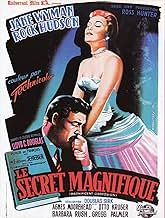
A rich playboy whose recklessness inadvertently causes the death of a prominent doctor tries to make amends to his widow, and falls for her in the process.A rich playboy whose recklessness inadvertently causes the death of a prominent doctor tries to make amends to his widow, and falls for her in the process.A rich playboy whose recklessness inadvertently causes the death of a prominent doctor tries to make amends to his widow, and falls for her in the process.
- Nominated for 1 Oscar
- 2 wins & 1 nomination total


Joseph Mell
- Dan
- (as Joe Mell)
7.08.2K
1
2
3
4
5
6
7
8
9
10
Featured reviews
Better than the original
Having seen both versions of Magnificent Obsession, I have to say I prefer the remake. It's glossier and more melodramatic, which is the point of such a soapy story. However, neither movie grabs me or makes me reach for the Kleenex box. In 1936, I couldn't stand Robert Taylor, and in 1954, I didn't like Jane Wyman very much. Mild dislike wins out over an intense one, so if you're going to rent one of the versions, I'd recommend this one.
Rock Hudson is a careless playboy, and when he endangers himself in a senseless accident, he uses up valuable emergency medical equipment that could have gone to someone else-literally. Because the equipment was used to save Rock's life, a beloved doctor in a nearby hospital died. Rock feels very guilty and tries to make it up to the man's widow, Jane Wyman, but she understandably hates him and can't forgive him. Then, in another cruel twist of fate, Rock accidentally hits Jane with his car and blinds her! The movie is titled Magnificent Obsession because he makes it his mission to make up for all the wrong he's done to her, so if that story appeals to you, you'll probably like it.
It really is an interesting, melodramatic story that could have stood another remake. If you like the chemistry of the two leads, you can check out the other romance they made together, All That Heaven Allows. I would have preferred another choice for this movie's lead, someone more tragic like Jennifer Jones or Susan Hayward. Then again, Jane Wyman did play tragic figures in Johnny Belinda and The Glass Menagerie, so if you like her style, you might really like her in this.
Rock Hudson is a careless playboy, and when he endangers himself in a senseless accident, he uses up valuable emergency medical equipment that could have gone to someone else-literally. Because the equipment was used to save Rock's life, a beloved doctor in a nearby hospital died. Rock feels very guilty and tries to make it up to the man's widow, Jane Wyman, but she understandably hates him and can't forgive him. Then, in another cruel twist of fate, Rock accidentally hits Jane with his car and blinds her! The movie is titled Magnificent Obsession because he makes it his mission to make up for all the wrong he's done to her, so if that story appeals to you, you'll probably like it.
It really is an interesting, melodramatic story that could have stood another remake. If you like the chemistry of the two leads, you can check out the other romance they made together, All That Heaven Allows. I would have preferred another choice for this movie's lead, someone more tragic like Jennifer Jones or Susan Hayward. Then again, Jane Wyman did play tragic figures in Johnny Belinda and The Glass Menagerie, so if you like her style, you might really like her in this.
A magnificent obsession indeed
My unashamed love for the films of Douglas Sirk may be described as an obsession, but it is to me, of course, a magnificent obsession. My attempts to influence others as to Sirk's genius have mostly failed. He's a director whose work you either get, or not. Those who view his works as camp masterpieces are very much missing the point. What is intrinsic in works of camp is the end product being appreciated in a manner that the creator had not intended. However, every camera angle of each frame, every nuance, indeed every color in every shot is totally intentional in all of Sirk's major films.
"Magnificent Obsession" is far from Sirk's best work, but it is perhaps his most important. Though he had made films in many genres, it was "All I Desire", his 1952 melodrama that paved the way for what would become his special place in cinema history. In the often ridiculed genre of so called "woman's movies", Sirk discovered there was great scope for artistic expression as well as social criticism and much more in this apparently vacuous genre. "Magnificent Obsession" is the first film in which this vision is realised.
To understand why this happened at all one must remember that Sirk was under a long term contract with Universal throughout the fifties, when they were by all accounts an inferior studio. As an European immigrant in need of work, Sirk signed to Universal, with the full understanding of the type of projects that would be offered to him. His intellectual and rich theatrical background would be put to use in clearly inferior material. When asked about this, he gave the example of how many of Shakespeare's plots are weak and uninteresting in themselves; it's the language that makes them art. Sirk was a master of cinematic language in all its aspects. The plots of his movies are often truly abysmal, but the language always pure joy to behold. "Magnificent Obsession" is a prime example of the abyss between screenplay and the cinematic language employed.
After reading the script of "Magnificent Obsession", Sirk called the plot "crazy" and did not want to make it. But as a contracted director, he had little sway with the studio heads and was persuaded, as always, to make the movie. It should be noted that he never had a bad word to say about Universal, even after he left Hollywood. He fully understood the contract he had made and simply made the best of his situation. It should also be noted that he gave Universal some of their greatest commercial successes of the decade, and created for them a star leading man, something they were in desperate need of. That star was Rock Hudson. "Magnificent Obsession" was Hudson's breakthrough film. He made eight films together with Sirk.
The magnificent obsession in question is the quest for spirituality; not exactly high on the agenda of materialistic, picture perfect, upper class American society of the fifties. Bob Merrick (Rock Hudson) is a shallow, womanizing, heavy drinking, spoiled playboy. The movie charts his journey towards spirituality. He is guided on this path by an older intellectual artist, Edward Randolph (Otto Kruger). Many critics have noted the physical similarities between Kruger and Sirk himself. It's almost irresistible to develop this notion. It is Randolph who despite Merrick's crass behavior perceives a potential for greater things and leads him towards self fulfillment.
Similarly it was Sirk who first spotted Rock Hudson's star potential. Under his guidance and direction, Hudson would in a matter of two to three years, become one the most popular actors in Hollywood. Having worked closely on eight films, it would seem absurd that Sirk was not aware of Hudson's homosexuality. This did not deter Sirk, (who himself was not gay). Moreover it fits well with his fascination for what he termed "split characters". It's the embodiment of fifties picture perfect appearance shielding a very different reality that is central to much of Sirk's work.
Edward Randolph quietly removes himself when he realises his protégé has finally found his new self. His work is done. While Hudson was no heavyweight in the acting stakes, under Sirk's direction he gave some very respectable performances, "Magnificent Obsession" amongst his best. His post Sirk career would soon take him to Doris Day territory, a far cry from the likes of "Written on the Wind", "Tarnished Angels" and "Battle Hymn".
All of Sirk's films are worth taking a close look at, particularly from "Magnificent Obsession" onwards. There are a handful of directors who so well grasped the possibilities of film making and possessed the know how in using the many elements that make up this art form.
"Magnificent Obsession" is far from Sirk's best work, but it is perhaps his most important. Though he had made films in many genres, it was "All I Desire", his 1952 melodrama that paved the way for what would become his special place in cinema history. In the often ridiculed genre of so called "woman's movies", Sirk discovered there was great scope for artistic expression as well as social criticism and much more in this apparently vacuous genre. "Magnificent Obsession" is the first film in which this vision is realised.
To understand why this happened at all one must remember that Sirk was under a long term contract with Universal throughout the fifties, when they were by all accounts an inferior studio. As an European immigrant in need of work, Sirk signed to Universal, with the full understanding of the type of projects that would be offered to him. His intellectual and rich theatrical background would be put to use in clearly inferior material. When asked about this, he gave the example of how many of Shakespeare's plots are weak and uninteresting in themselves; it's the language that makes them art. Sirk was a master of cinematic language in all its aspects. The plots of his movies are often truly abysmal, but the language always pure joy to behold. "Magnificent Obsession" is a prime example of the abyss between screenplay and the cinematic language employed.
After reading the script of "Magnificent Obsession", Sirk called the plot "crazy" and did not want to make it. But as a contracted director, he had little sway with the studio heads and was persuaded, as always, to make the movie. It should be noted that he never had a bad word to say about Universal, even after he left Hollywood. He fully understood the contract he had made and simply made the best of his situation. It should also be noted that he gave Universal some of their greatest commercial successes of the decade, and created for them a star leading man, something they were in desperate need of. That star was Rock Hudson. "Magnificent Obsession" was Hudson's breakthrough film. He made eight films together with Sirk.
The magnificent obsession in question is the quest for spirituality; not exactly high on the agenda of materialistic, picture perfect, upper class American society of the fifties. Bob Merrick (Rock Hudson) is a shallow, womanizing, heavy drinking, spoiled playboy. The movie charts his journey towards spirituality. He is guided on this path by an older intellectual artist, Edward Randolph (Otto Kruger). Many critics have noted the physical similarities between Kruger and Sirk himself. It's almost irresistible to develop this notion. It is Randolph who despite Merrick's crass behavior perceives a potential for greater things and leads him towards self fulfillment.
Similarly it was Sirk who first spotted Rock Hudson's star potential. Under his guidance and direction, Hudson would in a matter of two to three years, become one the most popular actors in Hollywood. Having worked closely on eight films, it would seem absurd that Sirk was not aware of Hudson's homosexuality. This did not deter Sirk, (who himself was not gay). Moreover it fits well with his fascination for what he termed "split characters". It's the embodiment of fifties picture perfect appearance shielding a very different reality that is central to much of Sirk's work.
Edward Randolph quietly removes himself when he realises his protégé has finally found his new self. His work is done. While Hudson was no heavyweight in the acting stakes, under Sirk's direction he gave some very respectable performances, "Magnificent Obsession" amongst his best. His post Sirk career would soon take him to Doris Day territory, a far cry from the likes of "Written on the Wind", "Tarnished Angels" and "Battle Hymn".
All of Sirk's films are worth taking a close look at, particularly from "Magnificent Obsession" onwards. There are a handful of directors who so well grasped the possibilities of film making and possessed the know how in using the many elements that make up this art form.
beautiful
romanticism. Rock Hudson in one of his most interesting roles. drama and flavor of soap opera and fragments from atmosphere of a lost time. a film about true love against mistakes and errors from past and illusions. sure, not a great one but perfect for the admirers of the director and actors and as refuge in a pink place. but Magnificent Obsession has the gift to be more than a nice movie. but the occasion for discover the art of Jane Wyman and Rock Hudson to explore the details of roles in wise manner. to say a great story about the second chance. and, sure, about the force of love. so, in strange manner, a memorable film. fascinating, sure, first for the performances of the lead actors.
Doc Rock and the playboy redemption.
Magnificent Obsession is adapted from a novel by Lloyd C Douglas, and it had been previously filmed back in 1935 with Irene Dunne and Robert Taylor in the leads. Here the piece is directed by melodrama maestro Douglas Sirk and features Jane Wyman and Rock Hudson as the emotionally charged leads. The story revolves around Bob Merrick (Hudson), a playboy who is inadvertently responsible for the death of Helen Phillips' (Wyman) husband. As he starts to find a soul in amongst his playboy image, he desperately wants to make peace with Helen, but during his efforts to apologise she is tragically blinded in an accident. As Helen recuperates, Bob worms his way into Helen's life by posing as someone else, they amazingly start to fall in love, but the truth will out and tragedy seems to permanently hover over this newly formed alliance.
As with the best of Douglas Sirk, Magnificent Obsession is loaded with drama and unashamed assaults on the viewers emotional fortitude. It is quite simply a weeper, a stress relief server for those so inclined. No bad thing that, though, just as long as the viewer is fully aware of the type of film they are getting. To only market it as a romance piece is something of a disservice because at the core it's one of redemption, where even religion is neatly threaded into the deftly assembled script. Technically it has a lot going for it, Frank Skinner's score is smoothly gorgeous, with Chopin's Études perfectly accompanying the blossoming romance, while the colour photography from Russell Metty is sensibly unobtrusive. Rock Hudson would jump on to the map with his performance here (proving he could act if given the meat to chew on), and Wyman would get Oscar nomination for her emotionally driven turn. All in all it's a film that's well worth watching, on proviso if you choose to be in that weeper frame of mind! 7.5/10
As with the best of Douglas Sirk, Magnificent Obsession is loaded with drama and unashamed assaults on the viewers emotional fortitude. It is quite simply a weeper, a stress relief server for those so inclined. No bad thing that, though, just as long as the viewer is fully aware of the type of film they are getting. To only market it as a romance piece is something of a disservice because at the core it's one of redemption, where even religion is neatly threaded into the deftly assembled script. Technically it has a lot going for it, Frank Skinner's score is smoothly gorgeous, with Chopin's Études perfectly accompanying the blossoming romance, while the colour photography from Russell Metty is sensibly unobtrusive. Rock Hudson would jump on to the map with his performance here (proving he could act if given the meat to chew on), and Wyman would get Oscar nomination for her emotionally driven turn. All in all it's a film that's well worth watching, on proviso if you choose to be in that weeper frame of mind! 7.5/10
Tissues required!
Douglas Sirk directed a lot of films that capitalized on the melodramas that were highly popular in the fifties. In "Magnificent Obsession" he shows why he was probably the man that was born to direct this film, as well as others of the genre. This is a remake of the film of 1935, which had been a vehicle for Irene Dunne and Robert Taylor.
Jane Wyman and Rock Hudson seemed to be unlikely candidates for playing a romantic couple in the movies. After all, Ms. Wyman was older than Mr. Hudson and clearly appeared to be in the film. The story, which is based on LLoyd Douglas novel, has a little bit of everything.
"Magnificent Obsession" proved to be a hit for its stars. In a way, it's easy to see why fans were attracted to it, with its many twists and turns and the impossible love between Helen and Dr. Bob Merrick, the playboy who becomes contrite after he causes the accident that makes Helen blind. Also in the cast the magnificent Agnes Moorehead, who has great moments in the film.
Jane Wyman and Rock Hudson seemed to be unlikely candidates for playing a romantic couple in the movies. After all, Ms. Wyman was older than Mr. Hudson and clearly appeared to be in the film. The story, which is based on LLoyd Douglas novel, has a little bit of everything.
"Magnificent Obsession" proved to be a hit for its stars. In a way, it's easy to see why fans were attracted to it, with its many twists and turns and the impossible love between Helen and Dr. Bob Merrick, the playboy who becomes contrite after he causes the accident that makes Helen blind. Also in the cast the magnificent Agnes Moorehead, who has great moments in the film.


Did you know
- TriviaThis film was an early starring role for Rock Hudson, and, according to Jane Wyman, he was very nervous. Some of his scenes had to be reshot thirty or forty times, but Wyman never said a word. Reportedly, years later at a party, Hudson ran into Wyman and said, "You were nice to me when you didn't have to be, and I want you to know that I thank you and love you for it."
- GoofsAt the accident scene, as the taxicab door closes, it is seen that there is no damage to it.
- Quotes
[last lines]
Edward Randolph: Once you find the way, you'll be bound. It will obsess you. but believe me, it will be a magnificent obsession.
- ConnectionsFeatured in Behind the Mirror: A Profile of Douglas Sirk (1979)
- SoundtracksConsolations, S. 172 No. 3 in D flat major - Lento, placido
Written by Franz Liszt
- How long is Magnificent Obsession?Powered by Alexa
Details
Box office
- Gross worldwide
- $7,906
- Runtime
- 1h 48m(108 min)
- Color
- Aspect ratio
- 2.00 : 1
Contribute to this page
Suggest an edit or add missing content