IMDb RATING
5.6/10
1.1K
YOUR RATING


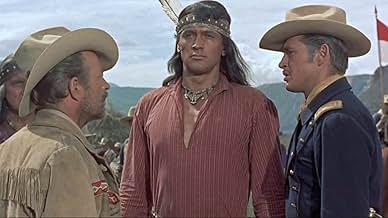
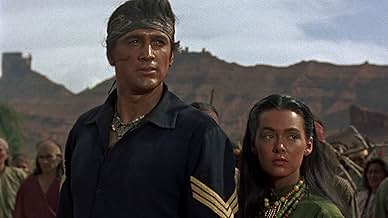
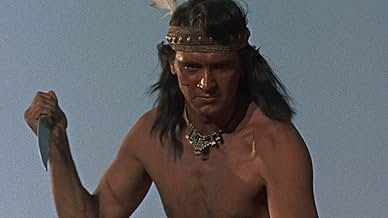
When peacemaking Apache chief Cochise dies, the Chiricahua Apaches are torn between following Cochise's peace loving son Taza and following the warlike renegade Apache warrior Geronimo.When peacemaking Apache chief Cochise dies, the Chiricahua Apaches are torn between following Cochise's peace loving son Taza and following the warlike renegade Apache warrior Geronimo.When peacemaking Apache chief Cochise dies, the Chiricahua Apaches are torn between following Cochise's peace loving son Taza and following the warlike renegade Apache warrior Geronimo.
- Director
- Writers
- Stars





Rex Reason
- Naiche
- (as Bart Roberts)


Eugene Iglesias
- Chato
- (as Gene Iglesias)

Richard H. Cutting
- Cy Hegan
- (as Richard Cutting)


Bradford Jackson
- Lt. Richards
- (as Brad Jackson)


Seth Bigman
- Indian Man
- (uncredited)
- Director
- Writers
- All cast & crew
- Production, box office & more at IMDbPro
5.61.1K
1
2
3
4
5
6
7
8
9
10
Featured reviews
Western fans and Sirk fans can skip this one
One might have expected a lot more from Douglas Sirk in this, his single Western. Beautifully shot by Russell Metty who worked extensively with Sirk, it's a very routine Western of no great interest.
Before Sirk hit his stride with the great melodramas he tried his hand at light romantic comedy and costume drama with pleasing if not spectacular results. He brought little if anything at all to the Western.
Perhaps more than anything it's an important rung in the ladder of elevating Rock Hudson towards stardom which would come with Sirk's next film "Magnificent Obsession".
Hudson is adequate in the role, but that's hardly difficult amongst some truly wooden performances. All in all something of a low point in the amazing 50's career of Douglas Sirk.
Before Sirk hit his stride with the great melodramas he tried his hand at light romantic comedy and costume drama with pleasing if not spectacular results. He brought little if anything at all to the Western.
Perhaps more than anything it's an important rung in the ladder of elevating Rock Hudson towards stardom which would come with Sirk's next film "Magnificent Obsession".
Hudson is adequate in the role, but that's hardly difficult amongst some truly wooden performances. All in all something of a low point in the amazing 50's career of Douglas Sirk.
Story that is VERY loosely based on Apache Life During Geronimo's time.
This movie is well-famed and Rock Hudson looked great ( as he always did even to non-gay men). The long hair and darkened skin make him an awesome looking Indian. His Features are White but this was more often the case in Hollywood movies about Indians than roles of Indians played by real Indians. It is Ironic that Taza's son became an actor and acted in early westerns.. I learned this fact by IMDb. I shall use it in my future writing.
No-- It took 45 yrs to force Geronimo to Surrender and his legend is founded largely on the fact that he was never caught but due to many of his own warriors becoming scouts, he was forced to surrender. It is sad but in a very harsh way--just punishment that these scouts were stripped of their roles as Scouts and sent to the same prison where Geronimo was. They served much longer sentences than what they were given. This is yet another unfairness done to the APACHE and to Geronimo. Who died in his mid-eighties from alcoholism and from falling from his horse on the way home from a saloon. HE wound up in a irrigation ditch all night and caught pneumonia as a result and died shortly after. Not a fitting end for a man that could raise the back of the hair on many a settler and many a cavalry soldier who had to think about his chances of surviving a battle with him.
He almost beat the US army--but alcoholism is a disease that killed far more Indians than cavalry soldiers ever did. The Native American had NO time in their history to develop a resistance to the effects of alcohol---both the immediate effects and the long-term effects shortened the lives of most Native Americans who drank it.
In the much later movie GERONIMO starring Gene Hackman and Robert Duvall, the camera takes us on the long train ride to Florida in the end of the movie. Some Apaches who did not become traitors to Geronimo were being chastised by loyal warriors and Geronimo reminds them that they are so few that it would be good for them to learn to get a long- -he reminds them that all they have is each other.
Geronimo was a name that leaps off of the pages even now--- but in his lifetime-- anything written about him was read immediately because it was usually news about his ongoing exploits. It is very sad that they allow the mistake of saying that he was captured to be stated as truth among his own people. Because the fact that he was not captured or killed even though the forces used to find and arrest or kill him were massive, is a testimonial to the skill of the Apache and to Geronimo himself. I believe the final number that surrendered was under 100. However, I would not want to be a settler and live anywhere Near where that 100 Apache were running free. They were intelligent, skilled warriors and Geronimo has been called a tactical genius. Since he was NEVER captured-- that must be true.
I must clarify: I do not believe that Geronimo Was EVER actually Captured-- He did surrender twice and after the second surrender, he was sent to prison in Florida. He was treated with respect by white soldiers with high level rank and other Apache though that respect from White Generals did deteriorate, he was NEVER just dismissed by his peers. This movie shows that happening again and again. This is tragic for the Apache was never really conquered and to say that he was, cheats him of the truth. Entire Armies were sent against them but they were NOT actually beaten in the common sense of the word. IF I was an Apache-- I would want that fact to remain clear and would be angered by a sloppy screenplay from Hollywood that disputes the truth of the Apache's wartime accomplishments. They have never been equalled.
Warren E.Justice
No-- It took 45 yrs to force Geronimo to Surrender and his legend is founded largely on the fact that he was never caught but due to many of his own warriors becoming scouts, he was forced to surrender. It is sad but in a very harsh way--just punishment that these scouts were stripped of their roles as Scouts and sent to the same prison where Geronimo was. They served much longer sentences than what they were given. This is yet another unfairness done to the APACHE and to Geronimo. Who died in his mid-eighties from alcoholism and from falling from his horse on the way home from a saloon. HE wound up in a irrigation ditch all night and caught pneumonia as a result and died shortly after. Not a fitting end for a man that could raise the back of the hair on many a settler and many a cavalry soldier who had to think about his chances of surviving a battle with him.
He almost beat the US army--but alcoholism is a disease that killed far more Indians than cavalry soldiers ever did. The Native American had NO time in their history to develop a resistance to the effects of alcohol---both the immediate effects and the long-term effects shortened the lives of most Native Americans who drank it.
In the much later movie GERONIMO starring Gene Hackman and Robert Duvall, the camera takes us on the long train ride to Florida in the end of the movie. Some Apaches who did not become traitors to Geronimo were being chastised by loyal warriors and Geronimo reminds them that they are so few that it would be good for them to learn to get a long- -he reminds them that all they have is each other.
Geronimo was a name that leaps off of the pages even now--- but in his lifetime-- anything written about him was read immediately because it was usually news about his ongoing exploits. It is very sad that they allow the mistake of saying that he was captured to be stated as truth among his own people. Because the fact that he was not captured or killed even though the forces used to find and arrest or kill him were massive, is a testimonial to the skill of the Apache and to Geronimo himself. I believe the final number that surrendered was under 100. However, I would not want to be a settler and live anywhere Near where that 100 Apache were running free. They were intelligent, skilled warriors and Geronimo has been called a tactical genius. Since he was NEVER captured-- that must be true.
I must clarify: I do not believe that Geronimo Was EVER actually Captured-- He did surrender twice and after the second surrender, he was sent to prison in Florida. He was treated with respect by white soldiers with high level rank and other Apache though that respect from White Generals did deteriorate, he was NEVER just dismissed by his peers. This movie shows that happening again and again. This is tragic for the Apache was never really conquered and to say that he was, cheats him of the truth. Entire Armies were sent against them but they were NOT actually beaten in the common sense of the word. IF I was an Apache-- I would want that fact to remain clear and would be angered by a sloppy screenplay from Hollywood that disputes the truth of the Apache's wartime accomplishments. They have never been equalled.
Warren E.Justice
One of the great tongue-in-cheek westerns?
Maybe someone knows something more about this: I once read part of an interview with Rock Hudson in which he said that Taza, Son of Cochise was "one of the great tongue-in-cheek westerns of all time." He didn't pursue the pint, so I'm not sure what it is that's tongue-in-cheek about the film. However, Hudson did say that he and Sirk and company had a great time making it. I'd love to find a video of this seldom-seen film and check it out, but perhaps someone has an inkling?
Douglas Sirk's unique western
Beware folks, because you deal here with the only western that director Douglas Sirk will ever give to us. But he has for this western his fetish actor Rock Hudson, so he is not totally alone in unknown territory. This is an agreeable piece of work, not worse nor better than other Universal westerns of this period. George Sherman could have done it too, and in the very same manner. By chance, Jeff Chandler, who played Cochise in THE BROKEN ARROW - for Twentieth Century Fox - was in the meantime "transfered" to Universal Studios, so it was easy for the production to use him as a dying Cochise in the beginning. And this is not a spoiler !!!!! Rock Hudson is OK, it also could have been worse. Good western.
Better to break a promise than your heart.
Taza, Son of Cochise is directed by Douglas Sirk and written by Gerald Drayson Adams and George Zuckerman. It stars Rock Hudson, Barbara Rush, Gregg Palmer, Rex Reason and Morris Ankrum. A Technicolor production with the Music scored by Frank Skinner and cinematography by Russell Metty.
In 1872 the long bitter war fought between the United States Cavalry troops and Apache bands led by Cochise came to an end. The peace treaty signed by Cochise and General Howard brought peace to the Arizona Territory. But three years later the mighty leader of the Chiricahua Apaches grew ill and come to the end of his days....
....the torch was passed to his first born son, Taza, who wants to follows his father's ideals and peace brokering ways. His second born son, Naiche, however, has different ideas, as does the mighty Geronimo.....
Douglas Sirk's only venture into the Western realm was originally shot in 3D around the gorgeous Arches National Monument Park. Following the pro-Indian theme that was becoming a feature of 1950s Westerns, it's a film that suffers primarily because of the casting of none Native Americans in the important character roles. Which is a shame because it's a gorgeous production that features action scenes full of vim and vigour. Story isn't out of the ordinary and the dialogue is often clunky as the Indian chatter is of the Hollywoodisation kind. Yet picture is never dull, the interest is always held as Taza attempts to hold on to peace for his people, whilst simultaneously he's trying to court the hand of Oona (Rush) against the wishes of her father, the war mongering Grey Eagle (Ankrum).
Hudson, badly cast as he is, can't be faulted for commitment in the title role. He clearly feels at ease working for Sirk (it was a coupling that would work together on a total of 9 movies), and at least he has the physicality for such a character. Unlike Ian MacDonald as Geronimo, who looks too old, is too staid and sticks out like a sore thumb. Russell Metty's photography is top draw, both in capturing gorgeous frames of the locale and in choice of colour lenses. Skinner provides a breezy, if standard Indian tinted Western musical score, and Sirk's direction is simple and effective with only minimal 3D moments part of the action. It's hardly an essential picture in the pantheon of pro-Indian Westerns, but it's better than it has a right to be, and with Pegasus' DVD release providing a lovely print, this is worth seeking out if only for Russell Metty's fine work. 6.5/10
In 1872 the long bitter war fought between the United States Cavalry troops and Apache bands led by Cochise came to an end. The peace treaty signed by Cochise and General Howard brought peace to the Arizona Territory. But three years later the mighty leader of the Chiricahua Apaches grew ill and come to the end of his days....
....the torch was passed to his first born son, Taza, who wants to follows his father's ideals and peace brokering ways. His second born son, Naiche, however, has different ideas, as does the mighty Geronimo.....
Douglas Sirk's only venture into the Western realm was originally shot in 3D around the gorgeous Arches National Monument Park. Following the pro-Indian theme that was becoming a feature of 1950s Westerns, it's a film that suffers primarily because of the casting of none Native Americans in the important character roles. Which is a shame because it's a gorgeous production that features action scenes full of vim and vigour. Story isn't out of the ordinary and the dialogue is often clunky as the Indian chatter is of the Hollywoodisation kind. Yet picture is never dull, the interest is always held as Taza attempts to hold on to peace for his people, whilst simultaneously he's trying to court the hand of Oona (Rush) against the wishes of her father, the war mongering Grey Eagle (Ankrum).
Hudson, badly cast as he is, can't be faulted for commitment in the title role. He clearly feels at ease working for Sirk (it was a coupling that would work together on a total of 9 movies), and at least he has the physicality for such a character. Unlike Ian MacDonald as Geronimo, who looks too old, is too staid and sticks out like a sore thumb. Russell Metty's photography is top draw, both in capturing gorgeous frames of the locale and in choice of colour lenses. Skinner provides a breezy, if standard Indian tinted Western musical score, and Sirk's direction is simple and effective with only minimal 3D moments part of the action. It's hardly an essential picture in the pantheon of pro-Indian Westerns, but it's better than it has a right to be, and with Pegasus' DVD release providing a lovely print, this is worth seeking out if only for Russell Metty's fine work. 6.5/10


Did you know
- TriviaDouglas Sirk often cited this film as the favorite of his own films since he always wanted to make a Western.
- GoofsThe official U.S. flag of 1872, the year the story takes place, did have 37 stars in five rows, however it consisted of a top and bottom row of eight stars with three rows of seven stars in between (8-7-7-7-8), not alternating rows of seven and eight (7-8-7-8-7) as the one in the film has.
- ConnectionsFeatured in Rock Hudson's Home Movies (1992)
- How long is Taza, Son of Cochise?Powered by Alexa
Details
- Release date
- Country of origin
- Languages
- Also known as
- Son of Cochise
- Filming locations
- Devils Garden, Arches National Park, Utah, USA(cavalry ambush scene)
- Production company
- See more company credits at IMDbPro
- Runtime
- 1h 19m(79 min)
- Color
- Aspect ratio
- 2.00 : 1
Contribute to this page
Suggest an edit or add missing content