IMDb RATING
6.4/10
7.2K
YOUR RATING


A blonde beauty upsets a show business family.A blonde beauty upsets a show business family.A blonde beauty upsets a show business family.
- Director
- Writers
- Stars
- Nominated for 3 Oscars
- 4 nominations total



Dorothy Abbott
- Showgirl
- (uncredited)

Dorothy Adams
- Nurse
- (uncredited)

Robert Adler
- Night Watchman
- (uncredited)
Aladdin
- Orchestra Violinist
- (uncredited)

Fred Aldrich
- Private Detective
- (uncredited)
- Director
- Writers
- All cast & crew
- Production, box office & more at IMDbPro
6.47.2K
1
2
3
4
5
6
7
8
9
10
Featured reviews
Marilyn was deliciously charming, seducing and very appealing
The film was, perhaps, the splashiest of the year's musicals
It dealt with the joys, loves and heartaches experienced by a vaudeville family called the Donahues (spending their lives singing and dancing and touring) with Merman and Dailey as mother and father, and Ray, Gaynor and O'Connor as their talented offspring
All of them get to perform a large catalog of new and old songs by Irving Berlin in sumptuous arrangements, beautiful settings and on a big Hippodrome extravaganza
Daily and Merman hit the top; O'Connorwho had liked to build a barbed-wire fence around Marilyndid it Scottish and came with some fine dances; Gaynor's love was dancing and she was really cute; and while Ray got some thinking to do, he sells a very beautiful song ("If You Believe").
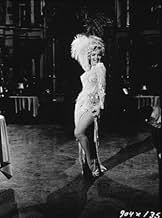
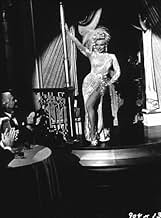
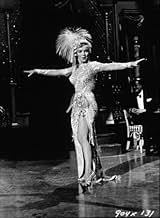
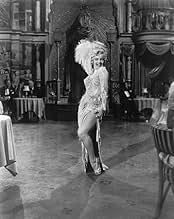
Marilyn (appearing after 29 minutes screening) was deliciously charming, seducing and very appealing She sang "After You Get What You Want" and "Lazy," and did that tropical version of 'Heat Wave.'
All of them get to perform a large catalog of new and old songs by Irving Berlin in sumptuous arrangements, beautiful settings and on a big Hippodrome extravaganza
Daily and Merman hit the top; O'Connorwho had liked to build a barbed-wire fence around Marilyndid it Scottish and came with some fine dances; Gaynor's love was dancing and she was really cute; and while Ray got some thinking to do, he sells a very beautiful song ("If You Believe").
Marilyn (appearing after 29 minutes screening) was deliciously charming, seducing and very appealing She sang "After You Get What You Want" and "Lazy," and did that tropical version of 'Heat Wave.'
Mr. Berlin, Madame Merman and Miss Monroe in unequal measure!
When Darryl F. Zanuck virtually forced exhibitors and most of his fellow studio mogul rivals to adopt CinemaScope as a panacea for TV's devastation of Hollywood's weekly box office bonanza, he dictated that virtually all of Twentieth's output was to be filmed in that eye-stretching process. "There's No Business Like Show Business," directed by that old pro, Walter Lang, seems to be the prime example of Darryl's minions saying to their boss: "You want wide? We'll give you W-I-D-E!!"
Everything about it was designed and lensed to emphasize the original ratio of the CinemaScope process and viewing it on a video that isn't letterboxed must look like what a one-eyed person must experience in everyday life. I never did see it in a theater but I have seen it on a TV broadcast which more-or-less recreated its widescreen ratio. It's a glorious mish-mash. Every Berlin tune that could be stuffed into it is given at least one run-through; John de Cuir's production design must have occupied every inch of several of Twentieth's West Los Angeles soundstages; Ethel Merman, after her terrific movie repeat of her Broadway success in "Call Me Madam" for Fox (and now, as of 2005, available on video), trumpets away in number after number (Must have been an ear-rending experience over those original four-track stereophonic sound systems.); Dan Dailey, Donald O'Connor and Mitzi Gaynor give it their energetic best; and then there's Marilyn. What can we say, with all that so sadly, in her personal life, came after she reluctantly fulfilled her contractual obligation in this one? She dazzles in, let's face it, a rather vulgar way, and seems shoehorned in to boost the potential box office. And they even added Johnnie Ray, a huge jukebox success at the time (and, due to his hearing deficiency, performing his songs at an even greater volume than La Merman.)
All in all this one shouldn't be missed if you want to view an example of Hollywood at its brassiest, in a production fairly bulging with elements that may not coalesce very harmoniously but which was, no doubt, worth the price of admission to those movie palaces before they were carved up to become the precursors of today's sterile multiplexes.
Everything about it was designed and lensed to emphasize the original ratio of the CinemaScope process and viewing it on a video that isn't letterboxed must look like what a one-eyed person must experience in everyday life. I never did see it in a theater but I have seen it on a TV broadcast which more-or-less recreated its widescreen ratio. It's a glorious mish-mash. Every Berlin tune that could be stuffed into it is given at least one run-through; John de Cuir's production design must have occupied every inch of several of Twentieth's West Los Angeles soundstages; Ethel Merman, after her terrific movie repeat of her Broadway success in "Call Me Madam" for Fox (and now, as of 2005, available on video), trumpets away in number after number (Must have been an ear-rending experience over those original four-track stereophonic sound systems.); Dan Dailey, Donald O'Connor and Mitzi Gaynor give it their energetic best; and then there's Marilyn. What can we say, with all that so sadly, in her personal life, came after she reluctantly fulfilled her contractual obligation in this one? She dazzles in, let's face it, a rather vulgar way, and seems shoehorned in to boost the potential box office. And they even added Johnnie Ray, a huge jukebox success at the time (and, due to his hearing deficiency, performing his songs at an even greater volume than La Merman.)
All in all this one shouldn't be missed if you want to view an example of Hollywood at its brassiest, in a production fairly bulging with elements that may not coalesce very harmoniously but which was, no doubt, worth the price of admission to those movie palaces before they were carved up to become the precursors of today's sterile multiplexes.
Classic musical drama!
The first time you watch this movie, you'll think it's long, boring, and stupid. The second time you watch this movie, you'll love it. I can't begin to tell you why, but it's the truth. (I had the chance to show this film to an audience during a Donald O'Connor film festival. People came up to me weeks later to say that they had caught it again on cable, and loved it the second time through.)
Marilyn is definately "ehh". This movie was filmed during her worst years of personal abuses, and it shows all over her face and her work, lending a shadowy sadness to her character for modern audiences. Donald O'Connor's character also takes on a new depth for modern viewers familiar with his own life's history, oftentimes with a sharp poignance that helps him grab control of so many scenes, and turn his character's story into the strongest sub-plot of the film.
Merman is BRILLIANT as the real head of this family, giving us a wonderfully unique character. Her role as the strong, smart, powerful, and loving mother is truly a standout for the 50's in general, and musicals in particular.
Marilyn is definately "ehh". This movie was filmed during her worst years of personal abuses, and it shows all over her face and her work, lending a shadowy sadness to her character for modern audiences. Donald O'Connor's character also takes on a new depth for modern viewers familiar with his own life's history, oftentimes with a sharp poignance that helps him grab control of so many scenes, and turn his character's story into the strongest sub-plot of the film.
Merman is BRILLIANT as the real head of this family, giving us a wonderfully unique character. Her role as the strong, smart, powerful, and loving mother is truly a standout for the 50's in general, and musicals in particular.
Good, Could've Been Great
Contrary to what a lot of people seem to think of this film, my biggest complaint with it is Marilyn Monroe. The studio shoehorned her into this film in their attempt to make the biggest musical extravaganza ever, and she just doesn't fit. She's so out of sync with the other characters that she might as well be from a different planet.
Don't get me wrong. I'm not a huge Marilyn fan, but she was good (and well-cast) in "Some Like It Hot". She's just all wrong for "No Business Like Show Business", and she looks and sounds ridiculous.
To be fair, Johnnie Ray often doesn't hold up well before modern audiences, either, when he sings. It's not that he's bad; it's that his style has come and gone and hardly been seen since. Everything in this movie tends to be at least a little overdone, and asking Johnnie Ray to exaggerate his singing does not produce flattering results.
Still, Donald O'Connor and Mitzi Gaynor are as brilliant and exuberant as you could hope. Ethel Merman is, well, Ethel Merman, and exactly right for her part. Dan Dailey is like a reliable locomotive that never disappoints.
The story is a bit plodding at times, but it only exists to set up one gala musical number after another. It only really bogs down when it gets caught up with Marilyn's character. If the studio had just left Marilyn out of it, perhaps giving Mitzi Gaynor the love interest role, and toned down the general effort level just a hair, this would've been one of the all-time greats.
It's still absolutely worth seeing -- in widescreen format, if you possibly can.
Don't get me wrong. I'm not a huge Marilyn fan, but she was good (and well-cast) in "Some Like It Hot". She's just all wrong for "No Business Like Show Business", and she looks and sounds ridiculous.
To be fair, Johnnie Ray often doesn't hold up well before modern audiences, either, when he sings. It's not that he's bad; it's that his style has come and gone and hardly been seen since. Everything in this movie tends to be at least a little overdone, and asking Johnnie Ray to exaggerate his singing does not produce flattering results.
Still, Donald O'Connor and Mitzi Gaynor are as brilliant and exuberant as you could hope. Ethel Merman is, well, Ethel Merman, and exactly right for her part. Dan Dailey is like a reliable locomotive that never disappoints.
The story is a bit plodding at times, but it only exists to set up one gala musical number after another. It only really bogs down when it gets caught up with Marilyn's character. If the studio had just left Marilyn out of it, perhaps giving Mitzi Gaynor the love interest role, and toned down the general effort level just a hair, this would've been one of the all-time greats.
It's still absolutely worth seeing -- in widescreen format, if you possibly can.
BIG musical with a highly contrived plot
this is a film for people who love big song and dance numbers (as well as Marilyn Monroe and Mitzi Gaynor fans). it almost is 'pre- reminiscent' of Bollywood in how it moves from one song to the next, with only the most meager connections between song and storyline. the storyline itself is thin enough, that in slow moments i was struck by how contrived the plot was. the purpose of this movie seemed to be to have several Irving Berlin songs choreographed into vaudeville-like song and dance numbers. what better way to do this than by following the lives of a couple of old vaudeville stars who met, married, had babies, and stayed on the road all the while. it all leads to the climactic scene (here's the spoiler, if this film can be said to have one) of ethel merman paying homage to herself and her role as Annie Oakley by singing 'there's no business like show business'. pay attention to how they managed to jigger the storyline such that ethel got her solo for that number (remembering that the family had five members plus a confounding love interest at that point, and the script writers had to somehow get all of them but ethel off the stage). another number, where johnny ray sings a gospel tune, has 'vehicle' written all over it. and as mentioned by the reviewer above, Marilyn Monroe was hot enough property that she was given two 'vehicle' numbers--although her character does not appear to have been penciled into an otherwise completed script, as suggested above. Marilyn's character is critical to the unfolding of the plot, such as it is. notice also how the script writers cleverly played upon Marilyn's reputation for a breathy, contrived diction.
so if you like BIG musicals with huge song and dance production numbers and little plot, this is for you (9 or 10 stars). if you do not, skip this one (1 or 2 stars, this is a bomb). averaged out to about a 6, but really more likely a 'love it' or 'hate it' movie. but then again . . .
there was something in the 'exposed ducts' construction that made me curious enough about how and why it was made the way it was, that i looked up the answers to many of my questions. were the songs composed specifically for this, or a jumble of odds and ends? (the latter). why was ethel merman given the climatic solo? (as mentioned, she was reprising a big number from her signature role as Annie Oakley in 'Annie Get Your Gun', which was one of the most successful Broadway shows ever at the time). who was that guy who played Steve Donahue, and please explain the strange juxtaposition of his commanding stage presence when singing, and that effete concealment of androgyny when not--as well as the 'cast-to-type' plot twist that sends him into the clergy . . . ? (look up a biography of johnny ray). so, if you want a peek into the movie-making process at the tail end of the studio-system era, this movie has a barely concealed super-structure that reveals how a hoped-for 'blockbuster' was constructed in those days.
so if you like BIG musicals with huge song and dance production numbers and little plot, this is for you (9 or 10 stars). if you do not, skip this one (1 or 2 stars, this is a bomb). averaged out to about a 6, but really more likely a 'love it' or 'hate it' movie. but then again . . .
there was something in the 'exposed ducts' construction that made me curious enough about how and why it was made the way it was, that i looked up the answers to many of my questions. were the songs composed specifically for this, or a jumble of odds and ends? (the latter). why was ethel merman given the climatic solo? (as mentioned, she was reprising a big number from her signature role as Annie Oakley in 'Annie Get Your Gun', which was one of the most successful Broadway shows ever at the time). who was that guy who played Steve Donahue, and please explain the strange juxtaposition of his commanding stage presence when singing, and that effete concealment of androgyny when not--as well as the 'cast-to-type' plot twist that sends him into the clergy . . . ? (look up a biography of johnny ray). so, if you want a peek into the movie-making process at the tail end of the studio-system era, this movie has a barely concealed super-structure that reveals how a hoped-for 'blockbuster' was constructed in those days.


Did you know
- TriviaOne day, Marilyn Monroe's husband, Joe DiMaggio, visited the set. He refused to be photographed with Monroe, but insisted on being photographed with Ethel Merman, whom he called "my favorite star."
- GoofsDonald O'Connor wears a gold ring on his left ring finger in almost all of his scenes. The ring is missing when he performs "A Man Chases a Girl (Until She Catches Him)", in the scene with Marilyn Monroe just before that, and in the film's climactic scenes.
Rings are not permanent fixtures, he simply removed the ring at some point and chose to no longer wear it.
- Quotes
Molly Donahue: "Don't worry." Hmm. That's a laugh. You start worrying about your kids the day they're born and you never stop. Even after they bury you, I bet you never stop.
- ConnectionsFeatured in Marilyn (1963)
- SoundtracksWhen the Midnight Choo-Choo Leaves for Alabam'
(uncredited)
Written by Irving Berlin
Performed by Ethel Merman and Dan Dailey
Later performed by Mitzi Gaynor and Donald O'Connor
- How long is There's No Business Like Show Business?Powered by Alexa
Details
- Release date
- Country of origin
- Languages
- Also known as
- El mundo de la fantasía
- Filming locations
- Production company
- See more company credits at IMDbPro
Box office
- Gross worldwide
- $6,341
- Runtime
- 1h 57m(117 min)
- Aspect ratio
- 2.55 : 1
Contribute to this page
Suggest an edit or add missing content