IMDb RATING
6.4/10
2.8K
YOUR RATING


Young Marines have adventures in love and war.Young Marines have adventures in love and war.Young Marines have adventures in love and war.
- Director
- Writer
- Stars
- Nominated for 1 Oscar
- 1 nomination total


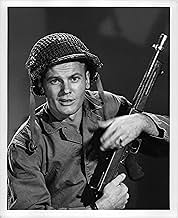


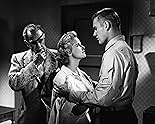


L.Q. Jones
- Pvt. L.Q. Jones
- (as Justus E. McQueen)


- Director
- Writer
- All cast & crew
- Production, box office & more at IMDbPro
6.42.8K
1
2
3
4
5
6
7
8
9
10
Featured reviews
A Reel War
It's not surprising many war veterans like this film. Dramatically framed with a voice-over by James Whitmore as the epitome of a Marine Sergeant who cares about his men but knows the mission is all, the film quickly draws us into the lives of these men and their women in a suspenseful and satisfying way. There is enough good acting by Whitmore, Van Heflin, Dorothy Malone, John Lupton and others to get us past the less well acted and more cliched moments. Some scenarios, such as the tragedy-to-triumph of the lumberjack womanizer(Aldo Ray)and the New Zealand farm widow (Nancy Olson)are superbly plotted and played. There are many memorable moments in the film and Uris' varied characters are well represented.(Please note that Navaho code-talkers are credited here.) Combat and training imagery and sound is generally high quality, but the outstanding aspect of the film is the way it explores the human qualities of those men and women who face the tests of war.
Then and Now
As I recall, our small town's prestige theater was packed, even to the back row of the balcony where I had to sit. But who cared. Word was that shapely Dorothy Malone (Elaine) did a strip tease in a chair, and just the thought of a girl bra-less on screen was enough to bring out every horny high school guy in town. Plus, the title promised all the neat battle scenes that teens in the '50's confused with real war. I don't think any of us were disappointed after leaving the theatre. Then again, a little Malone skin went a long way.
Seeing the movie again, I realize how many years have passed and how people change. Now the 2-hours-plus seem tedious and transparent, a typical Hollywood whitewash of the time, with stock characters and clichéd situations. It's like the producers wanted to touch every boy-girl base possible, and they do. I'm just puzzled the movie wasn't titled "Mating Cry" since that's where the screen time really is; only the last 10-minutes or so involve battle scenes and that amounts to either artillery explosions or fixing bayonets.
I'm sure enlistments went up following the film's release. Looks like Warner Bros. got maximal assistance from the Corps at Camp Pendleton—lots of massed troop scenes and colorful beach landings. And why not since the film's sum total plays like a recruitment poster. The trouble is this was just this type of Hollywood hokum that helped create the disconnect 10-years later between what Americans expected in Vietnam and the stark realities of what they got. And therein lies the irony of that long ago theater night—the glamorized deceptions of a Battle Cry plus its many 50's kin ended up costing a lot of folks more than what they paid at the box office.
Seeing the movie again, I realize how many years have passed and how people change. Now the 2-hours-plus seem tedious and transparent, a typical Hollywood whitewash of the time, with stock characters and clichéd situations. It's like the producers wanted to touch every boy-girl base possible, and they do. I'm just puzzled the movie wasn't titled "Mating Cry" since that's where the screen time really is; only the last 10-minutes or so involve battle scenes and that amounts to either artillery explosions or fixing bayonets.
I'm sure enlistments went up following the film's release. Looks like Warner Bros. got maximal assistance from the Corps at Camp Pendleton—lots of massed troop scenes and colorful beach landings. And why not since the film's sum total plays like a recruitment poster. The trouble is this was just this type of Hollywood hokum that helped create the disconnect 10-years later between what Americans expected in Vietnam and the stark realities of what they got. And therein lies the irony of that long ago theater night—the glamorized deceptions of a Battle Cry plus its many 50's kin ended up costing a lot of folks more than what they paid at the box office.
It helps to be old enough
For those of us who lived thru the War, BATTLE CRY is a splendid multi story Marines in Love and War drama, masterfully overseen by veteran Raoul Walsh, with a career perf by Aldo Ray, backed with fine work from Van Heflin, James Whitmore, Tab Hunter, Nancy Olson and others in a star cast. A huge box office hit from an equally big bestseller, marking a vast improvement on the book. Sentimental, exciting, plausible, involving and thoroughly entertaining; its 149 minute running time paced properly, unlike today's bloated epics, which seem to embrace overlength as a substitute for content and skill. Unlike Spielberg's yawner, CRY didn't need to resort to F/X bloodbaths to awaken the audience's attention.
I saw BATTLE CRY on Feb. 19, 1955 at the Laurel Theatre in San Carlos, a Saturday night at the movies in an Art Deco suburban house. Maybe you have to be 66 to appreciate this film for what it represents; and maybe you need to be 26 to swallow Spielberg's version of D-Day. I'll stick with BATTLE CRY.
I saw BATTLE CRY on Feb. 19, 1955 at the Laurel Theatre in San Carlos, a Saturday night at the movies in an Art Deco suburban house. Maybe you have to be 66 to appreciate this film for what it represents; and maybe you need to be 26 to swallow Spielberg's version of D-Day. I'll stick with BATTLE CRY.
Solid - but not what i was expecting
My rating of Battle Cry has more to do with my disappointment with the plot than the actually quality of the movie. I knew nothing of the movie before I watched it, but with a name like Battle Cry, I was expecting a war movie along the lines of Battleground (with which it is paired in the double feature DVD I bought). Instead, Battle Cry has more in common with a soap opera than a real war movie. The movie spends over two hours of its time on relationships and love affairs. When the real battle scenes finally begin, they're over and done with in less than 10 minutes. That's not to say I didn't enjoy the stories of the Marines and their women, it's just not what I was expecting.
I am sure that on repeat viewings my enjoyment of the movie and rating I've given it will increase. Most of the movie is very well done. Like most other reviews I've read, I am especially fond of the scenes involving Pfc Andy Hookens (Aldo Ray) and Pat Rogers (Nancy Olson). I found it a very believable, heartfelt story that's played perfectly by both actors. The rest of the cast is solid and their plot lines are almost as enjoyable.
I was shocked at the frank presentation of some of the subject matter in Battle Cry. I can't think of another movie from the 50s, especially a flag-waving war movie, where sex, pregnancy, drinking, and adultery are dealt with so openly. It's a nice change-of-pace from the sanitized WWII movies I've come to expect.
I am sure that on repeat viewings my enjoyment of the movie and rating I've given it will increase. Most of the movie is very well done. Like most other reviews I've read, I am especially fond of the scenes involving Pfc Andy Hookens (Aldo Ray) and Pat Rogers (Nancy Olson). I found it a very believable, heartfelt story that's played perfectly by both actors. The rest of the cast is solid and their plot lines are almost as enjoyable.
I was shocked at the frank presentation of some of the subject matter in Battle Cry. I can't think of another movie from the 50s, especially a flag-waving war movie, where sex, pregnancy, drinking, and adultery are dealt with so openly. It's a nice change-of-pace from the sanitized WWII movies I've come to expect.
An old marine fades away
When the worst thing the drill instructor can call the new recruits at boot camp is "Meatheads", you know that the movie is pulling its punches. Not that I thought that about "Battle Cry" when I saw it at the age of nine in 1956 at the movies, then I lapped up every minute of this film devoted to those most cinematic of warriors - the US Marines.
The years have not been kind to "Battle Cry". It has dated in a way that "From Here to Eternity" has not. However it seems that many WW2 veterans like this film. They seem less critical of it than younger reviewers, and it's hard to argue with people who actually lived it rather than viewed it. To be honest, "Battle Cry" seems more truthful to the spirit of the marines of WW2 than a movie such as "Windtalkers" with all its gore and false heroics.
Leon Uris wrote the novel based on his experiences with the marines during the war. It contained passages that were thrilling, funny and outrageous. The book's description of boot camp and the lustiness of the marines pulled no punches at all. But 1950's censorship made the movie a different matter.
The story follows a group of marines from the time they head to boot camp until their return from battle in the Pacific. So many characters are introduced that some of them emerge as overly familiar stereotypes, but Tab Hunter and Aldo Ray hold their own. Although James Whitmore's performance as Mac, the master sergeant, is convincing, his narration often comes across as trite and intrusive.
The movie concentrated as much on the encounters in the bedroom as on the battlefield, split evenly between the women the boys leave behind and the ones they find on their way to war with Nancy Olsen giving the strongest performance as the New Zealand widow who falls in love with Aldo Ray's character.
The movie becomes more focused when the recruits pass through boot camp and join the battalion that takes them to war. Van Heflin as Major Huxley, the commanding officer, gives the standout performance in this film, providing the right combination of toughness and compassion as the professional given the job of moulding boys into marines. His performance goes a long way towards counteracting the negatives in "Battle Cry".
The film's best sequence begins when Huxley pushes his men to outperform another battalion in a gruelling cross-country hike in New Zealand. After reaching their destination, he decides to do the return journey as well, pushing the men to their limits. When it seems they can't continue, the other battalion passes them on their way back mounted on trucks. The sight galvanises Huxley's men and resentment turns to pride as they march on bloodied feet back to camp. "When we hit that camp gate, let's give 'em a look at the best outfit in the Corps", exhorts Huxley as his men swing past to the accompaniment of Max Steiner's rousing score.
Unlike music for war films of the last 30 years or so, which invariably play to the pathos and tragedy of war, Steiner went for the glory. Steiner's original marching song, "Honey Babe", provides an enduring memory of the film.
"Battle Cry" delivers its major battle at the end. The landing on Saipan is well staged if somewhat confusing, but it leads to an emotional ending as the surviving marines return home.
The success of "Battle Cry" indicated that audiences of the day needed the reassurance of some core values: honour, duty, patriotism and sacrifice. "Battle Cry" over-delivered on those qualities. Vietnam was still ten years away, and then the generation brought up on movies like this would face some harsh realities of their own.
It is difficult to recommend "Battle Cry" to a broad audience today. But with that said, it does boast a number of fine performances and a sequence or two that stay in the memory.
The years have not been kind to "Battle Cry". It has dated in a way that "From Here to Eternity" has not. However it seems that many WW2 veterans like this film. They seem less critical of it than younger reviewers, and it's hard to argue with people who actually lived it rather than viewed it. To be honest, "Battle Cry" seems more truthful to the spirit of the marines of WW2 than a movie such as "Windtalkers" with all its gore and false heroics.
Leon Uris wrote the novel based on his experiences with the marines during the war. It contained passages that were thrilling, funny and outrageous. The book's description of boot camp and the lustiness of the marines pulled no punches at all. But 1950's censorship made the movie a different matter.
The story follows a group of marines from the time they head to boot camp until their return from battle in the Pacific. So many characters are introduced that some of them emerge as overly familiar stereotypes, but Tab Hunter and Aldo Ray hold their own. Although James Whitmore's performance as Mac, the master sergeant, is convincing, his narration often comes across as trite and intrusive.
The movie concentrated as much on the encounters in the bedroom as on the battlefield, split evenly between the women the boys leave behind and the ones they find on their way to war with Nancy Olsen giving the strongest performance as the New Zealand widow who falls in love with Aldo Ray's character.
The movie becomes more focused when the recruits pass through boot camp and join the battalion that takes them to war. Van Heflin as Major Huxley, the commanding officer, gives the standout performance in this film, providing the right combination of toughness and compassion as the professional given the job of moulding boys into marines. His performance goes a long way towards counteracting the negatives in "Battle Cry".
The film's best sequence begins when Huxley pushes his men to outperform another battalion in a gruelling cross-country hike in New Zealand. After reaching their destination, he decides to do the return journey as well, pushing the men to their limits. When it seems they can't continue, the other battalion passes them on their way back mounted on trucks. The sight galvanises Huxley's men and resentment turns to pride as they march on bloodied feet back to camp. "When we hit that camp gate, let's give 'em a look at the best outfit in the Corps", exhorts Huxley as his men swing past to the accompaniment of Max Steiner's rousing score.
Unlike music for war films of the last 30 years or so, which invariably play to the pathos and tragedy of war, Steiner went for the glory. Steiner's original marching song, "Honey Babe", provides an enduring memory of the film.
"Battle Cry" delivers its major battle at the end. The landing on Saipan is well staged if somewhat confusing, but it leads to an emotional ending as the surviving marines return home.
The success of "Battle Cry" indicated that audiences of the day needed the reassurance of some core values: honour, duty, patriotism and sacrifice. "Battle Cry" over-delivered on those qualities. Vietnam was still ten years away, and then the generation brought up on movies like this would face some harsh realities of their own.
It is difficult to recommend "Battle Cry" to a broad audience today. But with that said, it does boast a number of fine performances and a sequence or two that stay in the memory.


Did you know
- TriviaFilm debut of L.Q. Jones (billed under his real name of "Justus E. McQueen"; he took his character's name in this film as his real name after this film was released).
- GoofsMrs. Pat Rogers speaks with an American accent even though she's from New Zealand.
- ConnectionsFeatured in The True Adventures of Raoul Walsh (2014)
- SoundtracksMarine Hymn
(uncredited)
Music by Jacques Offenbach from "Geneviève de Brabant"
Lyrics attributed to L.Z. Phillips
Played during the opening credits and at various times throughout the picture
Sung by a chorus at the end
- How long is Battle Cry?Powered by Alexa
Details
- Release date
- Country of origin
- Languages
- Also known as
- Urlaub bis zum Wecken
- Filming locations
- Marine Corps Base Camp Pendleton, California, USA(as Camp Elliott)
- Production company
- See more company credits at IMDbPro
Box office
- Gross US & Canada
- $17,440,000
- Runtime
- 2h 29m(149 min)
- Aspect ratio
- 2.55 : 1
Contribute to this page
Suggest an edit or add missing content