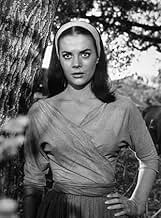
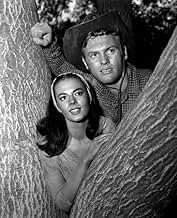
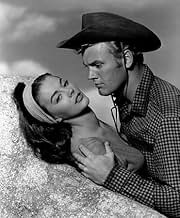
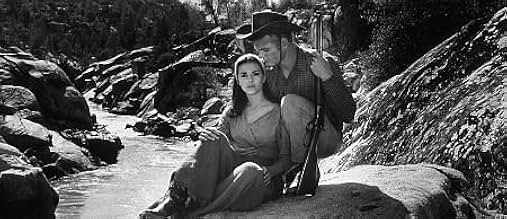
After Trace Jordan's brother is murdered by members of the land-grabbing Sutton family, he vows to report this injustice to the nearest Army fort.After Trace Jordan's brother is murdered by members of the land-grabbing Sutton family, he vows to report this injustice to the nearest Army fort.After Trace Jordan's brother is murdered by members of the land-grabbing Sutton family, he vows to report this injustice to the nearest Army fort.
Wayne Burson
- Sutton Rider
- (uncredited)
Amapola Del Vando
- Townswoman
- (uncredited)
John Doucette
- Bartender
- (uncredited)
Ron Hargrave
- Sutton Rider
- (uncredited)
Bob Herron
- Faber
- (uncredited)
David McMahon
- Doctor
- (uncredited)
- Director
- Writers
- All cast & crew
- Production, box office & more at IMDbPro
5.81K
1
2
3
4
5
6
7
8
9
10
Featured reviews
Hunter ensures this is easy on the eye
As his nicely self-depreciating autobiography suggests Tab Hunter was a slightly more complex and perhaps a somewhat less malleable young actor than maybe his studio would have liked him to be. For starters he was gay and was, to all accounts, comfortable with it, determined to have a private life as well as a public one. He was an early victim of the gossip columnists but he learned to live with it and if he never became a star of the first rank, was seldom out of work.
This formulaic western was designed as a vehicle for him and his attractive persona is one reason why it is so watchable. There is nothing particularly original about it and it may come as something of a surprise that it was written by Irving Wallace from a novel by Louis L'Amour. Hunter is the young rancher looking to revenge the murder of his brother, (by dastardly Skip Homeier who likes shooting men in the back). Other villains include Claude Akins and Earl Holliman and the romantic interest is provided by an inadequate but young Natalie Wood. Hunter and Ted McCord's cinema-scope photography ensure it is always easy on the eye.
Young love
A very routine western ,with a plot the average viewer has already seen fifty times (the wealthy landlord who wants to get rid of all the little farmers around,and his nasty offspring),this is nevertheless an entertaining nervy work ,with a good chemistry between the two principals .Natalie Wood ,who was only 18 at the time ,displays strength and resilience against a bunch of villains who ceaselessly harass her.She's the only man in her family ,her uncle and her little brother are sissies ,but we're told her father was a brave man ,just like Daniel Jordan,the man she helps to fight the criminals who killed his brother.A rather violent western,with a lot of death,and a splendid cinematography.
Warners Takes Aim at a Younger Audience
Two young lovers flee a murderous rancher's posse.
In 1956, Warner Bros. paired up two of their most promising young contract players in this movie and one other, The Girl He Left Behind. Unfortunately for the studio, neither film caught fire. Hunter certainly had the All-American good looks but in the acting department was no James Dean, while Wood's struggle here with a Mexican accent amounts to little more than an honest effort.
Wisely, the studio stacked the dialog with a veteran supporting cast—Akins, Franzen, and Teal —who carry most of the lines. At the same time, was there ever a better nasty young punk than the great Skip Homeier, who could hold his own with any heavyweight actor. Also, it's too bad the young Earl Holliman didn't have matinée good looks because he could have injected real feeling into Trace's pivotal part.
The cast itself gets to ride around greater LA in a generally non-scenic Technicolor Western. However, the showpiece brawl over the big rocks and into the roaring river is a real doozy. Hunter certainly earned his salary with that one. Then too, Franzen's Indian tracker is nicely conceived and adds a good ironical touch to the fairly predictable outcome.
All in all, the movie amounts to little more than a minor vehicle for two of the studio's attractive young stars. The talented Wood, at least, would go on to bigger and better things.
In 1956, Warner Bros. paired up two of their most promising young contract players in this movie and one other, The Girl He Left Behind. Unfortunately for the studio, neither film caught fire. Hunter certainly had the All-American good looks but in the acting department was no James Dean, while Wood's struggle here with a Mexican accent amounts to little more than an honest effort.
Wisely, the studio stacked the dialog with a veteran supporting cast—Akins, Franzen, and Teal —who carry most of the lines. At the same time, was there ever a better nasty young punk than the great Skip Homeier, who could hold his own with any heavyweight actor. Also, it's too bad the young Earl Holliman didn't have matinée good looks because he could have injected real feeling into Trace's pivotal part.
The cast itself gets to ride around greater LA in a generally non-scenic Technicolor Western. However, the showpiece brawl over the big rocks and into the roaring river is a real doozy. Hunter certainly earned his salary with that one. Then too, Franzen's Indian tracker is nicely conceived and adds a good ironical touch to the fairly predictable outcome.
All in all, the movie amounts to little more than a minor vehicle for two of the studio's attractive young stars. The talented Wood, at least, would go on to bigger and better things.
No Clear Title, No Legally Constituted Posse
Louis L'Amour novels make good reading and fine western cinema and The Burning Hills is no exception. Tab Hunter and Natalie Wood who were a screen team and studio public relations created off screen romance star in this film which has Tab Hunter on the run and Natalie Wood helping him.
Hunter's got plenty of reason to run, his brother was killed and he shoots Ray Teal who is the overlord of the local Ponderosa. The wounded Teal who really doesn't have title to a lot of the land he runs roughshod over and he sends his rotten son Skip Homeier and foreman Claude Akins with some of his riders after him. At no time are they a legally constituted posse and Homeier and Akins can't stand each other and have many issues between them.
Skip Homeier ever since he shot Gregory Peck in the back in The Gunfighter made a good career of playing some really nasty punk villains and he's certainly at his nastiest here. Eduard Franz has a strange and interesting part also as a mixed race tracker that Akins insists on having in the posse. He's a person of interesting and shifting loyalties.
Wood and Hunter were certainly an attractive pair and the teens and Tweens in the audience got some thrills as Hunter had to appear topless as Wood nursed him with his injuries. The Burning Hills has a lot of tension in it as the posse closes in and Hunter is a pretty resourceful man. Wood has a few tricks of her own to baffle the posse and not all of them involve sex.
The Burning Hills is a nicely constructed western that I'm sure Louis L'Amour took some pride in the screen version of his work.
Hunter's got plenty of reason to run, his brother was killed and he shoots Ray Teal who is the overlord of the local Ponderosa. The wounded Teal who really doesn't have title to a lot of the land he runs roughshod over and he sends his rotten son Skip Homeier and foreman Claude Akins with some of his riders after him. At no time are they a legally constituted posse and Homeier and Akins can't stand each other and have many issues between them.
Skip Homeier ever since he shot Gregory Peck in the back in The Gunfighter made a good career of playing some really nasty punk villains and he's certainly at his nastiest here. Eduard Franz has a strange and interesting part also as a mixed race tracker that Akins insists on having in the posse. He's a person of interesting and shifting loyalties.
Wood and Hunter were certainly an attractive pair and the teens and Tweens in the audience got some thrills as Hunter had to appear topless as Wood nursed him with his injuries. The Burning Hills has a lot of tension in it as the posse closes in and Hunter is a pretty resourceful man. Wood has a few tricks of her own to baffle the posse and not all of them involve sex.
The Burning Hills is a nicely constructed western that I'm sure Louis L'Amour took some pride in the screen version of his work.
Passable oater with goodlooking leading couple
Stuart Heisler became known for B pictures, and THE BURNING HILLS is one of his best, looking more like an A than a B film.
It is also helped by the goodlooking leading couple - Tab Hunter, who reportedly preferred males, and Natalie Wood as a latino woman, a role that probably placed her on the ramp for arguably her best known opus, WEST SIDE STORY, five years later.
The rest of the cast performs believably, with Ray Teal the standout. The main villain, Homeier, does not exactly stay in my memory.
The proficient Louis L'Amour wrote the novel, Irving Wallace cranked out the screenplay - famous names, but the product is far from credible (at one point, Hunter is shot off his horse, then he looks perfectly fit, but next thing he is bleeding again, showing trackers where he might be hiding).
Strictly standard cinematography with indifferent editing. The final fight between Hunter and Homeier starts in between bushes, goes on to rocky ground, and they keep falling onto what looks like conveniently soft beach sand for not so painful impact.
Predictably all is well that ends well, infinitely sweet ending. 6/10.
It is also helped by the goodlooking leading couple - Tab Hunter, who reportedly preferred males, and Natalie Wood as a latino woman, a role that probably placed her on the ramp for arguably her best known opus, WEST SIDE STORY, five years later.
The rest of the cast performs believably, with Ray Teal the standout. The main villain, Homeier, does not exactly stay in my memory.
The proficient Louis L'Amour wrote the novel, Irving Wallace cranked out the screenplay - famous names, but the product is far from credible (at one point, Hunter is shot off his horse, then he looks perfectly fit, but next thing he is bleeding again, showing trackers where he might be hiding).
Strictly standard cinematography with indifferent editing. The final fight between Hunter and Homeier starts in between bushes, goes on to rocky ground, and they keep falling onto what looks like conveniently soft beach sand for not so painful impact.
Predictably all is well that ends well, infinitely sweet ending. 6/10.
Did you know
- TriviaAccording to Tab Hunter's autobiography, studio executives were so displeased by Natalie Wood's "Mexican" accent that they even considered dubbing in another actress's voice.
- GoofsDuring the Sutton gang's battle with the Native Americans, one of the gang is hit in the back with a thrown tomahawk and falls off his horse, toward the camera. He falls off too late and rolls right into the camera's shadow and seemingly knocks right into the camera itself.
- Quotes
Maria Christina Colton: They think they can treat me like those girls in the dance hall.
Trace Jordon: I'm sorry. I know how you must feel.
Maria Christina Colton: You can't. You are a man.
- ConnectionsFeatured in Tab Hunter Confidential (2015)
- How long is The Burning Hills?Powered by Alexa
Details
Box office
- Gross US & Canada
- $1,500,000
- Runtime
- 1h 34m(94 min)
- Aspect ratio
- 2.35 : 1
Contribute to this page
Suggest an edit or add missing content