IMDb RATING
7.4/10
6.5K
YOUR RATING

A former sheriff blames himself for his wife's death during a Wells Fargo robbery and vows to track down and kill the seven men responsible.A former sheriff blames himself for his wife's death during a Wells Fargo robbery and vows to track down and kill the seven men responsible.A former sheriff blames himself for his wife's death during a Wells Fargo robbery and vows to track down and kill the seven men responsible.
- Awards
- 1 nomination total


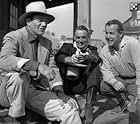


Don 'Red' Barry
- Clete
- (as Donald Barry)


Benjie Bancroft
- Townsman
- (uncredited)

Chet Brandenburg
- Townsman
- (uncredited)

Chick Hannan
- Townsman
- (uncredited)
- Director
- Writer
- All cast & crew
- Production, box office & more at IMDbPro
7.46.5K
1
2
3
4
5
6
7
8
9
10
Featured reviews
Solid Western
While heading to Flora Vista, the coach of John Greer (Walter Reed) and his wife Annie Greer (Gail Russell) gets trapped in the mud and the former sheriff Ben Stride (Randolph Scott) helps the couple that invites him to ride together with them. Then they meet the strangers Bill Masters (Lee Marvin) and his partner Clete (Donald Barry) and Bill tells to the couple that Ben is tracking down the seven men that robbed the Well Fargo office in Silver Springs and killed his wife that worked in the office. Annie gets close to Ben, who feels responsible for the death of his beloved wife. During their journey, they have moments of tension with an attack of Indians and the interest of Bill in Annie, and Ben asks Bill and Clete to leave the couple. When they arrive in the boundary of Flora Vista, John discloses a secret to Ben.
"Seven Men From Now" is a solid western, with story and characters very well developed and outstanding performances. Randolph Scott performs a lonely rider thirsty to revenge the death of his wife, and Lee Marvin performs a great villain, as usual. My vote is eight.
Title (Brazil): "7 Homens Sem Destino" ("7 Men Without Destiny")
"Seven Men From Now" is a solid western, with story and characters very well developed and outstanding performances. Randolph Scott performs a lonely rider thirsty to revenge the death of his wife, and Lee Marvin performs a great villain, as usual. My vote is eight.
Title (Brazil): "7 Homens Sem Destino" ("7 Men Without Destiny")
The villain and the heroine make the hero a more interesting character
Like McCrea, Scott did not become exclusively a Westerner until the mid-forties, but once established he became a Western star of distinction, achieving his best and most interesting roles as his career matured
Scott was a great gentleman It was simple for him to do the part because it was indeed the prime quality he brought to his many roles as lawman or lone rider Scott's best work was the group of seven movies he made with director Budd Boetticher in the fifties In these he obtained a new stature as the lone figure on a mission of vengeance or similar private quest, becoming a tougher, more forceful character, the archetype of the much-parodied image As we all know, a man's actions are what make the man, and over and over again, Scott believed in courage He believed in conspicuous displays of courage And finally he rounded off this splendid climax to a long career by starring with Joel McCrea in "Ride the High Country."
Boetticher's style was marvelously simple and economical, sticking closely to the same plots, locations and character types in each of his Westerns and stressing movement and action rather than ideas
Budd Boetticher's "Seven Men From Now" is 78 minutes And as concise as this great Western is, it has four really well-developed characters traveling through Apache country; beautiful storytelling; takes full advantage of the location; and there are a lot of narrative incidents
Ben Stride (Scott) represents a man whose wife has been killed and he's going to go out and seek revenge But his style is ramrod straight and not very interesting The killers that Stride is after are all opportunists They are men who had broken the law Boetticher introduces a sympathetic bad man, Bill Masters (Lee Marvin) who had been put in jail twice by the ex-Sheriff But you get the sense that Masters wouldn't kill a woman That's not what he has in mind... But, surely, he wants the $20,000 in gold from the strongbox Ultimately, he had to test himself up against Ben Stride in the final confrontation: the stronger villain against the stronger hero
Lee Marvin stole the show He had all the little tricks, and twitches, and schemes He is magnetic, especially in one key scene on that stormy night, when he gets inside the covered wagon, asking for a cup of hot black coffee Tension mounts when he tells John Greer (Walter Reed) that his wife is beautiful He wanted to get on Stride's nerves And some tension grew between the three characters
Annie Greer (Gail Russell) was the object of desire She was wonderful foil, essential, torn between two men Obviously her character quite quickly falls for Scott's character Her husbandwho seems weakturns out to be stronger than we thought... Stride let his own life down because he was too proud We hear him says: "A man ought to be able to take care of his woman." This is the line that's submitted to a test by the whole action and script and direction of the movie
One last note: Without sacrificing any of the traditional action elements, there was somehow an extra dimension to the Boetticher Westerns; they had a biting, underplayed quality, the kind of films one would have expected had John Huston (in his prime) suddenly decided to become a director of Westerns
Scott was a great gentleman It was simple for him to do the part because it was indeed the prime quality he brought to his many roles as lawman or lone rider Scott's best work was the group of seven movies he made with director Budd Boetticher in the fifties In these he obtained a new stature as the lone figure on a mission of vengeance or similar private quest, becoming a tougher, more forceful character, the archetype of the much-parodied image As we all know, a man's actions are what make the man, and over and over again, Scott believed in courage He believed in conspicuous displays of courage And finally he rounded off this splendid climax to a long career by starring with Joel McCrea in "Ride the High Country."
Boetticher's style was marvelously simple and economical, sticking closely to the same plots, locations and character types in each of his Westerns and stressing movement and action rather than ideas
Budd Boetticher's "Seven Men From Now" is 78 minutes And as concise as this great Western is, it has four really well-developed characters traveling through Apache country; beautiful storytelling; takes full advantage of the location; and there are a lot of narrative incidents
Ben Stride (Scott) represents a man whose wife has been killed and he's going to go out and seek revenge But his style is ramrod straight and not very interesting The killers that Stride is after are all opportunists They are men who had broken the law Boetticher introduces a sympathetic bad man, Bill Masters (Lee Marvin) who had been put in jail twice by the ex-Sheriff But you get the sense that Masters wouldn't kill a woman That's not what he has in mind... But, surely, he wants the $20,000 in gold from the strongbox Ultimately, he had to test himself up against Ben Stride in the final confrontation: the stronger villain against the stronger hero
Lee Marvin stole the show He had all the little tricks, and twitches, and schemes He is magnetic, especially in one key scene on that stormy night, when he gets inside the covered wagon, asking for a cup of hot black coffee Tension mounts when he tells John Greer (Walter Reed) that his wife is beautiful He wanted to get on Stride's nerves And some tension grew between the three characters
Annie Greer (Gail Russell) was the object of desire She was wonderful foil, essential, torn between two men Obviously her character quite quickly falls for Scott's character Her husbandwho seems weakturns out to be stronger than we thought... Stride let his own life down because he was too proud We hear him says: "A man ought to be able to take care of his woman." This is the line that's submitted to a test by the whole action and script and direction of the movie
One last note: Without sacrificing any of the traditional action elements, there was somehow an extra dimension to the Boetticher Westerns; they had a biting, underplayed quality, the kind of films one would have expected had John Huston (in his prime) suddenly decided to become a director of Westerns
First of the Scott/Boetticher Westerns
"Seven Men From Now" marked the first of seven compact 75-80 minute little westerns starring Randolph Scott and directed by Budd Boetticher. This one was produced by John Wayne's Batjac production company. It was originally intended for Wayne but he was busy on "The Searchers" (1956) at the time, so the role went to Scott. One has to wonder what would have happened had Wayne starred. For instance the running time would probably have had to have been lengthened to elevate it to "A" picture status. As it was it is a compact 78 minute "B" plus classic with an excellent cast and crisp direction.
This picture had been locked away in the Batjac vaults until recently when this and several other Batjac productions were painfully restored to their original brilliance under the direction of Michael Wayne.
Ex marshal Ben Stride (Scott) is on the trail of seven outlaws who robbed the freight office in his town and killed his wife in the process. Stride had been defeated for the job of sheriff and had refused to take the deputy sheriff job, thus he carries the burden of blame for not being there to save his wife.
Stride catches up to two of the men in the opening sequence with predictable results. Later on, he comes upon a young couple, the Greers, traveling west by way of the town that Stride is going to. When we meet John Greer (Walter Reed) and his wife Annie (Gail Russell), they are virtually stuck in the mud. Stride helps them out and decides to travel along with them. Greer seems to be a bit of a milk toast and an attraction forms between Annie and Stride.
Along the trail they meet up with Bill Masters (Lee Marvin) and his pal Clete (Donald Barry). Although Stride suspects that they might be a part of the gang, Masters soon lets it be known that he too is after the $20,000 stolen in the robbery. After a falling out Masters and Clete ride ahead to town and meet the remaining members of the gang headed by Bodeen (John Larch). They learn that the gold is being brought to them in Greer's wagon.
The gang rides out to try and ambush Stride and Masters and Clete ride after them. Out in the country a showdown ensues and..........
This film established the types of characters that would appear in the subsequent six films, the solitary granite jawed hero with a past and the likable but lethal villain. The final six films would be produced by Scott's Ranown production company.
The beautiful but tragic Gail Russell was fighting her personal demons at this time. Her past relationship with John Wayne no doubt figured in her getting this part, which she carries off well. She died at the young age of 36 in 1961. For Marvin, I believe that this was the first time that he was billed above the title. He practically steals the picture as the likable but deadly villain. Walter Reed was a staple of the John Ford stock company and has one of the best roles of his career in this film. Watch for Stuart Whitman as a cavalry lieutenant and Wayne stunt double Chuck Roberson as one of the outlaws. Donald Barry was better known as Don "Red" Barry in the 1940s as the result of having played Red Ryder in the 1940 serial "The Adventures of Red Ryder".
A great little western.
This picture had been locked away in the Batjac vaults until recently when this and several other Batjac productions were painfully restored to their original brilliance under the direction of Michael Wayne.
Ex marshal Ben Stride (Scott) is on the trail of seven outlaws who robbed the freight office in his town and killed his wife in the process. Stride had been defeated for the job of sheriff and had refused to take the deputy sheriff job, thus he carries the burden of blame for not being there to save his wife.
Stride catches up to two of the men in the opening sequence with predictable results. Later on, he comes upon a young couple, the Greers, traveling west by way of the town that Stride is going to. When we meet John Greer (Walter Reed) and his wife Annie (Gail Russell), they are virtually stuck in the mud. Stride helps them out and decides to travel along with them. Greer seems to be a bit of a milk toast and an attraction forms between Annie and Stride.
Along the trail they meet up with Bill Masters (Lee Marvin) and his pal Clete (Donald Barry). Although Stride suspects that they might be a part of the gang, Masters soon lets it be known that he too is after the $20,000 stolen in the robbery. After a falling out Masters and Clete ride ahead to town and meet the remaining members of the gang headed by Bodeen (John Larch). They learn that the gold is being brought to them in Greer's wagon.
The gang rides out to try and ambush Stride and Masters and Clete ride after them. Out in the country a showdown ensues and..........
This film established the types of characters that would appear in the subsequent six films, the solitary granite jawed hero with a past and the likable but lethal villain. The final six films would be produced by Scott's Ranown production company.
The beautiful but tragic Gail Russell was fighting her personal demons at this time. Her past relationship with John Wayne no doubt figured in her getting this part, which she carries off well. She died at the young age of 36 in 1961. For Marvin, I believe that this was the first time that he was billed above the title. He practically steals the picture as the likable but deadly villain. Walter Reed was a staple of the John Ford stock company and has one of the best roles of his career in this film. Watch for Stuart Whitman as a cavalry lieutenant and Wayne stunt double Chuck Roberson as one of the outlaws. Donald Barry was better known as Don "Red" Barry in the 1940s as the result of having played Red Ryder in the 1940 serial "The Adventures of Red Ryder".
A great little western.
Lee Marvin at his most cunning
This is one of my favorite westerns. Since it has been out of circulation until recently, few of the new generation have got to see it. Hopefully now that it has been restored on DVD it will receive its just desserts. If at all possible, see the wide-screen version. Budd Boetticher believed that as many shots as possible should be made outside. His movies have few interior scenes. He shot his best westerns in Lone Pine, California, second only to Utah's Mounument Valley for natural beauty that fulfills anyone's fantasy of how the Old West should appear on the big screen. "Seven Men From Now" also contains one of my favorite movie shots highlighting the genius of Boetticher. When Ben Stride (Randy Scott) draws against Bill Masters (Lee Marvin) the viewer never sees Stride draw. His/Her imagination must be used to visualize just how fast Stride's draw is. It's sort of like the old joke used on the Steve Allen Television Show by Don Knotts. He never moves his hands and asks the viewer, "Wanna see it again?"
These were the early days of Lee Marvin's film career when he was still trying to prove himself as a viable actor. In "Seven Men From Now" he succeeds beyond one's wildest expectations. Though he deserved the Oscar for "Cat Ballou" a few years later, he is actually better in "Seven Men From Now" than he was in that award-winning flick. After "Cat Ballou" his acting deteriorated somewhat, though from time to time he turned in an admirable performance especially in the neglected classic "Point Blank." Second only to Lee Marvin, is Randolph Scott who never gave a poor performance. He plays to perfection his role as a revenge seeking, self-pitying Marshall who still believes in fair play and romance. John Wayne was originally slotted for the role, but it is doubtful that even such a great actor as Wayne could have played Ben Stride the way he was meant to be portrayed, the way Randy Scott plays him. The finely honed well-written script is by Burt Kennedy who would go on to make one of the funniest westerns ever, "Support Your Local Sheriff." What a team Boetticher, Kennedy, and Scott made.
Though it is good to see the old cowboy star Don "Red" Barry on the big screen once more, his part as Bill Masters' weak-minded sidekick does not fit him. He is sadly miscast. A character actor such as Strother Martin would have fit the role much better.
This is one of those films not to be missed whether you're a western fan or not. It can be viewed repeatedly and enjoyed more each time.
These were the early days of Lee Marvin's film career when he was still trying to prove himself as a viable actor. In "Seven Men From Now" he succeeds beyond one's wildest expectations. Though he deserved the Oscar for "Cat Ballou" a few years later, he is actually better in "Seven Men From Now" than he was in that award-winning flick. After "Cat Ballou" his acting deteriorated somewhat, though from time to time he turned in an admirable performance especially in the neglected classic "Point Blank." Second only to Lee Marvin, is Randolph Scott who never gave a poor performance. He plays to perfection his role as a revenge seeking, self-pitying Marshall who still believes in fair play and romance. John Wayne was originally slotted for the role, but it is doubtful that even such a great actor as Wayne could have played Ben Stride the way he was meant to be portrayed, the way Randy Scott plays him. The finely honed well-written script is by Burt Kennedy who would go on to make one of the funniest westerns ever, "Support Your Local Sheriff." What a team Boetticher, Kennedy, and Scott made.
Though it is good to see the old cowboy star Don "Red" Barry on the big screen once more, his part as Bill Masters' weak-minded sidekick does not fit him. He is sadly miscast. A character actor such as Strother Martin would have fit the role much better.
This is one of those films not to be missed whether you're a western fan or not. It can be viewed repeatedly and enjoyed more each time.
Boetticher's first and probably finest western with Randolph Scott
I finally got to see Budd Boetticher's superb Technicolor western "Seven Men from Now" which was long considered a lost classic in 1950s American cinema. The copy I saw was a pre-restored version but in excellent condition. This is Boetticher's first of a series of fascinating, modest, and low-budget westerns with Randolph Scott. The others include "Buchanan Rides Alone", "Decision at Sundown", "The Tall T", "Ride Lonesome", and "Comanche Station".
All of them are superb, but "Seven Men" is really my favorite. As Andrew Sarris astutely observed in his Boetticher entry in The American Cinema, "Constructed partly as allegorical odysseys and partly as floating poker games in which every character took turns at bluffing about his hand or his draw until the final showdown, Boetticher's westerns expressed a weary serenity and moral certitude that was contrary to the more neurotic approaches of other directors in this neglected genre of the cinema". From the stunning opening sequence of Scott coming from behind the camera entering a rocky shelter to the final scene of Gail Russell watching Scott leaving the town, "Seven Men" is an exciting, brooding, and impeccably constructed western. Boetticher deftly uses the vast isolated landscape to comment on the characters' isolation and entrapment. The screenplay by Burt Kennedy is brilliant and witty. The film also features some extraordinary performances by Scott and his clever nemesis, played by the incredible Lee Marvin, a role that somehow anticipates his sadistic Liberty Valance in Ford's "The Man Who Shot Liberty Valance". Scott plays a morally ambiguous ex-sheriff who, while helping an Eastern husband and wife, travel cross-country in their covered wagon, hunts for the seven men shot and killed his wife. The scenes between Scott and Russell are strangely moving and effective. The final showdown between Scott and Marvin is stunning and unforgettable.
All of them are superb, but "Seven Men" is really my favorite. As Andrew Sarris astutely observed in his Boetticher entry in The American Cinema, "Constructed partly as allegorical odysseys and partly as floating poker games in which every character took turns at bluffing about his hand or his draw until the final showdown, Boetticher's westerns expressed a weary serenity and moral certitude that was contrary to the more neurotic approaches of other directors in this neglected genre of the cinema". From the stunning opening sequence of Scott coming from behind the camera entering a rocky shelter to the final scene of Gail Russell watching Scott leaving the town, "Seven Men" is an exciting, brooding, and impeccably constructed western. Boetticher deftly uses the vast isolated landscape to comment on the characters' isolation and entrapment. The screenplay by Burt Kennedy is brilliant and witty. The film also features some extraordinary performances by Scott and his clever nemesis, played by the incredible Lee Marvin, a role that somehow anticipates his sadistic Liberty Valance in Ford's "The Man Who Shot Liberty Valance". Scott plays a morally ambiguous ex-sheriff who, while helping an Eastern husband and wife, travel cross-country in their covered wagon, hunts for the seven men shot and killed his wife. The scenes between Scott and Russell are strangely moving and effective. The final showdown between Scott and Marvin is stunning and unforgettable.


Did you know
- TriviaJohn Wayne, a producer on the film, gave the female lead to Gail Russell, his co-star from Angel and the Badman (1947) and Wake of the Red Witch (1948), despite being warned that she looked 20 years too old to play a character in her mid-20s. Russell had not made a film in five years and had a serious drinking problem which would later end her life at age 36.
- GoofsWhen Randolph Scott's character says goodbye to Mrs Greer at the end, he stands facing her with the horse on his left side. In the next shot, a closeup, the horse is on his right side.
- Quotes
Jed: You must've rode a long way.
Ben Stride: I walked.
Jed: Ain't you got no horse?
Ben Stride: Did have. Chirichua jumped me about ten mile back.
Jed: They stole 'em?
Ben Stride: They ate him.
- ConnectionsFeatured in Budd Boetticher: A Man Can Do That (2005)
- SoundtracksSeven Men From Now
by 'By' Dunham (as By Dunham) and Henry Vars
- How long is 7 Men from Now?Powered by Alexa
Details
- Runtime
- 1h 18m(78 min)
- Color
- Aspect ratio
- 1.85 : 1
Contribute to this page
Suggest an edit or add missing content