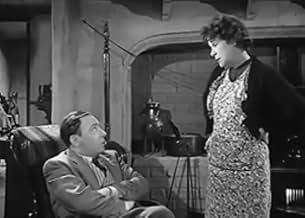
A Cockney family. (3 sisters, a brother-in-law and a niece) inherit a ramshackle Devon farm. The rest of the family doesn't want to leave London, but one of the male relatives insists and of... Read allA Cockney family. (3 sisters, a brother-in-law and a niece) inherit a ramshackle Devon farm. The rest of the family doesn't want to leave London, but one of the male relatives insists and off they go to face the unknown.A Cockney family. (3 sisters, a brother-in-law and a niece) inherit a ramshackle Devon farm. The rest of the family doesn't want to leave London, but one of the male relatives insists and off they go to face the unknown.
- Director
- Writer
- All cast & crew
- Production, box office & more at IMDbPro
6.1272
1
2
3
4
5
6
7
8
9
10
Featured reviews
Where There's a Will
I suppose most of us, if told we had inherited something, would find our eyes light up. Not so much this family of East London Cockneys who have inherited a run-down old farm in Devon after it's owner had a rather terminal encounter with a land mine. It is about as far away from London as they can go without a passport (assuming any of them actually had one). Upon arrival, they discover it's pretty much a dump and they are keen to just be rid of the place - and, fortunately, there are no shortage of folks wanting to obtain the land. Snag is, one of the family - "Alfie" (Leslie Dwyer) decides that he is tired of working in a bathhouse, and his niece "June" (Ann Hanslip) who is equally fed up with the relentless drudge of 1950s London life decides to help him make a go of the enterprise. What now ensues are a series of enjoyable escapades as they are, quite literally, fleeced by the locals, the ever pervasive Ministry and are soon ruing the day they ever saw the place. It is one of these gently internecine dramas, with everyone trying to pull a flanker before an ending that is as inevitable as it is enjoyable. It's maybe its a bit too basic, this - charming, yes - but the script and characterisations are little better than adaptations that might have worked (or, maybe did) better on the wireless. Still, it is quite a fun tale that raises a smile and makes you rethink that expression about gift horses.
Much fun to be had from this fast paced if unoriginal 50s fare
A wealth of familiar faces comprise the talent in this better than average British B movie comedy. Many of whom went on to later (and wider) TV stardom.
The plot is standard comedy bordering on grace fate, surrounding a Will and the usual machinations around money and morals ensues.
The wonderful (and sadly neglected) Kathleen Harrison brings a warm heart to the centre of it, and likewise Leslie Dwyer brings a degree of charm that makes us root for these two unlikely romantic suitors amidst the skullduggery. Grey power at the box office isn't new!
The film crackles along at a great pace. The financial ramifications of various legal positions are hard to follow, but it doesn't matter to the enjoyment of the piece. Warm chuckles all round.
Strewth!
George Cole's Flash Harry (of St Trinian's movies) is often seen as the forerunner for his iconic Arthur Daley character, but his role here seems even more so: the quick banter, the sly penny-pinching with a wink etc.
Generally, the film feels like a stage play. Once the 'townies go rural' joke has been established (rocky ride to the farm, sleep on straw beds etc) the rest of it mainly concerns who owns the right to the place. It's 3 against 1 in the family as they all want to sell it but patriarch Leslie Dwyer wants to stay there, to farm and to escape life in the big smoke. It's a good central role for him and a sweet bit of romance with long-term housekeeper Kathleen Harrison. Dandy Nichols is reliably enjoyable and watch for a young Edward Woodward - i actually didn't realise it was him until the end credits!
Overall, it's no classic Ealing satire nor is it a Will Hay style romp yet despite the characters being fairly typical (and the script a bit over-wordy) it is still quite a cosy kind of film; a rainy afternoon watch.
Generally, the film feels like a stage play. Once the 'townies go rural' joke has been established (rocky ride to the farm, sleep on straw beds etc) the rest of it mainly concerns who owns the right to the place. It's 3 against 1 in the family as they all want to sell it but patriarch Leslie Dwyer wants to stay there, to farm and to escape life in the big smoke. It's a good central role for him and a sweet bit of romance with long-term housekeeper Kathleen Harrison. Dandy Nichols is reliably enjoyable and watch for a young Edward Woodward - i actually didn't realise it was him until the end credits!
Overall, it's no classic Ealing satire nor is it a Will Hay style romp yet despite the characters being fairly typical (and the script a bit over-wordy) it is still quite a cosy kind of film; a rainy afternoon watch.
Delightful comedy with home truths about government
WHERE THERE'S A WILL opens with a man walking along a road, then poking the ground and blowing a mine. He dies apparently intestate and that starts a rollercoast of inheritance-related developments.
Leslie Dwyer plays Alfie Brewer, a London-based Turkish bath assistant who is more in line to inherit than any other family member, and is actually enthusiastic about farm work.
In contrast, his nephew George Cole is a scheming fraudster, and niece Thelma Ruby opens a near-Romeo and Juliet situation when she falls in reciprocated love with the son of an unfriendly neighbor who has bought the property's mortgage.
Best of all, Norman MacOwan pointing out how much better life was when he did not work and could just live off the environment, whereas earning a salary, paying taxes, health care, and all manner of rates depleted him of time and all the things that he used to enjoy in life.
Competent cinematography, strong screenplay with British humor at its best - recommended viewing.
Leslie Dwyer plays Alfie Brewer, a London-based Turkish bath assistant who is more in line to inherit than any other family member, and is actually enthusiastic about farm work.
In contrast, his nephew George Cole is a scheming fraudster, and niece Thelma Ruby opens a near-Romeo and Juliet situation when she falls in reciprocated love with the son of an unfriendly neighbor who has bought the property's mortgage.
Best of all, Norman MacOwan pointing out how much better life was when he did not work and could just live off the environment, whereas earning a salary, paying taxes, health care, and all manner of rates depleted him of time and all the things that he used to enjoy in life.
Competent cinematography, strong screenplay with British humor at its best - recommended viewing.
Cockneys On The Farm
When the farm owner gets blown up without a will, his lower-class London relatives show up for their share of the loot. Most of them want to sell out for some quick money, but Leslie Dwyer wants to turn farmer.
My mother was fond of Delderfield's novels, judging by their presence in her bedroom. I found this movie version harsh on the rather stereotyped Cockneys, except for Leslie Dwyer, who longs to get away from working in a Turkish bath and become a farmer, and niece Ann Hanslip, who wants to get away from her horror of a mother and dull city routine. Edward Woodward is competent but unrecognizable as the juvenile lead in his first screen appearance.
I found after a brisk opening -- I thought I was looking at a Monty Python skit when it opens with the old man getting blown up by a land mine. It's certainly a way of getting a movie off with a bang --t hat it sagged a bit in the middle, with Dwyer's horrid relations trying to play both ends against the middle, while Dwyer tries to figure out how to honorably keep the farm. But the pace picks up again to result in the foreordained happy ending.
My mother was fond of Delderfield's novels, judging by their presence in her bedroom. I found this movie version harsh on the rather stereotyped Cockneys, except for Leslie Dwyer, who longs to get away from working in a Turkish bath and become a farmer, and niece Ann Hanslip, who wants to get away from her horror of a mother and dull city routine. Edward Woodward is competent but unrecognizable as the juvenile lead in his first screen appearance.
I found after a brisk opening -- I thought I was looking at a Monty Python skit when it opens with the old man getting blown up by a land mine. It's certainly a way of getting a movie off with a bang --t hat it sagged a bit in the middle, with Dwyer's horrid relations trying to play both ends against the middle, while Dwyer tries to figure out how to honorably keep the farm. But the pace picks up again to result in the foreordained happy ending.
Did you know
- TriviaThe first film of Edward Woodward.
- Crazy creditsOpening credits listed on removable credit cards.
- ConnectionsRemake of Follow the Plough (1953)
Details
- Release date
- Country of origin
- Language
- Also known as
- Da li postoji testament
- Filming locations
- Staverton Bridge Station, Dart Valley Railway, Devon, England, UK(Family arrive in Devon.)
- Production companies
- See more company credits at IMDbPro
- Runtime
- 1h 20m(80 min)
- Color
- Aspect ratio
- 1.37 : 1
Contribute to this page
Suggest an edit or add missing content