IMDb RATING
6.3/10
8.8K
YOUR RATING
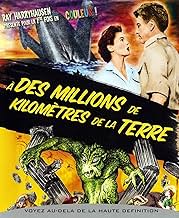
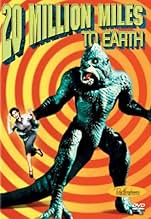
The first U.S. spaceship to Venus crash-lands off the coast of Sicily on its return trip. A dangerous, lizard-like creature comes with it and quickly grows gigantic.The first U.S. spaceship to Venus crash-lands off the coast of Sicily on its return trip. A dangerous, lizard-like creature comes with it and quickly grows gigantic.The first U.S. spaceship to Venus crash-lands off the coast of Sicily on its return trip. A dangerous, lizard-like creature comes with it and quickly grows gigantic.
Thomas Browne Henry
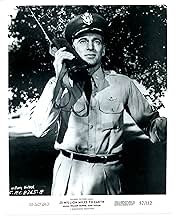
- Maj. Gen. A.D. McIntosh
- (as Thomas B. Henry)
Bart Braverman
- Pepe
- (as Bart Bradley)
Sid Cassel
- Farmer
- (uncredited)
Neil Collins
- Technician
- (uncredited)
Paul Cristo
- Police Officer
- (uncredited)
Noel Drayton
- 1st Reuters News Correspondent
- (uncredited)
John Duke
- American Embassy Aide
- (uncredited)
Darlene Fields
- Miss Reynolds
- (uncredited)
Duke Fishman
- Fisherman
- (uncredited)
Michael Garth
- Minor Role
- (uncredited)
Ray Harryhausen
- Man Feeding Elephant
- (uncredited)
6.38.7K
1
2
3
4
5
6
7
8
9
10
Featured reviews
Better than average
This is a simple enough film. Rocket returning from Venus crashes near Sicily and a foetal thing grows to become a giant lizardy humanoid type thing. The acting is ordinary and the script predictable.
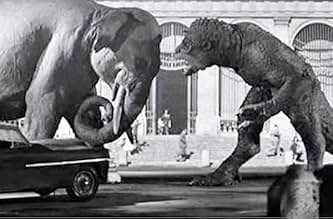
What makes it better than average for a 1950s monster movie is the Ray Harryhausen animated Venusian, called a Ymir here. Photographed in atmospheric black and white, its progress from small caged creature to being loose and dangerous on the streets of Rome and fighting an elephant is engrossing. You can't help rooting for the Ymir, attacked along the way by dogs and soldiers. The Ymir becomes a character like Frankenstein's creation or the Creature from the Black Lagoon. Excellent work by Harryhausen, and far more interesting than the CGI dinosaurs from Spielberg's over praised (and underwhelming) Jurassic Park trilogy.
This creature scared me in 1957 - love to see it again.
I saw this gem in 1957 at the Vineland Drive In, La Puente, California (which still exists! Saw Hellboy there last night.) The creature was so believable it scared me into peeking from beneath a blanket. I was eleven. I was hooked. Sci-Fi rules. Harryhausen's work is amazing and reason enough to seek it out. I was thrilled to discover it is available on DVD, and disappointed that some TV stations cut the elephant/creature fight scene for fear of upsetting animal rights folks. I will definitely find that DVD - and thanks to someone for noting the Full screen version is best, the "Wide-screen" is actually cropped top and bottom. I wanna see it all!
Incredible! The creature has to be taken alive!
I have to admit I was drawn to this because it was set in Sicily, but they really never got far from Rome.
It is a significant film for the fact that special effects were done by Ray Harryhausen, who has a cameo in the film (watch for the man feeding the elephant at the zoo.).
William Hopper, who played Perry Mason's assistant Paul Drake, will be a familiar face for those who grew up during the 50's and 60's. Joan Taylor was also on TV a lot during those years. They both have a rich sci-fi history in films like Earth vs. the Flying Saucers, "Men Into Space", and Conquest of Space.
The little Godzilla-like monster from Venus is the focus of the film as they try to find and capture it. Of course, Hooper knows all about the creature when facing it. Such plot holes would raise howls of derision today, but it was common in the films of the 50's.
An enjoyable reach into the past with a film that entertains more than a lot of the DTV we see today.
It is a significant film for the fact that special effects were done by Ray Harryhausen, who has a cameo in the film (watch for the man feeding the elephant at the zoo.).
William Hopper, who played Perry Mason's assistant Paul Drake, will be a familiar face for those who grew up during the 50's and 60's. Joan Taylor was also on TV a lot during those years. They both have a rich sci-fi history in films like Earth vs. the Flying Saucers, "Men Into Space", and Conquest of Space.
The little Godzilla-like monster from Venus is the focus of the film as they try to find and capture it. Of course, Hooper knows all about the creature when facing it. Such plot holes would raise howls of derision today, but it was common in the films of the 50's.
An enjoyable reach into the past with a film that entertains more than a lot of the DTV we see today.
See it for the monster
Let's state the obvious right off the bat. If it weren't for the stop-motion animation in this film, it would be simply awful. Awful acting, awful script, mediocre direction, this film has it all.
But once the monster appears on screen, none of that matters. Ray Harryhausen's animation is, as always, simply spellbinding, giving the monster, paradoxically, both a heightened reality (as it really is a physical object photographed in "real life") and a dreamlike quality. It's easy to see how Harryhausen's work set the standards for monster special effects until Star Wars and computer animation came along many years later.
This film is a particularly good example of his work for a number of reasons. There's only one monster (unlike the Sinbad/Jason/Titans movies), so all his effort is spent on that one "character". The monster also starts out small and grows huge by the end of the movie, allowing us to see it in a variety of settings. And, the fact that it's a humanoid (rather than a dinosaur or big octopus) allows it to "act" in a much more expressive manner (not unlike the original Kong).
So while this movie may qualify as little more than "MST3K" fodder as a science fiction work (did I mention how truly awful the script is?), as a piece of animation, it's a pure classic, deserving a space on your shelf next to King Kong, Snow White and Fantasia.
But once the monster appears on screen, none of that matters. Ray Harryhausen's animation is, as always, simply spellbinding, giving the monster, paradoxically, both a heightened reality (as it really is a physical object photographed in "real life") and a dreamlike quality. It's easy to see how Harryhausen's work set the standards for monster special effects until Star Wars and computer animation came along many years later.
This film is a particularly good example of his work for a number of reasons. There's only one monster (unlike the Sinbad/Jason/Titans movies), so all his effort is spent on that one "character". The monster also starts out small and grows huge by the end of the movie, allowing us to see it in a variety of settings. And, the fact that it's a humanoid (rather than a dinosaur or big octopus) allows it to "act" in a much more expressive manner (not unlike the original Kong).
So while this movie may qualify as little more than "MST3K" fodder as a science fiction work (did I mention how truly awful the script is?), as a piece of animation, it's a pure classic, deserving a space on your shelf next to King Kong, Snow White and Fantasia.
Hurrah for Harryhausen!
The moment the film begins it draws the viewer into its story about a US mission to Venus that brings back a specimen of a creature that grows at an incredibly rapid rate in Earth's atmosphere. The creature is like nothing else ever before on screen with its lizard-like human head and human torso, and dinosaur like legs and tail. The story naturally concentrates on capturing this creature before it destroys Italy. Like other monster films where the monsters are the sympathetic ones and the real monsters are the people, 20 Million Miles to Earth depicts a creature that is inquiring, basically harmless unless provoked, and heroic despite its eventual fate. Ray Harryhausen did a terrific job with his stop-motion animation, especially when we see the beast battle an elephant in the streets of Rome. The acting is decent, not as bad as some critics would argue. The film is pure entertainment and yet another commentary on mankind and the whole concept of the stranger within our society.
Did you know
- TriviaThe film was originally going to be set in Chicago, with the rocket crashing in Lake Michigan. Right before submitting the idea to producer Charles H. Schneer, Ray Harryhausen decided to change the setting to Italy at the last minute, after deciding that he always wanted to go on vacation there.
- GoofsThe spaceship crashes into the water no more than 100 yards from the fishermen. Yet their boats are in no way affected by any disturbance of the water. A vessel that large crashing into the water would have created a large wake that would have at the least rocked the boats heavily, if not capsized them.
- Quotes
Dr. Judson Uhl: You better tell them we're in a hurry and to roll up the red tape and put it into a drawer until this thing is over!
- Crazy creditsOpening credits prologue: A FISHING VILLAGE IN SICILY
- Alternate versionsMany local TV stations delete the scene in which the Ymir kills an elephant from a zoo, claiming the scene is a needless depiction of cruelty to animals.
- ConnectionsEdited from The Day the Earth Stood Still (1951)
- How long is 20 Million Miles to Earth?Powered by Alexa
Details
- Runtime
- 1h 22m(82 min)
- Color
- Aspect ratio
- 1.85 : 1
Contribute to this page
Suggest an edit or add missing content